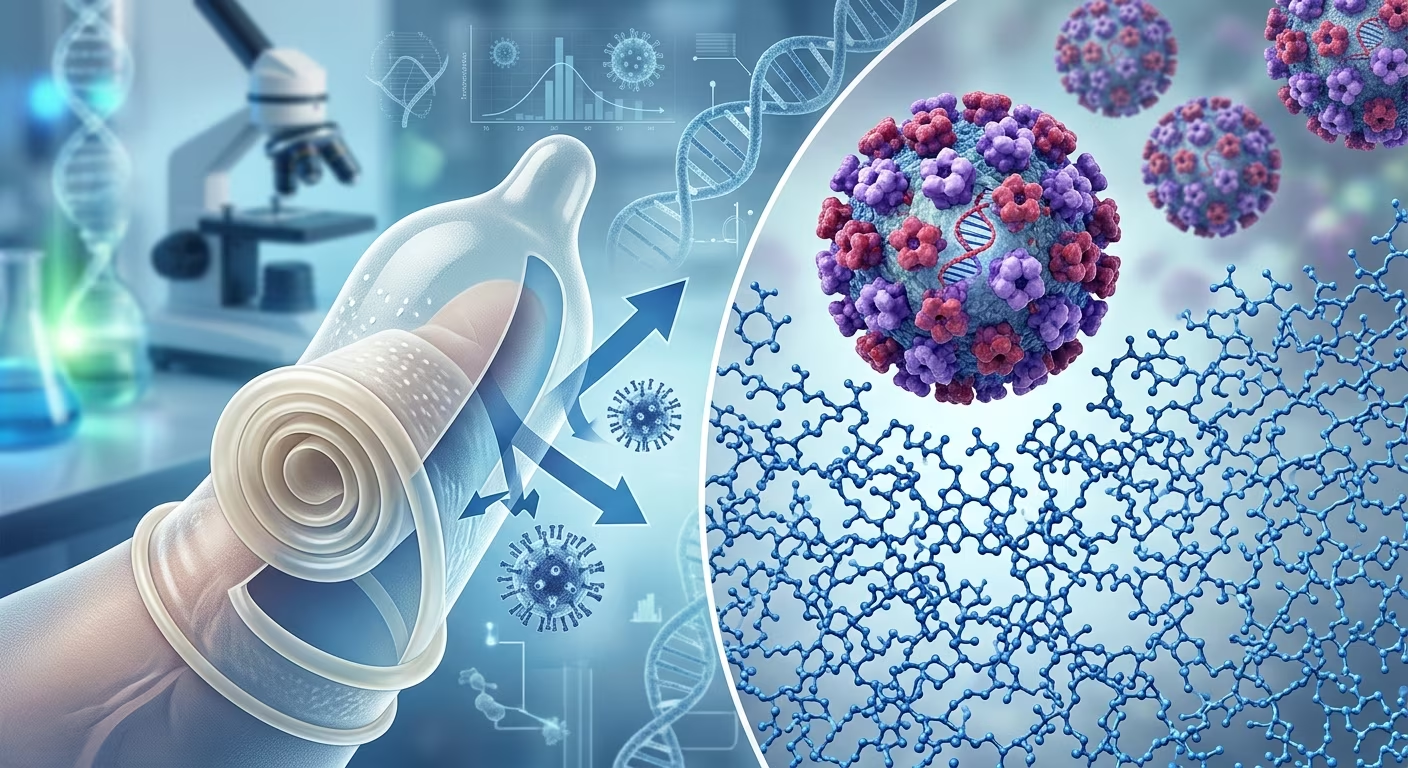
The Evolving Landscape of Sexual Health and Prevention
For decades, the discourse surrounding sexually transmitted infections (STIs) and barrier methods has been fraught with ideological tension. At the center of this debate is the Human Papillomavirus (HPV), a ubiquitous pathogen that behaves differently than many other common STIs. Because HPV is transmitted primarily through skin-to-skin contact rather than exclusively through bodily fluids, a pervasive myth took root in public health messaging: the idea that condoms offer little to no protection against HPV transmission.
This narrative was frequently amplified by proponents of abstinence-only education to discourage reliance on barrier methods. However, rigorous epidemiological research has systematically dismantled this misconception. By shifting the focus from risk elimination to evidence-based risk reduction, the medical community has clarified the vital role that consistent condom use plays in mitigating the spread of HPV and preventing its most severe clinical outcomes, including cervical and oropharyngeal cancers.
Understanding the Enemy: The Virology of HPV
To comprehend how barrier methods interact with HPV, one must first understand the virology and transmission dynamics of the virus itself. The World Health Organization (WHO) identifies HPV as one of the most common viral infections of the reproductive tract globally . There are over 100 distinct strains of HPV, with approximately 40 types specifically adapted to infect the mucosal tissues of the anogenital region.
These anogenital strains are broadly categorized into two distinct groups based on their clinical consequences:
- Low-Risk Types: Strains such as HPV 6 and 11, which are primarily responsible for benign anomalies like genital warts.
- High-Risk Oncogenic Types: Strains such as HPV 16 and 18, which have the potential to integrate into the host’s cellular DNA and cause precancerous dysplasias. If left undetected and untreated by the immune system, these high-risk strains are the primary drivers of cervical, anal, penile, and oropharyngeal cancers.
Unlike pathogens such as HIV or Chlamydia, which require the exchange of semen, vaginal fluids, or blood, HPV is contracted through direct epithelial friction. Micro-abrasions in the skin or mucosal lining during sexual activity allow the viral particles to enter the basal layer of the epithelium. This skin-to-skin transmission mechanism is the foundational reason why the efficacy of barrier methods was historically questioned.
The Origin of the “Ineffective Condom” Myth
The assumption that condoms are completely ineffective against HPV stems from a fundamental anatomical reality: external (male) condoms do not cover the entire pelvic region. During intercourse, areas such as the base of the penis, the scrotum, the perineum, and the outer labia remain exposed to direct friction. Because HPV can shed from these uncovered areas, early theoretical models presumed that the virus would easily bypass the physical barrier of a condom.
This anatomical technicality was heavily emphasized in late 20th-century and early 21st-century public health debates. Educational programs that prioritized abstinence-only-until-marriage curriculums frequently cited this specific biological trait to argue that contraception and barrier methods provided a false sense of security. The messaging evolved into a strict binary framework: if a method did not offer 100% guaranteed protection, it was deemed practically ineffective.
This binary perspective, however, fundamentally conflicts with the core principles of epidemiological harm reduction. In modern public health, efficacy is rarely absolute; instead, it is measured by a method’s ability to significantly lower the statistical probability of disease transmission and its subsequent clinical manifestations. The theoretical arguments against condoms lacked empirical validation until landmark longitudinal studies provided the necessary, concrete data.
The Scientific Breakthrough: Quantifying Condom Efficacy
The turning point in the scientific understanding of barrier methods and HPV arrived with a watershed longitudinal study published in the New England Journal of Medicine by Dr. Rachel L. Winer and her colleagues . Prior to this research, studying the precise transmission dynamics of HPV was notoriously difficult because the virus is so widespread that establishing a baseline of uninfected, newly sexually active individuals proved to be a logistical challenge.
The researchers tracked a cohort of young university women who were initially virgins, monitoring them closely as they initiated sexual activity. To ensure highly accurate data collection, participants maintained detailed electronic diaries documenting their sexual encounters and the exact frequency of their partners’ condom use. Additionally, the women underwent frequent HPV DNA testing to detect the presence of the virus at the molecular level, even in the complete absence of physical symptoms.
The empirical findings were paradigm-shifting. The data revealed that women whose partners used condoms consistently and correctly—defined as 100% of the time, from start to finish during intercourse—experienced a 70% reduction in the incidence of HPV infection compared to women whose partners used condoms less than 5% of the time . Furthermore, no precancerous cervical lesions (cervical squamous intraepithelial lesions) were detected in the group utilizing condoms consistently, highlighting a profound protective effect against the most dangerous oncogenic outcomes of the virus.
This study definitively proved that while condoms may not offer absolute immunity, they provide a highly significant degree of clinical protection, shattering the myth that barrier methods are irrelevant against skin-to-skin pathogens.
Biological Mechanisms: Why Barrier Methods Work
How does a physical barrier that leaves some skin exposed manage to reduce viral transmission by an impressive 70%? The answer lies in the biological mechanics of viral load and the specific vulnerabilities of human mucosal tissues.
First, condoms act as an impenetrable shield for the anatomical areas most susceptible to severe HPV-related damage. In women, the cervix—particularly the transformation zone where glandular cells meet squamous cells—is exceptionally vulnerable to HPV infection and subsequent oncogenic mutation. By sheathing the penile shaft and trapping seminal fluids, a condom physically blocks the highest concentration of the virus from making direct contact with the deep vaginal canal and the cervix.
Second, the concept of viral load is critical in virology. While a small amount of HPV might be transferred via the uncovered skin at the base of the genitals, the total amount of viral particles (the inoculum) is drastically reduced when a condom is used. A lower viral load is often much easier for the host’s innate immune system to recognize and clear naturally before the virus can establish a persistent, long-term cellular infection.
Finally, consistent condom use protects against dangerous co-infections. Barrier methods are highly effective at preventing the transmission of other STIs, such as chlamydia, gonorrhea, and trichomoniasis. These bacterial and parasitic infections cause severe inflammation and micro-ulcerations in the genital tract, compromising the epithelial barrier. A healthy, uninflamed mucosal lining is significantly more resilient against HPV penetration than tissue already battling another active pathogen.
Transmission Dynamics: Fluid vs. Skin-to-Skin STIs
| Transmission Type | Common Examples | Role of Barrier Methods |
|---|---|---|
| Fluid-Transmitted | HIV, Gonorrhea, Chlamydia | Provide near-absolute protection when used consistently and correctly to block fluid exchange. |
| Skin-to-Skin | HPV, Herpes Simplex Virus (HSV), Syphilis | Provide significant risk reduction (approx. 70% for HPV) by lowering viral load and covering highly vulnerable mucosal tissues. |
The Dual-Shield Approach: Vaccines and Barrier Methods
While the empirical vindication of condom efficacy is a crucial public health milestone, barrier methods are most effective when integrated into a comprehensive, multi-tiered prevention strategy. The most monumental advancement in HPV prevention in the 21st century has been the development of the prophylactic HPV vaccine.
Modern HPV vaccines, such as the 9-valent vaccine, prompt the immune system to generate robust neutralizing antibodies against the most dangerous and prevalent high-risk strains of the virus. The Centers for Disease Control and Prevention (CDC) strongly advocates for routine vaccination during early adolescence, ideally before any potential exposure to the virus occurs .
However, the vaccine does not render barrier methods obsolete. The vaccine protects against targeted oncogenic and wart-causing strains, but it does not cover all 40 genital HPV types. Furthermore, many sexually active adults today missed the window for early vaccination or received earlier iterations of the vaccine that covered fewer strains. Consequently, combining systemic immunization with the physical protection of condoms creates a “dual-shield” approach. This combined strategy maximizes protection against the full spectrum of HPV strains while simultaneously guarding against the myriad of other STIs that vaccines cannot prevent.
Advancing Public Health Education
The empirical evidence supporting condom efficacy against HPV demands a continued evolution in how sexual health is taught, conceptualized, and communicated. Relying on fear-based messaging or deliberately omitting critical clinical data regarding barrier methods fundamentally undermines the ethical principles of informed medical consent.
Comprehensive sexual education must explicitly communicate that while skin-to-skin STIs represent a unique transmission challenge, risk mitigation is highly achievable. Public health campaigns are most successful when they empower individuals with scientifically accurate tools rather than demanding perfection. When individuals are equipped with a clear understanding of how barrier methods lower the viral inoculum and protect the most vulnerable cellular tissues, they are more likely to adopt consistent safe sex practices.
Furthermore, modern healthcare providers must integrate this epidemiological evidence into routine patient consultations. By routinely discussing both vaccination and barrier methods during gynecological and general wellness exams, clinicians can actively dismantle the lingering stigmas associated with HPV. Ultimately, the integration of these proven, science-based strategies into national health frameworks ensures a more proactive, equitable, and effective approach to global sexual health.
Frequently Asked Questions (FAQs)
Do condoms provide 100% protection against HPV?
No. Because HPV can be transmitted via skin-to-skin contact in genital areas not covered by a condom (such as the scrotum or outer vulva), transmission is still possible. However, consistent use reduces the risk of transmission by approximately 70% and significantly protects the most vulnerable internal tissues, such as the cervix.
If I have received the HPV vaccine, do I still need to use condoms?
Yes. While the vaccine is highly effective at preventing the most dangerous high-risk strains of HPV that cause cancer, it does not protect against all strains of the virus. Additionally, the HPV vaccine offers no protection against other sexually transmitted infections such as HIV, syphilis, gonorrhea, or chlamydia.
Can HPV be transmitted if a partner has no visible symptoms?
Absolutely. The vast majority of HPV infections are entirely asymptomatic. A person can carry and transmit the virus without ever developing genital warts or knowing they are infected, which is why consistent, proactive protection is crucial.
Why are some educational programs critical of condom use for HPV?
Historically, abstinence-only programs emphasized the fact that condoms do not provide absolute (100%) protection against skin-borne viruses. They leveraged this lack of perfect efficacy to argue that abstinence is the only viable option, often omitting the scientific consensus that condoms provide substantial and clinically important risk reduction.
References
- Condom use and the risk of genital human papillomavirus infection in young women — Winer RL, Hughes JP, Feng Q, et al. New England Journal of Medicine. 2006-06-22. https://www.nejm.org/doi/full/10.1056/NEJMoa053284
- Primary Prevention Methods (STI Treatment Guidelines) — Centers for Disease Control and Prevention (CDC). 2021-07-22. https://www.cdc.gov/std/treatment-guidelines/clinical-primary.htm
- Sexually transmitted infections (STIs) — World Health Organization (WHO). 2024. https://www.who.int/news-room/fact-sheets/detail/sexually-transmitted-infections-(stis)