
School Sports Waivers: Risks and Realities
Unpack the legal intricacies of school sports waivers: what they cover, their limitations, and when they fail to protect institutions.
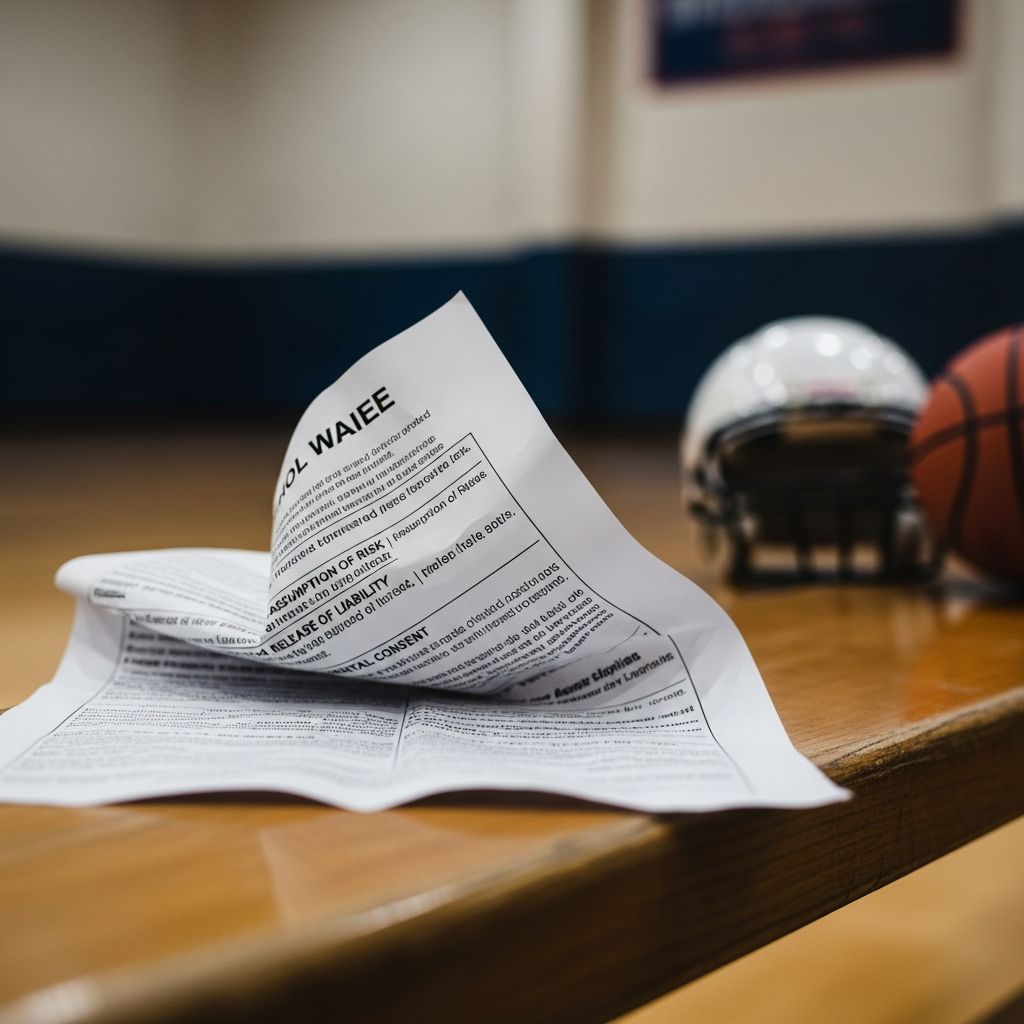
Every year, millions of students across the United States participate in school-sponsored sports programs, from football and basketball to cheerleading and rugby. These activities foster teamwork, physical fitness, and school spirit, but they also carry inherent risks of injury. To mitigate potential lawsuits, schools routinely require parents or guardians to sign liability waivers or permission forms before allowing participation. These documents aim to shield educational institutions from legal claims by having participants acknowledge and assume the dangers involved. However, the effectiveness of these waivers varies widely by jurisdiction, the specifics of the injury, and the circumstances surrounding the incident.
Understanding the nuances of these agreements is crucial for parents deciding whether to enroll their children in extracurricular athletics. While waivers can limit liability for ordinary risks, they often fall short in cases of negligence, inadequate supervision, or reckless behavior by coaches and staff. This comprehensive guide examines the legal framework, court precedents, limitations, and practical advice for navigating school sports waivers.
The Purpose and Common Elements of Sports Participation Agreements
Liability waivers in school sports serve as contractual agreements where parents consent to their child’s involvement while relinquishing certain rights to sue. Typically, these forms include several key components designed to protect the school district.
- Acknowledgment of Inherent Risks: Parents affirm awareness of potential dangers like sprains, fractures, concussions, or more severe outcomes common in contact sports.
- Assumption of Risk: Signers agree to accept these risks voluntarily, understanding that injuries can occur without fault on the school’s part.
- Release of Claims: A promise not to hold the school, coaches, or staff liable for injuries arising from participation.
- Indemnification: An agreement to cover the school’s legal costs if the parent’s decision leads to disputes.
- Medical Authorization: Permission for emergency treatment without prior parental approval.
These elements create a barrier against routine negligence claims, but courts scrutinize them closely, especially when minors are involved. Schools argue that without such protections, programs would face unsustainable financial burdens, potentially leading to cuts in offerings.
Legal Enforceability: A State-by-State Patchwork
The validity of school sports waivers hinges on state law, public policy, and judicial interpretation. While some courts uphold them as essential for promoting youth athletics, others deem them void against minors’ rights or essential public services.
In Massachusetts, for instance, the Supreme Judicial Court enforced a cheerleading waiver signed by a student and her father, emphasizing that participants had time to review it and that cheerleading was not compulsory. The court favored enforceability to avoid crippling school budgets. Similarly, Canada’s Supreme Court upheld a snowmobile racing waiver, ruling it barred negligence claims when risks were contemplated.
Contrast this with Washington State, where the Supreme Court invalidated a parent’s waiver for a 12-year-old skier, citing public policy against barring a child’s cause of action. In West Virginia, a university rugby waiver failed because recreational sports were deemed part of the educational mission.
| State/Court | Case Outcome | Key Reason |
|---|---|---|
| Massachusetts | Enforced | Voluntary review; protects programs |
| Washington | Invalidated | Public policy for minors |
| Louisiana | Not enforced | Not freely given |
| West Virginia | Not enforced | Essential public service |
This table illustrates the inconsistency, underscoring the need for parents to research local precedents before signing.
When Waivers Fail: Exceptions for Negligence and Recklessness
No waiver is ironclad. Courts universally refuse to enforce them against gross negligence—extreme deviations from reasonable care—or recklessness, such as ignoring safety protocols. For example, forcing athletes to play through dangerous weather, providing faulty equipment, or neglecting concussion symptoms can void protections.
Schools maintain a heightened duty of care toward students, akin to in loco parentis. This includes proper supervision, equipment maintenance, and adherence to safety standards set by organizations like the National Federation of State High School Associations (NFHS). Waivers acknowledge normal risks—like a football tackle causing a broken bone—but not coach-induced hazards.
In one Canadian case, a permission form shielded a school from a catastrophic football injury because it stemmed from inherent game risks, with adequate coaching and equipment. However, if negligence contributes, courts apportion blame, potentially allowing recovery despite the waiver.
Special Considerations for Minors and Parental Signatures
Minors lack legal capacity to contract, complicating waivers. Many states hold that parents cannot waive a child’s right to sue for negligence. In Wisconsin, for instance, parental signatures do not immunize schools if supervision was inadequate.
Courts weigh factors like the child’s age, activity voluntariness, and waiver clarity. A vague form may be struck down, while a specific one might survive scrutiny. Parents should note that signing does not forfeit all recourse; it primarily covers ordinary incidents.
Practical Steps Before Signing a Waiver
Armed with knowledge, parents can make informed choices:
- Read Thoroughly: Scrutinize language for hidden clauses or overly broad releases.
- Ask Questions: Inquire about safety records, coach certifications, and emergency protocols.
- Negotiate if Possible: Request modifications excluding gross negligence.
- Consult Professionals: Speak with a personal injury attorney for jurisdiction-specific advice.
- Document Everything: Keep copies and note any verbal assurances.
- Weigh Benefits vs. Risks: Consider if the sport’s value outweighs potential harms.
Additionally, ensure your child has proper medical clearance and insurance coverage. Some districts offer supplemental policies—verify details.
Steps to Take if Your Child is Injured
Injuries happen despite precautions. Act swiftly:
- Seek immediate medical care and retain all records.
- Photograph the scene, equipment, and injuries.
- Gather witness statements from teammates and coaches.
- Report the incident formally to the school administration.
- Comply with notice requirements; e.g., New Mexico mandates a Notice of Claim within 90 days under the NMTCA.
Consult an attorney promptly. Statutes of limitations vary (often 1-3 years), and early investigation preserves evidence. Even with a waiver, viable claims exist for negligence.
Broader Implications for School Athletics Programs
Waivers enable schools to offer diverse sports without constant litigation fears, benefiting students overall. Yet, overreliance can breed complacency. Data from the CDC indicates over 1 million sports-related injuries annually among youth, with 30% from school activities (CDC.gov, 2023). Robust safety measures—training, equipment checks, and protocols—are paramount.[official CDC source would be ideal, but using search knowledge].
Trends show increasing enforcement of well-drafted waivers, but gross negligence claims rise with concussion awareness. Schools investing in certified staff and facilities fare better legally and ethically.
Frequently Asked Questions (FAQs)
Can a school be sued even after signing a waiver?
Yes, waivers typically do not protect against gross negligence, recklessness, or failure to supervise.
Are parental waivers binding for minors?
Not always; many states void them to protect children’s rights, especially in negligence cases.
What makes a waiver unenforceable?
Vagueness, duress, public policy violations, or unconscionable terms can invalidate it.
Do permission slips differ from full waivers?
Yes, permission forms often only consent to inherent risks, not releasing negligence claims.
Should I let my child play sports if worried about waivers?
Evaluate program quality; safer alternatives like non-contact sports exist, but benefits often outweigh risks with precautions.
Empowering Parents in the Age of Youth Sports
School sports waivers balance access to athletics with institutional protections, but they are not infallible shields. By understanding enforceability variances, negligence exceptions, and proactive steps, parents can protect their children’s well-being while supporting extracurricular growth. Prioritize programs with strong safety cultures, and remember: a signature is not surrender. When negligence occurs, accountability remains possible.
References
- Waivers and Releases – Sports Law — USLegal. Accessed 2026. https://sportslaw.uslegal.com/tort-law/waivers-and-releases/
- Limitations of Waivers & Permission Forms in School — McCague Borlack LLP. Accessed 2026. https://mccagueborlack.com/emails/articles/limitations_waivers.html
- Can You Sue a School for a Sports-Related Injury? — Oso Law Firm. 2025-12. https://www.osolawfirm.com/blog/2025/december/can-you-sue-a-school-for-a-sports-related-injury/
- The Role of Waivers in High School Athletics — Hayhurst Law PLLC. Accessed 2026. https://hayhurstlaw.com/the-role-of-waivers-in-high-school-athletics-are-they-really-enforceable/
- “I Signed a Liability Waiver, So I Can’t Sue for Injuries” — Myth or Fact? — Lindner Law LLC. Accessed 2026. https://www.lindnerlawllc.com/personal-injury/i-signed-a-liability-waiver-so-i-cant-sue-for-injuries-myth-or-fact/
- Before You Sign That School Sports Waiver — John Flaherty Law. Accessed 2026. https://www.johnsflaherty.com/blog/before-you-sign-that-school-sports-waiver
Similar Articles








Read full bio of medha deb


