
School Dress Codes: 4-Step Legal Guide To Student Rights
Learn how public school dress codes work, what they may regulate, and how student constitutional rights and anti-discrimination laws limit those rules.
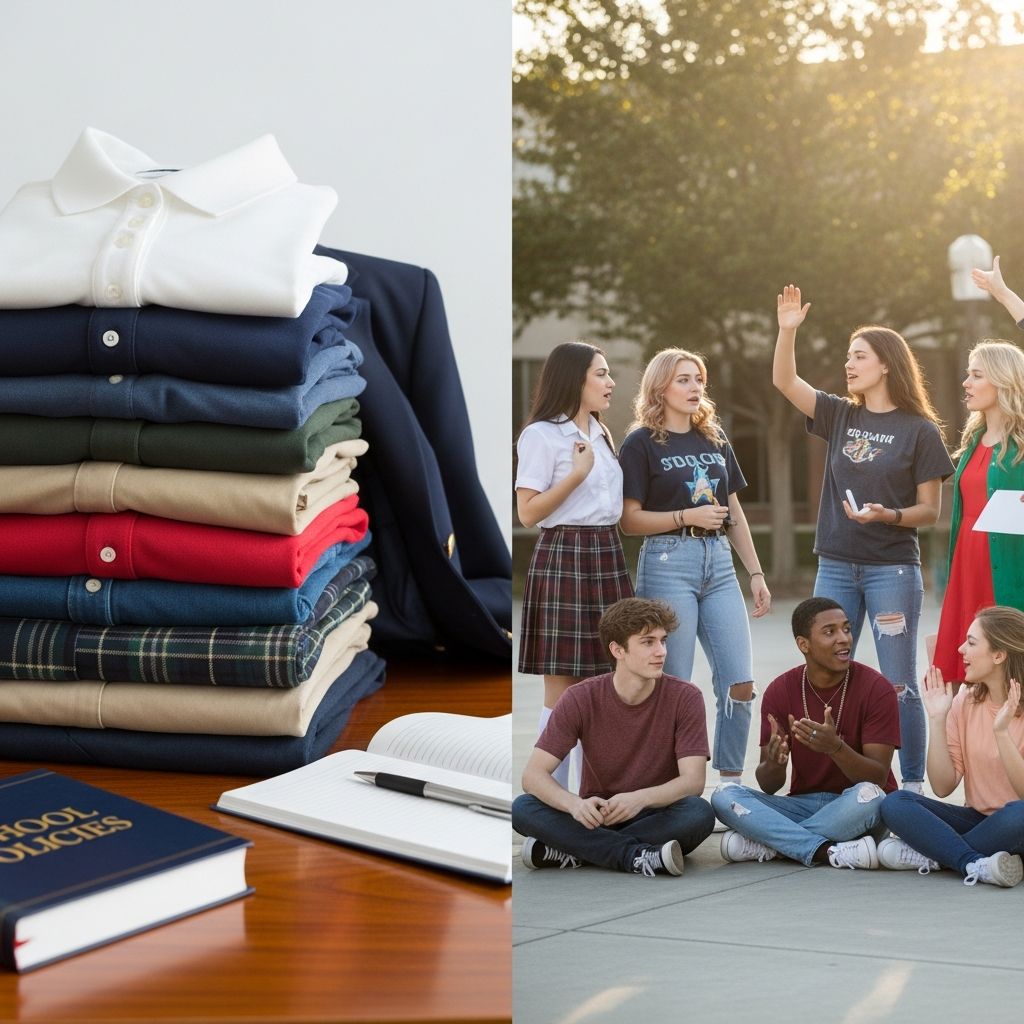
Across the United States, public schools use dress codes and uniform policies to promote safety, reduce conflict, and project a particular school image. At the same time, students do not lose their constitutional and civil rights when they walk into school, and those rights place important limits on how far dress rules can go.
This guide explains how school dress codes work, what legal standards apply, and how families can respond when they believe a policy has gone too far.
Why Schools Regulate Student Clothing
Most public schools adopt some form of dress code for a mix of educational and safety reasons.
- Reducing classroom distractions: Administrators often argue that revealing, vulgar, or slogan-heavy clothing can disrupt instruction or shift attention away from learning.
- Promoting safety and order: Rules may target gang-related insignia, clothing associated with violence, or items that could conceal weapons or contraband.
- Creating a particular school climate: Uniforms and standardized attire are sometimes used to foster a sense of unity or to reduce visible economic differences among students.
- Complying with health standards: Certain clothing (like closed-toe shoes in labs or shops) may be required to avoid physical injury.
These goals are legitimate, but they must be pursued in ways that comply with the Constitution, federal civil-rights laws, and state statutes.
Legal Foundations: Rights That Limit Dress Codes
Public school dress codes sit at the intersection of several areas of law. The most important sources of student protections include:
| Legal Source | Main Protection | How It Relates to Dress Codes |
|---|---|---|
| First Amendment (U.S. Constitution) | Free speech and free exercise of religion | Limits how schools may regulate expressive or religious clothing. |
| Fourteenth Amendment | Equal protection and due process | Bars discriminatory enforcement and excessively vague rules. |
| Title IX of the Education Amendments of 1972 | Sex discrimination in education | Restricts sex-based differences in dress requirements. |
| Title VI of the Civil Rights Act of 1964 | Race, color, and national-origin discrimination | Limits rules or enforcement that disproportionately target certain racial or ethnic groups. |
| State statutes and regulations | Specific authority and limits | Some states set conditions for adopting uniforms or restrict dress codes that are not tied to safety or health. |
Free Expression and Clothing in School
The Supreme Court has long recognized that students can express ideas through what they wear. In a leading case, the Court held that public school students do not “shed their constitutional rights to freedom of speech or expression at the schoolhouse gate.”
However, that protection is not absolute. Courts apply several overlapping standards when considering dress-code disputes:
- Substantial disruption test: Under the Tinker standard, officials may restrict student expression if they can reasonably forecast that it will cause a substantial disruption of school activities or invade the rights of others.
- Lewd or vulgar expression: Following later Supreme Court decisions, many courts allow schools to bar clothing that is plainly lewd, vulgar, or contains sexual innuendo, even without proof of disruption.
- School-sponsored contexts: In settings that are part of the school’s own curriculum or official publications, school authorities have even greater power to control messages, but this is less often the focus of clothing disputes.
In practice, this means that political or social messages on clothing are often protected, while truly profane or clearly disruptive messages may be restricted, especially if the school can point to concrete past problems.
Discrimination and Unequal Enforcement
Even when a school has broad authority to set dress requirements, it cannot do so in a discriminatory way. Federal civil-rights laws and the Equal Protection Clause sharply limit explicit or implicit bias in dress codes.
Gender-Based Requirements
Dress codes that explicitly impose different rules on boys and girls, or that rely on stereotyped expectations of “feminine” or “masculine” appearance, can violate Title IX and equal-protection guarantees.
- A rule that only girls must wear skirts, or that only boys must cut their hair short, is highly suspect under federal law.
- Schools may require “formal” or “appropriate” attire for events, but that standard usually must be written in a gender-neutral way (for example, “suit or dress clothing of the student’s choice”).
Racial and Cultural Impact
Dress and grooming rules that disproportionately affect a particular racial or ethnic group raise concerns under Title VI and equal protection. A recent federal review of school dress codes found that many policies regulate hairstyles and clothing in ways that fall more heavily on Black students, particularly Black girls.
- Restrictions on natural hairstyles, braids, or headwraps may invite legal challenges when they align closely with racial or cultural identity.
- Rules against symbols or slogans must be enforced consistently, regardless of the political message or the racial group most associated with it.
Uneven Application of the Same Rule
Even a facially neutral dress code can become unlawful if it is applied unevenly. For example, if a school punishes only girls for wearing tank tops while ignoring similar violations by boys, or targets students of one race more often for the same minor infractions, that pattern can support claims of discrimination.
Religious and Cultural Expression
Students retain the right to practice their religion in public schools, including through religious clothing and symbols, as long as doing so does not materially disrupt school operations or interfere with the rights of others.
- Head coverings and garments: Items such as hijabs, yarmulkes, turbans, or modesty garments generally must be allowed, even if the school otherwise limits hats or headwear.
- Jewelry and symbols: Religious pendants or symbols are typically protected, unless they pose a specific safety concern (for example, metal jewelry in certain lab settings).
- Accommodation process: Many district policies include procedures for parents or students to request religious accommodations when a rule conflicts with sincere beliefs.
Schools may seek to regulate clothing that they view as dangerous or disruptive, but they must take particular care where religious practice is involved. In many cases, a narrow exception or modification of the rule is required rather than a blanket prohibition.
State and Local Rules on Dress Codes and Uniforms
While the federal Constitution applies nationwide, state laws can shape how dress policies are adopted and enforced. An analysis of dress-code and uniform statutes shows substantial variation among states.
- Authorization statutes: At least twenty states expressly authorize districts or schools to adopt dress codes or uniform policies, sometimes with procedural requirements such as parental consultation or school-board approval.
- Safety and health requirements: Some states, like Massachusetts, restrict dress codes to situations where clothing implicates reasonable concerns about health, safety, or cleanliness.
- Local discretion: In states without explicit statutes, courts and attorney-general opinions often recognize broad local authority to set dress standards, subject to constitutional limits.
Because of this variation, families should review both the local district policy and any applicable state statutes when evaluating a dress-code issue.
Common Features and Controversies in Modern Dress Codes
Recent reviews of district policies highlight both recurring rules and recurring complaints.
Frequently Regulated Clothing
- Clothing that is overly revealing, such as very short shorts or skirts, low-cut tops, or exposed midriffs.
- Items associated with gangs, violence, or drugs, including certain colors, logos, or references to weapons and controlled substances.
- Clothing with profane, sexually suggestive, or harassing language or imagery.
- Headgear, including hats, hoods, and bandanas, often with exceptions for religious or medical use.
Areas of Ongoing Debate
- Sex-based targeting of “girls’ clothing”: Many policies focus heavily on garments more commonly worn by girls, such as leggings, crop tops, or certain dress styles, raising concerns about sexism and body shaming.
- Hair and grooming: Rules on hair length, texture, or protective styles have been criticized as racially biased and culturally insensitive.
- Expression of sexual orientation or gender identity: Clothing or accessories that symbolize LGBTQ+ identity may trigger disputes when schools attempt to restrict them under vague “disruption” language.
- Equity and access: Strict uniform requirements can impose financial burdens on families with limited resources if affordable options or assistance are not available.
School Uniform Policies
Some districts go beyond general dress codes and require standardized uniforms. Courts have generally upheld carefully written public-school uniform policies, especially when there are options for families to opt out or to express political or religious views in other ways.
Typical features of lawful uniform policies include:
- A clearly articulated purpose, such as improving safety, reducing gang influence, or promoting discipline.
- Written guidelines on colors and basic garments, usually applied across all genders in a neutral way.
- Exceptions or accommodations for religious dress and, in some districts, for sincerely held philosophical objections.
- Procedures to assist low-income families with obtaining required uniform items.
Even with uniforms, constitutional and anti-discrimination protections still apply. For example, a district cannot require different uniform styles for boys and girls in ways that enforce rigid gender stereotypes, and it must avoid policies that prevent students from wearing religious attire alongside or in place of parts of the uniform.
How Students and Families Can Respond to Dress Code Issues
When a dress-code dispute arises, students and families often benefit from a step-by-step approach.
1. Review the Written Policy
- Obtain the full dress code from the student handbook or district website; in some districts, dress rules must be posted in a central location.
- Note the exact language that the school believes was violated, as well as any process for appeals or exceptions.
2. Document What Happened
- Record the date, time, staff involved, and what was said about the supposed violation.
- If appropriate, keep copies of any written warnings, discipline forms, or emails.
- Note whether students of different genders, races, or backgrounds are being treated differently for similar clothing issues.
3. Communicate with School Officials
- Schedule a meeting with an administrator or counselor to discuss the concern calmly and clarify the school’s interpretation of the rule.
- If religious practice or disability is involved, ask about formal processes for requesting accommodations.
- Point to specific language in the policy that supports your position, such as a general free-expression statement or a clause promising equal treatment.
4. Consider Legal and Advocacy Resources
- If you believe the policy is discriminatory or violates constitutional rights, you may wish to consult a civil-rights or education-law attorney.
- Civil-liberties organizations and legal-aid groups sometimes provide guidance or representation in dress-code cases, particularly where broader policy change is at stake.
Best Practices for Fair and Legal Dress Codes
While this guide focuses on student rights, it can also help school boards and administrators design policies that are both effective and legally sound.
- Write gender-neutral rules that apply the same standards to all students, regardless of gender identity or expression.
- Avoid cultural or racial bias by reviewing how proposed rules may affect students from different racial and ethnic groups and by removing unnecessary bans on natural or protective hairstyles.
- Be specific and clear so that students and staff understand what is expected, reducing arbitrary or inconsistent enforcement.
- Provide meaningful input opportunities for students, families, and educators before adopting or revising the policy.
- Include clear avenues for accommodation for religious practice, disability, or other protected grounds, and describe how to request those accommodations.
- Monitor discipline data by gender, race, and disability status to detect and address patterns of disparate impact.
Frequently Asked Questions About School Dress Codes
Can a public school ban political messages on clothing?
Public schools generally cannot single out political viewpoints for suppression. If the school allows clothing with words or symbols, it typically must allow political messages as well, unless officials can show that a particular message is likely to cause substantial disruption or invade the rights of others.
Is it legal to require different clothing for boys and girls?
Policies that explicitly require different attire based on sex, such as skirts only for girls or pants only for boys, are vulnerable under Title IX and the Equal Protection Clause. Modern best practice is to set a unified standard that applies to all students, leaving style choices to the individual.
Can schools prohibit religious head coverings?
In most cases, no. Public schools must accommodate sincere religious practices unless the school can demonstrate a compelling reason and show that no less restrictive option would work. General bans on hats or headwear usually cannot be applied to religious coverings like hijabs, yarmulkes, or turbans.
What if a uniform policy is too expensive for my family?
Many districts that require uniforms also provide low-cost options, used-uniform exchanges, or financial assistance. Some state or local policies encourage or require schools to ensure that cost does not bar any student from attending. Parents can raise cost concerns with administrators or school boards and document any resulting barriers to attendance.
Do students have any say in what the dress code looks like?
Student input is not always legally required, but many districts now involve student governments or advisory panels when revising dress codes, particularly in response to concerns about sexism, racism, or unequal enforcement. Engaging with those processes can be an effective way for students to seek change.
References
- School Dress Codes: A First Amendment Breakdown — Freedom Forum Institute. 2019-08-01. https://www.freedomforum.org/school-dress-codes/
- Dress Codes — The First Amendment Encyclopedia, Middle Tennessee State University. 2017-01-01. https://firstamendment.mtsu.edu/article/dress-codes/
- 4 Things Public Schools Can and Can’t Do When It Comes to Dress Codes — American Civil Liberties Union (ACLU). 2019-09-09. https://www.aclu.org/news/womens-rights/4-things-public-schools-can-and-cant-do-dress-codes
- Dress Code Guidelines — New York City Department of Education. 2022-09-15. https://www.schools.nyc.gov/school-life/school-environment/dress-code-guidelines
- Uniforms/Dress Codes — Education Commission of the States. 2013-01-01. https://www.ecs.org/clearinghouse/77/97/7797.pdf
- School Dress Code Debates, Explained — Education Week. 2022-12-07. https://www.edweek.org/leadership/school-dress-code-debates-sexist-explained/2022/12
- Dress Codes: Undermining Cultural, Gender, Socio-economic Equity — Margaret Dimauro, Journal of Educational Leadership and Policy Studies. 2020-10-01. https://go.southernct.edu/jelps/files/2020-fall/9-Margaret-Dimauro.pdf
Similar Articles








Read full bio of medha deb


