
Electronic Filing in San Bernardino: Complete Implementation Guide
Navigate San Bernardino's mandatory eFiling requirements with this comprehensive resource.
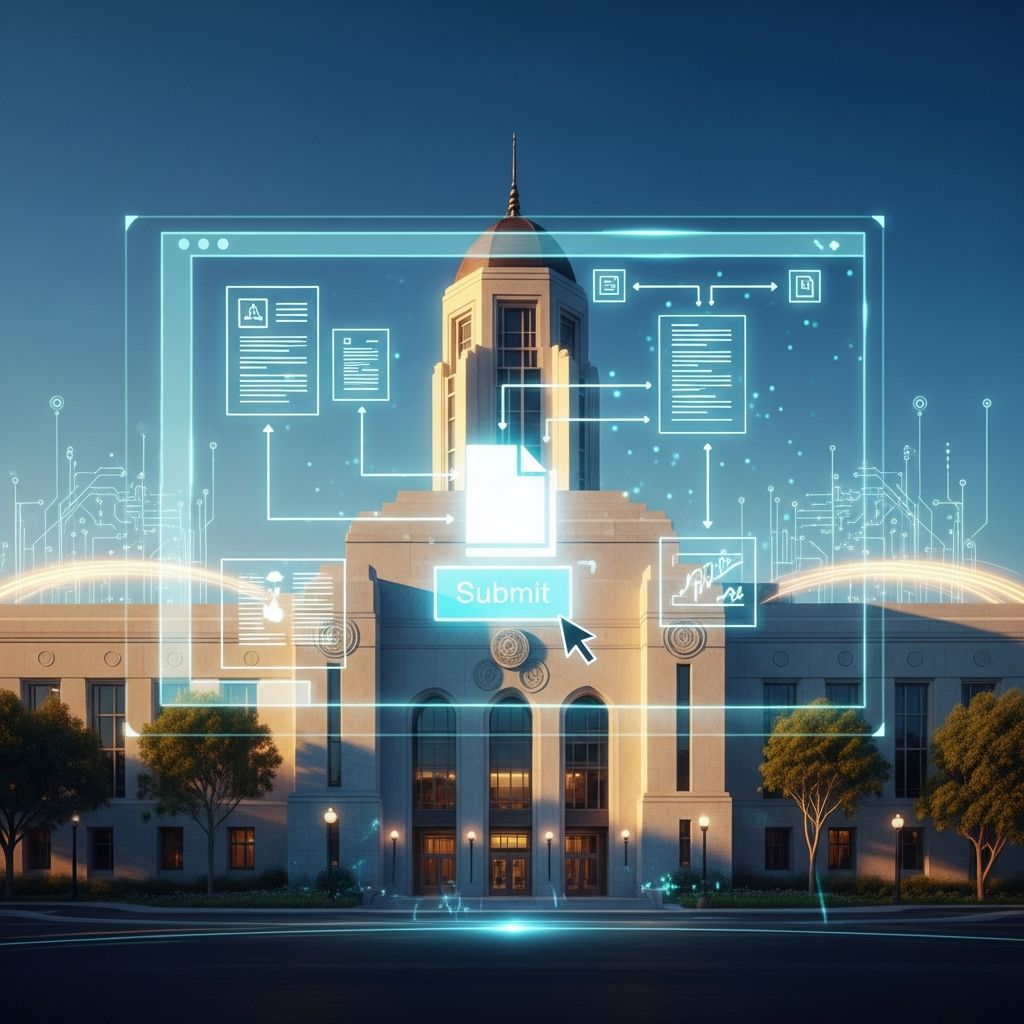
Understanding Electronic Filing in San Bernardino Superior Court
The San Bernardino Superior Court has fundamentally transformed how legal documents are submitted through its implementation of mandatory electronic filing for civil cases. Effective September 2, 2025, attorneys handling civil matters must adapt to this new filing paradigm, which brings both efficiency and specific technical requirements that practitioners need to understand thoroughly. This comprehensive guide walks through the essential aspects of eFiling in San Bernardino, addressing the most critical questions that legal professionals and self-represented litigants encounter when navigating this system.
The Transition to Mandatory eFiling: What Changed
The San Bernardino Superior Court’s shift to mandatory electronic filing represents a significant modernization of its document management infrastructure. Rather than requiring in-person visits or mail submissions, attorneys now must submit all civil case documents through approved Electronic Filing Service Providers (EFSPs). This transition applies to General Civil cases, including Unlimited, Limited, and Complex matters, as well as specific civil petitions such as harassment prevention orders, workplace violence restraining orders, name changes, and late claim relief petitions.
The implementation of this system provides several advantages to the legal community. Electronic submission eliminates the unpredictability of mail delivery and reduces the administrative burden on court staff. Additionally, filers benefit from the ability to submit documents 24 hours a day, 7 days a week, without being constrained by traditional court hours. For busy practitioners managing multiple cases across different jurisdictions, this flexibility proves invaluable.
Who Must Comply With eFiling Mandates
Understanding the scope of mandatory eFiling requirements is crucial for determining your filing obligations. Attorneys representing parties in civil matters fall under the mandatory eFiling requirement without exception. However, the court recognizes that certain circumstances may warrant relief from this obligation.
Self-represented litigants occupy a unique position within this framework. While they are not required to file electronically, the court actively encourages their voluntary participation in the eFiling system. This optional approach acknowledges the potential technological barriers that unrepresented parties may face while still promoting the modernized filing infrastructure.
Parties facing genuine hardship, significant prejudice, or other compelling reasons may request an exemption from mandatory eFiling by submitting Judicial Council form EFS-007 (Request for Exemption from Mandatory Electronic Filing and Service) along with form EFS-008 (Order of Exemption). These requests must include facts stated under penalty of perjury that justify the exemption.
Technical Specifications for Document Submission
Electronic filing systems require compliance with specific technical standards to ensure proper processing and document integrity. The San Bernardino Superior Court has established clear guidelines regarding document formatting and file size limitations.
All documents submitted through eFiling must be in non-editable Portable Document Format (PDF). This requirement protects document integrity and ensures that the filed version precisely matches what the filer intended to submit. The court’s system accepts individual documents up to 25 megabytes in size, with a maximum total file upload size of 50 megabytes per submission. These limitations, while generous compared to some court systems, require attention when dealing with voluminous exhibits or multiple document attachments.
The eFiling system prompts users to provide necessary processing information and guides them through the upload process. Once documents are transmitted, the system routes them to the appropriate court location for electronic processing. This automated workflow reduces manual handling and minimizes the potential for misfiling or loss of documents.
Processing Timelines and Expectations
One of the most practical questions attorneys have involves document processing timeframes. As San Bernardino transitions to its eFiling system, filers should anticipate variable processing times during the initial implementation period. Early adoption phases typically experience delays as court staff calibrate workflows and users acclimate to new procedures.
The court has designated certain document types as priority items. Oppositions, for instance, receive prioritized processing with an approximate 24-hour turnaround time. The court has indicated that this process may eventually become fully automated, allowing oppositions to integrate directly into case files with immediate availability. This staged approach demonstrates the court’s commitment to continuous improvement and efficiency optimization.
During holiday seasons and for certain specialized document types, processing delays may extend beyond standard timeframes. Filers should account for these potential delays when planning litigation strategy and response deadlines. Understanding these timelines helps prevent missed deadlines and ensures that parties maintain accurate expectations regarding document availability in case files.
Alternative Filing Methods and Their Application
Although eFiling represents the preferred and mandated method for most submissions, the court maintains alternative filing channels for specific circumstances. Fax filing remains available for fee waiver submissions and for small documents that do not require filing fees and are not time-sensitive in nature.
The court’s fax system operates with lower priority status compared to eFiling, File Submit, or physical filing. Documents received via fax may experience processing delays and should not be relied upon for time-critical filings. An important restriction applies to fax submissions: the court will not accept documents with the MC 005 coversheet containing credit card information, as this protects sensitive financial data.
Physical filing at court locations and File Submit options provide faster processing than fax submission while remaining available to those unable to access eFiling. These alternative methods serve as valuable backup options when technical difficulties or system unavailability prevents electronic submission.
Documents Ineligible for Electronic Submission
Not all documents that parties might wish to file electronically can be processed through the eFiling system. The court maintains a Civil Ineligible List that identifies documents for which electronic submission is not available. Appeal documents represent a significant category of ineligible materials for civil, family law, probate, and landlord-tenant cases.
Parties needing to submit ineligible documents may select “Documents Exempt from eFiling” in the filing dropdown menu. These documents may then be submitted physically, by mail, by fax, or through File Submit. However, filers should be aware that these alternative methods may result in processing delays compared to the standard eFiling channels.
Understanding which documents fall within the ineligible category prevents wasted effort attempting electronic submission of documents the system cannot accept. Reviewing the court’s comprehensive ineligible list before preparing filings allows attorneys to coordinate document submission strategies efficiently.
Electronic Service Requirements and Consent Protocols
Electronic filing and electronic service represent related but distinct concepts that require careful attention. The San Bernardino Superior Court requires that parties affirmatively consent to accept electronic service as a condition of eFiling participation. This consent requirement appears as a mandatory checkbox in the submission workflow that filers must complete to proceed.
California Code of Civil Procedure section 1010.6(c)(3) establishes the framework for valid express consent to electronic service. Parties may provide such consent through two mechanisms: by serving a notice on all parties and filing that notice with the court, or by manifesting affirmative consent through electronic means with the court or the EFSP while providing their electronic service address. Importantly, the mere act of electronic filing does not constitute express consent to electronic service; affirmative action is required.
The responsibility for creating and filing the proof of electronic service rests with the filing party, not the EFSP. While the EFSP facilitates the service method, each party must prepare appropriate proof of service documentation and file it with the court. This distinction clarifies that EFSPs are tools for transmission rather than agents responsible for service compliance.
Selecting and Working With Electronic Filing Service Providers
Parties cannot file directly with the court through the eFiling system; instead, they must select and utilize one of the court-approved Electronic Filing Service Providers. Multiple certified EFSPs maintain relationships with San Bernardino Superior Court, and the court’s eFiling webpage displays the complete list of available providers.
Each EFSP functions as an intermediary between filers and the court, handling the technical transmission of documents while ensuring compliance with formatting and submission requirements. Some EFSPs offer additional services, such as electronic service options, though parties remain responsible for their own proof of service documentation.
When selecting an EFSP, practitioners should consider factors such as user interface design, customer support availability, pricing structures, and any value-added services offered. Many firms develop preferences for particular providers based on experience and integration with their case management systems.
Fee Submission and Processing Limitations
An important technical constraint affects parties submitting substantial filing fees through the eFiling system. The court’s system cannot process individual fee submissions exceeding $25,000. When a filing includes fees beyond this threshold, only $25,000 can be processed immediately through eFiling.
Upon acceptance of such filings, the court issues a Notice of Filing Fees Due documenting any outstanding fees exceeding the $25,000 limit. These additional fees must be settled through alternative payment methods. The court provides multiple options for remitting outstanding fees: contacting the call center at (909) 387-1470, mailing a check to the clerk’s office at the filing location, or making in-person payments directly at the clerk’s office.
Parties anticipating fee submissions in excess of $25,000 should plan to follow up their eFiling with alternative payment arrangements. Understanding this limitation prevents confusion and ensures that filing fees are resolved promptly without delaying case processing.
Email Addresses and Electronic Service Addresses
For the eFiling system to function effectively, current and accurate email addresses are essential. Each party required to accept electronic service must include a valid email address on the first document filed electronically in the case. This requirement applies to all parties, whether represented by counsel or self-represented.
Parties whose email addresses change during pending litigation must notify the court and all other parties promptly. This notification occurs through electronic filing of a Notice of Change of Electronic Service Address (Judicial Council Form EFS-010). Failing to update email addresses can result in missed service of critical documents and potential default consequences.
Self-Represented Litigants and eFiling Participation
Self-represented parties occupy a distinct position within the San Bernardino eFiling framework. Although not required to participate electronically, the court encourages and facilitates their voluntary participation in the system. Self-represented litigants in General Civil proceedings must provide express consent to electronic service through specific procedures.
When self-represented parties choose to participate in eFiling, they must file a Consent to Electronic Service and Notice of Electronic Service Address (Judicial Council Form EFS-005-CV). Importantly, this consent cannot be provided through an EFSP; instead, parties must file this consent directly with the court through an alternative method.
Self-represented parties may withdraw consent to electronic service at any time by completing and filing a Withdrawal of Consent to Electronic Service (Judicial Council Form EFS-006). This flexibility recognizes that technological circumstances may change or that parties may prefer to return to traditional service methods.
Tolling and Rejected Filing Procedures
When complaints or cross-complaints are rejected by the eFiling system, parties need to understand how this procedural event affects statutory deadlines. Pursuant to California Code of Civil Procedure section 1010.6(e)(4)(E), rejected complaints and cross-complaints are subject to tolling. This means that the time periods for responding to or otherwise addressing these documents are extended, typically for a period equal to the length of time the document was improperly pending or rejected.
Understanding tolling protections helps parties avoid inadvertent default judgments when eFiling rejections occur. However, relying on tolling provisions should not be a primary strategy; instead, filers should verify acceptance of critical filings promptly and address any rejections immediately.
Frequently Asked Questions About San Bernardino eFiling
Q: What happens if I submit an eFiling document with an incorrect case number or party name?
A: The system validates certain information before acceptance. If critical errors are identified, the filing may be rejected. You should verify all case information carefully before submission. If a filing is accepted with errors, contact the court immediately to request correction or the filing of an amended document.
Q: Can I retrieve documents I accidentally submitted to the wrong case?
A: Once a document is accepted into a case file, retrieval is difficult. You should contact the court’s eFiling support immediately if you discover misfiling. In some circumstances, the court may grant a request to remove the document and refile it in the correct case, but this requires formal request and court approval.
Q: What technical support is available if I experience eFiling problems?
A: Your EFSP provides primary technical support for submission issues. The San Bernardino Superior Court also maintains eFiling resources and FAQs on its website. For court-specific questions, contact the appropriate court division directly.
Q: How do I know if my document has been successfully received by the court?
A: The EFSP typically provides immediate confirmation of submission. The court then issues a Notice of Filing or docket entry once the document has been accepted and processed into the case file. You can verify filing through the court’s public access portal.
Q: Are there any documents that should never be filed electronically due to confidentiality concerns?
A: Certain documents containing sensitive information may require special handling. Review court rules and the ineligible documents list before submitting materials containing sealed information, social security numbers, financial account details, or other protected data. When in doubt, contact the court for guidance.
Q: Can multiple parties in a case use different EFSPs?
A: Yes, different parties and their representatives may select different approved EFSPs. Each filer chooses the EFSP that best suits their needs, and the court receives documents from all approved providers.
Q: What should I do if the eFiling system is temporarily unavailable?
A: The court strives for maximum system availability, but temporary outages may occur. If eFiling is unavailable near a filing deadline, contact your EFSP and the court immediately. In emergency circumstances, alternative filing methods may be accepted, but these should be cleared with the court first
Best Practices for eFiling Success
Successful navigation of the San Bernardino eFiling system requires proactive planning and attention to detail. Begin by thoroughly reviewing the court’s eFiling requirements and frequently asked questions on the official court website. Familiarize yourself with your chosen EFSP’s specific procedures and user interface before facing critical filing deadlines.
Verify all document formatting, case information, and party details before submission. Allow adequate time for processing, particularly for complex filings or during busy court periods. Maintain organized records of all filings, confirmation numbers, and processed documents for file management and potential future reference.
Keep current contact information on file with the court and all opposing parties. Monitor case updates through the court’s public access portal to confirm receipt and processing of your filings. When questions arise, consult the court’s official resources before attempting workarounds or alternative approaches.
References
- San Bernardino Superior Court Implements Mandatory eFiling for Civil Cases — Superior Court of California, County of San Bernardino. 2025-09-02. https://www.sanbernardino.courts.ca.gov/online-services/efiling/civil-efiling
- Civil eFiling Requirements — Superior Court of California, County of San Bernardino. 2025-09-02. https://www.sanbernardino.courts.ca.gov/online-services/efiling/civil-efiling/civil-efiling-requirements
- eFiling — Superior Court of California, County of San Bernardino. 2025. https://www.sanbernardino.courts.ca.gov/online-services/efiling
- California Code of Civil Procedure Section 1010.6 — Legislative Counsel’s Digest. 2024. https://leginfo.legislature.ca.gov/faces/codes_displaySection.xhtml?lawCode=CCP§ionNum=1010.6
- California Rules of Court, Rule 2.250 et seq. — Judicial Council of California. 2025. https://www.courts.ca.gov/cms/rules/index.cfm?title=two&linkid=rule2_250
Similar Articles








Read full bio of Sneha Tete


