
Same-Sex Spousal Green Card: Complete Guide For U.S. Couples
Navigating green card eligibility for same-sex spouses after DOMA's fall: key steps, requirements, and updates.
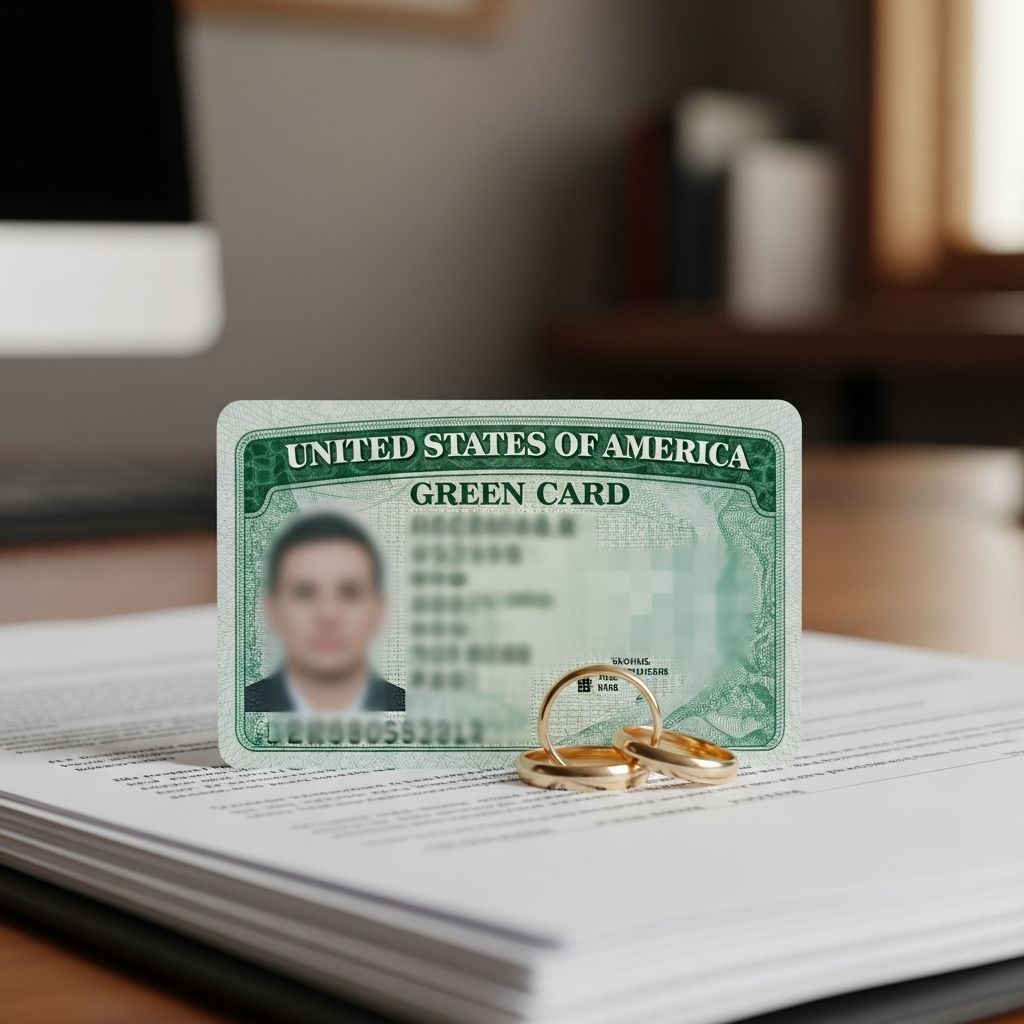
Same-sex couples now enjoy equal access to marriage-based immigration benefits in the United States, a right affirmed by pivotal Supreme Court decisions. U.S. citizens and lawful permanent residents can sponsor their same-sex spouses for green cards, provided the marriage is legally valid where it occurred. This shift ended decades of discrimination rooted in federal laws that previously excluded such unions from immigration considerations.
Historical Barriers to Equality in Immigration
Prior to 2013, federal policies severely restricted same-sex couples’ immigration options. The Defense of Marriage Act (DOMA), enacted in 1996, defined marriage exclusively as a union between one man and one woman for federal purposes, including immigration. This meant U.S. citizens could not petition for their same-sex spouses, leaving many bi-national partners separated or forced to live abroad.
USCIS consistently denied green card applications based on same-sex marriages, even if valid under state law. Non-citizen spouses faced deportation risks without relief options tied to their marital status. Visitor visas treated same-sex partners akin to unmarried cohabitants, imposing stricter scrutiny.
Efforts to reform included the Uniting American Families Act (UAFA), introduced repeatedly since 2000, aiming to equate permanent partnerships with marriages. Though it gained bipartisan support, it never passed before DOMA’s repeal rendered it unnecessary.
The Turning Point: Supreme Court Intervention
On June 26, 2013, the Supreme Court in United States v. Windsor struck down Section 3 of DOMA as unconstitutional, mandating federal recognition of valid same-sex marriages. This ruling extended full immigration benefits to same-sex spouses, including green cards, waivers, and derivative visas.
Following Windsor, USCIS issued guidance on July 26, 2013, clarifying that same-sex marriages qualify for all spousal benefits if legally valid in the celebrant’s jurisdiction. The Board of Immigration Appeals reinforced this in In re Zeleniak, applying a ‘place-of-celebration’ rule: validity is determined by the law where the marriage took place, not the couple’s residence.
The Department of State echoed this for visas, treating same-sex spouses identically to opposite-sex ones for work, study, or immigrant categories. Stepchildren from such marriages also qualify as derivatives.
Core Eligibility Criteria for Spousal Green Cards
To sponsor a same-sex spouse, the petitioner must be a U.S. citizen or lawful permanent resident (LPR). Citizens face no numerical limits, allowing immediate filing; LPRs encounter wait times due to visa caps.
- Valid Marriage: Must be recognized as legal in the jurisdiction of celebration, regardless of domicile state laws. Federal agencies ignore non-recognition in residence states.
- Bona Fide Relationship: Prove genuine intent via joint finances, photos, affidavits, and travel records. Fraud suspicions trigger denials.
- Legal Freedom to Marry: Both parties free from prior bindings; no bigamy.
- In-Person Meeting: Within two years for fiancé visas (I-129F).
Civil unions or domestic partnerships do not qualify; only marriages count. State Department FAQs confirm this explicitly.
Step-by-Step Application Pathways
Processes differ by spouse’s location: inside or outside the U.S.
If Spouse is in the U.S.
Petitioners file Form I-130 (Petition for Alien Relative) concurrently with I-485 (Adjustment of Status) if eligible. Citizens’ spouses qualify immediately; LPRs await visa availability via Visa Bulletin.
- Submit I-130 with marriage certificate, proofs of bona fides.
- USCIS approves I-130 (120-180 days typically).
- File I-485, I-765 (work), I-131 (travel) if concurrent.
- Biometrics, interview assessing relationship authenticity.
- Conditional green card (2 years) if marriage under 2 years at approval; remove conditions via I-751.
If Spouse is Abroad
Consular processing applies.
- Approved I-130 leads to National Visa Center (NVC) fees/documents.
- Case forwarded to U.S. embassy/consulate in spouse’s country.
- Visa interview; medical exam required.
- Enter U.S. within 6 months; conditional residency begins at port-of-entry.
Fiancé(e) route (K-1 visa): For unmarried couples, I-129F approval allows U.S. entry to marry within 90 days, followed by adjustment.
Special Scenarios and Complications
Transgender Partners: Post-Windsor, treated equally. Pre-transition marriages may require state law analysis, but federal place-of-celebration prevails.
Prior Divorces/Deportation: I-130 viable post-DOMA, but waivers (I-601) needed for unlawful presence. Adultery bars apply equally.
Children: Stepchildren qualify if under 21, married before age 18. Birth ‘in wedlock’ for bio kids hinges on marriage validity.
| Scenario | Eligible? | Key Requirement |
|---|---|---|
| Same-sex marriage in recognizing state | Yes | Place-of-celebration validity |
| Civil union | No | Must be full marriage |
| Reside in non-recognizing state | Yes | Federal rule overrides |
| LPR petitioner | Yes, with wait | Visa bulletin priority |
Proving a Genuine Relationship
USCIS demands concrete evidence at interviews. Submit:
- Joint leases, bank accounts, insurance.
- Photos, correspondence, affidavits from friends/family.
- Affidavit of Support (I-864) proving 125% poverty guidelines income.
Red flags include age gaps, quick courtships, or prior immigration violations. RFEs (Requests for Evidence) common; respond promptly.
Recent Policy Updates and Nationwide Marriage
Obergefell v. Hodges (2015) mandated nationwide same-sex marriage recognition, solidifying immigration parity. USCIS and State Department continue applying Windsor principles uniformly. As of 2026, every state issues licenses, easing access.
Processing times vary: I-130 averages 12-18 months; adjustments 18-24 months. Premium processing unavailable for family petitions.
Potential Pitfalls and Legal Support
Common errors: Insufficient evidence, ignoring visa waits, or assuming domestic partnerships suffice. Divorce within 2 years post-green card mandates joint I-751 or waiver proving battery/extreme hardship.
Consult accredited attorneys, especially for complex cases like prior removals. Organizations like Immigration Equality offer resources.
Frequently Asked Questions
Can same-sex spouses get green cards if married abroad?
Yes, if valid under that country’s laws; U.S. recognizes per place-of-celebration.
Does living in a conservative state affect eligibility?
No, federal immigration law controls, not residence state.
Are civil unions valid for sponsorship?
No, only marriages qualify.
What if the marriage is less than 2 years old?
Receive conditional green card; file I-751 to remove conditions.
Can LPRs sponsor same-sex spouses?
Yes, but expect multi-year waits due to F2A category limits.
Future Outlook for LGBTQ Immigration
With solid legal foundations, same-sex spousal immigration thrives. Proposed reforms focus on broader equality, like pathways for undocumented partners. Stay informed via USCIS alerts for policy shifts.
References
- Same-sex immigration policy of the United States — Wikipedia. 2023-10-15. https://en.wikipedia.org/wiki/Same-sex_immigration_policy_of_the_United_States
- Bi-national Couples — Immigration Equality. 2023-05-20. https://immigrationequality.org/legal/legal-help/couples-and-families/bi-national-couples/
- Revisiting the Meaning of Marriage: Immigration for Same-Sex Couples After Windsor — Mercer Law Review. 2013-01-01. https://digitalcommons.law.mercer.edu/fac_pubs/88/
- US Visas for Same-Sex Spouses – DOMA FAQs — U.S. Department of State. 2015-06-26. https://travel.state.gov/content/dam/visas/DOMA/DOMA%20FAQs%20-%202015%20Supreme%20Court%20Ruling.pdf
- Special Considerations for LGBTQ Immigrants — Immigrant Legal Resource Center (ILRC). 2022-08-10. https://www.ilrc.org/sites/default/files/resources/lgbt_immigrants.pdf
Similar Articles








Read full bio of medha deb


