
Reimagining Ballot Access: How Same-Day Registration Strengthens Democracy
Discover how eliminating arbitrary registration deadlines through same-day voter registration can dramatically improve electoral participation.
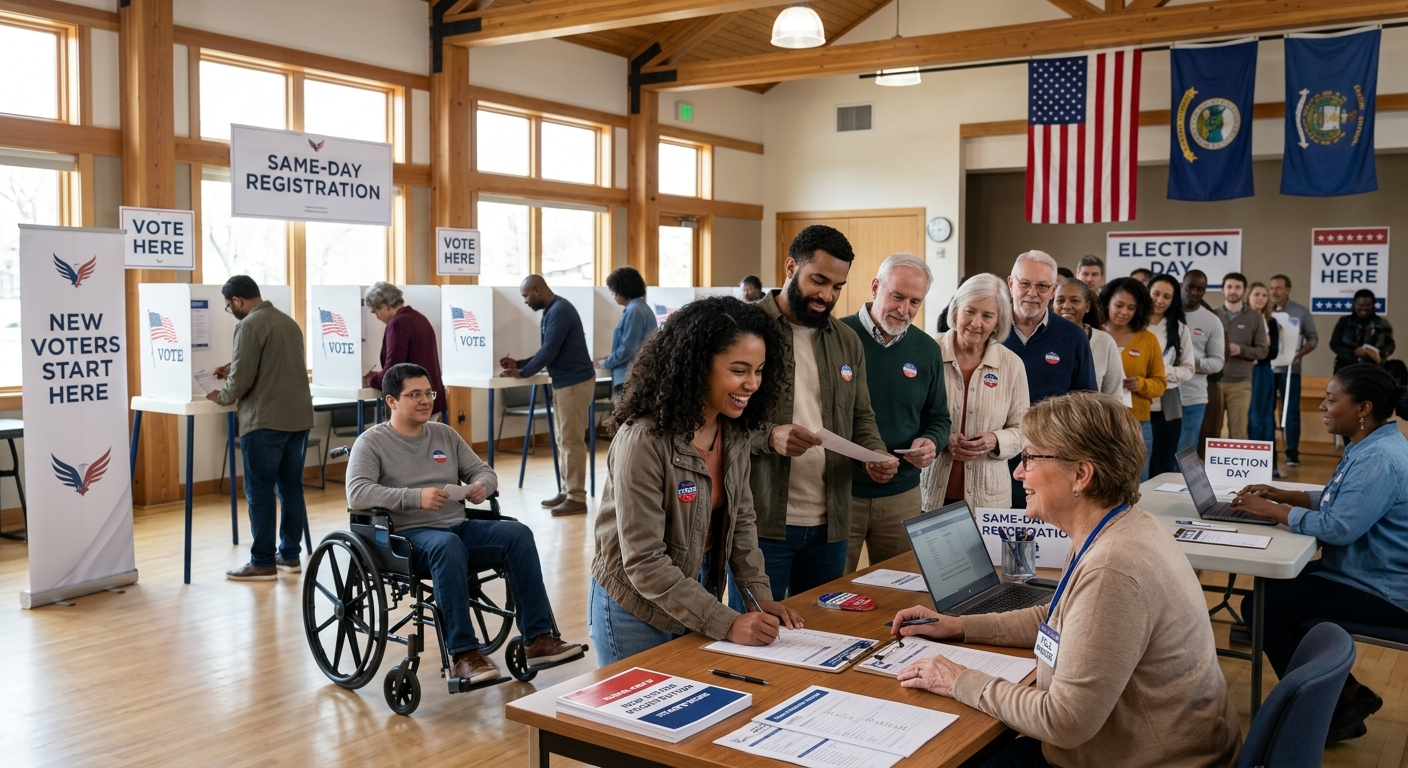
The foundation of any healthy democracy rests on the ability of its citizens to participate freely and fairly in the electoral process. Yet, throughout the history of the United States, the fundamental right to vote has frequently been entangled in bureaucratic red tape and administrative hurdles. Whenever civic participation surges, a predictable wave of legislative efforts emerges to restrict access to the ballot box, a phenomenon widely recognized as voter suppression. Addressing these concerted efforts requires structural innovations that protect the electorate’s voice. Among the most potent and proven solutions to combat disenfranchisement is the implementation of Same-Day Voter Registration (SDVR), commonly referred to as Election Day Registration (EDR).
For decades, the standard American voting process has been rigidly divided into two distinct steps: registering to vote weeks or months in advance, and subsequently casting a ballot on Election Day. This outdated framework disproportionately affects marginalized communities, young voters, and those with high residential mobility. By merging these two steps into a single, seamless action, Same-Day Registration eliminates the arbitrary deadlines that act as invisible barriers to the ballot box. This comprehensive reform not only modernizes election administration but also serves as an indispensable safeguard against systemic voter suppression.
The Mechanics of Same-Day Registration
To fully appreciate the transformative nature of Same-Day Registration, it is essential to understand the traditional hurdles it dismantles. In jurisdictions without EDR, voters are subjected to advance registration deadlines that can fall anywhere from 15 to 30 days prior to an election. These deadlines were originally established in an era of paper records to give election officials adequate time to compile and distribute voter rolls. Today, however, with the advent of real-time digital databases and electronic poll books, the logistical necessity of a 30-day buffer is obsolete.
Same-Day Registration allows eligible citizens to arrive at a polling place, provide valid proof of identity and residency, register to vote, and cast their ballot all in a single visit . This mechanism inherently recognizes human behavior and the dynamics of modern political campaigns. Voter interest and civic engagement typically peak in the final weeks and days leading up to an election—precisely the time when traditional registration windows have already closed. By allowing registration concurrent with voting, EDR capitalizes on peak electoral interest, ensuring that citizens who become engaged late in the election cycle are not penalized with disenfranchisement.
Furthermore, EDR provides a vital administrative fail-safe. In numerous instances, voters who believe they are registered arrive at the polls only to discover that their names have been erroneously purged from the rolls due to clerical errors, system glitches, or aggressive voter roll maintenance programs. Under a traditional system, these individuals are turned away and denied their right to vote. In an EDR state, a mistakenly purged voter can simply update their information and cast a regular ballot immediately, preserving the integrity of their constitutional right.
Demonstrable Impacts on Voter Turnout
The argument for Same-Day Registration is not purely theoretical; it is heavily supported by decades of empirical evidence and academic research. Studies consistently demonstrate that states employing EDR experience significantly higher voter turnout compared to states with traditional, fixed deadlines. According to research synthesized by the MIT Election Data and Science Lab, the implementation of Same-Day Registration generally boosts voter turnout by 5 to 7 percentage points .
This increase in participation is not distributed evenly; it has a profound effect on specific demographics that historically exhibit lower turnout rates. Young adults, for example, tend to relocate more frequently for education or employment. Each move requires a new voter registration. EDR drastically simplifies this process, with some studies indicating up to a 10% increase in turnout among voters under the age of 25 . Similarly, lower-income citizens and minority communities, who may face inflexible work schedules or lack transportation to make multiple trips for registration and voting, benefit immensely from a consolidated one-step process.
When examining the states with the highest voter turnout rates during major national elections, there is a striking correlation: the vast majority of top-performing states offer some form of Same-Day Registration. This data underscores that when the state removes administrative friction, the electorate responds with robust participation.
Dismantling Voter Suppression Tactics
Voter suppression in the modern era rarely looks like outright prohibition; instead, it manifests as a series of bureaucratic obstacles designed to exhaust the voter. Restrictive early registration deadlines serve as one of the most effective, albeit quiet, forms of voter suppression. By cutting off access to the ballot weeks before debates conclude and public interest peaks, the system structurally favors entrenched, older, and wealthier demographics who tend to be permanently registered at fixed addresses.
In addition to strict deadlines, aggressive voter roll purges have become a favored tool of those seeking to limit electoral participation. While maintaining accurate voter lists is a legitimate administrative duty, these purges are frequently executed with flawed matching algorithms that disproportionately remove voters of color, naturalized citizens, and individuals with hyphenated or common surnames. Without Same-Day Registration, a wrongful purge is a definitive denial of the franchise. EDR completely neutralizes the threat of aggressive purging. If a legitimate voter finds their name missing from the ledger, EDR empowers them to correct the state’s mistake on the spot.
Moreover, Same-Day Registration mitigates the impact of polling place consolidations and closures. When voters are forced to navigate to new, unfamiliar precincts, the likelihood of arriving at the “wrong” polling location increases. In some EDR states, voters can register and vote at centralized county polling locations, providing a critical safety net against intentional or accidental misdirection.
Security and Integrity: Debunking Electoral Myths
The most common resistance to Same-Day Registration stems from unfounded claims that it compromises election security or facilitates voter fraud. Opponents argue that allowing individuals to register and vote simultaneously deprives election officials of the time necessary to verify an applicant’s eligibility. However, comprehensive analyses by election administrators and legal experts have thoroughly debunked these assertions.
According to the Brennan Center for Justice, Election Day Registration procedures do not compromise voter roll security; in fact, they may enhance it . EDR requires applicants to present substantive documentation—such as a driver’s license, utility bill, or official government document—proving both their identity and their current residency directly to a sworn election official at the polling place . This face-to-face verification is arguably more secure than a mail-in registration form submitted weeks in advance without physical verification.
Furthermore, EDR states utilize statewide voter registration databases that instantly cross-reference data to prevent double voting. If an individual attempts to vote in one precinct and subsequently attempts to register and vote in another, the electronic poll book will immediately flag the duplicate attempt. Decades of data from states that pioneered EDR, such as Minnesota, Wisconsin, and Maine, demonstrate virtually non-existent rates of voter impersonation or fraud associated with the practice .
Comparing the Frameworks: Traditional vs. Same-Day Registration
To highlight the structural advantages of EDR, it is helpful to directly compare the two systems of voter registration currently utilized in the United States.
| Feature | Traditional Registration States | Same-Day Registration States |
|---|---|---|
| Registration Deadline | Typically 15 to 30 days prior to Election Day. | Up to and including Election Day. |
| Error Correction | Voters purged in error are forced to cast provisional ballots, which often go uncounted. | Voters can immediately re-register with proof of residency and cast a standard ballot. |
| Voter Turnout | Generally lower, as late-engaging citizens are locked out of the process. | Consistently 5% to 7% higher than traditional states. |
| Administrative Burden | Pre-election rush of paperwork for election offices; higher reliance on provisional ballots. | Smoother resolution of issues at the polls; drastic reduction in provisional ballot processing. |
| Demographic Impact | Disenfranchises highly mobile populations, youth, and low-income workers. | Promotes equitable access across age, income, and racial demographics. |
State Adoption and Nationwide Momentum
The push for Same-Day Registration is not a novel experiment. It has been a functioning, successful reality in several states since the 1970s. Maine, Minnesota, and Wisconsin were the early pioneers, proving over the course of decades that the system is both secure and highly effective at driving civic participation.
In recent years, the momentum for EDR has accelerated significantly. According to the National Conference of State Legislatures (NCSL), over 20 states and the District of Columbia have now enacted some form of Same-Day Voter Registration . These states represent a diverse cross-section of the country, spanning different regions and political leanings, proving that the desire for accessible elections is a broadly shared American value.
Despite this progress, millions of Americans still live in jurisdictions that enforce rigid, early deadlines. This patchwork of access creates an inherent inequality in the American electoral system, where a citizen’s ability to easily cast a ballot is dictated entirely by their zip code. As the fight against voter suppression intensifies, voting rights advocates continue to push for federal standards that would mandate EDR nationwide, ensuring a baseline of democratic access for all citizens regardless of the state in which they reside.
Frequently Asked Questions (FAQs)
What exactly is Election Day Registration (EDR)?
Election Day Registration, also known as Same-Day Voter Registration (SDVR), is an electoral policy that allows eligible citizens to register to vote and cast their ballot on the same day. It eliminates advance registration deadlines, streamlining the voting process into a single step.
Does Same-Day Registration increase voter fraud?
No. Extensive research and decades of practical application show that EDR does not increase voter fraud. Voters utilizing EDR are required to show valid identification and proof of residency to a poll worker in real-time. Additionally, centralized electronic databases prevent individuals from registering and voting in multiple locations.
How does this reform combat voter suppression?
Voter suppression often relies on bureaucratic barriers, such as closing registration windows before the public is fully engaged with an election, or erroneously purging active voters from the rolls. EDR combats this by allowing anyone who is eligible to bypass arbitrary deadlines and immediately correct administrative errors at the polling place.
Who benefits the most from Same-Day Registration?
While all voters benefit from a more efficient system, EDR provides the most significant advantages to young voters, lower-income citizens, individuals who move frequently, and minority communities. These demographics are historically the most impacted by early deadlines and rigid registration requirements.
Is Same-Day Registration available in my state?
As of recent legislative sessions, more than 20 states and the District of Columbia offer Same-Day Registration on Election Day or during the early voting period. Because voting laws vary significantly and change frequently, voters should check with their local or state election official’s website to verify the specific registration rules in their jurisdiction.
Conclusion
The health of a representative democracy is measured by the ease with which its citizens can participate in self-governance. For too long, the United States has tolerated a voting system that treats registration as an administrative obstacle course rather than a fundamental right. The persistence of voter suppression tactics demands robust, systemic reforms that insulate the electorate from partisan gamesmanship and bureaucratic disenfranchisement.
Same-Day Registration stands out as the single most effective tool for modernizing ballot access. By collapsing an outdated two-step process into a single, secure action, EDR prevents the disenfranchisement of the highly mobile, empowers young and marginalized voters, and acts as a definitive safeguard against erroneous voter roll purges. As more states recognize the indisputable benefits of higher turnout and enhanced election integrity, the nationwide adoption of Same-Day Registration remains a critical imperative for the future of American democracy. Ensuring that every eligible citizen has the unobstructed opportunity to make their voice heard is not just a matter of policy; it is the fundamental promise of the democratic ideal.
References
- Same Day Voter Registration — National Conference of State Legislatures (NCSL). 2026-03-27. https://www.ncsl.org/elections-and-campaigns/same-day-voter-registration
- Same-day registration — MIT Election Data and Science Lab. 2022-02-09. https://electionlab.mit.edu/research/same-day-registration
- Election Day Registration — Brennan Center for Justice. 2024. https://www.brennancenter.org/issues/ensure-every-american-can-vote/voting-reform/election-day-registration
Similar Articles








Read full bio of medha deb


