
Safeguarding Your Creative Concepts Legally
Discover proven legal strategies to shield your innovative ideas from theft and unauthorized use in today's competitive market.
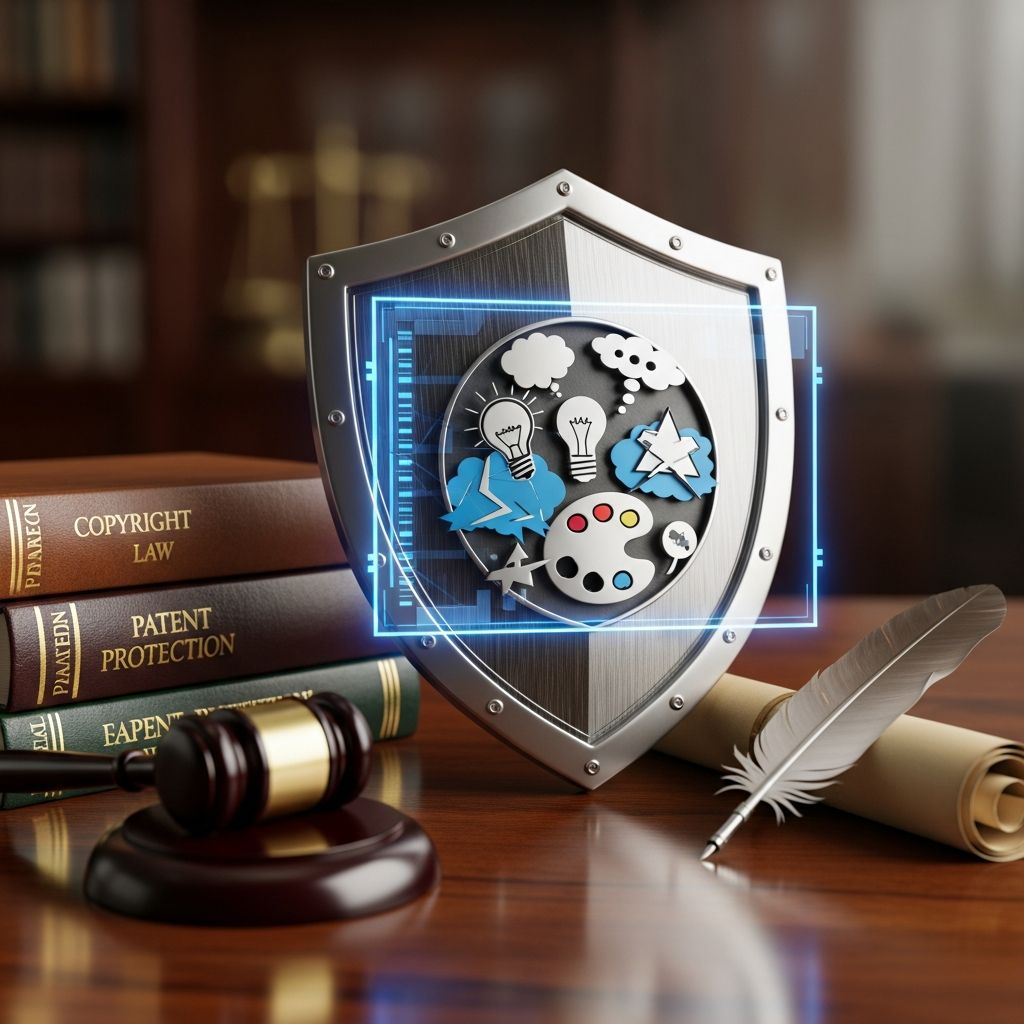
Your mind is a powerhouse of innovation, constantly generating concepts that could disrupt industries or launch successful ventures. However, in a world where ideas travel at the speed of digital sharing, unprotected concepts risk being exploited by others. Intellectual property (IP) law provides robust frameworks to secure these assets, ensuring you retain control and reap the rewards of your creativity. This guide delves into key mechanisms—patents, copyrights, trademarks, and trade secrets—along with practical steps to fortify your defenses.
Understanding the Foundations of Idea Protection
Intellectual property encompasses creations of the mind, from inventions and artistic works to brand identifiers and confidential processes. Unlike tangible assets, IP derives value from its exclusivity, granted through legal protections that deter copying and enable monetization. According to the U.S. Patent and Trademark Office (USPTO), securing IP early can prevent costly disputes and enhance business valuation.
Core types include:
- Patents: Exclusive rights for novel inventions, lasting 20 years from filing.
- Copyrights: Automatic safeguards for original expressions like writings or code, typically for the author’s life plus 70 years.
- Trademarks: Symbols distinguishing goods/services, renewable indefinitely with use.
- Trade Secrets: Perpetual protection for confidential info, as long as secrecy is maintained.
Choosing the right tool depends on your idea’s nature: functional innovations suit patents, while artistic outputs favor copyrights.
Harnessing Patents for Inventive Breakthroughs
Patents grant inventors monopoly rights over useful, novel, and non-obvious inventions, covering processes, machines, manufactures, or compositions of matter. To qualify, your idea must solve a technical problem in a new way, publicly disclosed via a detailed application.
Filing involves:
- Prior Art Search: Use USPTO tools to check existing patents.
- Drafting Claims: Work with attorneys to define the invention’s scope precisely.
- Examination: Respond to USPTO examiner feedback, often taking 2-3 years.
Provisional patents offer a one-year placeholder for full applications, buying time at lower cost. Benefits include licensing revenue and blocking competitors, though maintenance fees apply post-grant. For software, utility patents protect algorithms if tied to technical effects.
| Patent Type | Duration | Best For |
|---|---|---|
| Utility | 20 years | Functional inventions |
| Design | 15 years | Ornamental designs |
International protection via the Patent Cooperation Treaty (PCT) streamlines filings in 150+ countries.
Copyrights: Shielding Expressive Creations
Copyrights protect original works fixed in a tangible medium, such as literature, music, visuals, or software code. Protection arises automatically upon creation, but U.S. Copyright Office registration strengthens enforcement, enabling statutory damages up to $150,000 per infringement.
Key protections include reproduction, distribution, performance, and derivative works rights. For digital content, embed watermarks or metadata to trace copies. Fair use exceptions allow limited educational or critical uses, but commercial exploitation typically infringes.
- Register online via copyright.gov for $45-$65.
- Include © notices: “© 2026 Your Name. All rights reserved.”
- License via Creative Commons for controlled sharing.
Software copyrights safeguard source code expression, not underlying ideas—pair with patents for algorithms. In the EU, similar directives harmonize protections.
Trademarks: Building and Defending Brand Identity
Trademarks protect words, logos, sounds, or designs identifying product sources, preventing consumer confusion. Federal registration with USPTO provides nationwide priority and prima facie evidence of ownership.
Steps to secure:
- Comprehensive search via USPTO TESS database.
- File intent-to-use or in-use applications.
- Monitor and police via watch services.
Common law rights accrue from use, but registration enables lawsuits in federal court and customs seizures of fakes. Secure domain names matching marks to combat cyber-squatting. Examples: Apple’s bitten apple or Nike’s swoosh endure through vigilant enforcement.
Trade Secrets: The Power of Confidentiality
Trade secrets cover formulas, methods, or data providing competitive edges, like Coca-Cola’s recipe. No registration needed; protection endures indefinitely if secrecy holds.
Essential safeguards:
- NDAs: Bind employees, partners, vendors.
- Access Limits: Role-based controls, multi-factor authentication.
- Physical/Digital Security: Encryption, audits, non-compete clauses where enforceable.
Under the Defend Trade Secrets Act (2016), misappropriation yields damages and injunctions. Unlike patents, no public disclosure required, ideal for perpetually valuable info.
Advanced Tactics: Technology and Contracts in IP Defense
Beyond traditional IP, integrate tech and agreements for layered protection. Blockchain offers immutable provenance records; DRM (Digital Rights Management) encrypts content with usage limits. Code obfuscation and app shielding deter reverse-engineering in software.
Standard contracts include:
| Agreement Type | Purpose | Key Clauses |
|---|---|---|
| NDA | Confidentiality | Non-disclosure duration, exceptions |
| Licensing | Monetization | Royalties, territory, termination |
| Work-for-Hire | Ownership transfer | IP assignment, warranties |
Employee policies mandate IP assignment; open-sourcing non-core elements can build ecosystems while core secrets remain proprietary.
Global Considerations and Enforcement Strategies
IP knows no borders—file in key markets via Madrid Protocol for trademarks or PCT for patents. In China, known for counterfeits, combine registrations with local monitoring. Enforcement involves cease-and-desist letters, litigation, or customs actions.
Costs vary: patents $10K+, trademarks $225/class. Consult IP attorneys via state bars. Audit portfolios annually to renew and prune.
Frequently Asked Questions
Can I protect a pure idea without implementation?
No, ideas alone aren’t protectable; reduce to practice via prototype, writing, or code for patent/copyright eligibility.
How long does IP protection last?
Patents: 20 years; Copyrights: life +70 years; Trademarks: indefinite with use; Trade secrets: forever if secret.
Do I need a lawyer for IP filings?
Recommended for complexity; self-filing risks rejection, but USPTO pro se options exist.
What if someone steals my idea abroad?
Register internationally; use WIPO or treaties for recourse[10].
Is software patentable?
Yes, if novel technical solutions; copyrights cover code expression.
Proactive Steps for Every Creator
Document everything timestamped; use invention disclosure forms. Educate teams on IP value. Monetize via licensing, sales, or startups. By blending legal tools, tech, and vigilance, transform fleeting ideas into enduring assets.
References
- Intellectual Property Protection: Best Practices for Corporations — CEB. 2023. https://www.ceb.com/blog/intellectual-property-protection-corporate-strategies/
- Protecting intellectual property in the digital age: Key strategies — IE University. 2024. https://www.ie.edu/uncover-ie/intellectual-property-in-the-digital-age-master-of-laws-llm/
- Software Intellectual Property 101: IP Protection & More — Thales Group. 2023. https://cpl.thalesgroup.com/software-monetization/protecting-software-intellectual-property
- 4 Types of Intellectual Property Protection & IP Rights — Fortra. 2024. https://www.fortra.com/blog/4-types-of-intellectual-property-protection-ip-rights
- A Complete Guide to Protecting Your Small Business IP — U.S. Chamber of Commerce. 2023. https://www.uschamber.com/co/start/strategy/intellectual-property-guide-for-artists-and-creators
- Protect Intellectual Property — International Trade Administration (.gov). 2025. https://www.trade.gov/protect-intellectual-property
- Protecting Intellectual Property in the United States — USPTO (.gov). 2022. https://www.uspto.gov/sites/default/files/documents/UK-SME-IP-Toolkit_FINAL.pdf
Similar Articles








Read full bio of medha deb


