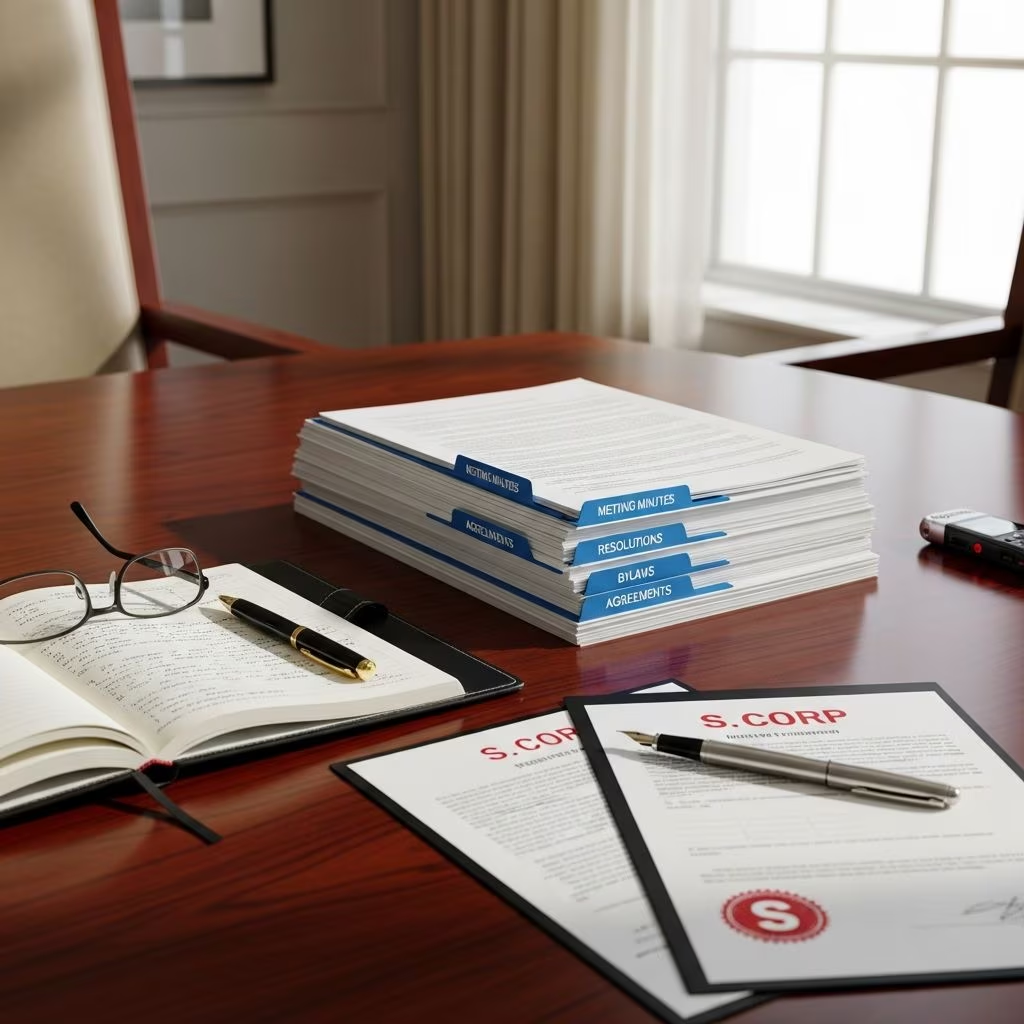
S corporations must maintain detailed records of their meetings to uphold corporate formalities, safeguard limited liability, and satisfy state regulations. These documents serve as official proof of decisions, protecting against legal challenges and IRS audits.
Understanding the Legal Foundation of S Corp Record-Keeping
S corporations originate as standard corporations that elect S status with the IRS for pass-through taxation benefits. Despite this tax election, they remain bound by state corporate laws governing meetings and documentation. Most states mandate annual shareholder and director meetings, with minutes preserved in corporate books—though not filed publicly.
Federal law imposes no direct minutes requirement, but the IRS may demand them during audits to verify compliance and decisions like officer elections or major transactions. Neglecting these records risks ‘piercing the corporate veil,’ exposing owners to personal liability for business debts.
- Key Legal Drivers: State statutes, bylaws, articles of incorporation, and IRS scrutiny.
- Universal Benefit: Minutes demonstrate separation between personal and business affairs.
State-Specific Variations in Meeting Obligations
Requirements differ by jurisdiction. The majority of states compel both C and S corps to document proceedings, typically annually for shareholders and directors. Exceptions include Delaware, Kansas, Nevada, North Dakota, and Oklahoma, where minutes are optional but strongly advised for liability protection.
| State Group | Requirement | Frequency | Notes |
|---|---|---|---|
| Most States (e.g., California, New York) | Mandatory | Annual minimum | Quorum rules apply; records in corporate books. |
| Exceptions (DE, KS, NV, ND, OK) | Not required | N/A | Recommended for audits and disputes. |
| All States | Special meetings as needed | As convened | Document major actions like loans or contracts. |
Consult your state’s corporate code or bylaws for precise rules, as some demand more frequent sessions or quorum thresholds.
Critical Elements to Document in Every Meeting Record
Minutes must be permanent, convertible to print (e.g., digital docs or handwritten), and uniform in format for easy reference. Core components ensure completeness and defensibility:
- Header Details: Corporation name, meeting type (annual/special), date, time, location (virtual or physical).
- Attendance: List attendees (shareholders, directors, officers) with titles, absentees, and quorum confirmation.
- Agenda Coverage: Topics discussed, reports from officers, motions proposed, debates summarized factually.
- Decisions: Votes cast (yea/nay/abstain), results, resolutions passed, action items assigned.
- Footer: Adjournment time, secretary’s signature, approval date (often next meeting).
Avoid verbatim transcripts; focus on outcomes and facts to maintain brevity while capturing essence.
Step-by-Step Process for Creating and Approving Minutes
- Pre-Meeting Prep: Designate a secretary, distribute agenda, confirm quorum rules.
- During Meeting: Note key facts objectively; record motions, seconds, votes precisely.
- Post-Meeting Draft: Compile within 24-48 hours, circulate for review.
- Approval: Vote to adopt at next meeting; file signed version in records.
- Storage: Organize chronologically in secure books or digital vault, retain 7-10 years.
This workflow minimizes errors and ensures accessibility for stakeholders.
Alternatives: Acting Without Formal Assemblies
Not all decisions require gatherings. Many states permit ‘unanimous written consents’ as minute equivalents, ideal for small S corps. Obtain signatures from the minimum approving shares (per bylaws), document the action, and file with records.
- Advantages: Speed, cost savings, no quorum hassles.
- Requirements: Matches vote threshold for in-person approval; state-specific limits.
- Example Use: Approving budgets, electing officers, or minor contracts between meetings.
Even sole-owner S corps should execute these annually to affirm ongoing compliance.
Access Rights and Handling Inspection Demands
Shareholders, directors, and officers hold statutory rights to inspect minutes upon request. Promptly provide copies; refusal invites court orders and penalties. Maintain transparency to foster trust and deter disputes.
During audits or litigation, minutes prove diligence. Digital distribution via email or cloud suits modern operations, with hard copies optional.
Consequences of Non-Compliance and Risk Mitigation
Skipping minutes erodes liability shields, invites IRS penalties, and weakens court defenses. Courts may disregard corporate status if formalities lapse, holding owners personally accountable.
Proactive Strategies:
- Use templates for consistency.
- Schedule annual meetings religiously—even brief ones.
- Train officers on accurate note-taking.
- Retain legal counsel for complex matters.
Practical Templates and Customization Tips
Standardize with adaptable templates. Sample Header:
[Corp Name] [Annual/Special] Meeting Minutes
Date: [MM/DD/YYYY] | Time: [Start-End] | Location: [Address/Virtual Link]
Body Outline: ‘Meeting called to order by [Chair]. Quorum present: [Yes/No]. Attendees: [List]. Motions: [Detail].’
Customize per bylaws; software tools aid drafting for growing firms.
Frequently Asked Questions
What are the minimum requirements for S corp minutes?
Include date, attendees, discussions, votes, and signatures; format consistently and store securely.
Do single-shareholder S corps need minutes?
Yes, document annual ‘meetings’ or consents to uphold formalities and audit readiness.
How long must S corp minutes be kept?
Typically 7-10 years, per state laws, for audits and disputes.
Can meetings be virtual for S corps?
Yes, if bylaws allow; note virtual details in minutes.
What if quorum isn’t met?
No binding votes; reschedule or use written consents where permitted.
References
- S Corporation Meeting Minutes Requirements — LegalZoom. 2023. https://www.legalzoom.com/articles/s-corporation-meeting-minutes-requirements
- S Corp Meeting Minutes Template: A Comprehensive Guide — UpCounsel. 2024. https://www.upcounsel.com/s-corp-meeting-minutes
- S Corp Meeting Minutes Requirements: What You Need to Know — Doola. 2024. https://www.doola.com/blog/s-corp-meeting-minutes-requirements/
- Corporate Meeting Minutes: How and When to Make Records — Nolo. 2023-10-15. https://www.nolo.com/legal-encyclopedia/corporate-meeting-minutes.html
- What S Corporations Should Include in Annual Shareholders & Board Meeting Minutes — Julie Merrill, Esq. 2023. https://www.juliemerrill.me/blog/what-s-corporations-should-include-in-annual-shareholders-board-meeting-minutes-with-resolutions