
Rolling Coal: 4 Common Mods, Risks, And Laws
Unpacking the controversial diesel smoke practice: origins, health risks, environmental harm, and varying state laws across the U.S.
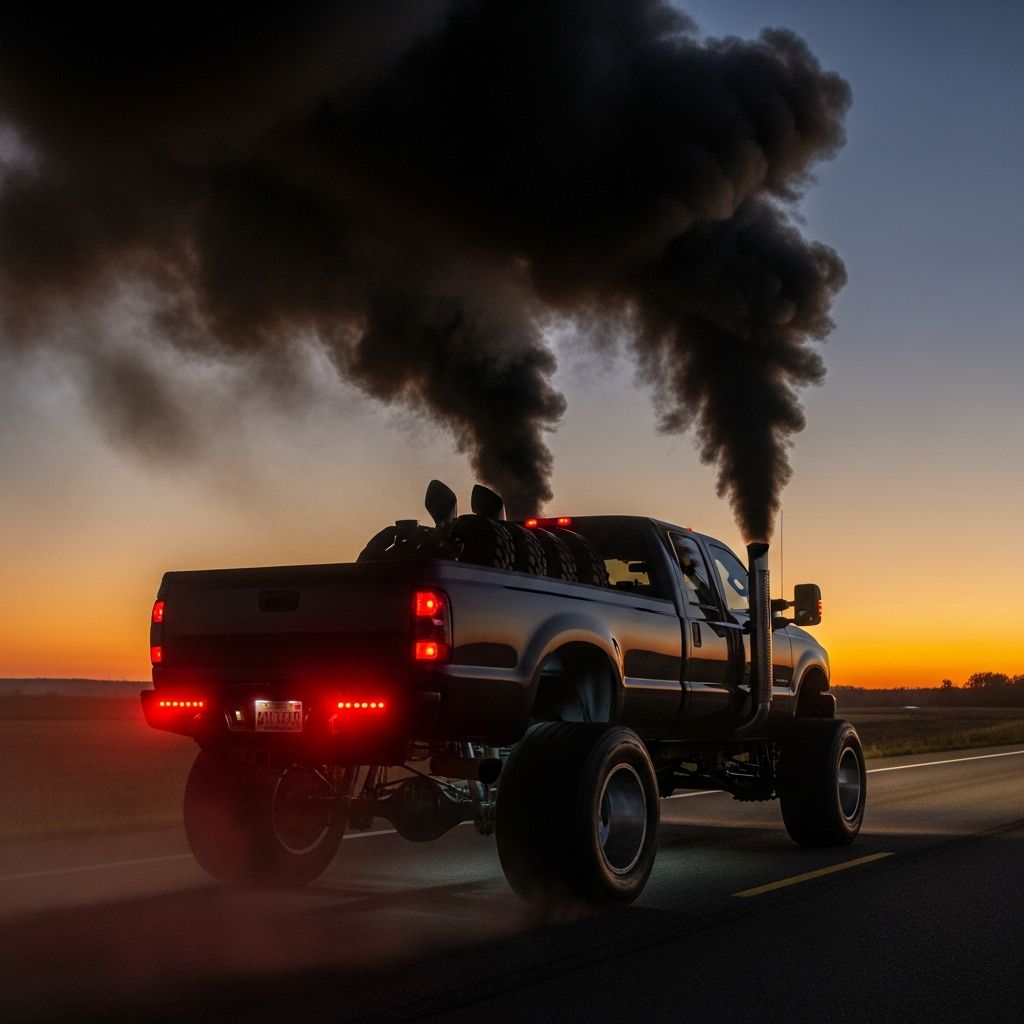
Rolling coal involves deliberately modifying diesel engines in trucks to produce thick clouds of black smoke, often aimed at pedestrians, cyclists, or hybrid vehicles. This practice, which gained traction in the mid-2010s, combines elements of bravado, anti-environmentalism, and mechanical tweaking. While proponents view it as a display of power, it poses serious risks to air quality, public health, and road safety. Federally, it violates the Clean Air Act by tampering with emissions controls, though enforcement relies heavily on state laws that differ widely.
Origins and Motivations Behind the Practice
The term ‘rolling coal’ refers to the act of revving a modified diesel engine to eject massive plumes of unburnt fuel particles, resembling coal smoke from old locomotives. It emerged prominently around 2014 among diesel truck enthusiasts, particularly in rural and suburban U.S. areas. Modifications typically include deleting particulate filters, disabling exhaust gas recirculation (EGR) systems, or reprogramming engine control units (ECUs) to inject excess fuel. These changes create an overly rich air-fuel mixture, leading to incomplete combustion and visible black exhaust.
Motivations vary but often stem from a cultural backlash against fuel-efficient vehicles like Priuses. Videos on social media platforms showcase trucks blasting smoke at ‘eco-friendly’ cars, cyclists, or electric scooters, framing it as rebellion against environmental regulations. Some participants claim it’s about demonstrating engine power, but critics highlight its roots in pollution denialism. Despite the spectacle, these alterations void warranties and reduce fuel efficiency, costing owners thousands in modifications.
Mechanical Process: How Diesel Trucks Are Altered
To achieve rolling coal, owners make several targeted changes:
- DPF Delete: Removing the diesel particulate filter (DPF), which traps soot, allowing free emission of particulates.
- EGR Block-Off: Disabling the exhaust gas recirculation system that reduces nitrogen oxides (NOx).
- Tune Files: Custom ECU software that overrides factory limits on fuel injection, prioritizing smoke over power.
- Stack Exhausts: Installing vertical smokestacks for dramatic visual effect.
These mods can cost $1,000 to $5,000 and are marketed online despite federal prohibitions on selling such defeat devices. The result is a truck that, upon hard acceleration, belches dense black clouds obscuring visibility for dozens of yards.
Health and Safety Hazards Posed by Black Smoke Clouds
Exposure to rolling coal smoke is far from harmless. The black plumes consist of fine particulate matter (PM2.5), volatile organic compounds, and soot laden with heavy metals and carcinogens. For cyclists and pedestrians, a sudden blast can cause respiratory distress, eye irritation, and asthma attacks. Vulnerable groups like children, the elderly, and those with pre-existing conditions face heightened risks; one report described a toddler hospitalized after soot inhalation from a nearby coal-roller.
On roads, the practice endangers everyone. Dense smoke reduces visibility, potentially causing pile-ups or forcing evasive maneuvers. In one documented case, a New Jersey assemblyman was engulfed on the Turnpike, calling it ‘terrifying.’ Motorists blinded momentarily risk collisions, while cyclists may swerve into traffic. Beyond immediate dangers, chronic exposure contributes to broader public health issues like cardiovascular disease and lung cancer.
Environmental Consequences of Emissions Tampering
Diesel modifications for rolling coal drastically increase pollutant output. A stock diesel truck meets strict EPA standards, but ‘deleted’ versions emit up to 100 times more particulates and NOx, precursors to smog and acid rain. This undermines decades of progress in clean diesel technology, echoing scandals like Volkswagen’s emissions cheating. Nationally, widespread adoption exacerbates urban air quality problems, straining compliance with Clean Air Act mandates. In high-traffic areas, repeated incidents compound fine dust pollution, harming ecosystems and wildlife.
Federal Framework: Clean Air Act Violations
The cornerstone against rolling coal is the federal Clean Air Act (CAA), enforced by the EPA. Section 203(a)(3) prohibits tampering with emissions control devices on vehicles post-1968, including aftermarket deletes. Selling or installing defeat devices carries civil penalties up to $4,409 per violation (adjusted for inflation) and potential criminal charges. The EPA explicitly addressed rolling coal in 2014 guidance, confirming it violates CAA by disabling diesel particulate filters and related tech. However, federal enforcement targets manufacturers and large-scale sellers more than individual drivers, leaving street-level action to states.
State-by-State Legal Landscape: Bans and Penalties
While federal law provides a baseline, only select states have explicit rolling coal prohibitions. Here’s a comparison of key states:
| State | Law Summary | Penalty | Exemptions |
|---|---|---|---|
| Colorado | SB 17-278 bans nuisance exhaust obscuring views (since 2017) | $100 fine (class A infraction) | Normal acceleration exhaust |
| Maryland | Banned since 2017; targets intentional smoke | Up to $500 | Commercial vehicles >5 tons, construction |
| New Jersey | Explicit ban on tampering and smoke emission | Up to $5,000 | None specified |
| Texas | Misdemeanor for excessive exhaust obstructing roads | Up to $350 | Requires catching in act |
| Florida | No specific law; limits visible exhaust to 5 seconds | Varies under general statutes | Acceleration/deceleration |
In states without dedicated laws, prosecutors use reckless driving, air pollution statutes, or public nuisance charges. Enforcement challenges persist: officers must witness the act, prove intent, and distinguish from normal exhaust. Colorado’s law, for instance, has issued few citations despite daily sightings, often resolved via mail-in fines.
Enforcement Challenges and Real-World Outcomes
Proving intent is the biggest hurdle. Smoke from cold starts or heavy loads mimics rolling coal, requiring video evidence or witness testimony. In Colorado, State Patrol data shows minimal tickets under the 2017 law, with most paid remotely to avoid court. Repeat offenders risk license suspension if fines go unpaid. High-profile cases, like targeting politicians or causing accidents, spur investigations, but daily highway incidents often go unchecked due to resource limits. Victims can file complaints with local air quality boards or EPA hotlines for potential follow-up.
Alternatives for Diesel Enthusiasts: Legal Power Upgrades
Truck owners seeking performance without illegality have options:
- Cold Air Intakes: Improve airflow without emissions tampering.
- Turbos and Injectors: EPA-compliant upgrades for torque.
- Suspension Lifts: Aesthetic mods that stay legal.
- Track Days: Designated areas for smoke shows without public harm.
These preserve engine health and avoid fines, aligning power with responsibility.
Frequently Asked Questions About Rolling Coal
Is rolling coal ever legal?
No, it violates the federal Clean Air Act nationwide by tampering with emissions systems. Some states allow brief exhaust during acceleration, but intentional clouds are prohibited.
What should I do if targeted by a coal-roller?
Safely pull over, note the license plate, vehicle details, and location. Report to police with photos/video; cite local exhaust or reckless driving laws.
Can rolling coal damage my vehicle?
Yes—deletes cause excessive wear on turbos, injectors, and cylinders, leading to costly repairs and failed inspections.
How many states ban rolling coal explicitly?
About 10, including Colorado, Maryland, New Jersey, and Connecticut, with fines from $100 to $5,000.
Does rolling coal improve performance?
It reduces efficiency and power; proper tunes enhance output without smoke or legal risks.
References
- EPA Clean Air Act Guidance on Emissions Tampering — U.S. Environmental Protection Agency. 2014-07. https://www.epa.gov/enforcement/rolling-coal-guidance
- Colorado SB 17-278: Prohibition on Nuisance Exhaust — Colorado General Assembly. 2017. https://leg.colorado.gov/bills/sb17-278
- Maryland Rolling Coal Ban Legislation — Maryland General Assembly. 2017-10-01. https://mgaleg.maryland.gov/mgawebsite/Legislation/Details/hb1198?ys=2017RS
- Colorado Rolling Coal Enforcement Report — Colorado Public Radio (CPR). 2024-08-19. https://www.cpr.org/2024/08/19/colorado-rolling-coal-law/
- Texas Vehicle Exhaust Regulations — Texas Department of Public Safety. Ongoing. https://www.dps.texas.gov/section/vehicle-inspection
- Florida Statutes Section 316.2935 — Florida Legislature. Current. http://www.leg.state.fl.us/statutes/index.cfm?App_mode=Display_Statute&URL=0300-0399/0316/Sections/0316.2935.html
Similar Articles








Read full bio of Sneha Tete


