
Rolling Coal: Law, Safety, and Environmental Impact
Explore how rolling coal works, why it is dangerous, and how federal and state laws are responding to this smoky roadway trend.
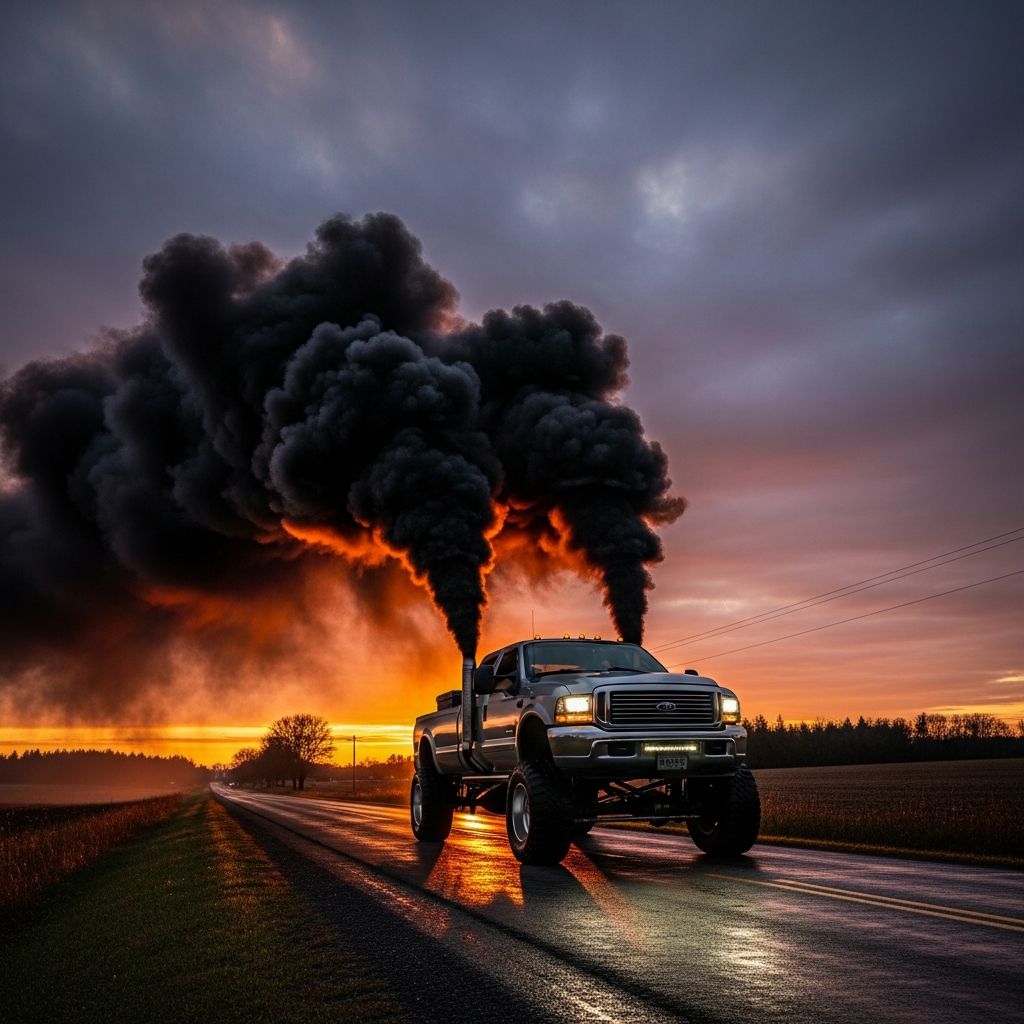
Rolling coal has become an attention-grabbing way for some diesel truck owners to show off or make a political statement, but the clouds of thick black smoke raise serious questions about health, safety, and legality. This article explains what rolling coal is, how it works, why it is dangerous, and how federal and state laws treat the practice.
What Does “Rolling Coal” Mean?
Rolling coal is the slang term for deliberately modifying a diesel vehicle so it can emit large, dense plumes of black exhaust on command. Drivers often trigger these smoke blasts:
- During rapid acceleration or aggressive driving
- Near pedestrians, cyclists, or hybrid and electric vehicles
- At political events or while being recorded for social media
Unlike normal diesel exhaust, which modern engines and pollution controls are designed to limit, rolling coal intentionally overrides these systems to maximize visible smoke and soot.
How Diesel Engines Normally Control Pollution
Modern diesel vehicles are built with a series of emissions-control technologies intended to reduce harmful pollutants, in line with U.S. Environmental Protection Agency (EPA) standards under the Clean Air Act.
Common systems include:
- Diesel particulate filters (DPFs) that trap fine soot particles before they exit the tailpipe
- Exhaust gas recirculation (EGR) systems that lower combustion temperatures to reduce nitrogen oxides (NOx)
- Selective catalytic reduction (SCR) systems that use chemicals, often urea-based solutions, to convert NOx into less harmful gases
- Onboard diagnostics (OBD) and software that monitor and adjust engine performance to stay within emissions limits
When these systems are intact and functioning, diesel exhaust is significantly cleaner than in older, uncontrolled engines.
How Vehicles Are Modified to Roll Coal
Rolling coal requires tampering with or bypassing the factory-installed emissions controls. The EPA refers to many of these modifications as defeat devices, and it considers their manufacture, sale, and installation a violation of the Clean Air Act.
Typical changes include:
- Removing or hollowing out the diesel particulate filter, allowing raw soot to flow directly into the exhaust stream
- Altering or disabling software controls so the engine dumps extra fuel into the cylinders, creating incomplete combustion and more smoke
- Installing aftermarket tuning devices or chips that circumvent emission control programming
- Adding oversized exhaust stacks to make the smoke plume more visible
According to EPA enforcement data, hundreds of thousands of trucks have had their emission controls illegally tampered with or disabled, producing emissions equivalent to millions of unmodified vehicles.
Health and Environmental Consequences
The thick, black smoke associated with rolling coal is primarily made up of fine particulate matter, unburned hydrocarbons, and nitrogen oxides. These pollutants are linked to serious health and environmental harms.
Air Pollution and Climate Effects
Diesel exhaust is a major source of black carbon, a component of fine particulate matter (PM2.5). Black carbon absorbs sunlight and contributes to global warming by heating the atmosphere and darkening snow and ice surfaces, reducing their ability to reflect sunlight.
The EPA and other researchers have found that tampered diesel engines can emit vastly higher levels of:
- Particulate matter (PM), including fine particles that can penetrate deep into the lungs
- Nitrogen oxides (NOx), which contribute to ground-level ozone and smog formation
A 2020 EPA analysis estimated that emissions from illegally modified diesel pickup trucks in the United States equaled the excess pollution of about 9 million additional trucks, illustrating the scale of the problem when many vehicles are altered.
Human Health Risks
The World Health Organization classifies diesel engine exhaust as a Group 1 carcinogen, meaning there is sufficient evidence that it causes cancer in humans. Exposure to diesel exhaust is associated with:
- Increased risk of lung cancer and other respiratory diseases
- Aggravation of asthma, chronic obstructive pulmonary disease (COPD), and allergies
- Higher rates of heart disease and cardiovascular problems
People who are especially vulnerable include:
- Individuals with asthma or other chronic lung conditions
- Children and older adults
- Cyclists and pedestrians who are forced to breathe deeply while in or near the smoke plume
Even brief, intense exposure—as happens when a truck intentionally covers a cyclist or another driver in smoke—can trigger severe respiratory symptoms in sensitive individuals.
Traffic Safety Concerns
Rolling coal is not only a pollution issue; it also creates significant safety hazards on the road.
| Safety Issue | How Rolling Coal Contributes |
|---|---|
| Reduced visibility | Large smoke plumes can temporarily blind following or passing drivers, increasing crash risk. |
| Targeting vulnerable road users | Cyclists and pedestrians are often singled out, exposing them to sudden, dense exhaust while they may be unable to quickly escape. |
| Startle and distraction | The sudden noise and smoke can startle nearby drivers, leading to erratic maneuvers or loss of control. |
| Aggressive driving behavior | Rolling coal is frequently associated with tailgating, rapid acceleration, or swerving around other vehicles. |
In one documented incident, a New Jersey legislator driving an electric car described being suddenly engulfed in diesel smoke on the highway and losing visibility, illustrating how quickly such behavior can create a dangerous situation.
Federal Law: The Clean Air Act and Defeat Devices
Rolling coal is widely understood to be illegal at the federal level under the U.S. Clean Air Act. The key legal issue is not the slang term itself, but the actions taken to modify or operate a vehicle in ways that disable mandatory pollution controls.
Key Federal Provisions
Under the Clean Air Act:
- It is unlawful to manufacture, sell, or install any part or component that bypasses, defeats, or renders inoperative an emission control device on a vehicle.
- Vehicle owners and shops can be fined for tampering with emissions systems or using defeat devices.
- Companies that produce tuning devices or “delete kits” have faced substantial civil penalties and settlements with the EPA.
The EPA has pursued enforcement actions against businesses that market products intended to enable rolling coal or similar tampering. For example, the agency has imposed multi-million-dollar fines on firms that sold and installed such devices.
State and Local Responses
Although federal law already prohibits tampering with emissions systems, some states have adopted specific laws or traffic provisions addressing rolling coal to make enforcement more straightforward.
Examples of State-Level Approaches
- New Jersey enacted a statute that explicitly outlaws rolling coal by prohibiting both the modification of vehicles for that purpose and the intentional release of large amounts of smoke on roadways.
- Maryland passed legislation making it unlawful to intentionally emit visible, dense diesel exhaust from certain vehicles, with fines for violations, while exempting some commercial and construction vehicles.
- Other states, such as Colorado and Illinois, have considered bills focused on excessive diesel smoke or targeted emissions, though not all proposed measures have become law.
These laws often frame rolling coal as both an air pollution offense and a roadway safety hazard, particularly when directed at other people.
Civil Liability and Criminal Exposure
Beyond regulatory fines, rolling coal can potentially expose drivers to civil lawsuits or criminal charges, depending on the circumstances.
- Negligence claims: If rolling coal contributes to a crash or injures someone with a respiratory condition, the driver may face civil liability for damages.
- Intentional torts: Deliberately directing smoke at a specific person could give rise to claims such as battery, intentional infliction of emotional distress, or harassment under state law.
- Traffic or criminal offenses: Where state statutes explicitly prohibit rolling coal, violations may be treated as traffic infractions or, in more serious cases, reckless or aggressive driving.
The legal outcome will depend on the facts of each incident and the specific laws of the jurisdiction, but drivers who roll coal should not assume that the behavior carries no legal consequences.
Why Some Drivers Still Roll Coal
Despite its health and legal risks, rolling coal persists in some circles for cultural and social reasons. Motivations can include:
- Identity and image: Some truck owners view the smoke as a symbol of power, toughness, or rebellion.
- Political expression: Rolling coal is sometimes used to express opposition to environmental regulations or to mock hybrid and electric vehicles.
- Online attention: Dramatic smoke displays can attract views on social media platforms, encouraging copycat behavior.
However, as awareness of the legal and health implications grows, public tolerance for the practice is decreasing, and regulatory enforcement has intensified.
Practical Takeaways for Vehicle Owners
For owners of diesel trucks or other diesel vehicles, understanding the legal limits around modification is critical.
- Do not remove or disable emissions equipment. Tampering with diesel particulate filters, EGR systems, or SCR systems can violate federal law, even if the vehicle passes a local inspection.
- Be cautious with aftermarket tuners. Some performance devices are marketed as off-road-only or racing products, yet they may still be illegal on public roads under the Clean Air Act.
- Consult qualified professionals. Mechanics or specialty shops familiar with emissions rules can help ensure that modifications remain compliant.
- Consider warranty and resale impacts. Emissions tampering may void manufacturer warranties and make it more difficult to sell the vehicle legally.
Frequently Asked Questions (FAQs)
Q: Is rolling coal always illegal in the United States?
A: Rolling coal typically involves tampering with emission controls, which violates the federal Clean Air Act. Some states also have specific laws targeting the intentional release of dense diesel smoke, making enforcement easier at the local level.
Q: Can I be fined just for owning a modified diesel truck?
A: Federal and state agencies usually focus on the manufacture, sale, and installation of defeat devices, as well as on vehicles actively operating with tampered systems. However, owning and operating a vehicle with disabled emission controls can still expose you to enforcement actions, especially if discovered during inspections or investigations.
Q: How dangerous is brief exposure to coal-rolling exhaust?
A: Short-term exposure to intense diesel exhaust can trigger coughing, shortness of breath, or asthma attacks, particularly in people with underlying heart or lung conditions. Diesel exhaust is a known carcinogen, and deliberate concentration of emissions increases potential health risks.
Q: Is there any legitimate reason to remove a diesel particulate filter?
A: In general, removing or disabling a diesel particulate filter on a vehicle used on public roads is unlawful under federal regulations. Legitimate repairs or replacements must maintain or restore emissions control performance, not bypass it.
Q: What should I do if someone deliberately rolls coal on me?
A: If it is safe to do so, create distance between your vehicle and the source of the smoke. If you experience breathing difficulty, seek fresh air as quickly as possible. In serious situations or where you can safely record details like license plates, you may report the incident to local law enforcement, especially in jurisdictions with specific anti-coal-rolling laws.
References
- Is Rolling Coal Illegal in Florida? — Gibson Truck World (summary of EPA findings). 2020-10-01. https://www.gibsontruckworld.com/blog/is-rolling-coal-illegal-in-florida.htm
- Rollin’ Out: Regulatory Pressures Poised to Nix Coal Rolling Fad — North Carolina Journal of Law & Technology. 2015-09-29. https://journals.law.unc.edu/ncjolt/blogs/regulatory-pressures-coal/
- What’s the deal with rolling coal? — Montana Public Radio (citing EPA 2020 tampering report). 2022-11-10. https://www.mtpr.org/montana-news/2022-11-10/whats-the-deal-with-coal-rolling
- Your Questions About Rolling Coal, Answered — KUNC / NPR. 2015-09-23. https://www.kunc.org/environment/2015-09-23/your-questions-about-rolling-coal-answered
- “Rolling Coal” — A Hazardous New Practice — Miller & Zois, LLC (discussing Maryland law). 2017-09-15. https://www.theinjurylawyermd.com/rolling-coal-hazardous-new-practice/
Similar Articles








Read full bio of medha deb


