
Defending Our Freedoms: The Role of Civil Liberties Organizations
Understanding the crucial legal battlegrounds where non-governmental organizations protect your rights.
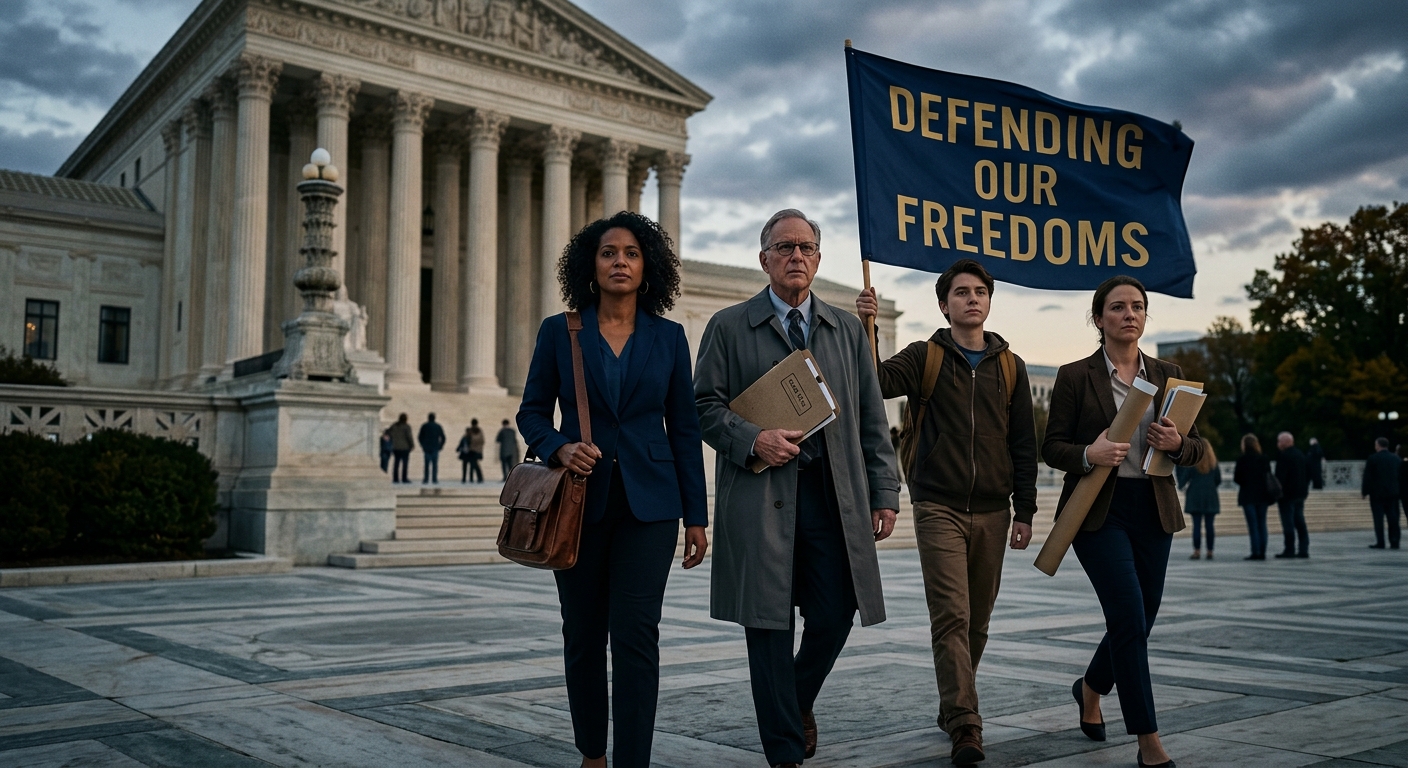
In any functioning democracy, the promises written into foundational documents do not enforce themselves. The mere existence of a constitution or a bill of rights is insufficient to guarantee that individuals will be shielded from governmental overreach or systemic injustice. It requires constant vigilance, rigorous legal defense, and unwavering public advocacy. This is the exact space occupied by civil liberties organizations—dedicated non-governmental watchdogs that operate tirelessly to ensure the abstract promises of freedom are translated into tangible legal protections for everyday citizens.
For decades, major legal rights organizations have served as the vanguard of American jurisprudence. Whenever a new law threatens to suppress free speech, whenever law enforcement oversteps its constitutional bounds, or whenever technological advancements outpace our privacy laws, these organizations mobilize. Their work spans the entire spectrum of the legal system, from local municipal courts to the highest appellate tribunals in the nation. By fighting for the marginalized, the silenced, and the oppressed, these advocacy groups do more than just win lawsuits; they shape the very fabric of society’s relationship with state power.
Understanding the function, scope, and necessity of these legal rights groups requires a deep dive into the nuances of constitutional law. It demands an examination of what our rights truly are, how they are consistently threatened by both traditional authorities and modern innovations, and the meticulous legal strategies employed to defend them. In this comprehensive overview, we will explore the critical battlegrounds where civil liberties are defended and why the work of these organizations is more important today than ever before.
Deciphering the Legal Language: Civil Liberties vs. Civil Rights
A common point of confusion in public discourse is the distinction between “civil liberties” and “civil rights.” While these terms are frequently used interchangeably in media and casual conversation, they hold distinct meanings within the realm of legal scholarship and constitutional law. Grasping this difference is essential to understanding the dual-pronged approach taken by legal advocacy organizations.
Civil liberties are fundamentally defined as negative rights. They represent the fundamental freedoms guaranteed to individuals that are protected from government interference. In the United States, these are primarily enumerated in the Bill of Rights. Freedom of speech, freedom of religion, the right to bear arms, and the right to be free from unreasonable searches and seizures are all classic examples of civil liberties. They establish a boundary line that the state cannot legally cross, operating as a strict restraint on governmental power.
Conversely, civil rights are positive legal entitlements created by statutes and legal precedents. They ensure that individuals receive equal treatment under the law and are protected from unfair discrimination based on protected characteristics such as race, gender, religion, or disability. If civil liberties restrict what the government can do, civil rights dictate how the government and society must treat people—mandating fairness and equality. Legal rights organizations often fight on both fronts simultaneously, recognizing that liberty without equality is an illusion, and equality without liberty is mere oppression.
| Concept | Definition | Primary Source of Law | Classic Example |
|---|---|---|---|
| Civil Liberties | Individual freedoms protected from unjust governmental interference. | The Constitution (Bill of Rights) | The right to protest a government policy without being arrested. |
| Civil Rights | Legal provisions ensuring equitable treatment and freedom from discrimination. | Statutes (e.g., Civil Rights Act), 14th Amendment | The right to equal employment opportunities regardless of race or gender. |
The Primary Pillars of Liberty Protection
The mandate of civil liberties organizations is vast, covering a multitude of legal doctrines. However, their core efforts generally fall into several primary pillars that represent the most frequent points of friction between individuals and state power.
Freedom of Expression and Assembly
At the heart of democratic society is the ability of the populace to speak their minds, criticize their leaders, and gather in protest. Legal rights groups fiercely defend the First Amendment, often taking on controversial cases to protect speech that may be deeply unpopular or offensive. The underlying legal philosophy is that if the government is granted the authority to censor the fringes of society, it will inevitably use that same power to silence mainstream political opposition. These organizations defend the rights of journalists to protect their sources, citizens to peacefully assemble, and individuals to express their beliefs without fear of state-sponsored retaliation.
Due Process and Criminal Justice Reform
Another major pillar involves the protections afforded to those accused of crimes. The Fourth, Fifth, Sixth, and Eighth Amendments provide a robust framework designed to prevent an overzealous state from steamrolling defendants. Civil liberties organizations challenge unconstitutional policing practices, such as stop-and-frisk policies that disproportionately target minority communities. They fight against mass incarceration, excessive bail requirements, and the use of cruel and unusual punishments. By demanding strict adherence to due process, these advocates ensure that the justice system remains accountable and equitable.
Digital Privacy and Technological Autonomy
In the twenty-first century, the battleground for liberty has expanded from physical spaces into the digital realm. As our lives become increasingly intertwined with technology, the amount of personal data generated is staggering. Civil rights advocates argue that digital privacy is deeply interconnected with traditional constitutional protections. Government surveillance of internet traffic, the warrantless collection of cellular location data, and the deployment of biometric tracking all represent profound threats to the Fourth Amendment. Organizations specifically dedicated to digital rights work tirelessly to establish legal precedents that force antiquated constitutional interpretations to catch up with modern technology.
How Legal Rights Organizations Effect Change
To effectively combat systemic overreach, civil liberties organizations employ a multifaceted approach. Their influence extends far beyond the courtroom, penetrating the halls of legislatures and the minds of the general public.
Strategic and Impact Litigation
The most visible tool in the arsenal of these organizations is impact litigation. Unlike a private law firm that primarily seeks financial compensation for a specific client, a civil liberties group takes on cases designed to set broad, far-reaching legal precedents. They seek out plaintiffs whose circumstances perfectly illustrate a constitutional violation. By pursuing these cases all the way to the Supreme Court, they aim to secure injunctions that strike down unconstitutional laws or force institutional policy changes. Additionally, they frequently file amicus curiae (friend of the court) briefs in ongoing cases to provide expert legal analysis and advocate for liberty-focused outcomes.
Legislative Advocacy and Lobbying
While courts interpret the law, legislatures write it. Therefore, legal rights organizations maintain a heavy presence in national and state capitals. They employ lobbyists and policy analysts who review proposed bills, identifying hidden clauses that might infringe on civil liberties. When a harmful piece of legislation is introduced, these organizations mobilize their members, launch public pressure campaigns, and testify before legislative committees. Conversely, they also draft and sponsor proactive legislation designed to expand rights, such as data privacy bills or criminal justice reform acts.
Public Education and Empowerment
An informed citizenry is the ultimate defense against tyranny. A major function of civil liberties organizations is public education. They produce extensive “Know Your Rights” materials that empower individuals to safely navigate encounters with law enforcement, assert their rights during protests, and understand their legal protections at international borders. By translating dense legal jargon into accessible language, these groups demystify the legal system and give ordinary people the tools they need to protect themselves in real-time situations.
Emerging Threats to Civil Liberties in the 21st Century
The landscape of legal rights is never static. As society evolves, new threats emerge that test the resilience of established constitutional doctrines. Today’s civil liberties organizations are currently locked in battles over several modern crises.
The most alarming modern threat comes from the unchecked expansion of artificial intelligence and algorithmic surveillance. Law enforcement agencies are increasingly utilizing facial recognition software, predictive policing algorithms, and automated license plate readers. These technologies frequently operate without adequate oversight, leading to documented cases of algorithmic bias where people of color are disproportionately misidentified and falsely arrested. Advocacy groups are pushing for strict moratoriums on the use of these technologies until robust civil rights safeguards can be codified into law.
Furthermore, democratic participation itself is under siege. Voting rights are fundamentally linked to civil liberties, as the ability to elect representatives is the primary mechanism citizens have for holding the government accountable. Partisan gerrymandering, restrictive voter identification laws, and the purging of voter rolls are heavily litigated areas. Organizations are fighting state by state to dismantle arbitrary barriers to the ballot box, arguing that these tactics constitute coordinated efforts to suppress minority voter turnout and undermine the democratic process.
Lastly, the ongoing tension between national security and individual privacy remains a critical issue. Expanding executive powers, particularly under the guise of counter-terrorism, often result in mass surveillance programs that sweep up the private communications of innocent citizens. Civil liberties defenders constantly challenge intelligence agencies, demanding transparency and insisting that national security cannot be used as a blank check to bypass the Fourth Amendment.
The Citizen’s Role in Defending Freedom
While non-governmental legal organizations possess the expertise and resources to fight constitutional battles, their strength is entirely derived from public support. The defense of civil liberties is a collective responsibility that requires active civic engagement from everyday individuals.
Citizens must stay informed about the legal issues impacting their communities. This means reading beyond headlines, understanding the voting records of elected officials, and tracking legislation that affects individual rights. When local governments attempt to pass restrictive ordinances or when state legislatures introduce discriminatory bills, it is the vocal opposition of constituents that most effectively halts these efforts.
Furthermore, individuals can directly support the infrastructure of liberty. Donating to legal defense funds, volunteering for grassroots advocacy campaigns, and amplifying the educational materials produced by civil rights groups dramatically increases their operational capacity. Most importantly, simply knowing one’s own rights and having the courage to assert them respectfully and lawfully during an encounter with authority is the most direct way a citizen can uphold the principles of the Constitution.
Frequently Asked Questions (FAQs)
What is the core difference between civil liberties and human rights?
While overlapping, civil liberties generally refer to the specific legal protections enshrined in a nation’s constitution that limit government power over its citizens. Human rights are broader, universal principles of dignity and freedom that belong to all people globally, regardless of their specific national laws, as outlined in international treaties like the Universal Declaration of Human Rights.
Can private companies violate my civil liberties?
Technically, constitutional civil liberties (like the First Amendment) only protect you from government action, a concept known as the “state action doctrine.” A private social media company banning you does not violate your First Amendment rights. However, private entities can violate your civil rights if they engage in illegal discrimination prohibited by statutes like the Civil Rights Act.
Why do civil liberties groups sometimes defend highly controversial people?
These organizations operate on principle rather than popularity. They recognize that exceptions to constitutional protections are dangerous precedents. If the government is permitted to violate the rights of a controversial or widely disliked individual today, the legal precedent established will be used to target marginalized groups or political dissidents tomorrow.
How do digital privacy laws protect my civil liberties?
Digital privacy laws act as an extension of the Fourth Amendment into the modern era. They prevent law enforcement from accessing your location data, search history, and private communications without a strictly vetted judicial warrant. Without these laws, the government could engage in warrantless dragnet surveillance, chilling free expression and eliminating anonymity.
Conclusion
The arc of history does not automatically bend toward justice; it requires the relentless effort of dedicated advocates to pull it in the right direction. Civil liberties organizations stand as the crucial intermediary between the immense power of the state and the vulnerability of the individual. They navigate the complex intersections of constitutional law, civil rights legislation, and modern technological advancements to preserve the core tenets of a free society.
As we face an era defined by rapid technological change, polarizing political climates, and evolving threats to bodily and democratic autonomy, the work of these groups remains indispensable. Protecting our fundamental freedoms is not a battle that is fought and won in a single generation. It is an ongoing, enduring struggle. By understanding our rights, supporting the organizations that defend them, and remaining civically engaged, we collectively ensure that the guarantees of liberty endure for the future.
References
- civil liberties — Legal Information Institute (LII), Cornell Law School. 2026-04-01. https://www.law.cornell.edu/wex/civil_liberties
- civil rights — Legal Information Institute (LII), Cornell Law School. 2026-04-01. https://www.law.cornell.edu/wex/civil_rights
- Constitutional Protections & Civil Liberties — American Bar Association. 2026-03-04. https://www.americanbar.org/groups/crsj/
- Digital Privacy Legislation is Civil Rights Legislation — Electronic Frontier Foundation. 2023-05-18. https://www.eff.org/deeplinks/2023/05/digital-privacy-legislation-civil-rights-legislation
Similar Articles








Read full bio of medha deb


