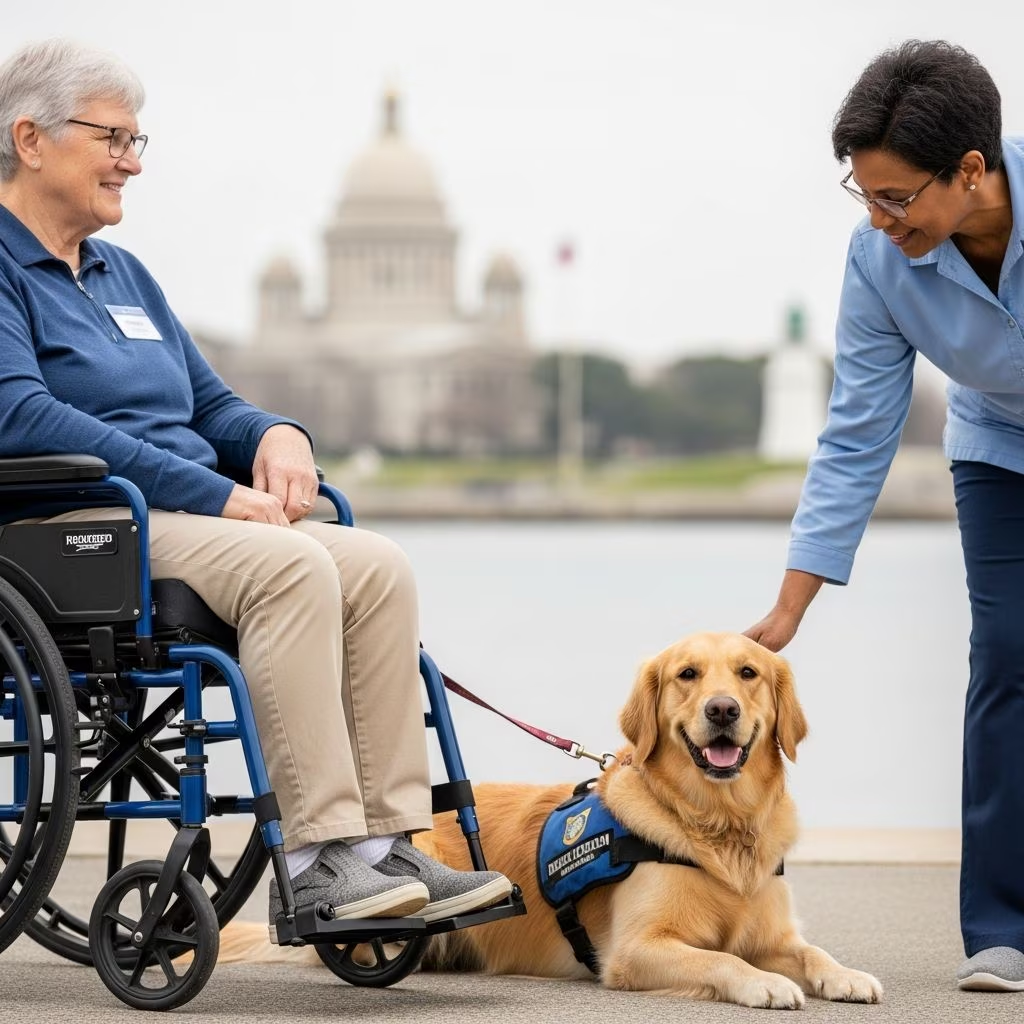
Overview of Assistance Animals in Rhode Island: Legal Framework and Protection
Rhode Island provides robust legal protections for individuals with disabilities who rely on service animals and assistance animals. These protections operate at both the state and federal levels, ensuring that people with disabilities have full and equal access to public spaces, housing, and accommodations with their trained animals. Understanding the distinction between service animals, emotional support animals, and personal assistance animals is essential for residents navigating Rhode Island’s disability accommodation laws.
The state’s comprehensive approach to assistance animal protections is grounded in both the federal Americans with Disabilities Act (ADA) and Rhode Island’s Civil Rights Law. These laws establish clear rights and responsibilities for both animal handlers and public or private facilities that must provide accommodations.
Defining Service Animals: What Qualifies Under Rhode Island and Federal Law
Rhode Island law and the ADA define service animals with specific technical requirements. Under the state’s Civil Rights Law, a service animal is a dog that has been or is being trained to assist an individual with a disability by performing specific tasks or functions. This definition encompasses various types of trained assistance dogs beyond the commonly recognized guide dogs.
The federal ADA extends the definition slightly, recognizing that service animals may include dogs or miniature horses specifically trained to perform disability-related tasks. The key distinction is that the animal must have received formal training to assist with particular disabilities, not simply be a companion or emotional support animal without specific task training.
Examples of qualified service animals under both Rhode Island and federal law include:
- Guide dogs trained to assist individuals who are blind or have low vision
- Hearing dogs trained to alert individuals who are deaf or hard of hearing
- Mobility assistance dogs trained to help individuals with physical disabilities
- Psychiatric service dogs trained to respond to mental health crises
- Alert dogs trained to warn individuals with specific medical conditions
Public Accommodations Access: Rights and Protections
Individuals with disabilities have the explicit right to be accompanied by their qualified service animals in public accommodations throughout Rhode Island. Public accommodations are defined as privately owned businesses and facilities that serve the general public, and they must provide equal access without discrimination.
Public accommodations required to allow service animals include:
- Restaurants and food service establishments
- Retail stores and shopping centers
- Hotels and lodging facilities
- Theaters and entertainment venues
- Healthcare facilities and medical offices
- Government buildings and offices
- Public transportation systems
- Airports and travel facilities (for psychiatric service dogs in cabin areas)
- Sports and recreation venues
Importantly, Rhode Island law prohibits public accommodations from charging any additional fees or requiring special payments for service animals. An individual with a disability cannot be charged admission fees, deposits, or other costs related to having their service animal present. However, facility operators retain the right to charge for any damage caused by the service animal to the premises or equipment.
Exclusion of Service Animals from Public Spaces
While service animals generally have access to all public accommodations, Rhode Island and federal law recognize limited circumstances where animals may be excluded. A service animal may be excluded if it poses a direct threat to the health or safety of others, or if the animal is not housebroken or is out of control without the handler’s ability to manage the behavior.
For example, if a guide dog exhibits aggressive behavior such as barking and snapping at other customers, a facility manager may request the animal’s removal. Similarly, if a service animal is not housetrained and creates unsanitary conditions, exclusion would be permitted.
A critical protection exists for individuals whose service animals are excluded: they retain the right to enter the facility and access its services themselves. The exclusion applies only to the animal, not to the person with a disability.
Housing Protections: Fair Housing Act and State Law Requirements
Rhode Island’s Fair Housing Practices Act provides comprehensive protections for individuals who use assistance animals in residential settings. Under state law, a personal assistive animal is one specifically trained by a certified animal training program to assist an individual with a disability with tasks of independent living.
The federal Fair Housing Act extends protection beyond formally trained service animals to include emotional support animals (ESAs), provided the individual has a documented disability and a disability-related need for the animal. This broader federal protection means that landlords cannot discriminate based on the type of assistance animal, as long as proper documentation is provided.
Landlord Obligations and Prohibited Actions
Under Rhode Island and federal fair housing law, landlords must provide reasonable accommodations for assistance animals. Specific protections include:
- Allowing assistance animals in housing units regardless of no-pet policies
- Waiving all pet fees, deposits, and monthly pet rent charges
- Disregarding breed, size, and weight restrictions that normally apply to pets
- Accepting assistance animals without requiring official registration or certification
- Not demanding access to detailed medical records or specific diagnoses
- Accepting documentation from a qualified healthcare provider without requiring specific forms
Landlords are explicitly prohibited from discriminating against individuals who use assistance animals or from denying housing based on the presence of an ESA when proper documentation exists.
Documentation Requirements and Tenant Responsibilities
For emotional support animals in particular, landlords may request documentation from a qualified healthcare provider if the disability or the need for the animal is not apparent. For example, a landlord could request proof that an individual needs an emotional support rabbit, but cannot demand such documentation for a blind individual’s guide dog.
Individuals requesting housing accommodations for assistance animals must maintain their animals responsibly. Tenant obligations include:
- Obtaining proper documentation from a Rhode Island-licensed healthcare professional with personal knowledge of the disability
- Keeping the assistance animal well-behaved and under control at all times
- Ensuring the animal is housebroken
- Cleaning up after the animal and maintaining sanitary conditions
- Accepting liability for any property damage caused by the animal
- Preventing the animal from engaging in disruptive or dangerous behavior
- Ensuring the animal poses no health or safety threats to other residents
Legitimate Bases for Exclusion
Despite broad protections, landlords may exclude an assistance animal in specific circumstances:
- The animal poses a direct threat to the health or safety of others based on documented behavior
- The animal would cause substantial physical damage to the property
- Accommodating the animal would create undue financial or administrative burden
- The accommodation would fundamentally alter the essential nature of housing operations
- Adequate documentation from a qualified professional is not provided
Any exclusion decision must be based on the individual animal’s documented behavior, not on assumptions about breed, size, or other classifications.
Emotional Support Animals in Rhode Island: Distinct Legal Status
Emotional support animals occupy a unique legal category in Rhode Island. Unlike service animals that perform specific trained tasks, ESAs provide comfort and emotional support through their presence and companionship. Federal law recognizes ESAs as a valid category of assistance animals, but they receive more limited protections than service dogs in many contexts.
In housing contexts, ESAs receive protections equivalent to service animals under the Fair Housing Act when the owner has a documented disability and a disability-related need for the animal. However, in public accommodations, ESAs do not have the same access rights as service animals. Restaurants, retail stores, theaters, and other public spaces may legally exclude emotional support animals where pets are generally not permitted.
Employment and Workplace Protections
Rhode Island does not require employers to accommodate emotional support animals in the workplace. Only service dogs trained to perform specific disability-related tasks receive mandatory protection under the ADA in employment contexts. However, employees may request reasonable accommodations under the ADA on a case-by-case basis, and some Rhode Island employers voluntarily allow ESAs in their workplaces at their discretion. The burden of demonstrating workplace necessity for an ESA is significantly higher than demonstrating housing necessity.
Air Travel with Emotional Support Animals
The Air Carrier Access Act provides some protections for assistance animals in air travel, but with important limitations. Only psychiatric service dogs trained to perform specific disability-related tasks retain cabin access protections. General emotional support animals traveling by air must typically be transported as pets in the cargo hold or under-seat, and owners must pay pet fees ranging from approximately $95 to $125 each way. Size, breed, and weight restrictions apply to ESAs in air travel, and airlines may require health certificates.
Penalties for Service Animal Misrepresentation
Rhode Island enacted comprehensive legislation to combat fraudulent claims of service animal status. The law, effective July 8, 2019, makes it a civil violation to misrepresent any animal as a service animal in attempts to gain unauthorized access to public spaces or facilities.
Illegal actions under Rhode Island’s misrepresentation law include:
- Verbally claiming a pet is a service animal
- Using fake service dog vests, collars, or harnesses
- Presenting forged service animal certificates or identification cards
- Making any false statement to bring a pet where animals are normally prohibited
Violations are classified as civil infractions punishable by up to 30 hours of community service for an organization that serves individuals with disabilities. Notably, Rhode Island does not impose fines or criminal jail time for service animal misrepresentation, focusing instead on community service requirements.
The law does not currently include specific penalties for ESA fraud in housing contexts, though fraudulent documentation or false claims regarding disabilities could potentially violate other fraud statutes.
Key Distinctions: Service Animals versus Emotional Support Animals
| Characteristic | Service Animals | Emotional Support Animals |
|---|---|---|
| Required Training | Specific task-based training required | No specific training required |
| Public Accommodation Access | Full access without fees | No guaranteed public access rights |
| Housing Access | Full access; no fees or restrictions | Full access under Fair Housing Act; no fees or breed restrictions |
| Workplace Access | ADA protections apply | No mandatory protections |
| Air Travel | Psychiatric service dogs only in cabin | Travel as pets; fees apply |
| Animal Types | Dogs or miniature horses | Any domesticated animal |
Frequently Asked Questions About Service and Assistance Animals in Rhode Island
Q: Can my landlord require that I show medical records to prove I need an emotional support animal?
A: No. Your landlord cannot demand your detailed medical records or specific diagnosis. They may request documentation from a qualified healthcare provider proving your disability and disability-related need for the animal, but they cannot require access to your personal medical information or dictate which forms your provider must use.
Q: Are service animals required to wear vests or identification cards?
A: No. Under Rhode Island and federal law, service animals are not required to wear vests, identification cards, or any official marking. However, wearing distinctive gear helps inform the public and can prevent false claims by others. Using fake identification without a legitimate service animal is illegal.
Q: Can my service animal be excluded from a public restaurant if the manager is concerned about allergies among other customers?
A: No. Allergies or phobias of other customers do not constitute valid grounds for excluding a service animal. The animal can only be excluded if it poses a direct threat to health and safety based on its actual behavior, or if it is not housebroken or out of control.
Q: What should I do if a business illegally denies my service animal access?
A: Document the incident, including the date, time, location, and staff members involved. Contact the Rhode Island Governor’s Commission on Disabilities or file a complaint with the U.S. Department of Justice Civil Rights Division. You may also consult with an attorney regarding potential civil rights violations.
Q: Can my landlord charge a pet deposit for my emotional support animal in housing?
A: No. Under the Fair Housing Act, landlords cannot charge pet fees, deposits, pet rent, or any additional charges for assistance animals, including emotional support animals, when proper documentation of the disability and disability-related need is provided.
Q: Is there a “service animal registry” I must register my dog with in Rhode Island?
A: No. No official state registration system exists for service animals. Online registries are available from private companies, but they are not required by law and have no legal significance. Your documentation should come from your healthcare provider or the organization that trained your service animal.
Q: Can I have an emotional support animal at my workplace in Rhode Island?
A: Rhode Island does not mandate employer accommodation of emotional support animals. Only service dogs trained to perform specific disability-related tasks have workplace rights under the ADA. You may request reasonable accommodations on a case-by-case basis, but your employer is not obligated to grant them for ESAs.
Navigating Your Rights: Practical Guidance for Rhode Island Residents
Understanding your legal rights regarding service animals and emotional support animals is essential for ensuring you receive proper accommodations in Rhode Island. When accessing public accommodations with a service animal, remember that no facility can charge you additional fees, and your animal cannot be excluded based on breed, size, or preemptive safety concerns—only based on documented dangerous behavior.
For housing situations, always obtain proper documentation from a Rhode Island-licensed healthcare provider before requesting accommodations. This documentation should confirm your disability and your disability-related need for the animal. Keep this documentation secure but accessible, as landlords may request it in situations where the disability is not apparent.
If you believe your rights have been violated, contact the Rhode Island Governor’s Commission on Disabilities, file complaints with appropriate state and federal agencies, or seek legal counsel. Documenting all incidents and maintaining organized records of your animal’s training and documentation will strengthen your position should disputes arise.
References
- New law aims to prevent service animal misrepresentation — Rhode Island General Assembly. 2019. https://www.rilegislature.gov/pressrelease/Lists/PressReleases/DispForm.aspx?ID=370521
- Rhode Island ESA Letter: Rhode Island ESA Laws — Service Dogs. 2026. https://www.servicedogs.com/states/rhode-island-esa-letter/
- Rhode Island Laws on Service Dogs and Emotional Support Animals — Nolo. 2026. https://www.nolo.com/legal-encyclopedia/rhode-island-laws-on-service-dogs-and-emotional-support-animals.html
- General Laws of Rhode Island Section 40-9.1-2 — Justia. 2024. https://law.justia.com/codes/rhode-island/title-40/chapter-40-9-1/section-40-9-1-2/
- Service Animals — Rhode Island Governor’s Commission on Disabilities. 2026. https://gcd.ri.gov/title-iii-public-accommodations/service-animals