
Revive, Pause, or Exit: Options for Your Underperforming Business
Discover strategic choices for a struggling business: hibernation for recovery, downsizing for survival, or outright sale for maximum value.
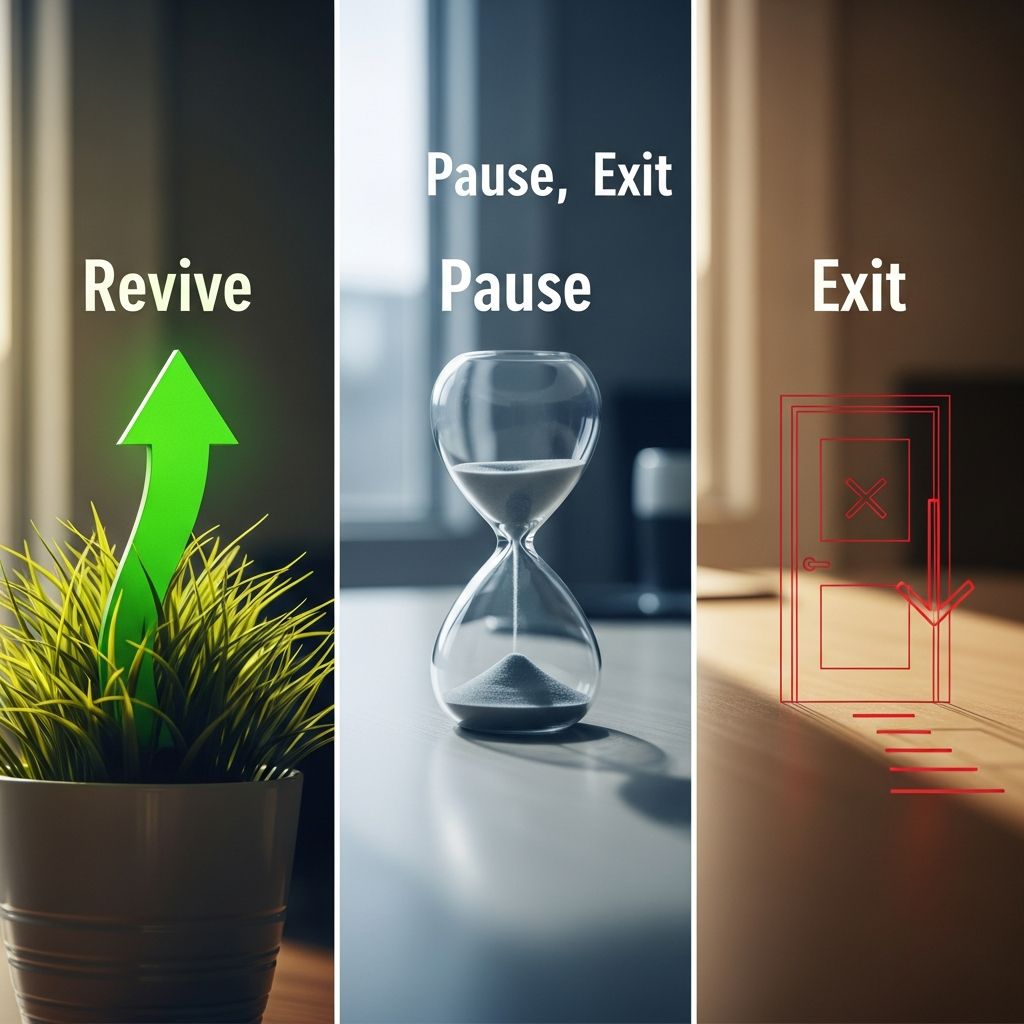
When economic pressures, market shifts, or unexpected events strain your company, owners face tough choices. Rather than rushing to close permanently, consider
hibernation
—a temporary suspension of full operations—orselling
the business to capitalize on its remaining value. Downsizing offers a middle path to streamline and sustain. This guide outlines these paths, their pros and cons, legal steps, and key factors to weigh for informed decision-making.Assessing Your Business’s True Condition
Before choosing a path, evaluate your company’s health objectively. Review financial statements, cash flow projections, and market trends. Is the downturn temporary, like a seasonal slump or post-crisis recovery lag, or structural, signaling deeper issues like outdated models or competition?
Key indicators include:
- Declining revenue over 6-12 months without clear rebound signs.
- mounting debts exceeding assets.
- Customer loss or inability to acquire new ones.
- Operational inefficiencies draining resources.
Consult financial advisors or use tools like break-even analysis to forecast viability. For instance, if projections show profitability within 12-18 months, hibernation or downsizing might preserve value. Persistent losses tilt toward selling.
Understanding Business Hibernation: A Strategic Pause
**Hibernation** keeps your entity legally active while minimizing operations and costs, ideal for anticipated recoveries. Unlike closure, it avoids dissolution fees and retains assets, intellectual property, and goodwill for reactivation.
Benefits include:
- Cash preservation: Slash non-essential spending to cover bare minimums like state fees.
- Flexibility: Pivot to low-overhead services, such as a gym owner offering outdoor training during low-demand periods.
- Opportunity: Use downtime for planning, marketing refreshes, or skill-building.
Risks involve potential customer attrition to competitors and team morale dips from uncertainty. Maintain communication to reassure stakeholders.
Steps to Implement Hibernation Effectively
- Audit and eliminate costs: Categorize expenses into essential (e.g., entity fees, minimal insurance) and discretionary (e.g., premium software). Switch to free alternatives or pause subscriptions.
- Handle personnel: Furlough non-essential staff to comply with labor laws like the Fair Labor Standards Act, avoiding exempt employee violations. Layoffs may be necessary but offer severance where possible.
- Manage contracts: Fulfill or assign ongoing agreements per terms to prevent breaches.
- Inform stakeholders: Notify customers, vendors, and lenders of the pause with a reactivation timeline to build trust.
- Monitor compliance: File annual reports and pay minimal taxes to stay in good standing.
Hibernation suits sole proprietors or single-owner LLCs easily, but partnerships require consensus. State laws vary; check secretary of state requirements.
Downsizing: Streamline for Sustainability
If full hibernation feels extreme,
downsize
by reducing scale while keeping core operations alive. This rebuilds profitability without full shutdown.| Cost Category | Hibernation Approach | Downsizing Approach |
|---|---|---|
| Office/CRM Software | Cancel entirely | Downgrade to basic plan |
| Staffing | Furlough/layoff most | Reduce hours or headcount partially |
| Marketing | Pause | Target low-cost digital channels |
| Inventory/Supplies | Liquidate excess | Order minimally |
Downsizing preserves customer relationships and revenue trickles, unlike hibernation’s near-zero activity. Analyze fixed vs. variable costs to prioritize cuts.
Selling Your Business: Capitalize on Remaining Value
Selling transfers ownership, providing liquidity and an exit. It’s preferable if you’re burned out, eyeing retirement, or spotting better ventures.
Advantages over liquidation:
- Higher returns: Buyers pay premiums for goodwill, customer bases, and potential.
- Legacy preservation: Operations continue under new ownership.
- Clean break: Negotiate terms like earn-outs or consulting roles.
Challenges:
- Finding buyers willing to pay fair value for distressed assets.
- Disclosure risks and negotiation time.
- Lower valuations due to urgency.
Prepare by cleaning financials, valuing assets (e.g., 1-4x EBITDA for small firms), and using brokers. Multi-owner entities need agreement per operating agreements.
Valuation Considerations for Struggling Firms
Distressed sales fetch less but attract opportunistic buyers. Factors influencing price:
- Revenue trends and assets.
- Intellectual property or contracts.
- Market timing—sell before insolvency.
Asset sales vs. entity sales: Latter includes liabilities; former isolates value.
Comparing Your Options Side-by-Side
| Option | Best For | Pros | Cons | Timeline |
|---|---|---|---|---|
| Hibernation | Temporary dips | Low cost, reversible | Customer loss risk | Months to years |
| Downsizing | Ongoing viability | Maintains revenue | Partial stress relief | Immediate |
| Selling | Exit readiness | Cash influx | Lower price, effort | 3-12 months |
Hybrid approaches, like hibernating while marketing for sale, blend benefits.
Legal and Tax Implications Across Strategies
Each path carries distinct requirements. Hibernation demands ongoing filings; neglect risks administrative dissolution. Sales trigger capital gains taxes—structure as stock vs. asset sale wisely. Consult attorneys for state-specific rules and IRS guidelines on losses.
For LLCs/partnerships, review governing documents. Bankruptcy may loom if debts mount, but explore alternatives first.
Real-World Scenarios: Choosing the Right Path
A seasonal retailer might hibernate off-season, cutting rent via storage. A tech startup with IP could downsize to consulting. A mature firm with steady but slim margins suits sale to a larger entity.
Post-pandemic gyms exemplify hibernation: Pause facilities, offer virtual classes.
Frequently Asked Questions
What is business hibernation exactly?
A legal pause in operations while maintaining entity status, focusing on minimal costs to await better conditions.
Can I hibernate a multi-owner business?
Yes, with all owners’ agreement per operating agreement or bylaws.
Does selling a struggling business yield less money?
Often yes, due to lower valuations, but more than liquidation.
How do I value my underperforming company?
Use multiples of earnings, asset appraisals, or brokers; factor distress discounts.
What if hibernation fails?
Transition to sale or dissolution, leveraging preserved records.
Next Steps for Action
1. Gather financials and consult professionals.
2. Model scenarios.
3. Align with partners.
4. Execute with legal guidance.
These strategies empower owners to navigate adversity strategically.
References
- Is It Time to Hibernate or Sell Your Struggling Business? — Nolo. 2023. https://www.nolo.com/legal-encyclopedia/hibernate-or-sell-struggling-business-30339.html
- The Pros and Cons of Hibernating Your Business — Maverrik. 2023. https://maverrik.io/blog/should-your-business-hibernate-during-the-winter/
- Buying or Selling a Struggling Business (Part 1) — Fennemore Law. 2023. https://www.fennemorelaw.com/buying-or-selling-a-struggling-business-aka-the-distressed-business-part-1/
- Should You Sell Your Business or Liquidate It? — Sacramento Business Brokers. 2023. https://www.sacramentobusinessbrokers.com/post/should-you-sell-your-business-or-liquidate-it-the-pros-and-cons-of-each
- Business Liquidation vs Selling — Murphy Business. 2023. https://murphybusiness.com/emeraldcoast/article/business-liquidation-vs-selling/
Similar Articles








Read full bio of medha deb


