
Reverse Planning Mastery: Boost Holiday Revenue
Unlock peak holiday profits with backward planning: strategic timelines, inventory prep, and marketing mastery for unbeatable sales.
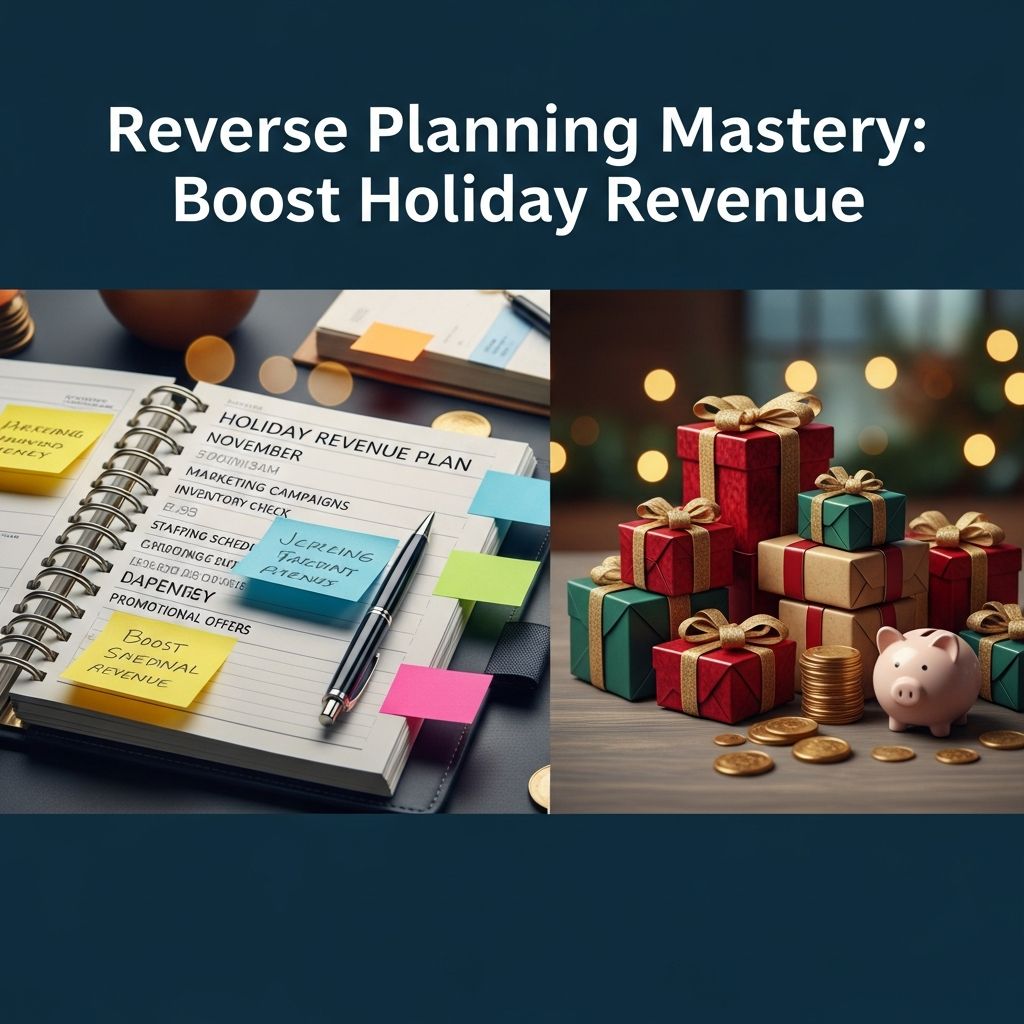
Reverse planning transforms chaotic holiday rushes into orchestrated revenue booms. By starting from key sales dates and working backward, businesses ensure every task aligns perfectly for peak performance.
Why Backward Thinking Wins Holiday Seasons
Holiday periods drive massive retail revenue, often comprising 25-33% of annual U.S. sales. Forward planning frequently underestimates timelines, leading to rushed executions and missed opportunities. Reverse planning counters this by anchoring on end dates—like Black Friday or Christmas Eve—and mapping prerequisites realistically.
This method fosters respect for deadlines and optimal resource allocation. Experts note it prevents the common pitfall of optimistic timelines that overlook research, production, and implementation delays. Businesses using reverse calendars report higher preparedness, reduced stockouts, and amplified sales velocity.
Key Holidays and Peak Sales Windows
Identify holidays central to your niche. Major U.S. events include:
- Thanksgiving to Cyber Monday: Launches Q4 frenzy with Black Friday (deep discounts) and Cyber Monday (online surge).
- Christmas: Climaxes spending two weeks prior, peaking December 20-24.
- Valentine’s Day: February 14 boosts gifts, flowers, chocolates.
- Halloween: October 31 drives costumes, decor, candy sales.
- Back-to-School: Late July-August for supplies, apparel.
Extend to niche events like Mother’s Day or quirky observances (e.g., National Pet Day) for testing. Analyze past data: Q4 often starts in Q3 due to early promotions.
Step-by-Step Guide to Building Your Reverse Calendar
Construct your calendar systematically for precision.
- List Target Dates: Pinpoint sales start (e.g., promotions launch) and peak days.
- Break Down Tasks: Detail activities like inventory orders, ad creatives, email sequences. Estimate time conservatively—add 20-50% buffer.
- Assign Durations: E.g., designing 10 social graphics: 2 days; shipping inventory: 4-6 weeks lead time.
- Work Backward: Subtract durations from end dates to set start points.
- Assign Owners and Milestones: Delegate with clear deadlines; include checkpoints.
Example Timeline Table for Christmas Campaign:
| Task | Duration | Start Date | End Date | Owner |
|---|---|---|---|---|
| Launch Sales | – | Dec 1 | Dec 25 | Sales Team |
| Run Ads/Emails | 4 weeks | Nov 3 | Dec 1 | Marketing |
| Restock Inventory | 6 weeks | Oct 4 | Nov 15 | Operations |
| Create Content | 3 weeks | Sep 13 | Oct 4 | Design |
Critical Components: Inventory, Staffing, and Marketing
Inventory Forecasting and Procurement
Stockouts erode 10-20% potential holiday profits. Reverse plan procurement: order 8-12 weeks ahead for international suppliers, factoring tariffs and disruptions. Use demand forecasting tools integrating historical sales, weather impacts, and trends. Audit Q3 for visibility; aim for 1.5-2x normal stock turns.
Staffing and Training Schedules
Scale teams 20-50% for peaks. Schedule hires/training 6-8 weeks prior; cross-train for flexibility. Align shifts with projected footfall—e.g., extra hands Black Friday.
Marketing and Promotion Arsenal
Craft multi-channel assaults:
- Email: Segmented blasts with gift guides, urgency (“Last Chance Free Shipping”).
- Social: Daily posts, contests, stories; user-generated content for reach.
- Paid Ads: Retargeting, AI-optimized dayparting for mobile shoppers.
- Site Optimizations: Bundles, wishlists, trust badges to lift conversions 15-30%.
Incorporate promotions: flash sales, BOGO, loyalty perks. Plan content calendars syncing with peaks.
Top Tools for Seamless Execution
Leverage digital aids:
- Google Sheets/Calendar: Collaborative, color-coded, alerts.
- Asana/Airtable: Task tracking, dependencies.
- Gantt Charts (e.g., TeamGantt): Visual timelines.
- Inventory Software (e.g., Netstock): Demand predictions.
- Marketing Hubs (e.g., HubSpot): Automated campaigns.
Real-time dashboards enable agility amid shifting trends.
Avoiding Common Pitfalls in Reverse Planning
Underestimating tasks plagues 70% of first-timers—always buffer. Overlook dependencies (e.g., content before ads). Ignore metrics: track past performance. Neglect flexibility for real-time tweaks like viral trends. Test small: pilot quirky holidays before scaling.
Real-World Success Stories
A test-prep firm added a week’s buffer post near-disaster, boosting Q4 output 40%. Campground software CEO Ravi Parikh credits realistic tasking for resource wins. Retailers using AI forecasting cut stockouts 25%, per industry reports.
Frequently Asked Questions
How far ahead should reverse planning begin?
Start 3-6 months pre-peak; Q3 for Q4 holidays to cover procurement.
What if timelines slip?
Build 20% buffers; prioritize high-ROI tasks, automate low-value ones.
Best promotions for holiday spikes?
Free shipping thresholds, bundles, urgency emails, social giveaways drive 20-50% lifts.
How to forecast inventory accurately?
Blend historical data, trends, external factors like weather via tools.
Free tools for beginners?
Google Workspace suffices; upgrade to Asana for teams.
References
- Retail Sales Benchmarks — U.S. Census Bureau. 2024-12-01. https://www.census.gov/retail/index.html
- Holiday Inventory Strategies — Netstock. 2024-09-15. https://www.netstock.com/blog/holiday-sales-strategy-for-retail-industry/
- Reverse Planning in Operations — Harvard Business Review. 2023-11-20. https://hbr.org/2023/11/the-power-of-backward-planning
- Consumer Spending During Holidays — National Retail Federation. 2025-01-10. https://nrf.com/research
- Project Management Best Practices — Project Management Institute. 2024-06-05. https://www.pmi.org/learning/library/backward-planning-projects-6657
Similar Articles








Read full bio of medha deb


