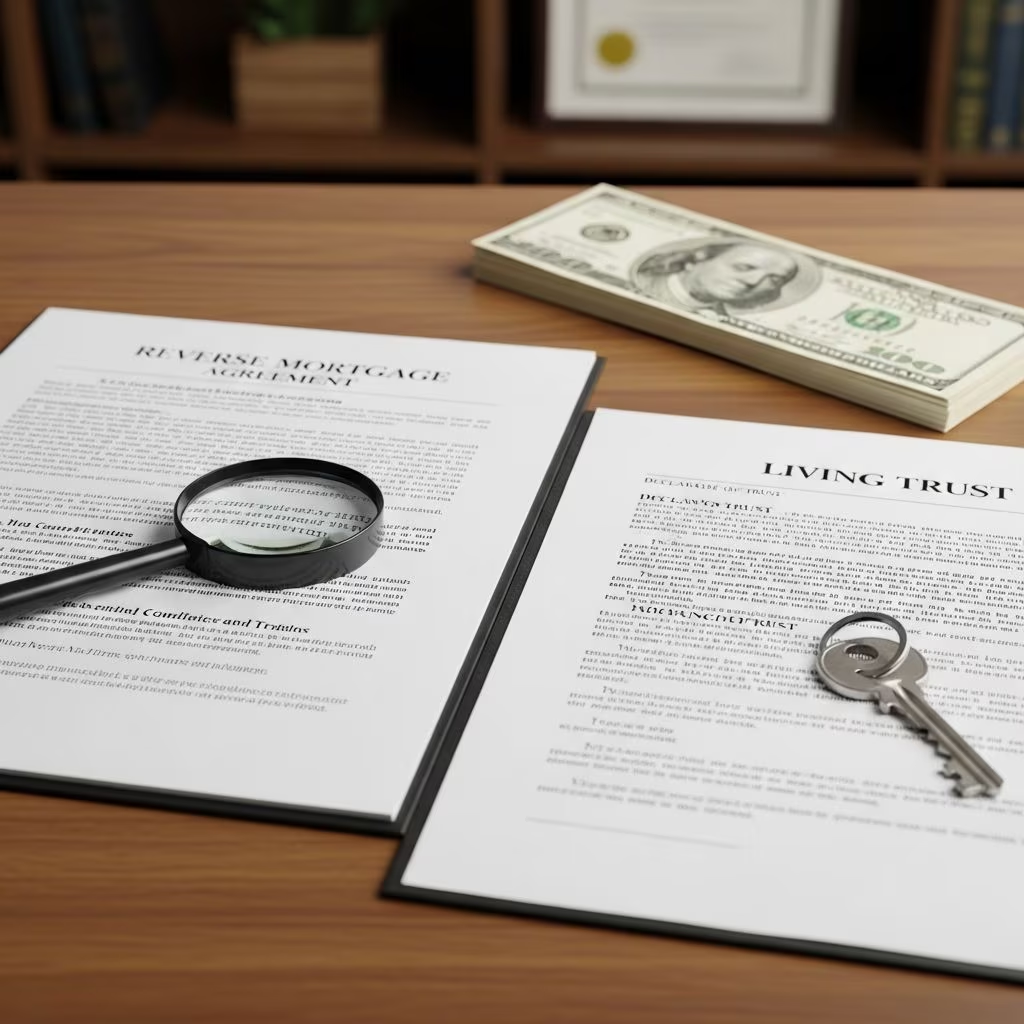
Obtaining a reverse mortgage on a property held in a living trust is feasible under specific conditions that align estate planning with senior financing needs. Lenders require verification of trust terms, borrower eligibility, and occupancy rules to approve such loans.
Understanding Reverse Mortgages for Seniors
Reverse mortgages enable homeowners aged 62 and older to convert home equity into cash without monthly repayments. Funds can be received as lump sums, monthly payments, or lines of credit, with repayment due upon the borrower’s death, sale of the home, or permanent move-out.
These loans, primarily Home Equity Conversion Mortgages (HECMs) insured by the Federal Housing Administration (FHA), appeal to retirees seeking supplemental income for living expenses, healthcare, or home improvements. However, they reduce available inheritance equity and accrue interest over time.
Role of Living Trusts in Property Ownership
A living trust is a revocable legal entity where you transfer assets like your home during your lifetime. As grantor and initial trustee, you retain full control, avoiding probate upon death and ensuring seamless transfer to beneficiaries.
Trusts streamline asset management, protect privacy, and allow incapacity planning. For real estate, they facilitate decisions like encumbering property with liens, provided the trust document explicitly authorizes such actions.
Eligibility Criteria for Borrowers and Trusts
To qualify, all borrowers and primary trust beneficiaries must be at least 62 years old, occupy the home as their principal residence, and own the property outright or with paid-down equity.
- Age Threshold: Every individual listed as a borrower or current beneficiary must meet the 62+ requirement.
- Occupancy Mandate: The home must serve as the primary residence; vacation or rental properties disqualify.
- Equity Position: Minimal or no existing forward mortgage balance is needed.
Lenders scrutinize the trust to confirm it is revocable, valid, and enforceable under state law. Irrevocable trusts generally do not qualify due to loss of borrower control.
Trust Document Powers and Lender Review
Your trust must grant the trustee authority to borrow against or mortgage trust-held real estate. Standard living trust language typically includes powers to sell, lease, or encumber property, but review the document or consult an attorney to confirm.
Lenders mandate a full review of the trust agreement before approval. They verify:
- Primary beneficiaries (not contingent ones) match borrowers and hold occupancy rights.
- Trustee obligations to notify lenders of occupancy or title changes.
- Provisions ensuring loan enforceability post-borrower death.
| Requirement | Purpose | Source |
|---|---|---|
| Revocable Status | Maintains borrower control | |
| Beneficiary Occupancy Rights | Ensures ongoing eligibility | |
| Notification Clauses | Protects lender interests | |
| Trustee Borrowing Powers | Allows mortgage placement |
Sequence Matters: Trust First vs. Mortgage First
Property in Trust Before Applying for Reverse Mortgage
If the home is already trust-owned, apply as trustee on behalf of beneficiaries. Submit the trust for approval; lenders check beneficiary ages, occupancy rights, and repayment enforcement mechanisms. Some require the trust to assume borrower obligations explicitly.
Reverse Mortgage Obtained Before Creating Trust
Post-mortgage trust creation is straightforward. Notify the lender and transfer title into the trust using trustee powers. Most servicers approve if primary beneficiaries align with original borrowers and occupancy continues.
Avoid unapproved transfers, as they may trigger loan acceleration.
Application Process and Documentation
Steps include:
- Confirm personal and trust eligibility (age, residency, equity).
- Review trust for mortgage powers; amend if needed via attorney.
- Shop lenders compliant with HUD guidelines for HECMs.
- Submit trust documents for review; expect 2-4 weeks processing.
- Complete counseling session mandatory for reverse mortgages.
- Close the loan with title in trust name where approved.
Counseling educates on risks like equity depletion and heir impacts.
Repayment Triggers and Heir Implications
No payments are required while borrowers or eligible beneficiaries reside in the home and maintain it. Triggers include:
- All borrowers pass away.
- Home sold or title transferred permanently.
- Failure to pay taxes, insurance, or repairs.
- Non-occupancy as principal residence.
Heirs inherit the home subject to the loan balance, repayable by sale or refinance. Federal law limits liability to 95% of appraised value if less than owed.
Pros and Cons of This Combination
| Advantages | Disadvantages |
|---|---|
| Probate avoidance | Equity reduction for heirs |
| Privacy in transfers | Ongoing maintenance costs |
| Flexibility in incapacity | Interest accrual |
| Asset protection elements | Lender approval delays |
Benefits shine for those prioritizing lifetime income over maximum inheritance, but weigh costs like origination fees and MIP.
Common Pitfalls and Expert Advice
Avoid assuming all trusts qualify; outdated or non-compliant language causes denials. Notify servicers promptly of changes. Irrevocable trusts complicate or block eligibility.
Consult estate attorneys familiar with HUD rules and local variations. Financial advisors help assess fit within broader retirement plans.
Frequently Asked Questions
Can any living trust hold a reverse-mortgaged home?
No, it must be revocable with lender-approved terms ensuring beneficiary eligibility and notification duties.
What if beneficiaries are under 62?
They disqualify unless contingent; all current beneficiaries must be 62+.
Does transferring to trust trigger repayment?
Not if approved by lender beforehand; notify to prevent issues.
Are there state-specific rules?
Yes, trust validity follows state law; lenders confirm compliance.
Can heirs keep the home after death?
Yes, by repaying the loan balance, often via sale.
References
- Can I Get a Reverse Mortgage If My House Is in a Living Trust? — Nolo. 2023. https://www.nolo.com/legal-encyclopedia/can-i-get-a-reverse-mortgage-if-my-house-is-in-a-living-trust.html
- Getting Reverse Mortgage If Your House Is in Living Trust — Thomas McKenzie Law. 2024. https://www.thomasmckenzielaw.com/getting-reverse-mortgage-if-your-house-is-in-living-trust/
- Can I Put a Home with a Reverse Mortgage into a Trust? — YouTube (Law Group). 2023-10-15. https://www.youtube.com/watch?v=EhjJ95GLqoE
- Transferring a Property to a Living Trust — Reverse Mortgage Questions. 2024. https://reverse.mortgagequestions.com/Articles/Living-Trust
- Can I transfer a home with a reverse mortgage to a revocable living trust? — Chilin Law. 2015-03. https://www.chilinalaw.com/2015/03/can-i-transfer-a-home-with-a-reverse-mortgage-to-a-revocable-living-trust/
- Key Takeaways on Trusts and HECMs — NRMLA. 2025-05-29. https://www.nrmlaonline.org/2025/05/29/key-takeaways-on-trusts-and-hecms
- Reverse Mortgage Problems for Heirs — Harrison Estate Law. 2024. https://harrisonestatelaw.com/reverse-mortgage-problems-for-heirs/