
Border Crisis: 6 Essential Reforms For A Humane, Fair System
Examining the reality of border migration and effective, humane policy solutions.
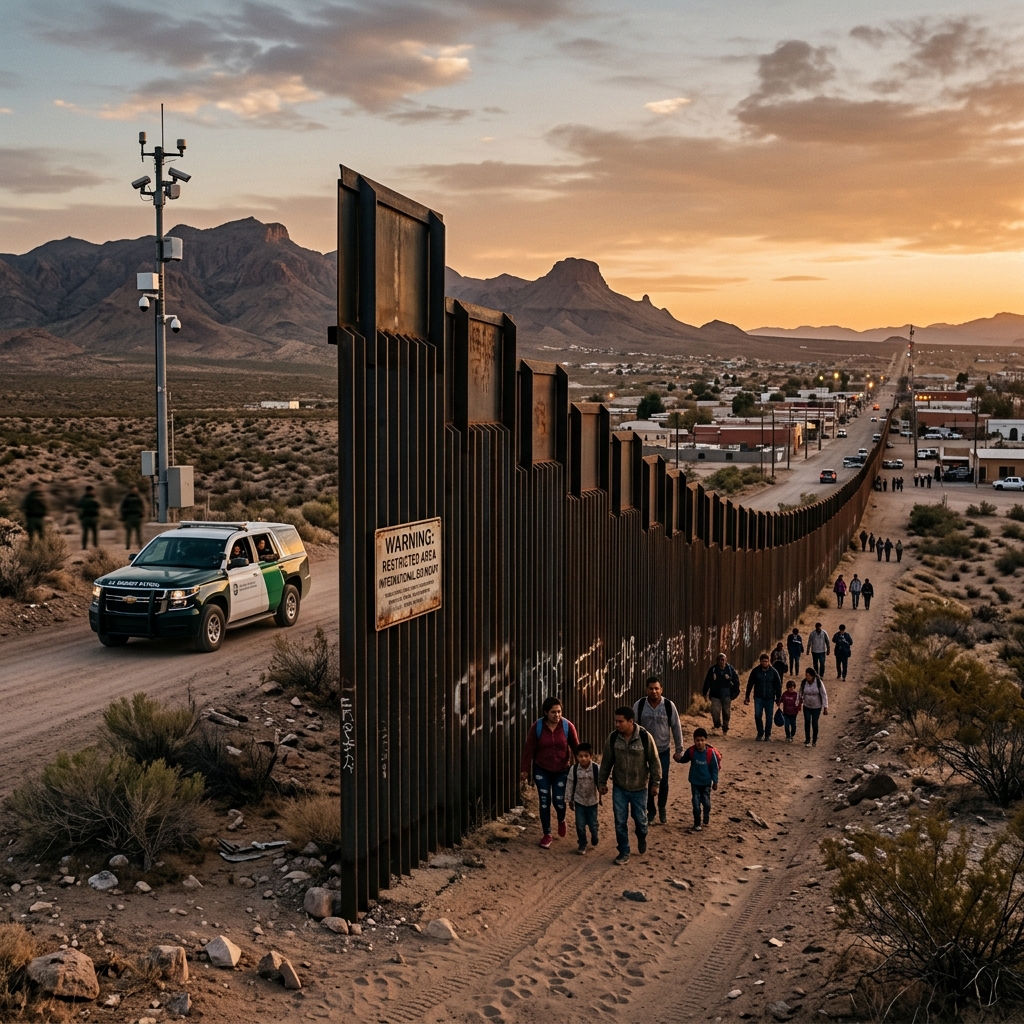
Introduction: Decoding the “Border Crisis” Narrative
The phrase “border crisis” is plastered across modern headlines, echoing through legislative halls and political campaigns with alarming and often misleading frequency. It is typically accompanied by rhetoric suggesting that the United States-Mexico border is chaotic, uncontrolled, or under siege by an invading force. However, framing the situation exclusively as a national security emergency fundamentally mischaracterizes the reality on the ground. The situation at the southern border is indeed critical, but it is not a crisis of security; rather, it is a profound administrative, structural, and humanitarian crisis.
For decades, the American public has been presented with a narrative relying on fear, portraying migration as a threat that must be met with force, walls, and punitive legal action. This framing obscures the true challenge: an outdated immigration system colliding with global human displacement. When we peel back political sensationalism, we find desperate families and unaccompanied minors seeking refuge from unimaginable violence and extreme poverty. Recognizing the difference between a security threat and a humanitarian emergency is the first step in redefining our approach to border management and comprehensive reform.
The Historical Shift: Who is Coming to the Border?
To understand why the current immigration system is failing, one must look at the historical context of border enforcement infrastructure. In the late twentieth century, the vast majority of people crossing the US-Mexico border were single adults—primarily men from Mexico—seeking temporary or seasonal agricultural and construction work. The border apparatus was designed to apprehend, process, and swiftly return these individuals. Holding facilities were constructed as short-term, punitive lockups, essentially concrete cells meant for brief detention before rapid repatriation.
Over the past decade, however, the demographic profile of migrants has undergone a radical and undeniable transformation. Today, a significant portion of those arriving at the border are families, unaccompanied children, and highly vulnerable individuals from the Northern Triangle of Central America (Honduras, Guatemala, El Salvador), as well as from Venezuela, Haiti, Cuba, and beyond. These individuals are not simply seeking economic opportunity; they are fleeing systemic gang violence, total political collapse, severe human rights abuses, and climate change-induced disasters that have destroyed their communities.
Our border infrastructure, initially built for single adults seeking employment, is fundamentally ill-equipped to handle traumatized families seeking international protection. Attempting to force this new humanitarian reality into an outdated enforcement mold is akin to treating a complex medical emergency with a strict law enforcement response. The mismatch between the demographics of the people arriving and the physical facilities built to hold them has resulted in catastrophic overcrowding, unacceptable living conditions, and repeated human rights violations, thereby creating the very chaos that politicians loudly decry.
The Illusions of Deterrence-First Policies
For consecutive political administrations, the default policy response to increased migration has been “deterrence through enforcement.” The logic behind this approach assumes that if the United States makes the physical journey and the subsequent administrative processing as painful and punitive as possible, desperate people will stop coming. This ideology gave rise to deeply controversial and harmful policies, including widespread family separation, the use of solitary confinement in civil immigration detention, and rapid border expulsions utilized under pandemic-era directives .
Despite the human cost, evidence demonstrates deterrence policies fail. When a mother flees a neighborhood where gangs threaten to murder her children, the abstract threat of a US detention facility does not outweigh the immediate threat of death. Migration driven by absolute desperation is inelastic to border enforcement policies. These deterrence measures merely force desperate people into taking increasingly dangerous routes through blistering deserts and treacherous rivers, enriching violent smuggling cartels and leading to a preventable loss of life.
The human toll of this punitive approach is immeasurable. Families have been irreparably traumatized by forced separations that violate fundamental human decency. Individuals have languished for months or even years in civil immigration detention centers, which often closely resemble high-security criminal prisons, suffering from severe medical neglect and psychological distress. Treating asylum seekers as criminals to “send a political message” to future migrants is not only an ineffective policy but also a grave moral failure that contradicts fundamental international human rights principles.
Legal Imperatives: The Right to Seek Asylum
Much of the public discourse surrounding border crossings relies on the dangerous misconception that individuals presenting themselves at the border, or crossing between official ports of entry to request asylum, are committing a crime. In reality, seeking asylum is a strictly legally protected right under both domestic US law and binding international treaties. The foundation of modern global asylum law was laid by the 1951 Refugee Convention and its subsequent 1967 Protocol, which the United States is legally obligated to uphold .
Under these established legal frameworks, any person who arrives at the border of a participating nation has the fundamental right to request asylum if they possess a well-founded fear of persecution based on their race, religion, nationality, membership in a particular social group, or political opinion. Crucially, international law explicitly prohibits the practice of “refoulement”—the forced return of refugees or asylum seekers to a country where they are liable to be subjected to persecution or immediate danger.
Furthermore, standard US legal codes specify that an individual can apply for asylum regardless of how they initially entered the country. Therefore, criminalizing asylum seekers, or implementing administrative bottlenecks designed to summarily block them from accessing the asylum system, is a direct violation of established legal commitments. The true crisis lies in the federal government’s repeated attempts to circumvent its own laws and international obligations in favor of politically expedient, short-term border closures.
Follow the Money: The Budgetary Imbalance
To truly comprehend the dysfunction at the border, one must critically examine where the federal government directs its resources. A staggering financial imbalance exists between the agencies tasked with militarized immigration enforcement and those tasked with immigration processing and humanitarian adjudication. The budgets for law enforcement agencies handling border security and interior enforcement have ballooned massively over the last two decades. Billions of taxpayer dollars are poured into expanding immigrant detention centers, deploying thousands of armed agents, funding advanced surveillance technologies, and constructing physical barriers .
In stark contrast, the components of the immigration system responsible for actually resolving complex legal cases—the immigration courts (which fall under the Department of Justice’s Executive Office for Immigration Review) and citizenship and immigration processing agencies—have been chronically and severely underfunded. This severe misallocation of funds has resulted in an administrative bottleneck of epic proportions.
| Agency / Department Focus | Primary Function | Systemic Reality & Funding Trend |
|---|---|---|
| Border & Interior Enforcement | Detention, deportations, border patrols, physical barriers | Receives multi-billion dollar budget increases; strict focus on punitive deterrence. |
| Immigration Adjudication (Courts) | Processing asylum claims, conducting legal hearings | Chronically underfunded, leading to multi-year systemic bottlenecks. |
| Community-Based Support | Providing housing, legal counsel, and social services | Heavily reliant on NGOs; receives a microscopic fraction of federal budgets. |
According to current tracking data, the backlog in US immigration courts has soared well past 3 million pending cases . When vulnerable individuals request asylum, they enter a system that lacks the judges, asylum officers, and administrative staff required to hear their cases timely. Asylum seekers can wait anywhere from three to seven years for a legal decision. Pumping money into detention beds and border walls does nothing to resolve this backlog; it only subjects people to costly incarceration while they wait for a court date that is years away.
Charting a Humane and Effective Path Forward
Solving the complex, deeply entrenched challenges at the US-Mexico border requires a fundamental paradigm shift. We must collectively abandon the failed deterrence-first approach and transition to a modernized system grounded in humanitarian reception, efficient legal processing, and robust community support. True security and administrative order can only be achieved by creating a functional, well-resourced administrative process that treats migrants with basic human dignity.
Essential Steps for Comprehensive Reform
- Phasing out private, for-profit detention: The government must end its reliance on mass immigration detention, particularly the use of private prison companies that financially benefit from human incarceration. Detention is exorbitant, deeply inhumane, and completely unnecessary for the vast majority of migrants navigating civil proceedings.
- Scaling up Community-Based Case Management: Funds should be immediately redirected toward community support models. These programs allow asylum seekers to live safely in communities while their cases are pending, providing them with access to social services, trauma healthcare, and legal representation. Studies confirm that alternatives to detention yield compliance rates close to 99% for court appearances when individuals are provided with legal counsel, all at a fraction of the cost of incarceration.
- Modernizing Border Reception: Instead of building more walls, the government needs to construct modern humanitarian processing centers at the border. These facilities should be fully staffed by medical professionals, child welfare experts, trauma counselors, and asylum officers, shifting the environment from a jail-like setting to a safe reception hub.
- Fully Funding the Adjudication System: To eliminate the crippling multi-year court backlog, Congress must significantly increase funding for the adjudication systems. Hiring hundreds of new immigration judges, asylum officers, and administrative support staff is absolutely essential for delivering timely and fair legal decisions.
Frequently Asked Questions (FAQs) About US Border Policy
Is the United States border completely “open”?
No. The assertion that the US has an “open border” is entirely politically motivated rhetoric. The border is heavily fortified with tens of thousands of agents, extensive physical fencing, advanced surveillance drones, and strict enforcement protocols. Migrants who cross are generally apprehended, detained, and processed, and thousands are routinely deported or expelled.
Why don’t migrants simply apply for asylum in their home countries?
Under international and US law, an individual generally must be physically present in the United States or at an official US port of entry to claim asylum. Furthermore, people fleeing immediate, life-threatening danger—such as death threats from violent cartels or state-sponsored persecution—cannot afford to wait months or years in their home countries for slow bureaucratic visa processing.
Do strict deterrence policies stop people from migrating?
Extensive data and historical migration trends clearly show that strict deterrence measures, such as family separation or rapid expulsions, do not significantly reduce migration flows. They primarily push desperate individuals to take more dangerous, clandestine routes, directly increasing the power and profits of human smuggling networks and leading to a higher death toll in border regions.
How much does it cost taxpayers to detain an immigrant?
While costs fluctuate based on contracts and locations, detaining an individual in a federal facility can cost taxpayers roughly $150 to $200 per day. In stark contrast, alternative-to-detention programs, such as community-based case management, cost a tiny fraction of that amount—often just a few dollars a day—while maintaining incredibly high compliance rates for legal proceedings.
Conclusion: A Path Forward
The narrative of a border “crisis” driven by an uncontrolled invasion is not just inaccurate; it actively prevents meaningful solutions. The true crisis is a systemic failure to update our immigration infrastructure to meet the harsh realities of modern global displacement. By continuing to pour billions into punitive enforcement and mass detention, the United States doubles down on a broken strategy that causes immense human suffering without solving the underlying administrative gridlock. It is possible to maintain a border system that is both secure and deeply humane. Achieving this balance requires political courage, a commitment to our legal obligations, and a shift in resources toward community-based processing and an adequately funded justice system. Treating migration as a humanitarian reality rather than a criminal threat will restore dignity, order, and fairness to the US-Mexico border.
References
- CBP Enforcement Statistics — U.S. Customs and Border Protection. 2026-05-19. https://www.cbp.gov/newsroom/stats/cbp-enforcement-statistics
- The 1951 Refugee Convention — United Nations High Commissioner for Refugees (UNHCR). 2024-04-12. https://www.unhcr.org/about-unhcr/who-we-are/1951-refugee-convention
- U.S. Immigration and Customs Enforcement Budget Overview — Department of Homeland Security. 2024-04-30. https://www.dhs.gov/sites/default/files/2024-03/dhs_budget_in_brief_fy2025.pdf
- Immigration Court Backlog Tool — Transactional Records Access Clearinghouse (TRAC), Syracuse University. 2026-05-11. https://trac.syr.edu/phptools/immigration/court_backlog/
Similar Articles








Read full bio of Sneha Tete


