
Rethinking Public Safety: A New Era of Policing
Discover how communities are transforming public safety by reinvesting resources.
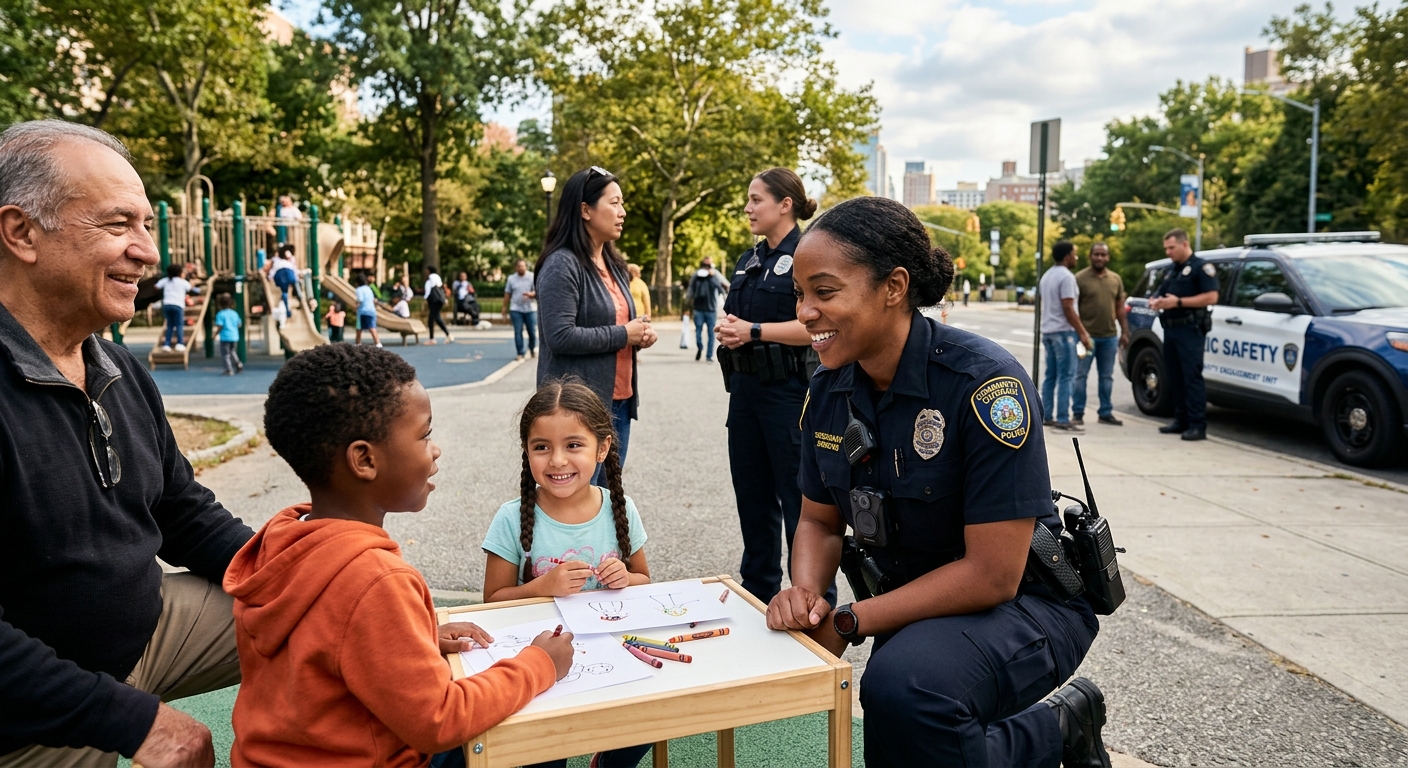
For decades, the default response to nearly every civic and social crisis in the United States has been to dispatch armed law enforcement. From resolving domestic disputes and addressing mental health episodes to managing unhoused populations and enforcing minor traffic infractions, society has placed an extraordinary and unsustainable burden on police officers. This expectation has effectively transformed law enforcement agencies into the primary intervention tool for complex systemic failures that they are fundamentally ill-equipped to handle. The expanding footprint of the criminal justice system has sparked a profound national debate regarding what true public safety looks like and how municipalities can better allocate their resources. Reimagining the role of police requires a paradigm shift—moving away from a system rooted in punitive measures and toward a holistic framework that prioritizes community investment, specialized civilian response, and preventative care.
The Societal and Financial Toll of an Expanded Police Mandate
The financial implications of modern policing are staggering. Across the country, municipal and county governments routinely allocate massive portions of their general funds to sustain and expand their law enforcement apparatus. These budgets cover everything from advanced tactical gear and extensive overtime pay to the processing of millions of arrests annually. However, an analysis of civic expenditures demonstrates that relying on the criminal legal system to solve social problems is an inherently flawed strategy. According to the Vera Institute of Justice, excessive spending on police, jails, and courts does not consistently correlate with enhanced public safety, and it actively diverts critical funding away from community-based programs that address the root causes of crime.
When municipal budgets disproportionately favor law enforcement, essential civic resources such as public health initiatives, affordable housing development, youth outreach, and public education are inevitably underfunded. Furthermore, the human cost of this over-reliance is disproportionately borne by marginalized communities. Over-policing often results in the criminalization of poverty and the exacerbation of racial disparities. The routine deployment of armed officers to non-violent situations heightens the probability of escalation, transforming minor civic nuisances into life-altering encounters within the criminal justice system.
Law enforcement personnel frequently report high levels of stress and burnout stemming from this mission creep. When officers are constantly reacting to societal failures rather than focusing on serious criminal investigations, clearance rates for violent crimes plummet. This dynamic reveals a dual failure: vulnerable individuals do not receive the specialized care they desperately need, and public safety organizations are stretched too thin to effectively perform their core investigative duties. Acknowledging these severe financial and social tolls is the first step toward restructuring public safety.
Transforming Crisis Intervention Through Civilian-Led Models
One of the most glaring vulnerabilities in the current policing model is the utilization of armed officers to manage behavioral and mental health crises. Law enforcement academies traditionally dedicate the vast majority of their extensive training hours—often averaging over 800 hours per recruit—to tactical skills, firearms proficiency, and defensive maneuvers, leaving only a fraction of that time for crisis de-escalation and behavioral health education. Consequently, when officers arrive at a scene where an individual is experiencing a severe psychiatric episode, the presence of a uniform, flashing lights, and a firearm can trigger panic and rapidly escalate the situation, frequently with fatal consequences.
To mitigate these outcomes, advocates and policymakers are championing alternative response models that remove law enforcement from the equation entirely. Implementing a behavioral health coordinated system involves deploying specialized teams of licensed clinical social workers, paramedics, and peer support specialists to non-violent emergency calls. The Substance Abuse and Mental Health Services Administration (SAMHSA) emphasizes the necessity of developing comprehensive crisis care systems that route individuals toward treatment rather than the criminal justice system. Communities that have adopted civilian-led mobile crisis units report significant reductions in unnecessary arrests and emergency room visits, demonstrating that a compassionate, health-first approach is both safer and more effective.
Reevaluating the Necessity of Armed Traffic Enforcement
Routine traffic stops constitute the most frequent point of contact between civilians and law enforcement. Historically framed as an essential component of highway safety, these encounters have increasingly come under scrutiny for their high risk of escalation and their role in facilitating racial profiling. Minor infractions—such as an expired registration tag, a broken taillight, or failure to signal—are frequently leveraged as pretextual stops to conduct unwarranted searches. These subjective enforcement practices generate deep community mistrust and regularly result in constitutional violations.
A reimagined approach to public safety involves drastically reducing the footprint of armed officers on the roadways. Policy experts suggest transitioning the responsibility of traffic enforcement to unarmed civilian agencies or relying more heavily on automated technology. For instance, research from the Brookings Institution highlights how the integration of autonomous vehicles and advanced traffic management technology could effectively eliminate the necessity for routine police intervention on highways. By decoupling traffic enforcement from traditional policing, municipalities can eliminate a primary vector for violent encounters, alleviate the administrative burden on police departments, and ensure that traffic laws are enforced equitably and objectively.
Beyond administrative changes, rethinking traffic safety also involves profound investments in civil engineering and urban design. Implementing traffic calming measures—such as protected bike lanes, pedestrian islands, and narrower roadways—naturally forces drivers to reduce their speeds without the looming threat of an armed police stop. By designing safer streets proactively, municipalities can drastically reduce traffic fatalities while simultaneously scaling back the punitive enforcement mechanisms that have historically fractured police-community relations.
Fostering Supportive Educational Environments Beyond Law Enforcement
The militarization of public spaces has extended deeply into the American educational system through the widespread placement of School Resource Officers (SROs). While initially introduced under the guise of protecting students from external threats, the constant presence of armed police in hallways has fundamentally altered school disciplinary frameworks. Minor behavioral issues and typical adolescent indiscretions that were once handled internally by teachers and administrators are now frequently outsourced to law enforcement, leading to citations and arrests.
This dynamic fuels the school-to-prison pipeline, a systemic trajectory that disproportionately impacts students of color and youth with disabilities. Reimagining public safety necessitates the removal of armed law enforcement from educational settings. Instead of funding police contracts, school districts are increasingly urged to reinvest those resources into hiring more school psychologists, nurses, counselors, and social workers. By prioritizing restorative justice practices and trauma-informed care over punitive enforcement, schools can cultivate a genuinely supportive environment that addresses the emotional and developmental needs of students, thereby preventing behavioral issues before they escalate.
The psychological impact of attending a heavily policed school cannot be overstated. For many students, particularly those growing up in over-policed neighborhoods, the sight of a uniform in their school hallway induces anxiety and signals that they are viewed as potential criminals rather than developing learners. Transitioning away from this punitive model requires a cultural reset within the education system. Implementing peer mediation programs and comprehensive mental health screenings can preemptively identify students who are struggling, offering them a lifeline rather than a criminal record.
The Economics of Safety: Reinvesting in Community Infrastructure
Ultimately, the movement to reimagine the role of police is deeply rooted in economics and the prioritization of community infrastructure. A municipal budget is a moral document that reflects a community’s core values. When a city chooses to allocate the lion’s share of its discretionary funds to law enforcement, it signals a commitment to managing the symptoms of societal decay rather than curing the underlying disease. The concept of reinvestment is not about creating a void in public safety, but rather about right-sizing an overly inflated apparatus to fund proactive solutions.
Investing in comprehensive community infrastructure includes expanding access to affordable housing, ensuring robust funding for public health clinics, creating sustainable youth employment programs, and improving public transit. These foundational elements are the true drivers of public safety. When individuals have reliable shelter, economic opportunities, and access to necessary physical and mental healthcare, the structural drivers of crime are significantly diminished. Shifting resources away from reactive policing and into preventative community support represents a sustainable, long-term strategy for building resilient and peaceful neighborhoods.
Frequently Asked Questions (FAQ)
What does “reimagining policing” actually mean?
Reimagining policing refers to the critical examination and restructuring of public safety frameworks. It involves reducing the societal reliance on armed law enforcement to handle non-violent social issues, such as mental health crises and traffic enforcement, and shifting those responsibilities to specialized civilian professionals. It focuses on addressing root causes of crime rather than exclusively punishing the symptoms.
How do civilian crisis response teams operate without armed police?
Civilian crisis response teams are typically composed of trained medics, licensed clinical social workers, and peer support specialists. When dispatched to non-violent emergency calls, they utilize advanced de-escalation techniques and behavioral health expertise to stabilize the individual in crisis. Their goal is to connect the person with community-based treatment resources, bypassing the criminal justice system and avoiding the trauma of arrest.
Why are advocates pushing to remove police from schools?
The presence of armed police in schools has been shown to criminalize minor behavioral infractions, disproportionately affecting students of color and those with disabilities. Advocates argue that schools should focus on education and restorative justice. Replacing police officers with mental health counselors, nurses, and psychologists allows schools to support student well-being rather than funneling youths into the juvenile justice system.
Does reallocating police budgets lead to higher crime rates?
Studies and public policy analyses suggest that reallocating funds from law enforcement to critical community services—such as affordable housing, healthcare, and educational programs—actually addresses the root causes of crime. By proactively investing in preventative measures and supporting marginalized populations, communities can achieve sustainable, long-term safety without relying exclusively on punitive law enforcement strategies.
Conclusion: Moving Toward Holistic Community Safety
The demand to rethink public safety is not merely a reactionary critique of law enforcement; it is a visionary blueprint for a healthier, more equitable society. By acknowledging the limitations and inherent risks of relying on armed officers to cure complex social ills, communities can begin the vital work of restructuring their civic priorities. Through the implementation of civilian-led crisis interventions, the reform of traffic and school enforcement, and the targeted reinvestment of municipal budgets into preventative community care, it is possible to build a public safety infrastructure that truly protects, serves, and uplifts all citizens.
References
- 2025 National Guidelines for a Behavioral Health Coordinated System of Crisis Care — Substance Abuse and Mental Health Services Administration (SAMHSA). 2025-01-15. https://www.samhsa.gov/
- Budget Justice — Vera Institute of Justice. 2020-09-24. https://www.vera.org/
- Autonomous vehicles could improve policing, public safety, and much more — Brookings Institution. 2020-08-25. https://www.brookings.edu/
- State and Local Law Enforcement Training Academies and Recruits, 2022 — Bureau of Justice Statistics. 2024-11-14. https://bjs.ojp.gov/
Similar Articles








Read full bio of Sneha Tete




