
Rethinking Public Safety: Community Reinvestment
Discover how shifting resources to community services creates lasting security.
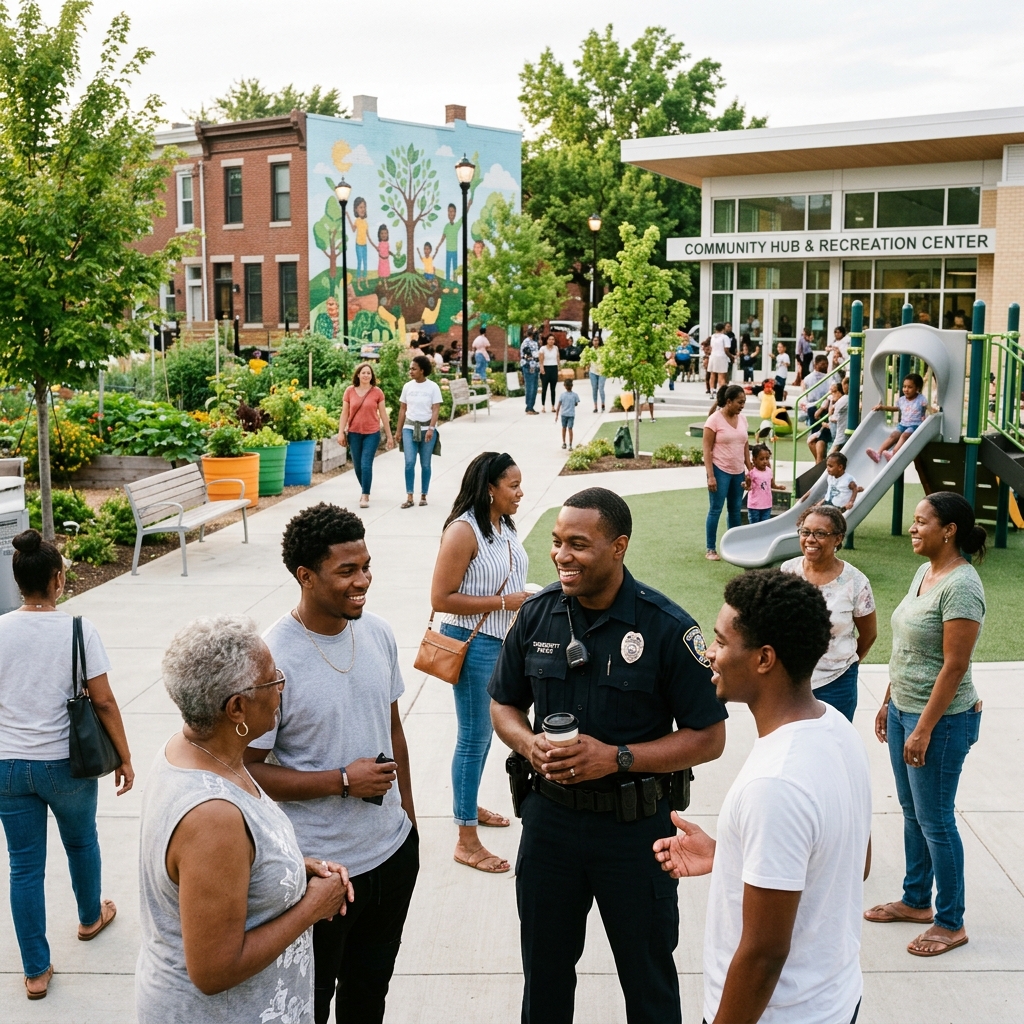
The conversation surrounding public safety in the United States has reached a critical juncture. For generations, the default solution to preventing crime and maintaining order has been to increase the size, scope, and funding of traditional law enforcement agencies. However, a growing body of evidence, alongside vocal community advocacy, suggests that this heavily reactive approach may not be the most effective way to foster truly secure neighborhoods. Communities nationwide are coming together to demand transparency and evidence-based solutions, rejecting decades-old paradigms that treat every social ill as a criminal justice problem. Instead, a new paradigm is emerging—one that advocates for the strategic reallocation of public funds from police departments toward essential, life-affirming community services.
This transformative approach argues that true safety does not originate from the threat of arrest or incarceration. Rather, it is born from stability and opportunity. When communities have robust access to mental health care, affordable housing, quality education, and addiction treatment, the root causes of many low-level crimes are addressed before they ever manifest. By critically examining the limitations of our current policing models and exploring successful alternative response programs across the nation, we can begin to understand why reinvesting in community infrastructure is a practical, data-driven strategy for reducing systemic harm and building lasting public security.
The Escalation of Law Enforcement Spending
To understand the push for resource reallocation, one must first examine the historical trajectory of municipal budgets in the United States. Over the past few decades, state and local governments have consistently increased their financial commitments to police protection. According to data published by the Bureau of Justice Statistics, state and local government expenditures on police protection rose significantly between 2000 and 2017 . In many jurisdictions, this ballooning budget has frequently outpaced corresponding investments in social safety nets, public health initiatives, and early childhood education.
Despite these massive financial injections into the justice system, many cities continue to grapple with persistent cycles of poverty, substance abuse, and interpersonal violence. The central critique brought forth by policy experts is not that law enforcement serves absolutely no purpose, but that the returns on these escalating, disproportionate investments are drastically diminishing. Funneling a massive share of taxpayer dollars into police departments leaves other critical civic institutions chronically underfunded. When local schools lack dedicated guidance counselors, housing authorities have multi-year waitlists, and public clinics cannot accommodate psychiatric emergencies, the social fabric naturally frays. Inevitably, the fallout from these systemic socioeconomic failures spills into the streets, where police officers are suddenly dispatched to manage the complex symptoms of poverty and mental illness rather than the specific, violent crimes they were originally trained to solve.
Why Traditional Policing Is Stretched Too Thin
Modern police officers are routinely asked to wear too many hats, burdened with societal responsibilities they were never meant to carry. A single patrol shift might require an officer to act as a social worker, a mental health professional, an addiction counselor, a domestic mediator, and a truancy officer. The fundamental problem with this dynamic is that law enforcement personnel are primarily trained in tactical response, criminal apprehension, interrogation, and the use of physical force. They are generally not provided with extensive training in long-term behavioral therapy, the nuanced de-escalation of severe psychotic episodes, or compassionate homelessness intervention.
When armed officers are dispatched to resolve non-violent, public health-related crises, the inherent risk of unnecessary escalation is dangerously high. The mere presence of a law enforcement uniform, flashing lights, and lethal weapons can induce extreme panic in an individual experiencing a mental health crisis, occasionally leading to tragic, fatal outcomes. Furthermore, relying on police to handle these deep-seated societal issues often results in an endless, expensive cycle of arrest and release. An unhoused individual might be incarcerated for trespassing, loitering, or public intoxication, only to be released back onto the very same streets a few days later without any underlying medical treatment or housing support. This revolving door is incredibly expensive for taxpayers and actively detrimental to the physical and psychological well-being of the marginalized individuals caught within it.
The Core Pillars of Community Reinvestment
Reimagining public safety requires a highly proactive, restorative framework. If a municipality decides to shift a portion of its budget away from traditional policing, those freed-up funds must be deliberately and strategically channeled into programs that neutralize the catalysts of crime before they trigger a 911 call. The most successful and sustainable reallocation strategies focus heavily on three primary pillars of community health and infrastructure.
1. Mental Health and Addiction Support
Behavioral health crises and unmanaged substance use disorders drive a substantial, overwhelming volume of emergency dispatch calls across the country. When municipal funds are redirected toward community-based clinics, 24/7 detox centers, and highly accessible psychiatric care, individuals can receive appropriate medical treatment rather than a permanent criminal record. Establishing non-punitive, supportive spaces for rehabilitation decreases desperation-driven offenses, such as theft to support an addiction, and drastically alleviates the immense daily burden placed on local emergency rooms and county jails.
2. Housing as a Form of Safety
Housing insecurity is intrinsically linked to public disorder, community distress, and petty crime. Individuals who are forced to live on the street due to economic hardship are highly vulnerable to both committing survival crimes and becoming victims of severe violence themselves. By investing heavily in affordable housing developments, transitional shelters, and emergency rent-assistance programs, cities can provide the baseline stability required for people to seek steady employment and essential medical care. Countless housing-first initiatives have consistently demonstrated that providing a safe, reliable living environment is ultimately far cheaper and vastly more humane than repeatedly policing, sweeping, and criminalizing homeless encampments.
3. Youth Engagement and Educational Opportunities
Chronically underfunded schools, crumbling community facilities, and a stark lack of extracurricular programming leave young people with incredibly limited pathways to success. Investing in modern youth centers, comprehensive after-school mentorship programs, and vocational training equips adolescents with tangible life skills and a profound sense of belonging. When communities provide viable, legal avenues for economic advancement and personal growth, the allure of gang involvement and juvenile delinquency drops precipitously, breaking the school-to-prison pipeline before it takes hold.
Proven Alternatives: Success Stories from the Field
The concept of reallocating police funds to specialized social services is not merely a theoretical, academic exercise. Several forward-thinking municipalities across the United States have already implemented alternative crisis response programs that entirely bypass traditional law enforcement for specific 911 calls, yielding highly promising, data-backed results.
Denver’s STAR Program
In Denver, Colorado, the Support Team Assisted Response (STAR) program has quickly become a leading, nationally recognized model for alternative crisis intervention. Launched to handle low-risk, non-violent emergency calls explicitly related to mental health distress, poverty, and substance abuse, the STAR program dispatches a specialized two-person team consisting of a trained paramedic and a licensed behavioral health clinician. According to an extensive interim evaluation conducted by the Urban Institute, the STAR program has effectively and safely diverted thousands of calls away from traditional police response, significantly reducing the likelihood of unnecessary arrests and connecting vulnerable individuals directly to community-based care networks . By expertly handling these specific public health incidents, the program frees up armed officers to strictly focus their attention on severe, violent crimes where their specialized tactical training is actually required and beneficial.
The CAHOOTS Model in Oregon
Decades before the national conversation dramatically shifted toward police reform and budget reallocation, the city of Eugene, Oregon, pioneered the Crisis Assistance Helping Out On The Streets (CAHOOTS) program. Operating as a highly mobile crisis intervention team, CAHOOTS is deeply and seamlessly integrated into the local regional 911 dispatch system. When a 911 or non-emergency call involves an individual in psychiatric distress or a non-violent interpersonal dispute, a medical professional and a seasoned crisis worker are dispatched instead of armed police officers. Recent rigorous academic evaluations have highlighted the immense efficacy of this community-first approach. A comprehensive 2025 working paper published by the prestigious National Bureau of Economic Research emphasizes that mobile crisis response teams like CAHOOTS not only provide demonstrably better, more compassionate care for those in acute distress, but they also support better overall policing by optimizing emergency resource allocation and virtually eliminating unnecessary low-level arrests .
Addressing Common Misconceptions About Reallocation
The growing movement to redefine public safety is frequently subjected to intense political polarization, often grossly oversimplified by inflammatory slogans that fail to capture the deep nuance of the actual policy proposals. One of the primary, most pervasive misconceptions is that reallocating funds—often controversially branded in the media as “defunding”—means the immediate and complete elimination of police departments, intentionally leaving communities entirely vulnerable to violent criminals. In reality, the vast majority of reform advocates, policy analysts, and community organizers are simply calling for a rational, evidence-based recalibration of municipal budgets.
The core objective is absolutely not a lawless society, but rather a structurally sound society where the systemic response actually matches the nature of the emergency. It is highly inefficient and economically wasteful to pay an armed officer a premium, taxpayer-funded salary to write a bureaucratic report on a stolen bicycle, or to repeatedly displace unhoused individuals from public parks. By thoughtfully transferring those specific, non-violent responsibilities to specialized, highly trained civilian agencies, cities can effectively ensure that their police departments are right-sized, significantly better trained, and entirely focused on investigating and preventing serious, violent offenses. Ultimately, it is a compelling argument for strict governmental efficiency just as much as it is an impassioned plea for modern social justice.
Building a Comprehensive Safety Ecosystem
Transitioning toward a truly holistic, community-centric model of public safety will not happen overnight. It requires sustained political will, rigorous ongoing data collection, and deep, unprecedented collaboration between city planners, public health officials, educators, and grassroots community leaders working in tandem. It also necessitates a fundamental shift in our collective cultural mindset—moving far away from the deeply ingrained idea that harsh punishment is the only valid, acceptable response to societal dysfunction, and fully embracing the reality that proactive care, compassion, and prevention are far more powerful tools for maintaining civic order.
Ultimately, a safe community is not defined by having an armed police officer stationed on every single street corner; it is defined by being a place where every resident has their basic human needs met. By critically and honestly evaluating how we spend our limited taxpayer dollars, and deliberately choosing to invest heavily in the foundational infrastructure of human well-being, we can successfully build a public safety ecosystem that is genuinely equitable, incredibly resilient, and highly effective for everyone.
Frequently Asked Questions (FAQs)
What does reallocating police funds actually mean?
Reallocation means taking a portion of the vast financial resources currently dedicated to traditional police departments and directly investing those funds into proactive, community-based services like mental health care clinics, affordable housing initiatives, and comprehensive youth programs. The overarching goal is to address the underlying root causes of crime proactively rather than merely reacting to the damage after the fact.
Do community response teams handle violent crimes?
No. Alternative response programs, such as mobile crisis intervention units, are specifically dispatched strictly to non-violent, low-risk incidents, such as mental health episodes, public intoxication, minor trespassing, or routine welfare checks. Traditional armed police officers continue to be dispatched to respond to violent crimes, active physical threats, and severe, life-threatening emergencies.
How does housing impact local crime rates?
Housing instability is universally recognized as a major driver of public disorder and survival-based crimes. When individuals have reliable access to stable, affordable housing, they are significantly less likely to experience the profound economic desperation that can lead to theft, and they are far less likely to be aggressively criminalized for simply existing in public spaces. Stable housing serves as a mandatory foundation for individuals to successfully find steady work and receive continuous medical care.
Can civilian social workers safely respond to 911 calls?
Yes, and empirical data from long-running programs like CAHOOTS in Oregon and STAR in Colorado decisively prove it. These civilian professionals are highly trained in psychological de-escalation, conflict resolution, and emergency medical care. In the vast majority of non-violent cases, the distinct absence of lethal weapons and imposing police uniforms actually helps to quickly calm individuals in crisis, leading to peaceful, productive resolutions without ever requiring police backup.
Are crime rates guaranteed to drop if a city invests in community services?
While no single public policy offers an absolute, ironclad guarantee, extensive sociological and economic data strongly suggest that deep-seated poverty and a stark lack of opportunity are the primary, most consistent drivers of crime. Communities that choose to invest heavily in comprehensive social safety nets consistently show much lower rates of violent and property crimes over the long term compared to jurisdictions that rely solely on reactive, punitive policing measures.
References
- State and Local Government Expenditures on Police Protection in the U.S., 2000-2017 — Bureau of Justice Statistics. 2020-07-13. https://bjs.ojp.gov/library/publications/state-and-local-government-expenditures-police-protection-us-2000-2017
- Evaluating Alternative Crisis Response in Denver’s Support Team Assisted Response (STAR) Program: Interim Findings — Urban Institute. 2024. https://www.urban.org/research/publication/evaluating-alternative-crisis-response-denvers-support-team-assisted-response-star-program
- Mobile Crisis Response Teams Support Better Policing: Evidence from CAHOOTS — National Bureau of Economic Research. 2025-05. https://www.nber.org/papers/w33761
Similar Articles








Read full bio of Sneha Tete


