
Rethinking the Militarization of American Law Enforcement
Examining how paramilitary equipment affects police and community trust.
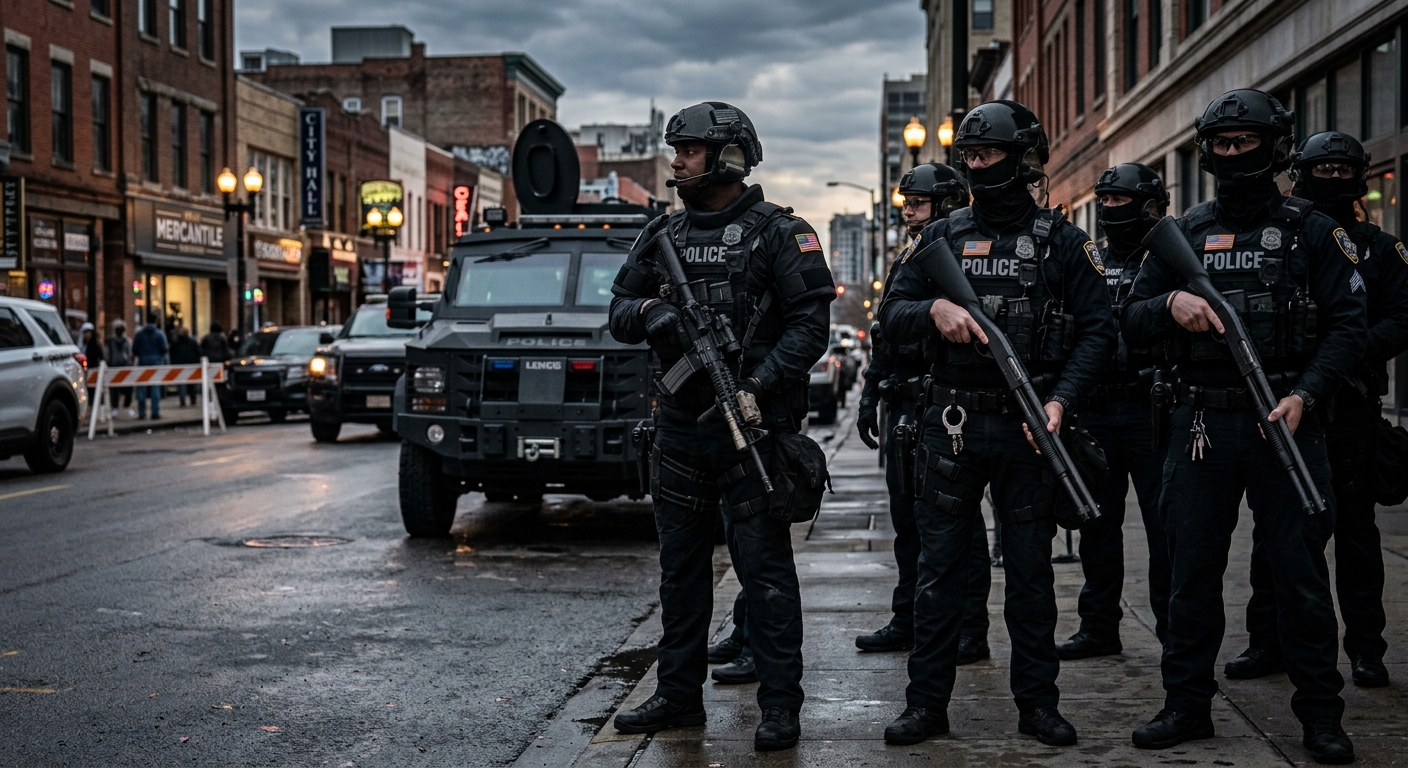
Policing in the United States has undergone a visual, tactical, and philosophical transformation over the last few decades. The traditional image of the neighborhood peace officer has, in many jurisdictions, been supplemented or entirely replaced by specialized units equipped with gear originally designed for foreign battlefields. Armored personnel carriers, high-caliber rifles, flashbang grenades, and camouflage uniforms are no longer exclusive to the armed forces. They have become fixtures in local police departments across the nation. This metamorphosis is not merely aesthetic; it represents a profound shift in how law enforcement agencies interact with the communities they are sworn to protect.
Historically, the United States has maintained a strict demarcation between the military and domestic law enforcement, a principle deeply rooted in democratic traditions. However, the blurring of these lines has accelerated significantly. The deployment of paramilitary equipment fundamentally alters the relationship between the state and the civilian populace, raising critical questions regarding public safety, civil rights, and the core purpose of domestic policing. As municipalities grapple with the complexities of modern law enforcement, a growing consensus of civil rights advocates, academic researchers, and policy analysts are urging a critical reevaluation of the mechanisms that funnel military surplus to local jurisdictions. The argument is clear: treating neighborhoods like war zones does not necessarily make them safer, and the collateral damage to community relations can be devastating.
The Mechanics of the Pipeline: How Combat Gear Reaches Local Streets
To comprehend the militarization of domestic police, one must examine the logistical pipelines that facilitate this transformation. The primary mechanism is the federal surplus transfer system, which permits the Department of Defense to offload excess equipment to local and state agencies. Following the end of major global conflicts and the downsizing of active military operations, the U.S. government found itself with a massive surplus of combat-ready materiel. Rather than destroying or decommissioning these assets, legislative frameworks were established to repurpose them for domestic anti-drug and anti-terrorism initiatives.
Under these provisions, law enforcement agencies—ranging from massive metropolitan departments to small-town sheriff’s offices—can acquire high-value military gear for little more than the cost of shipping and maintenance. This process is overseen by defense logistics entities that manage reutilization and transfer programs. The accessibility of this equipment is staggering. A local police department can acquire an armored Mine-Resistant Ambush Protected (MRAP) vehicle, originally designed to withstand improvised explosive devices in combat zones, essentially free of charge.
Furthermore, these programs often come with stipulations that incentivize the rapid deployment of the acquired gear. Some transfer agreements dictate that the receiving agency must use the equipment within a certain timeframe, typically one year, or risk having it recalled. This ‘use it or lose it’ mandate inevitably encourages local departments to find reasons to deploy SWAT teams and armored vehicles, often integrating them into routine policing activities where such overwhelming force is entirely unnecessary.
The Hidden Financial Burden on Local Municipalities
While the initial acquisition of military surplus gear may appear to be a cost-effective boon for local budgets, the long-term financial realities paint a different picture. The federal government may transfer an armored vehicle or a cache of specialized firearms at a fraction of their manufacturing cost, but the receiving municipality absorbs all subsequent liabilities. The maintenance of combat-grade equipment is notoriously expensive, requiring specialized parts, custom repairs, and specifically trained mechanics. Furthermore, training personnel to operate MRAP vehicles, deploy flashbangs, and utilize high-caliber weaponry requires extensive, ongoing educational programs that drain departmental funds.
Beyond direct operational costs, the heightened risk of escalating civilian encounters brings significant financial peril in the form of civil litigation. When militarized tactics lead to property destruction, wrongful injury, or loss of life, municipalities frequently face multi-million dollar settlements. Thus, the pursuit of heavily discounted military hardware often traps local governments in a cycle of ballooning expenditures, diverting crucial taxpayer funds away from community-based initiatives, mental health crisis response teams, and public infrastructure projects that genuinely contribute to societal well-being.
Assessing the Contrast: Military vs. Civilian Policing Needs
| Feature | Military Engagement | Domestic Policing |
|---|---|---|
| Primary Objective | Defeat an enemy force; secure territory. | Protect citizens; uphold the law; maintain peace. |
| Rules of Engagement | Overwhelming force authorized against combatants. | Minimum necessary force; strict constitutional limits. |
| Equipment Design | Lethality, armor against explosives, camouflage. | Visibility, accessibility, less-lethal options. |
| Target Environment | Hostile territories, war zones. | Civilian neighborhoods, local communities. |
The Illusion of Enhanced Safety and Crime Reduction
A central justification for outfitting civilian police with combat gear is the assertion that it enhances public safety and protects officers during high-risk operations. Proponents argue that the modern threat landscape necessitates an overwhelming tactical advantage. However, empirical studies present a sharply contrasting reality. Rigorous academic analyses consistently fail to find a statistically significant correlation between the acquisition of military equipment and a reduction in violent crime rates.
Comprehensive research analyzing the distribution of federal surplus equipment to local agencies demonstrates that the deployment of militarized units does not enhance officer safety or decrease local crime. A landmark 2018 study published in the Proceedings of the National Academy of Sciences (PNAS) analyzed nationwide panel data and concluded that militarized policing fails to deliver its promised safety benefits. In fact, some data suggests the opposite effect: the introduction of paramilitary tactics can escalate volatile situations, increasing the likelihood of lethal encounters for both civilians and officers.
When law enforcement approaches a situation with overwhelming military force, the inherent tension of the encounter skyrockets. A routine warrant execution can rapidly degrade into a violent confrontation when initiated by flashbangs, battered doors, and officers wielding assault rifles. The reliance on sheer force often sidelines essential de-escalation techniques, substituting tactical dominance for critical communication and conflict resolution skills.
The Erosion of Community Trust: Guardians vs. Warriors
Beyond the statistics of crime rates and equipment ledgers, the deployment of combat-style equipment exacts a heavy toll on the psychological well-being of a community. The foundation of effective policing in a democratic society relies heavily on the concept of policing by consent—the idea that police derive their authority from the public’s trust, respect, and cooperation. This model requires officers to be viewed as accessible ‘guardians’ of the community.
Equipping police officers like soldiers invariably cultivates a ‘warrior’ mentality, both within the department and in the eyes of the public. When officers patrol streets in armored vehicles and tactical gear, it sends an unequivocal message to residents: you are perceived as a potential threat, and your neighborhood is viewed as a hostile territory. This visual intimidation breeds fear rather than respect.
The transformation is psychological as much as it is physical. Training programs that emphasize survival at all costs and treat every civilian encounter as a potentially lethal ambush reinforce the warrior mindset. When officers are conditioned to view themselves as soldiers on the front lines of a war against crime, the citizens they interact with are inevitably cast in the role of enemy combatants. This profound alienation severs the critical bonds of trust required for community members to report crimes, act as witnesses, and collaborate with law enforcement.
Disproportionate Impacts on Marginalized Demographics
The consequences of militarized law enforcement are not distributed evenly across the American populace. Decades of data reveal a stark and deeply troubling pattern: militarized police units are disproportionately deployed in communities of color, amplifying historical inequalities and systemic biases within the criminal justice system.
Research consistently demonstrates that Special Weapons and Tactics (SWAT) teams—the most common manifestation of paramilitary policing at the local level—are significantly more likely to be utilized in predominantly Black and Hispanic neighborhoods. Crucially, this disproportionate deployment persists even when researchers control for local crime rates. The routine use of these high-octane tactics for relatively low-level offenses, such as executing search warrants for suspected drug possession, subjects marginalized communities to unparalleled levels of trauma and risk.
The normalization of military-style raids in minority neighborhoods reinforces a dual-tiered system of justice, where some communities experience policing as a collaborative public service, while others experience it as a hostile occupation. This disparity further erodes the legitimacy of law enforcement institutions in the eyes of those who are most frequently subjected to their harshest tactics.
Constitutional Implications and Civil Liberties Concerns
The escalation of police militarization presents acute challenges to the constitutional rights guaranteed to American citizens. Among the most visible casualties of this trend is the First Amendment. The right of the people peaceably to assemble and petition the government for a redress of grievances is a cornerstone of democracy. However, when peaceful protests and civil demonstrations are met with phalanxes of officers clad in riot gear, brandishing assault rifles, and supported by armored personnel carriers, it creates a profound chilling effect on free speech.
The mere presence of militarized force can escalate tensions at a demonstration, turning peaceful assemblies into confrontational flashpoints. The utilization of tear gas, rubber bullets, and mass containment tactics against protesters blurs the line between crowd control and combat operations, often punishing lawful assembly under the guise of maintaining order.
Furthermore, the aggressive nature of paramilitary policing frequently implicates the Fourth Amendment, which guards against unreasonable searches and seizures. The proliferation of no-knock warrants executed by heavily armed tactical teams often leads to violent, property-destroying entries into private residences. The aggressiveness inherent in these tactics fundamentally conflicts with the principles of restraint and proportionality required by the Constitution. When homes are raided in the middle of the night with explosive breaching tools, the sanctity of the home is violated, and the risk of catastrophic errors—such as raiding the wrong address or triggering tragic misunderstandings—is magnified immensely.
Pathways to Reform: Re-establishing the Guardian Ethos
Addressing the deeply entrenched militarization of local police requires a comprehensive, multi-faceted approach aimed at curtailing the flow of military equipment, imposing strict oversight, and fostering a cultural shift within law enforcement agencies.
- Rollback of Transfer Programs: Legislative action is necessary at the federal level to strictly limit or entirely abolish programs that funnel offensive military weaponry—such as armored vehicles, high-caliber firearms, and grenade launchers—to civilian police departments. Equipment designed exclusively for the battlefield has no place on local streets.
- Local Democratic Oversight: Municipalities must enact transparency laws that mandate public hearings and explicit city council approvals before a police department can acquire controlled equipment from federal sources or private vendors. Communities must have a voice in deciding how they are policed.
- Revising Tactical Protocols: Agencies must establish rigorous, standardized protocols that restrict the deployment of SWAT teams and paramilitary tactics strictly to active, life-threatening emergency scenarios—such as active shooter incidents or hostage crises. Their use in routine warrant executions must be severely curtailed.
- Prioritizing De-escalation Training: Police academies must pivot away from warrior-centric curriculums. Training must emphasize constitutional rights, implicit bias recognition, crisis intervention, and advanced de-escalation techniques, reinforcing the core identity of the officer as a community guardian.
Frequently Asked Questions (FAQ)
What is the main driver behind the militarization of local police?
The primary driver is the federal surplus transfer programs, which allow the Department of Defense to transfer excess military equipment, including armored vehicles and high-powered firearms, to state and local law enforcement agencies at minimal cost. This, combined with an influx of federal grant money aimed at counter-terrorism and counter-narcotics, has fueled the acquisition of tactical gear.
Does military equipment make police officers and communities safer?
Empirical research indicates that outfitting local police with military gear does not lead to a reduction in violent crime or enhance officer safety. Studies have shown that increased militarization can actually escalate volatile situations and increase the risk of violence for both civilians and officers.
How does police militarization affect First Amendment rights?
When law enforcement responds to peaceful protests with riot gear, armored vehicles, and military-grade crowd control weapons, it creates a chilling effect on free speech and the right to assemble. The overwhelming show of force often escalates tensions and can turn peaceful demonstrations into chaotic and violent confrontations.
What steps can local governments take to address this issue?
Local governments can pass ordinances requiring police departments to obtain approval from the city council or civilian oversight boards before acquiring or deploying military-style equipment. Enhancing transparency, requiring detailed reporting on the use of SWAT teams, and demanding community input are crucial steps toward demilitarization.
References
- The “1033 Program,” Department of Defense Support to Law Enforcement — Defense Technical Information Center. 2014-08-28. https://apps.dtic.mil/sti/citations/ADA610738
- Militarization Fails to Enhance Police Safety or Reduce Crime but May Harm Police Reputation — Proceedings of the National Academy of Sciences (PNAS). 2018-08-21. https://www.pnas.org/doi/10.1073/pnas.1805161115
- New Study Findings: Militarizing Local Police Does Not Reduce Crime — Louisiana State University. 2020-12-07. https://www.lsu.edu/mediacenter/news/2020/12/07polsci_gunderson_nature.eb.php
- Police demilitarization and violent crime — Nature Human Behaviour (via PubMed). 2021-02-15. https://pubmed.ncbi.nlm.nih.gov/33589809/
Similar Articles








Read full bio of medha deb




