
Rethinking Immigration Enforcement: Untangling Local Police
Untangling local police from ICE builds trust and enhances public safety.
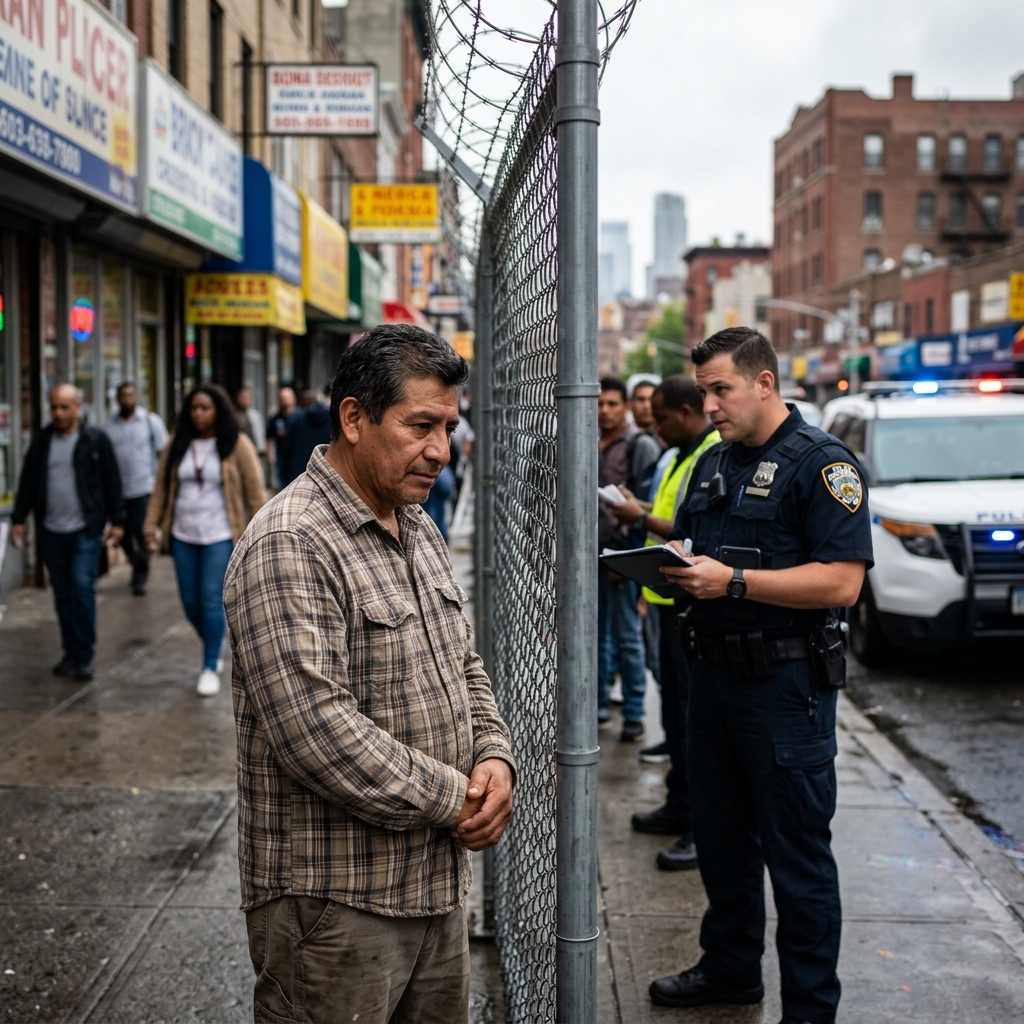
The Intersection of Local Policing and Federal Immigration Policies
The relationship between local law enforcement agencies and federal immigration authorities has been a subject of intense scrutiny, debate, and policy shifts for decades. At the heart of this discourse is a fundamental question: Should state, county, and municipal police officers be deputized to enforce federal immigration laws? While proponents argue that collaboration acts as a force multiplier for national security and border enforcement, a growing consensus among criminologists, civil rights advocates, and community leaders suggests the opposite. The entanglement of local police with U.S. Immigration and Customs Enforcement (ICE) often creates a duality in local policing that undermines its primary objective: keeping communities safe.
When local officers take on the role of immigration agents, the foundational trust required for effective community policing begins to fracture. Public safety relies on the willingness of residents to report crimes, step forward as witnesses, and assist in investigations. However, when the lines between local law enforcement and federal deportation efforts are blurred, marginalized communities retreat into the shadows. This comprehensive analysis explores the mechanisms of ICE collaboration programs, the paradoxical impact they have on public safety, and the broader socioeconomic and health consequences of deputizing local police for immigration enforcement.
Deconstructing ICE Collaboration Programs
To understand the impact of local-federal immigration partnerships, it is essential to examine the legal and operational frameworks that make them possible. The two most prominent mechanisms for this collaboration are the 287(g) program and the issuance of ICE detainer requests under broad information-sharing initiatives.
The Mechanics of the 287(g) Program
Added to the Immigration and Nationality Act (INA) in 1996, Section 287(g) allows the Department of Homeland Security to delegate specific immigration enforcement authorities to state and local law enforcement agencies. Through Memorandums of Agreement (MOAs), local officers are trained and authorized to perform the functions of federal immigration agents under ICE supervision.
The program typically operates under distinct operational models:
- The Jail Enforcement Model: Deputized officers working within local correctional facilities can interrogate individuals who have been arrested on state or local charges about their immigration status, subsequently initiating deportation proceedings before the individual is released.
- The Task Force Model: This model allows local officers to enforce immigration laws during routine policing duties, such as traffic stops or neighborhood patrols, significantly expanding the reach of federal immigration enforcement into daily civilian life.
While ICE positions the 287(g) program as a vital tool for removing dangerous criminals from communities, critics argue that it frequently ensnares individuals with minor infractions, such as traffic violations, thereby expanding the deportation pipeline without necessarily targeting severe security threats.
Information Sharing and Detainer Requests
Another cornerstone of federal-local collaboration is biometric information-sharing frameworks. When local police arrest an individual and submit their fingerprints to the FBI for criminal background checks, this data is automatically routed to ICE databases.
If ICE determines the individual may be deportable, they issue an “immigration detainer” or “hold request.” This administrative document asks the local jail to hold the individual for up to an additional 48 hours beyond their scheduled release time (e.g., after charges are dropped, bail is posted, or a sentence is served) so that ICE agents can arrive and assume custody. Because detainers are administrative requests rather than judicial warrants signed by a judge, their constitutionality has been frequently challenged in federal courts, leading many jurisdictions to limit or outright refuse compliance.
The Public Safety Paradox: Why Entanglement May Reduce Community Security
The stated goal of ICE collaboration programs is to enhance public safety by removing individuals who pose a threat. However, a deeper examination reveals a “public safety paradox”—the very programs designed to protect communities often end up making them more vulnerable to crime.
The Chilling Effect on Crime Reporting
The most severe consequence of police-ICE collaboration is the “chilling effect” it has on crime reporting within immigrant communities. When local police are viewed as an extension of federal immigration enforcement, undocumented immigrants—and even their legally present family members—become deeply reluctant to interact with authorities.
Academic research confirms this dynamic. A study measuring the impact of interior immigration enforcement found that when local law enforcement collaborates with ICE, undocumented immigrants become statistically less likely to trust that police will keep them safe, protect witness confidentiality, or shield them from discrimination.
This erosion of trust creates a fertile environment for criminals. Predators are keenly aware of which populations are afraid to call the police. Consequently, immigrants become disproportionately targeted for offenses such as robbery, domestic violence, wage theft, and extortion. If a victim of domestic violence believes that calling 911 will result in their own deportation or the separation of their family, they are likely to endure the abuse in silence. In this way, the entire community becomes less safe, as violent offenders remain on the streets unpunished.
Misallocation of Local Resources
Local police departments operate with finite budgets and limited personnel. When local jurisdictions sign 287(g) agreements or dedicate resources to honoring ICE detainer requests, they often divert crucial tax dollars and officer hours away from their primary mandate: investigating and preventing local crimes. Time spent interrogating inmates about their country of origin, processing administrative immigration paperwork, or holding individuals beyond their local release dates drains resources that could otherwise be deployed for proactive community policing, rapid emergency response, or solving cold cases.
The Ripple Effects on Health and Civil Liberties
The consequences of deputizing local police as immigration agents extend far beyond the parameters of the criminal justice system. The pervasive fear of deportation infiltrates the daily lives of immigrants, generating profound impacts on public health and civil liberties.
Impacts on Community Health and Well-being
The psychological toll of living in a jurisdiction with aggressive ICE-police collaboration is substantial. The constant fear of family separation creates an environment of toxic stress, which has been linked to long-term mental and physical health deterioration.
Furthermore, this fear often deters individuals from seeking essential medical care. Research has shown that both documented and undocumented immigrants report high levels of stress due to the threat of deportation, which directly and negatively affects their emotional well-being and their willingness to access public health services. During public health crises, such as infectious disease outbreaks, the reluctance of a segment of the population to visit hospitals or clinics due to fear of encountering law enforcement can endanger the health of the entire community.
The Risk of Racial Profiling
Programs that blur the lines between local policing and immigration enforcement inherently increase the risk of racial profiling. When officers are granted the authority to question individuals about their immigration status, the decision of whom to question is often influenced by implicit biases regarding race, ethnicity, or language. This can lead to the systemic harassment of minority communities, where individuals are stopped, questioned, or detained based solely on their appearance or accent, risking violations of fundamental constitutional protections under the Equal Protection Clause.
Assessing the Efficacy of Federal-Local Partnerships
Despite the persistent push for local-federal collaboration, empirical data does not consistently support the claim that these programs reduce crime. In fact, some evidence suggests the opposite. A comprehensive analysis of federal-local partnerships on immigration law enforcement found that the activation of collaborative task force agreements did not reduce crime rates and, in some contexts, significantly increased the risk of violent victimization among certain demographics.
| Policy Objective | Assumed Outcome | Documented Real-World Impact |
|---|---|---|
| Target severe criminal threats | Removal of violent offenders | High volume of deportations for minor infractions (e.g., traffic stops) |
| Improve community security | Safer neighborhoods | Decreased reporting of crimes; vulnerable populations targeted by predators |
| Maximize law enforcement efficiency | Force multiplier for public safety | Diversion of local police budgets and personnel to federal civil matters |
| Deter unauthorized immigration | Lower unauthorized populations | Widespread toxic stress, family separation, and reduced access to healthcare |
This misalignment between intended goals and actual outcomes has driven a growing movement among local leaders to reevaluate their participation in federal immigration enforcement.
Policy Alternatives: Building Trust Through Separation
In response to the negative impacts of ICE collaboration programs, numerous states, counties, and municipalities have enacted policies to formally untangle local policing from federal immigration enforcement. Often referred to colloquially as “trust acts,” these legislative measures are designed to prioritize local public safety over federal civil immigration mandates.
Key components of these trust-building policies include:
- Declining Unconstitutional Detainers: Refusing to hold individuals in local jails based solely on administrative ICE detainers, requiring instead a judicial warrant signed by a judge.
- Ending 287(g) Agreements: Terminating voluntary memorandums of agreement that deputize local officers as ICE agents, ensuring local police focus exclusively on criminal law enforcement.
- Restricting Information Sharing: Limiting the voluntary sharing of release dates, personal addresses, and other non-public information with federal immigration authorities unless mandated by a court order.
- Prohibiting Inquiries into Immigration Status: Forbidding local officers from asking victims, witnesses, or suspects about their citizenship status during routine interactions.
By establishing a clear firewall between local public safety operations and federal immigration enforcement, these jurisdictions aim to foster an environment where all residents, regardless of their background, feel secure in calling for help and cooperating with local authorities.
Frequently Asked Questions (FAQs)
What exactly is the 287(g) program?
The 287(g) program is a provision of the U.S. Immigration and Nationality Act that allows the Department of Homeland Security to enter into formal agreements with state and local law enforcement agencies. These agreements train and authorize local police and sheriff’s deputies to perform the duties of federal immigration agents, such as interrogating individuals about their status and initiating deportation proceedings.
How do ICE detainer requests function in local jails?
An ICE detainer is an administrative request asking a local jail to hold an individual for up to 48 hours past the time they would otherwise be released (e.g., after posting bail or completing a sentence). This extra time gives ICE agents the opportunity to arrive and take the individual into federal custody for deportation processing.
Does ending ICE collaboration mean local police are ignoring violent crime?
No. Ending ICE collaboration simply means local police focus their resources entirely on local criminal law enforcement rather than federal civil immigration enforcement. Individuals who commit violent crimes are still arrested, prosecuted, and sentenced under state and local laws, regardless of their immigration status.
How does police-ICE collaboration affect victims of crime?
When local police cooperate closely with ICE, immigrants often fear that interacting with law enforcement will lead to their deportation or the deportation of a family member. This fear severely discourages victims of domestic violence, extortion, and assault from calling 911, leaving them vulnerable and allowing perpetrators to evade justice.
Conclusion
The debate over immigration enforcement is complex, but the mandate of local law enforcement is straightforward: to protect and serve the community. When local police are co-opted into enforcing federal immigration laws through programs like 287(g) and detainer compliance, the fundamental trust required for effective policing is broken. By critically evaluating these partnerships and opting to disentangle local public safety from federal deportation efforts, communities can foster an environment of mutual trust. True public safety is achieved not through fear and division, but by ensuring that every resident, regardless of their background, can step out of the shadows and rely on the protection of the law.
References
- Delegation of Immigration Authority Section 287(g) Immigration and Nationality Act — U.S. Immigration and Customs Enforcement (ICE). 2026-06-02. https://www.ice.gov/identify-and-arrest/287g
- Federal-Local Partnerships on Immigration Law Enforcement: Are the Policies Effective in Reducing Violent Victimization? — PubMed Central (PMC). 2021. https://www.ncbi.nlm.nih.gov/pmc/articles/PMC8941659/
- How Interior Immigration Enforcement Affects Trust in Law Enforcement — Tom K. Wong / UC San Diego. 2019-04-03. https://gspp.berkeley.edu/assets/uploads/research/pdf/wong_trust_in_law_enforcement_v2.pdf
- The Impact of Immigration and Customs Enforcement on Immigrant Health: Perceptions of Immigrants in Everett, Massachusetts, USA — PubMed Central (PMC). 2020. https://www.ncbi.nlm.nih.gov/pmc/articles/PMC7370005/
Similar Articles








Read full bio of medha deb




