
Rethinking Counter-Terrorism: Civil Liberties vs. Expanded State Power
Analyzing the delicate balance between national security strategies and the protection of constitutional rights.
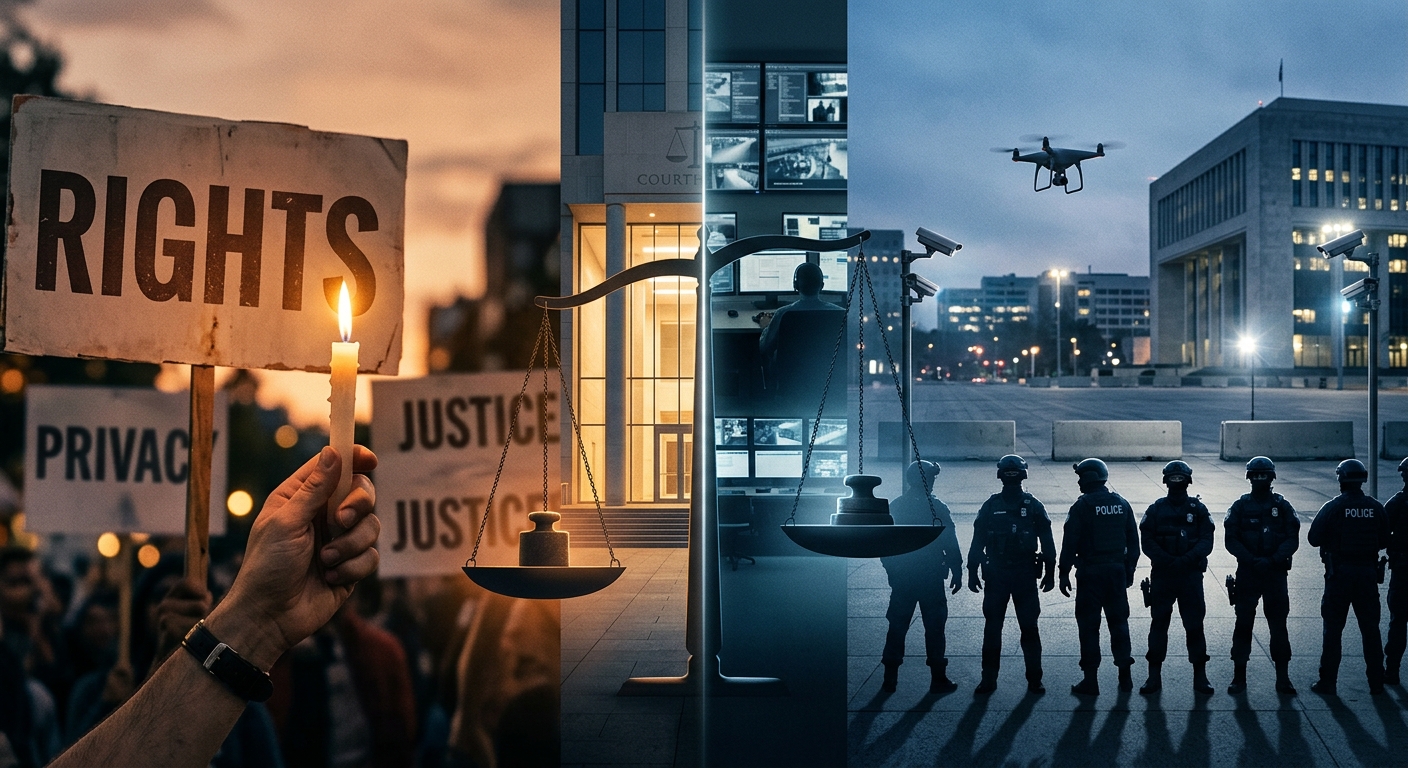
In recent years, the focal point of national security apparatuses has undergone a profound geographical and ideological shift. Nations globally, and particularly the United States, find themselves grappling with the specter of internal, ideologically motivated violence. As the threat landscape pivots from foreign-directed terrorism to domestic violent extremism, governments are rapidly developing new policy frameworks to neutralize these emerging dangers. However, the formulation of a comprehensive internal security strategy introduces a profound dilemma: how can a democratic society fortify its defenses without inadvertently dismantling the civil liberties that define it?
The push to aggressively counter internal threats often defaults to a familiar bureaucratic instinct: expanding the authority, funding, and surveillance capabilities of law enforcement and intelligence agencies. While this approach is championed by policymakers as a necessary adaptation to a heightened threat environment, legal scholars, civil rights advocates, and historians warn of the severe collateral damage such expansions inevitably cause. Enhancing the investigative latitude of the state frequently results in the disproportionate policing of marginalized communities and the chilling of constitutionally protected speech. Analyzing these evolving security paradigms requires a rigorous examination of whether existing legal mechanisms are sufficient and whether granting broader powers truly results in greater public safety, or merely deeper systemic inequity.
The Evolution of Internal Security Frameworks
Historically, the architecture of modern counter-terrorism was largely constructed in the aftermath of international crises, designed primarily to monitor, intercept, and prosecute foreign actors and transnational networks. These frameworks authorized expansive data collection, sophisticated electronic surveillance, and preemptive investigative tactics based on the premise that identifying external threats required a sprawling intelligence net.
Today, intelligence assessments point to a distinctly different primary threat: decentralized, ideologically fragmented domestic actors. In 2021, the Office of the Director of National Intelligence (ODNI) released an unclassified assessment concluding that domestic violent extremists pose an elevated threat to the homeland, driven by varying ideological motivations including racial bias and anti-government sentiments. Responding to this shift, executive branches have drafted comprehensive strategies aimed at mobilizing federal resources to disrupt these domestic networks.
The recalibration of these strategies involves increasing information-sharing between federal, state, and local law enforcement, increasing funding for threat assessment programs, and enhancing monitoring of digital spaces where radicalization frequently occurs. While the stated goal—preventing mass casualty events and targeted violence—is universally supported, the methodology relies on re-deploying tools originally designed for foreign intelligence gathering into the domestic sphere. This inward turn of the security apparatus raises immediate red flags regarding privacy, the threshold for criminal investigations, and the potential for ideological profiling.
The Sufficiency of Existing Legal Mechanisms
A central debate surrounding modern counter-terrorism strategies is the perceived necessity for new investigative powers or specific “domestic terrorism” criminal statutes. Proponents of expanded legal frameworks argue that law enforcement lacks the specific tools necessary to adequately classify, track, and prosecute domestic extremists with the same vigor applied to international terrorists.
Conversely, a critical analysis of the current penal code reveals an extensive, robust array of existing statutes perfectly capable of addressing ideologically motivated violence. Federal prosecutors already possess wide-ranging authority to charge individuals with civil rights violations, hate crimes, weapons offenses, interstate threats, and conspiracy. When an individual commits an act of violence, the existing criminal justice system does not lack the jurisdiction or the punitive power to hold them accountable. The Government Accountability Office (GAO) has continually evaluated how federal agencies track and respond to these threats, frequently emphasizing the need for better collaboration and data management using existing tools, rather than highlighting a deficit in statutory authority.
When policymakers insist on creating new categories of domestic terrorism offenses, they are rarely seeking the ability to prosecute violence—which is already illegal. Instead, the push for expansion typically aims to lower the evidentiary thresholds required to initiate an investigation. By categorizing certain ideologies or affiliations as inherently tied to “terrorism,” agencies can bypass the standard requirement of establishing probable cause of a specific crime, relying instead on vague criteria to justify wiretaps, prolonged physical surveillance, and the use of undercover informants. This shift from reactive prosecution of crimes to preemptive policing of ideologies is where the gravest threats to civil liberties emerge.
Systemic Vulnerabilities and Minority Over-Policing
The most compelling argument against expanding the state’s security apparatus lies in the historical reality of how these powers are deployed. The history of American law enforcement is replete with instances where enhanced investigative authorities, ostensibly granted to protect the nation from grave threats, were weaponized against marginalized communities, political dissidents, and civil rights movements.
When terms like “extremism,” “radicalization,” or “threat to national security” are left broadly defined within policy directives, their application becomes highly subjective. This subjectivity is inevitably filtered through the implicit biases prevalent within institutional structures. Historically, this has resulted in the aggressive surveillance of Black empowerment groups, Indigenous environmental defenders, and organized labor movements. In the post-9/11 era, sweeping counter-terrorism mandates led to the unwarranted mass surveillance of Muslim and Arab American communities, casting entire demographics under a shadow of suspicion based solely on religious and ethnic identity.
Granting broader mandates to counter domestic threats today—even if explicitly motivated by a desire to combat white supremacist violence—creates a durable infrastructure of surveillance that will long outlast the current political administration. Policy analysts consistently warn that tools forged to monitor right-wing militias today can, and historically will, be turned against left-leaning activists, minority rights organizers, and marginalized populations tomorrow. Broad mandates empower agencies to investigate affiliations and beliefs, placing a disproportionate burden on communities of color who already experience elevated levels of traditional policing and systemic scrutiny.
Preserving the Sanctity of Protected Speech
A foundational pillar of a democratic society is the unwavering protection of free expression, assembly, and the right to petition the government for a redress of grievances. The First Amendment strictly prohibits the government from criminalizing ideology, no matter how unpopular, offensive, or radical it may be. The threshold for criminalizing speech is exceptionally high, requiring evidence that the speech constitutes a true threat or is intended to, and is likely to, incite imminent lawless action.
Expansive counter-terrorism strategies naturally encroach upon these constitutional protections. When law enforcement agencies are tasked with preemptively identifying “extremists” before they commit crimes, they must invariably scrutinize the political rhetoric, online discourse, and peaceful organizing of citizens. This preemptive monitoring blurs the critical legal distinction between radical ideology and criminal conduct.
The knowledge that federal agencies are actively monitoring digital platforms, organizing spaces, and public protests creates a profound chilling effect on civic participation. Individuals may self-censor, avoid attending lawful demonstrations, or disengage from controversial political debates out of fear of being flagged in a federal database as a potential security threat. When the state treats intense political dissent as a precursor to terrorism, it stifles the very democratic processes required to address social grievances.
Holistic Solutions Beyond Punitive Mandates
If the expansion of surveillance and law enforcement power presents unacceptable risks to civil liberties, how should a society address the genuine threat of ideologically motivated violence? The answer lies in shifting the paradigm away from punitive, preemptive policing and toward addressing the root, systemic causes of radicalization and social fracturing.
Effective prevention requires a public health approach to violence. This involves investing in community resilience, bolstering mental health resources, and addressing the deep economic disparities and systemic injustices that create fertile ground for extremist recruitment. Furthermore, countering the spread of violent ideologies requires robust efforts to combat digital disinformation and foster media literacy, empowering communities to reject propagandistic narratives without relying on state-sponsored censorship.
For law enforcement, the focus must remain on the rigorous, unbiased investigation of actual criminal conduct, utilizing the ample tools already provided by the Constitution and the criminal code. Enhancing transparency, implementing strict oversight mechanisms for intelligence agencies, and ensuring that any deployment of surveillance technology is subject to independent judicial review are critical steps in maintaining the delicate balance between public safety and individual freedom.
A Closer Look: Comparing Security Approaches
To fully grasp the implications of policy choices, it is helpful to contrast a traditional, expansionist security model with a civil-liberties-centric approach.
| Feature | Expanded Enforcement Model | Civil-Liberties-Centric Model |
|---|---|---|
| Primary Focus | Preemptive surveillance and ideological monitoring. | Prosecution of actual criminal conduct and violence. |
| Legal Authority | Advocates for new statutes and broader definitions of terrorism. | Relies on existing criminal codes (hate crimes, conspiracy). |
| Impact on Communities | High risk of profiling, over-policing, and surveillance bias. | Protects marginalized groups from unwarranted state scrutiny. |
| Free Speech | Risks chilling effect by monitoring dissent and rhetoric. | Strictly separates protected political speech from criminal acts. |
| Resource Allocation | Increased funding for intelligence gathering and militarization. | Investment in social services, mental health, and community resilience. |
Frequently Asked Questions (FAQs)
- Why is defining “domestic terrorism” legally complicated?
Defining domestic terrorism is legally fraught because it often requires law enforcement to evaluate an individual’s political or social motivations, rather than just their actions. Broad definitions risk encompassing protected First Amendment activities, such as civil disobedience or aggressive political protests. - Are current laws insufficient to prosecute ideologically motivated violence?
Legal experts generally agree that existing federal and state laws are highly sufficient. Statutes covering murder, assault, weapons trafficking, conspiracy, civil rights violations, and hate crimes carry severe penalties. The issue is rarely a lack of laws, but rather how resources are allocated and prioritized to enforce them. - How does expanded surveillance disproportionately affect marginalized communities?
When law enforcement is given broad, discretionary power to identify “threats,” implicit institutional biases often dictate who is scrutinized. Historically, minority groups, religious minorities, and civil rights activists have been disproportionately targeted by national security apparatuses compared to their white counterparts. - What is the “chilling effect” in relation to counter-terrorism?
The chilling effect occurs when individuals refrain from exercising their legal rights—such as speaking out on controversial issues or attending protests—due to the fear of government surveillance, harassment, or being wrongly placed on a watchlist.
Conclusion: Safeguarding Democracy While Ensuring Security
The imperative to protect citizens from ideologically motivated violence is undeniably a primary responsibility of the state. However, the methods chosen to achieve this security reflect the core values of the society itself. Hastily expanding law enforcement mandates, increasing surveillance capabilities, and adopting vague definitions of extremism offer a dangerous illusion of safety at the devastating cost of constitutional rights. True, enduring security cannot be achieved by sacrificing the civil liberties of marginalized communities or by stifling democratic dissent. Moving forward, national security strategies must be rigorously anchored in the rule of law, demanding strict adherence to civil rights, transparent oversight, and a commitment to addressing the systemic roots of violence rather than merely expanding the reach of the penal state.
References
- National Strategy for Countering Domestic Terrorism — The White House. 2021-06-15. https://www.whitehouse.gov/wp-content/uploads/2021/06/National-Strategy-for-Countering-Domestic-Terrorism.pdf
- Domestic Terrorism: Further Actions Needed to Strengthen FBI and DHS Collaboration to Counter Threats — Government Accountability Office (GAO). 2023-03-02. https://www.gao.gov/products/gao-23-104720
- Biden administration unveils national strategy to combat domestic terrorism — Reuters. 2021-06-15. https://www.reuters.com/world/us/biden-administration-unveils-national-strategy-combat-domestic-terrorism-2021-06-15/
- Domestic Violent Extremism Poses Heightened Threat in 2021 — Office of the Director of National Intelligence (ODNI). 2021-03-01. https://www.dni.gov/files/ODNI/documents/assessments/UnclassSummaryofDVEAssessment-17MAR21.pdf
Similar Articles








Read full bio of Sneha Tete


