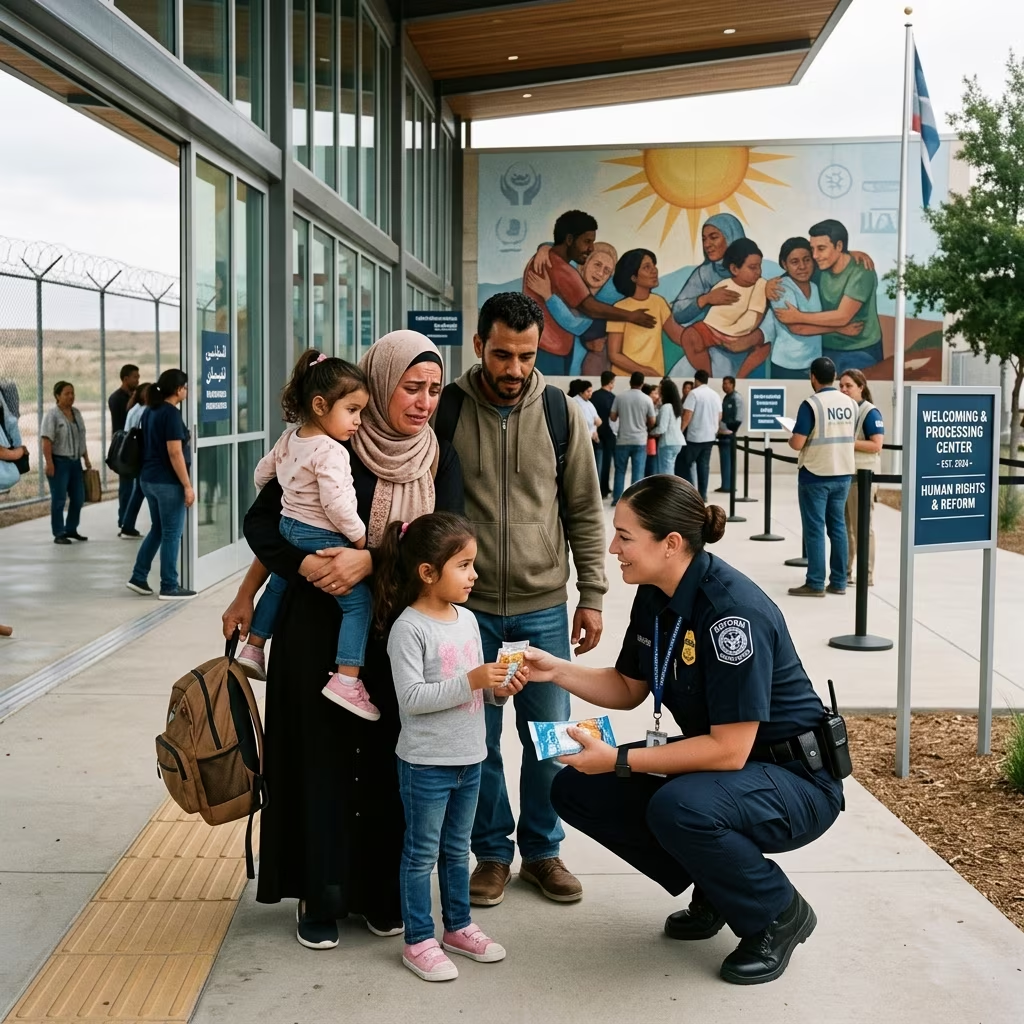
Over the past decade, the United States border has been the epicenter of an intensifying and highly polarized humanitarian discourse. At the core of this complex debate are the practices and policies of U.S. Customs and Border Protection (CBP). While establishing border security remains a legitimate national priority, the methods employed to manage migration have repeatedly raised profound ethical, medical, and legal questions. Reports of life-threatening detention conditions, the traumatic separation of migrant families, and preventable fatalities in custody have sparked widespread condemnation from civil rights advocates, public health experts, and international humanitarian organizations.
Mounting evidence suggests that the current border enforcement framework is fundamentally flawed. For years, the system has relied far too heavily on deterrence through punitive measures, prioritizing apprehension and incarceration over safe, orderly, and humane processing. This article explores the deep-seated structural issues within border enforcement agencies, the devastating impact these deterrence policies have on vulnerable migrant populations, and the urgent necessity for comprehensive reform that prioritizes human dignity, robust medical oversight, and strict institutional accountability.
The Enduring Psychological Toll of Family Separation
Perhaps one of the most controversial and widely criticized chapters in recent immigration history is the systemic implementation of family separation policies. Ostensibly designed as a strict deterrence mechanism, the forced removal of children from their parents at the U.S.-Mexico border has inflicted profound, and in many cases, irreversible trauma. Extensive clinical evaluations and human rights investigations have meticulously documented the severe psychological fallout of these enforcement actions.
Mental health professionals and clinical researchers have diagnosed asylum-seeking children and their parents with acute trauma, severe anxiety, and post-traumatic stress disorder (PTSD) directly linked to their period of separation. The disruption of primary attachment bonds during critical developmental stages can fundamentally alter a child’s neurological and emotional trajectory, leading to long-term behavioral issues, cognitive delays, and toxic stress. In instances of sudden separation, children are deprived of their primary source of comfort and security in an unfamiliar, high-stress environment, amplifying the psychological damage exponentially.
Furthermore, human rights organizations emphasize that the psychological damage does not magically dissipate upon reunification. Families continue to endure the behavioral and emotional aftershocks long after they are physically brought back together. The practice of forcibly tearing families apart violates fundamental principles of child welfare and universally recognized international human rights standards. Moving forward, legislation must definitively and permanently ban the separation of families for civil immigration enforcement purposes, ensuring that families belong together and are processed as unified, intact entities.
Dangerous Overcrowding and Substandard Detention Conditions
The physical environments in which migrants are held upon initial apprehension have frequently been described by government watchdogs and independent medical observers as dangerous and unsanitary. CBP short-term holding facilities, commonly referred to as processing centers, were originally designed to hold individuals for no more than 72 hours. However, systemic processing bottlenecks and periodic surges in migration have repeatedly resulted in prolonged detention, with individuals—including infants, toddlers, and pregnant women—held for weeks in facilities entirely unequipped for long-term residential care.
Internal reports from the Department of Homeland Security’s Office of Inspector General have routinely highlighted hazardous levels of overcrowding. Unannounced inspections have revealed holding cells operating at more than double their maximum structural capacity, forcing individuals into standing-room-only conditions for days on end. In such environments, basic human hygiene is severely compromised, with detainees lacking adequate access to showers, clean clothing, toothbrushes, or nutritious meals.
The reliance on concrete floors and thin mylar blankets in freezing, heavily air-conditioned cells has become a grim hallmark of these temporary holding centers. These squalid conditions not only breed highly contagious infectious diseases but also strip individuals of their fundamental dignity. The failure to maintain basic humanitarian standards in these facilities underscores a critical mismatch between the agency’s militarized enforcement capabilities and its capacity for humane, dignified care.
Critical Failures in Medical Care and Oversight
A direct consequence of overcrowded and ill-equipped facilities is the severe lapse in medical care, which has, tragically, led to preventable illnesses and deaths in custody. The demographic profile of migrants arriving at the border has shifted significantly in recent years; increasingly, it includes vulnerable families, young children, and individuals suffering from preexisting health conditions exacerbated by arduous, multi-week journeys. Despite this demographic shift, the medical infrastructure within CBP facilities has struggled to adapt and keep pace.
Recent investigations by federal oversight bodies have identified glaring deficiencies in how medical care is administered, documented, and overseen. Even when supplemental funds are allocated specifically for medical assessments, there is a distinct failure to consistently implement health screenings for high-risk populations. Children, pregnant individuals, and adults presenting with apparent injuries frequently bypass crucial medical evaluations due to severe staffing shortages, language barriers, or bureaucratic negligence.
Furthermore, the heavy reliance on under-monitored third-party medical contractors has created a fragmented and unreliable healthcare response. The inability to adequately track medical data across facilities, enforce uniform treatment standards, or provide immediate emergency interventions in a timely manner has had fatal consequences for detainees. Meaningful reform must remove long-term medical care responsibilities from law enforcement agencies and transfer them to dedicated, independent public health professionals who can operate with medical autonomy.
Confronting a Culture of Impunity
Beyond logistical failures and resource misallocations, a persistent culture of impunity within border enforcement agencies severely hinders meaningful progress. For years, civil rights groups and legal advocates have raised alarms about the excessive use of force, verbal abuse, and coercive tactics occasionally employed by border agents. From fatal encounters along the border to the reported mistreatment of detainees in crowded processing centers, the lack of transparency in internal investigations has deeply eroded public trust.
Accountability mechanisms within the current framework are often weak, protracted, or entirely opaque to the public. When migrants attempt to file formal complaints regarding physical abuse, the destruction of essential personal property, or the denial of basic necessities, these grievances frequently vanish into a bureaucratic void without resulting in disciplinary action or policy changes. This environment emboldens misconduct and discourages whistleblowers from coming forward to report systemic abuses.
To restore institutional integrity, there must be a radical overhaul of oversight structures. Implementing independent civilian oversight boards, mandating the universal use of body-worn cameras during all encounters, and ensuring swift, transparent investigations into allegations of abuse are non-negotiable steps toward establishing a culture of accountability and respect for human life.
A Blueprint for Humanitarian and Systemic Reform
Addressing the myriad, intertwined issues at the border requires significantly more than incremental policy tweaks; it demands a fundamental paradigm shift. The current enforcement-first model must be rapidly replaced with a humanitarian-first approach that respects legal rights, international asylum laws, and inherent human dignity. This transformation begins with aggressively reallocating federal resources.
Rather than continuously expanding the budgets for border militarization, surveillance technology, and mass detention facilities, funding should be purposefully directed toward community-based processing centers, specialized child welfare advocates, and comprehensive legal aid for asylum seekers. Individuals arriving at the border seeking refuge are exercising a legally recognized right under both U.S. and international law. Therefore, their reception should be managed primarily by trained asylum officers, trauma specialists, and humanitarian workers rather than heavily armed law enforcement agents.
Expanding community-based alternatives to detention (ATD) has proven to be not only vastly more cost-effective but also highly successful in ensuring compliance with immigration proceedings without the traumatic need for physical incarceration.
Comparative Table: Current Enforcement vs. Proposed Humanitarian Model
| Policy Area | Current Enforcement Model | Proposed Humanitarian Model |
|---|---|---|
| Initial Processing | Militarized apprehension by armed agents. | Reception by humanitarian workers and asylum officers. |
| Detention Duration | Often prolonged beyond 72 hours in holding cells. | Strictly limited brief processing before transfer to community. |
| Medical Care | Contractor-based, often lacking standardized oversight. | Independent public health professionals conducting immediate screenings. |
| Family Unity | History of family separations for prosecution. | Absolute legal protections against separation of families. |
| Oversight | Internal reviews with limited public transparency. | Independent civilian oversight with mandatory body cameras. |
Frequently Asked Questions (FAQs)
What are the primary human rights concerns regarding border detention centers?
The primary concerns involve severe overcrowding, prolonged detention beyond legal limits, inadequate medical care, and poor sanitary conditions. Watchdogs have frequently documented facilities lacking sufficient food, clean clothing, and sleeping arrangements, which collectively violate basic humanitarian standards and pose immediate health risks.
How does family separation impact the development of children?
Family separation causes immediate and severe psychological trauma, often resulting in conditions such as PTSD, anxiety, and depression. In young children, the disruption of attachment to a primary caregiver can lead to toxic stress, which negatively alters brain development, impairs cognitive functions, and causes long-term emotional and behavioral difficulties.
What role do third-party contractors play in border facilities?
Third-party contractors are frequently utilized by federal agencies to provide basic medical screenings and logistical support within holding facilities. However, independent audits have shown a lack of stringent oversight over these contractors, leading to inconsistent care, missed medical assessments for high-risk individuals, and a lack of accountability during health emergencies.
How can the immigration system transition to a more humane model?
Transitioning to a humane model requires divesting from militarized enforcement and mass detention, and instead investing in community-based processing, comprehensive legal representation, and trauma-informed care. Implementing robust independent oversight and relying on alternatives to detention (ATD) are critical steps in respecting the dignity and legal rights of asylum seekers.
Conclusion
The persistent crises documented at the border are not merely logistical failures; they are the direct result of a policy framework that structurally devalues human life and dignity in the pursuit of deterrence. The tragic loss of life, the deep psychological scars left by family separations, and the squalid conditions of mass confinement demand immediate, systemic intervention. True border security must not come at the expense of our foundational human rights commitments. By embracing transparency, accountability, and a humanitarian approach to migration processing, a system can be built that respects the rule of law while unequivocally honoring the humanity of every individual seeking safety.
References
- The psychological effects of forced family separation on asylum-seeking children and parents at the US-Mexico border — PubMed Central (PMC). 2021-11-24. https://www.ncbi.nlm.nih.gov/pmc/articles/PMC8612502/
- US: Lasting Harm from Family Separation at the Border — Human Rights Watch. 2024-12-16. https://www.hrw.org/news/2024/12/16/us-lasting-harm-family-separation-border
- OIG-19-51 – Management Alert – DHS Needs to Address Dangerous Overcrowding and Prolonged Detention — Department of Homeland Security Office of Inspector General. 2019-07-02. https://www.oig.dhs.gov/sites/default/files/assets/2019-07/OIG-19-51-Jul19_.pdf
- Southwest Border: CBP Should Improve Oversight of Medical Care for Individuals in Custody — U.S. Government Accountability Office (GAO). 2026-01-14. https://www.gao.gov/products/gao-26-107425