
Restoring Justice: A Call to Safeguard Civil Liberties
Examining the erosion of civil liberties and the fight to reclaim them.
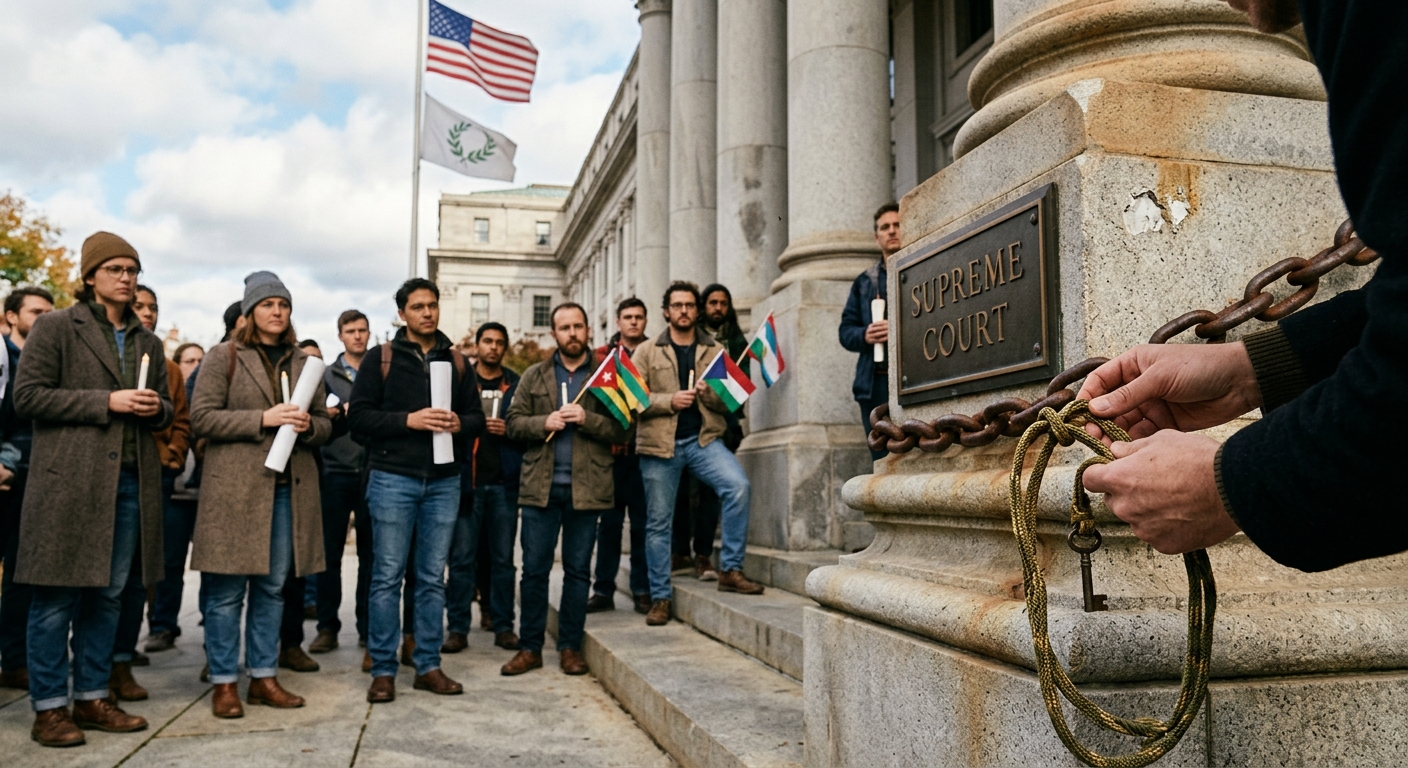
The delicate equilibrium between national security and the preservation of civil liberties remains one of the most heavily contested domains of modern democratic governance. For centuries, the structural integrity of the United States Constitution has relied upon a complex system of checks and balances designed specifically to prevent the concentration of arbitrary power. However, moments of profound national crisisranging from armed conflict to the unprecedented shock of international terrorismhave frequently been leveraged to justify sweeping expansions of executive authority. As executive power swells in times of panic, the foundational constitutional rights of individuals are often treated as collateral damage, ostensibly sacrificed on the altar of public safety.
The post-9/11 era inaugurated a profound paradigm shift in how the government approaches law, justice, and the parameters of executive authority. In the name of fighting an ambiguous and open-ended global conflict, political leaders institutionalized policies that deeply undermined the rule of law. From the suspension of due process to the architecture of a clandestine, global surveillance apparatus, the consequences of these decisions continue to reverberate through the legal landscape today. Recognizing these historical infringements is not merely an academic exercise; it is an urgent prerequisite for restoring the constitutional guardrails that protect fundamental freedoms. Reclaiming these liberties requires an unyielding commitment to legal accountability, legislative reform, and an engaged civil society willing to demand absolute transparency from the institutions that govern them.
The Historical Context: National Security vs. Fundamental Rights
The tension between state security and individual liberty is entirely embedded in the design of democratic institutions. To govern effectively, a state must protect its citizens from external threats and organized violence. Yet, to govern justly, it must rigorously ensure it does not become an oppressive threat to its own people. Historically, the executive branch has been the primary beneficiary of national security crises. The very nature of the executive branch allows for rapid, unilateral actiona characteristic that makes it uniquely suited to respond to immediate emergencies, but simultaneously highly prone to overreach without adequate oversight.
In recent decades, the executive branch has systematically monopolized national security policy, often with the tacit acquiescence or active complicity of the legislative branch. According to leading constitutional scholars at the Brennan Center for Justice, Congress has repeatedly ceded its constitutional authority to the executive by passing broad statutory delegations of power. This ongoing legislative abdication has resulted in the proliferation of unchecked emergency powers that completely bypass the traditional, deliberative legislative process. The National Emergencies Act of 1976, initially intended to regulate and limit presidential emergency declarations, has instead become a vehicle for indefinite states of emergency that grant the president vast, unvetted powers. By operating under continuous states of emergency, the government normalizes extraordinary measures, allowing temporary security protocols to harden into permanent, unshakeable fixtures of the legal system. The true cost of this rapid centralization of power is a steep, noticeable decline in institutional transparency, legal accountability, and the erosion of structural safeguards intended to prevent authoritarianism.
The Assault on Habeas Corpus and the Military Commissions Act
At the very heart of the Anglo-American legal tradition lies the writ of habeas corpus, widely and reverently known as the “Great Writ.” Habeas corpus is a fundamental procedural guarantee that actively protects individuals against arbitrary, unjustified, and unlawful state imprisonment. By legally allowing a detained person to challenge the factual and legal basis of their detention before an independent, impartial judge, habeas corpus serves as the ultimate bulwark against executive tyranny. Without this foundational right, the state possesses the terrifying ability to literally disappear individuals, imprisoning them indefinitely without formally charging them with a crime or affording them the opportunity for a fair trial.
The sanctity of the Great Writ faced one of its most severe existential threats with the passage of the Military Commissions Act of 2006. Enacted by Congress in direct response to earlier Supreme Court rulings that had successfully challenged the legality of military tribunals at the Guantanamo Bay detention camp, the 2006 Act was a legally drastic and unprecedented measure. It explicitly and aggressively stripped federal courts of the jurisdiction to hear habeas corpus petitions filed by foreign citizens designated as “enemy combatants” who were being held indefinitely at Guantanamo Bay. In essence, the government sought to legislate into existence a legal black holea geographic and judicial twilight zone where the U.S. Constitution simply did not apply, and where the executive branch could exercise total, unreviewable discretion over the lives and futures of its detainees.
This aggressive legislative maneuver set the stage for one of the most consequential and heavily debated Supreme Court battles of the 21st century: Boumediene v. Bush (2008). Lakhdar Boumediene, an Algerian citizen captured in Bosnia and subsequently detained at Guantanamo Bay, directly challenged the constitutionality of the Military Commissions Act. He argued that the Constitution guaranteed him the right to challenge his detention in a civilian court, despite being a foreign national held outside the formal geographic borders of the United States. In a historic and closely divided 5-4 decision, the Supreme Court struck down the provision of the Act that sought to suspend habeas corpus. Writing for the majority, Justice Anthony Kennedy delivered a powerful reaffirmation of constitutional principles, declaring emphatically that the political branches do not possess the power to switch the Constitution on and off at will depending on convenience. The Court ruled that the constitutional privilege of habeas corpus unambiguously extends to individuals detained at Guantanamo Bay because the United States maintains de facto sovereignty over the base. Furthermore, the Court established that the alternative military review procedures implemented by Congress were legally insufficient and could not serve as an adequate substitute for a true habeas proceeding. The Boumediene decision was celebrated as a critical, watershed victory for the rule of law. It unequivocally established that even during times of protracted armed conflict, the executive branch remains subject to rigorous judicial scrutiny.
The Expansion of the Modern Surveillance State
While the physical, indefinite detention of individuals represents the most visceral form of government overreach, the rapid expansion of digital mass surveillance represents an equally profound, albeit invisible, threat to foundational civil liberties. As global communications technology evolved at breakneck speed in the 21st century, the intelligence community actively sought broader, more intrusive authorities to monitor the digital footprint of foreign adversaries. This concerted effort culminated in the enactment of Section 702 of the Foreign Intelligence Surveillance Act (FISA), established by the FISA Amendments Act of 2008.
According to the official guidance from the Office of the Director of National Intelligence (ODNI), FISA Section 702 permits the government to conduct targeted digital surveillance of non-U.S. persons who are located entirely outside the geographic boundaries of the United States. This intelligence collection is conducted with the compelled, legally mandated assistance of major electronic communication service providers based in the U.S. The stated goal is to acquire actionable foreign intelligence information. Proponents of the surveillance law consistently argue that it is an absolutely indispensable tool for uncovering international terrorist plots, tracking global weapons proliferation networks, and proactively defending against highly sophisticated, state-sponsored cyberattacks. Government officials assert that the statutory framework contains stringent, court-approved minimization procedures specifically designed to protect the privacy rights of innocent American citizens.
However, constitutional scholars, privacy rights organizations, and civil liberties advocates paint a starkly different and alarming picture. The central controversy surrounding Section 702 lies in the sweeping, massive “incidental” collection of Americans’ private digital communications. Because modern global communications infrastructure is deeply intertwined, targeting a foreign individual invariably and systematically sweeps up millions of emails, text messages, and phone calls belonging to U.S. citizens who happen to be communicating with the targeted foreign entity. Once this vast, unprecedented repository of private digital data is captured and stored in highly secure government databases, domestic law enforcement agenciesmost notably the FBIhave frequently utilized what critics refer to as the “backdoor search loophole.” This administrative loophole allows domestic agents to routinely query intelligence databases for information regarding U.S. citizens, completely bypassing the traditional Fourth Amendment requirement to first obtain a probable cause warrant from a civilian judge.
This massive intelligence-gathering infrastructure operates largely in the shadows, overseen by the Foreign Intelligence Surveillance Court (FISC)a secretive judicial body that hears only arguments from the government. The lack of an adversarial process and the heavy reliance on highly classified legal interpretations effectively result in a body of “secret law” that the American public cannot access, debate, or legally challenge in open court.
Impact on Marginalized Communities and Free Speech
The human cost of an unchecked, omnipresent security apparatus extends far beyond theoretical legal debates occurring in law schools. Historically, sweeping executive authorities and expanded surveillance powers have been disproportionately wielded against marginalized communities, political dissidents, and grassroots activists. The broad, nebulous definition of “national security threats” can easily be weaponized to target religious minorities or racial groups under the guise of counterterrorism. When the government operates without the strict, unyielding constraints of transparency and due process, implicit biases inevitably infect enforcement operations, leading to widespread racial profiling, unjustified surveillance of mosques, and the deliberate targeting of civil rights organizers.
Furthermore, the undeniable knowledge of pervasive government surveillance inflicts a severe, measurable chilling effect on First Amendment rights. The constitutional freedoms of speech, association, and the press cannot thrive in a societal environment of persistent paranoia. Journalists struggle immensely to protect confidential sources, and activists fear that organizing lawful, peaceful protests will ultimately land them on a restrictive government watchlist. True justice requires an environment where citizens can boldly exercise their constitutional rights without fear of silent retribution or unwarranted state intrusion.
The Role of Grassroots Activism in Defending Democracy
Legislative reforms and landmark judicial victories rarely occur in a political vacuum; they are almost always the direct product of sustained, unyielding public pressure. The restoration of law and justice relies heavily on the vitality and persistence of grassroots activism. Coordinated national days of action, large-scale public demonstrations, and intensive, highly organized lobbying campaigns by civil liberties organizations serve as a critical counterweight to government secrecy and institutional inertia. When thousands of citizens descend upon capitols, flood congressional switchboards, and demand accountability, they violently disrupt the status quo of the political establishment.
Organizations dedicated to preserving civil liberties play an absolutely indispensable role in translating complex, arcane legal issues into accessible public discourse. By relentlessly filing Freedom of Information Act (FOIA) requests, pursuing strategic impact litigation in federal courts, and organizing broad, diverse coalitions, civil society ensures that the erosion of rights does not happen quietly in the dark. The fight to close legal black holes, mandate total transparency in intelligence gathering, and secure the universal right to privacy is fundamentally a grassroots struggle. It requires ordinary citizens to recognize that constitutional rights are not self-executing mechanisms; they must be aggressively, continuously defended by the very people they are meant to protect.
A Blueprint for Restoring the Rule of Law
To move beyond merely fighting defensive legal battles and to affirmatively restore the rule of law, federal policymakers must adopt a comprehensive legislative blueprint that permanently reins in executive overreach and reinstates robust checks and balances. Essential reforms must include:
- Reforming Emergency Powers: Congress must aggressively amend the National Emergencies Act to legally mandate affirmative congressional approval for any declared state of emergency to last beyond a brief, initial window (e.g., 30 days). This structural reform would force the legislative branch to actively deliberate on emergency measures rather than allowing the president to govern indefinitely by executive decree.
- Closing the Backdoor Search Loophole: Congress must explicitly amend FISA Section 702 to require intelligence and domestic law enforcement agencies to obtain a strict, probable-cause warrant before searching vast intelligence databases for the communications of U.S. citizens.
- Enhancing FISC Transparency: The highly secretive nature of the Foreign Intelligence Surveillance Court must be fundamentally reformed. Significant legal interpretations and constitutional rulings issued by the FISC must be mandatorily declassified and published for public consumption, and a permanent special advocate should be appointed to argue on behalf of civil liberties in court proceedings.
- Repealing Draconian Statutes: Lawmakers must conduct a comprehensive, independent review of all post-9/11 national security legislation and fully repeal any provisions that allow for indefinite detention without trial, ensuring that the writ of habeas corpus is universally respected and upheld.
Conclusion: The Price of Liberty is Eternal Vigilance
The political and legal trajectory of the United States over the past two decades serves as a potent, undeniable reminder that the rule of law is astonishingly fragile. The repeated invocation of national security has frequently provided a convenient, unassailable pretext for dismantling the legal frameworks that diligently protect due process, privacy, and basic human dignity. From the unprecedented suspension of habeas corpus at the Guantanamo Bay detention facility to the widespread, warrantless digital surveillance of everyday communications, the unchecked expansion of executive power represents a profound, ongoing threat to democratic governance.
However, the history of civil liberties is also defined by incredible resilience. Landmark judicial rulings, courageous government whistleblowers, and unyielding public advocacy have continuously demonstrated that the tide of authoritarianism can be successfully stemmed. Restoring justice is not a static achievement but an active, generational commitment. It requires structural legislative reforms, a fiercely independent judiciary, and a deeply vigilant public. Only by persistently challenging the boundaries of executive authority and demanding absolute fidelity to constitutional principles can society ensure that the fundamental rights of individuals endure through times of crisis and peace alike.
Frequently Asked Questions (FAQs)
What is the writ of habeas corpus?
The writ of habeas corpus is a foundational legal procedure that allows an individual who is detained or imprisoned to officially challenge the legality of their detention before a neutral court. It is specifically designed to prevent arbitrary state action and ensure that no individual is held without lawful, provable justification.
How did the Military Commissions Act of 2006 affect due process?
The Military Commissions Act of 2006 included a highly controversial provision that stripped federal civilian courts of the jurisdiction to hear habeas corpus petitions filed by foreign individuals detained as “enemy combatants” at Guantanamo Bay, effectively denying them the fundamental right to challenge their indefinite military detention.
What was the significance of the Boumediene v. Bush decision?
In the landmark 2008 case Boumediene v. Bush, the United States Supreme Court struck down the habeas-stripping provision of the Military Commissions Act. The Court officially ruled that detainees at Guantanamo Bay retain the constitutional privilege of habeas corpus, establishing a critical, binding check on executive power.
Why is FISA Section 702 controversial?
While FISA Section 702 is technically intended to target the digital communications of foreign adversaries located abroad, it incidentally and routinely captures vast amounts of private communications involving U.S. citizens. The primary controversy centers on the “backdoor search loophole,” which actively allows domestic law enforcement to query these massive databases for American citizens’ data without ever obtaining a probable cause warrant.
References
- Boumediene v. Bush, 553 U.S. 723 (2008) Supreme Court of the United States / Library of Congress. 2008-06-12. https://www.loc.gov/item/usrep553723/. Although published in 2008, this landmark ruling remains the definitive, binding legal precedent regarding habeas corpus.
- Military Commissions Act of 2006 U.S. Congress. 2006-10-17. https://www.congress.gov/bill/109th-congress/senate-bill/3930. This foundational statute is essential for understanding the historical context of post-9/11 jurisdiction stripping.
- Emergency Powers: A System Vulnerable to Executive Abuse Brennan Center for Justice. 2023-12-15. https://www.brennancenter.org/our-work/analysis-opinion/emergency-powers-system-vulnerable-executive-abuse
- FISA Section 702 Resources Office of the Director of National Intelligence. 2024-05-02. https://www.dni.gov/index.php/ic-legal-reference-book/fisa-section-702-resources
Similar Articles








Read full bio of Sneha Tete


