
Restoring Citizenship and Ending Immigration Bias
Examining systemic disparities in immigration and the urgent need for reform.
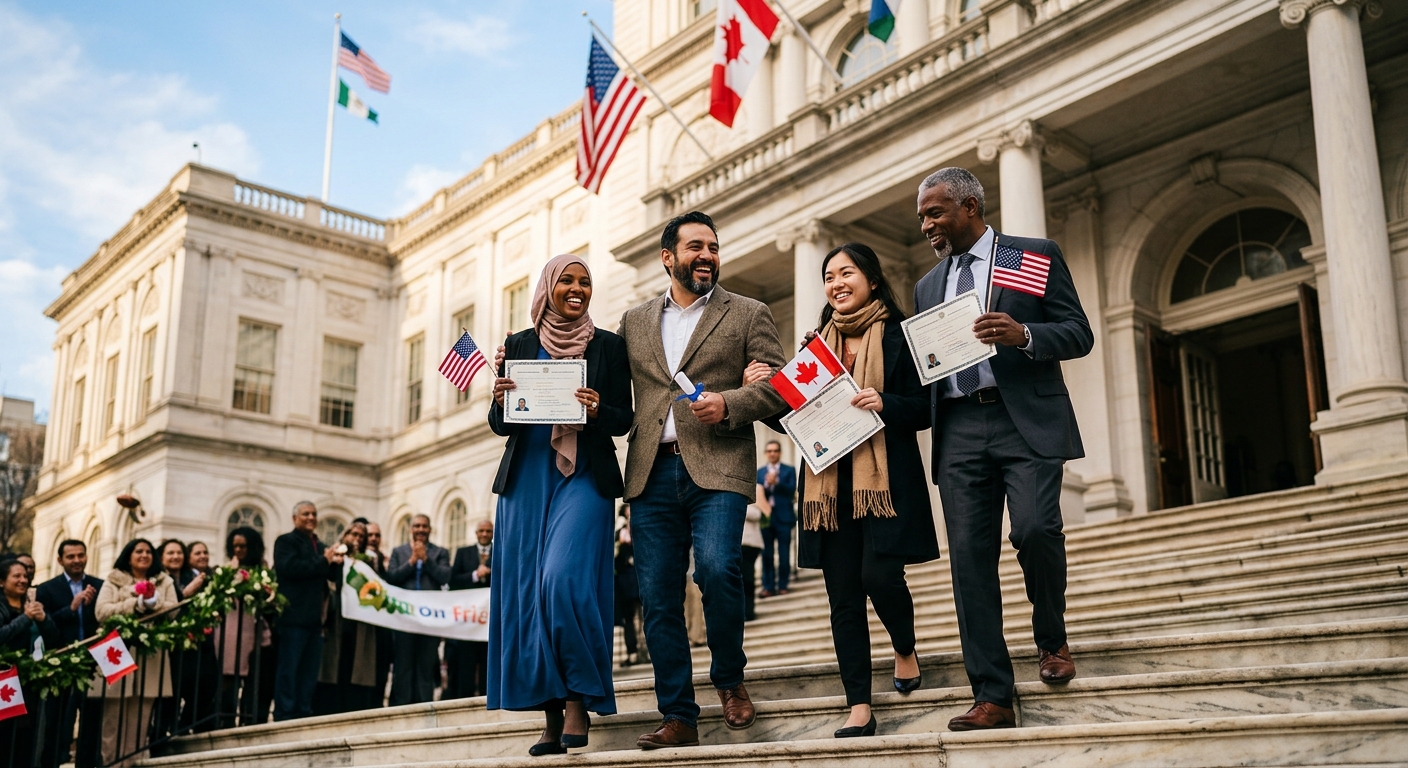
For centuries, the concept of American citizenship has been held as a beacon of liberty, a promised land of rights and protections. However, an honest examination of the United States’ immigration policies reveals a starkly different reality for immigrants of color. From the nation’s foundational naturalization laws to contemporary deportation mechanisms, systemic inequities have persistently marginalized Black and Brown individuals. As advocacy organizations and civil rights groups press for urgent reforms, the mandate for the federal government is clear: it is time to dismantle the discriminatory architecture of the immigration system and restore pathways to citizenship for those unjustly stripped of or denied their rights. This comprehensive analysis explores the historical underpinnings of racialized citizenship, the present-day impacts of aggressive immigration enforcement, the troubling rise of denaturalization practices, and the critical executive actions required to forge a truly equitable future for all immigrants.
The Historical Legacy of Racialized Naturalization
To understand the current disparities in immigration enforcement, one must look at the foundational laws that established who was deemed worthy of American citizenship. The Naturalization Act of 1790 set a precedent that would last for generations, explicitly restricting the right to naturalize to “free white persons” of “good moral character” . This overtly racist statute effectively excluded individuals of African descent, Native Americans, and Asian immigrants from fully participating in the civic life of the republic.
Subsequent legislation, such as the Chinese Exclusion Act of 1882, further weaponized immigration law to target specific racial groups, creating a legacy of “immigration exceptionalism” where discriminatory policies were frequently shielded from standard constitutional scrutiny . Even as laws evolved to gradually include African Americans and lift Asian exclusion acts, the foundational bias left an indelible mark. Citizenship was not merely a legal status; it was a closely guarded privilege tied explicitly to racial identity. The echoes of these historical exclusions continue to reverberate through modern immigration policies, where the criminalization of specific immigrant communities often serves as a proxy for the explicit racial exclusions of the past, perpetuating an unequal standard of justice.
The Modern Era: Crimmigration and Targeted Enforcement
In recent decades, the intersection of criminal justice and immigration enforcement—a phenomenon widely referred to as “crimmigration”—has drastically exacerbated racial disparities. By linking local policing practices with federal immigration enforcement, marginalized communities find themselves disproportionately targeted. Policies such as the Secure Communities program and 287(g) agreements have effectively deputized local law enforcement agencies to act as federal immigration extensions.
Because Black and Brown communities are historically over-policed, they suffer higher rates of arrest for minor infractions. This over-policing funnels directly into the immigration system, creating what advocates describe as a “prison-to-deportation pipeline.” Research from legal institutes highlights that Black immigrants, despite making up a relatively small percentage of the overall undocumented population, account for a vastly disproportionate number of deportations based on criminal grounds . Black immigrants are often subjected to harsher penalties, longer detention periods, and higher rates of solitary confinement while in custody compared to other demographic groups.
Similarly, Hispanic communities face intense scrutiny and account for the overwhelming majority of interior arrests by immigration authorities . The double penalty inflicted upon noncitizens of color—who serve their time in the criminal justice system only to be immediately transferred to immigration detention for deportation—underscores the urgent need to sever the ties between local policing and federal immigration enforcement. These compounding systemic biases ensure that immigrants of color face a significantly steeper uphill battle when attempting to maintain their residency or pursue a path to citizenship.
The Resurgence of Denaturalization: A Threat to Naturalized Citizens
Perhaps one of the most alarming trends in recent immigration policy is the resurgence of denaturalization—the legal process of revoking the citizenship of naturalized Americans. Historically, denaturalization was an exceedingly rare mechanism, reserved almost exclusively for egregious cases involving war criminals, human rights violators, or individuals who committed severe, documented fraud .
However, in recent years, the use of denaturalization has been significantly expanded and institutionalized. The creation of dedicated offices within federal justice and immigration departments aimed at aggressively investigating and prosecuting denaturalization cases marked a drastic shift in policy. Advocacy groups have noted that these investigations frequently and disproportionately target naturalized citizens from South Asian, Middle Eastern, Mexican, Haitian, and African nations .
This aggressive posture transforms citizenship from a permanent, constitutionally protected status into a conditional privilege for naturalized Americans of color. The lingering threat of denaturalization creates a profound chilling effect, deterring immigrants from fully exercising their civic rights, such as voting, organizing, or participating in public discourse, out of fear of government retaliation. Civil rights organizations have repeatedly called on federal leaders to halt these sweeping operations, dismantle the infrastructure created to expedite denaturalizations, and restore the historical norms that protected naturalized citizens from arbitrary and discriminatory state power.
The Human Cost: Family Separation and Deported Veterans
The human cost of these discriminatory policies cannot be overstated. When a parent, spouse, or community leader is abruptly deported or stripped of their citizenship, the ripple effects devastate entire families. Children left behind face severe emotional trauma and financial instability. The threat of family separation acts as a constant psychological burden on mixed-status households, forcing many into the shadows and preventing them from accessing essential health and social services.
Furthermore, the deportation of military veterans—individuals who swore an oath to defend the United States, only to be exiled due to minor infractions—highlights a profound moral failure within the immigration system. For decades, noncitizens have enlisted in the U.S. Armed Forces with the promise of an expedited pathway to citizenship. Yet, shifting policies, administrative hurdles, and a lack of adequate support have frequently denied these veterans their rightful status, leaving them exceptionally vulnerable to deportation after their military service concludes. Restoring citizenship to deported veterans is a fundamental moral obligation to those who sacrificed for the nation.
The Crucial Role of Legal Representation in Mitigating Bias
A critical factor in navigating the labyrinthine U.S. immigration system is access to competent legal representation. Unlike the criminal justice system, immigrants facing deportation are not guaranteed a public defender under the Sixth Amendment. Consequently, individuals must secure private counsel at their own expense or rely on overwhelmed pro bono legal organizations.
Empirical studies reveal stark racial and socioeconomic disparities in who obtains representation in immigration court . Immigrants with prior criminal charges, particularly Black and Hispanic individuals, are significantly less likely to secure legal counsel. Yet, representation is one of the most determinative factors in a case’s outcome. Immigrants with legal representation are vastly more likely to be released from detention and successfully defend against deportation than those who represent themselves. To address these systemic inequities, legal advocates strongly argue for the establishment of a universal right to counsel in all immigration proceedings, ensuring that no individual is forced to navigate complex legal battles against the immense resources of the federal government entirely alone.
A Policy Mandate: Steps the Administration Must Take
To rectify the deep-seated racial biases within the U.S. immigration framework, the current administration must take decisive, systemic action. Temporary administrative fixes and piecemeal reforms are wholly insufficient to dismantle a system built upon centuries of racialized logic. The administration must prioritize the following robust steps:
- Dismantle Denaturalization Infrastructure: The administration must immediately suspend all denaturalization operations that are not directly related to egregious war crimes and completely dismantle the specialized federal offices created to expedite widespread citizenship stripping.
- Sever Ties Between Local Police and Federal Immigration Enforcement: Ending programs like 287(g) and Secure Communities is essential to stopping the prison-to-deportation pipeline that heavily and disproportionately impacts Black and Brown communities.
- Restore Citizenship for Deported Veterans: Immediate executive action should be taken to facilitate the return of deported military veterans, providing them with the naturalization benefits they unequivocally earned through their military service.
- Implement Universal Legal Representation: Providing federally funded legal counsel for all individuals facing removal proceedings would ensure fundamental due process and dramatically mitigate the severe racial disparities currently seen in case outcomes.
- Establish Independent Oversight: Creating robust, independent oversight mechanisms for immigration enforcement agencies is necessary to rigorously investigate and curb instances of racial profiling, physical abuse, and systemic discrimination.
Conclusion
The call to restore citizenship for Black and Brown individuals is a demand for the United States to genuinely live up to its highest democratic ideals. For far too long, the immigration system has functioned as a secondary mechanism of racial control, perpetuating the marginalization of communities of color. By confronting the historical legacies of racist naturalization laws, addressing the present-day crises of crimmigration and denaturalization, and implementing sweeping, equitable reforms, the administration has a historic opportunity to redefine American citizenship. A truly just and functional immigration system must recognize the inherent dignity of all individuals, ensuring that the promise of liberty, equality, and justice is extended unequivocally to everyone, regardless of their race, ethnicity, or country of origin.
Frequently Asked Questions
What is “crimmigration” and how does it affect immigrants of color?
Crimmigration refers to the growing intersection and merger of criminal law and immigration enforcement. It involves utilizing local law enforcement agencies to enforce federal immigration laws. This disproportionately affects immigrants of color, particularly Black and Hispanic individuals, because these communities are historically over-policed, leading to higher rates of arrests that quickly trigger deportation proceedings.
Why is denaturalization considered a threat to civil rights?
Denaturalization is the process of revoking a person’s U.S. citizenship. While historically reserved for extreme cases like war criminals, its expanded use against naturalized citizens for minor administrative errors or under broad national security pretexts disproportionately targets minority groups. It threatens civil rights by making citizenship feel conditional, discouraging naturalized citizens from fully participating in democratic processes.
Why do deported military veterans lack U.S. citizenship?
Many noncitizens join the U.S. military with the expectation of an expedited path to naturalization. However, complex administrative hurdles, lack of institutional support during their service, and shifting policies often leave them without citizenship upon discharge. Consequently, minor legal infractions in civilian life can lead to their deportation, despite their military service.
References
- Race, Nationality, and Reality — National Archives. 2022-11-10. https://www.archives.gov/publications/prologue/2002/summer/immigration-law-1.html
- The Criminalization and Deportation of African and African-Descendant Migrants in the United States — The Thurgood Marshall Institute. 2025-05-13. https://tminstituteldf.org/
- Racial Disparities in Crime-Based Removal Proceedings — Emily Ryo, Ian Peacock, Duke Law Scholarship Repository. 2023-08-01. https://scholarship.law.duke.edu/
- Denaturalization: What You Need to Know — Asian Law Caucus. 2025-01-16. https://www.asianlawcaucus.org/
Similar Articles








Read full bio of Sneha Tete


