
Restorative Justice: The Growing Momentum for Reparations in America
Tracing the evolution of reparations from federal legislative proposals to localized initiatives addressing systemic inequality.
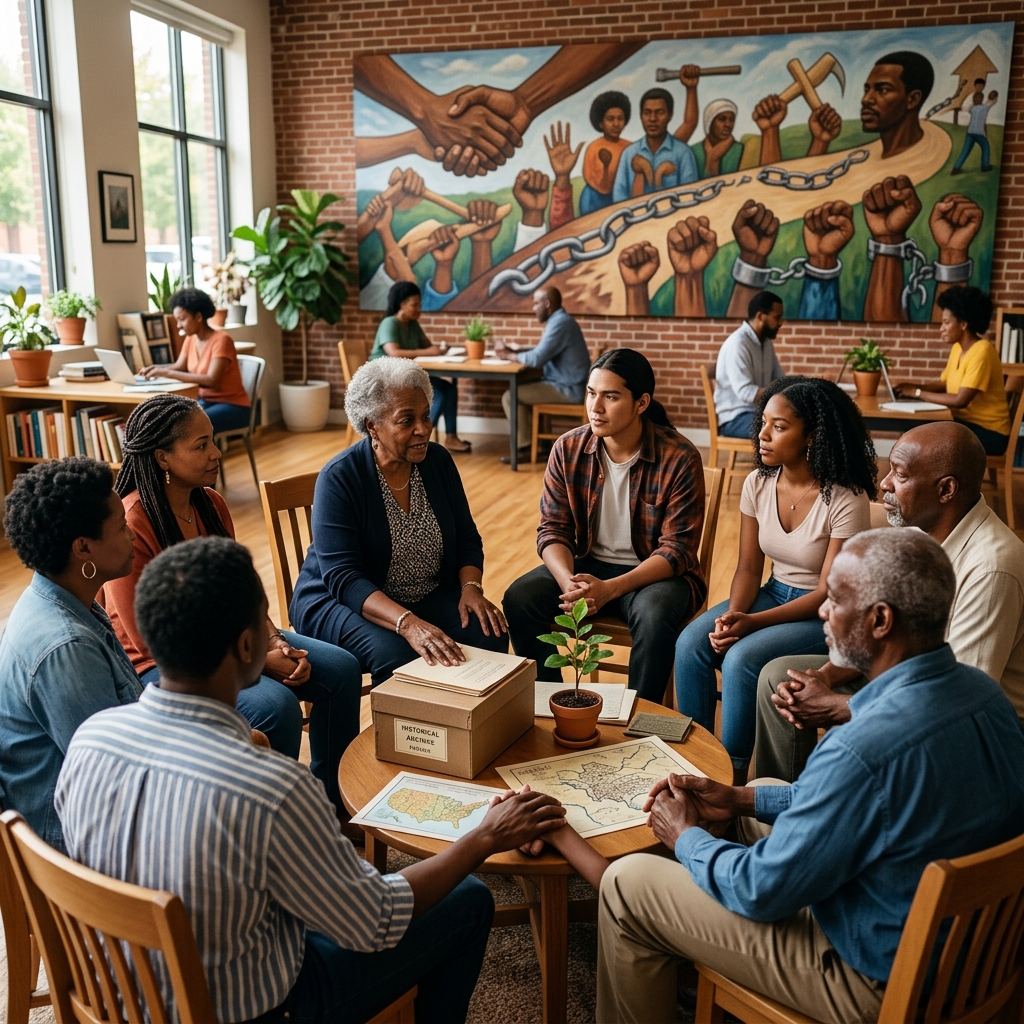
Confronting the Shadows of History
The dialogue surrounding restorative justice and reparations for descendants of enslaved African Americans has transcended theoretical debate, firmly establishing itself within legislative chambers across the nation. The modern call for restitution is not merely a demand for symbolic acknowledgment; it is an urgent push for tangible, systemic interventions designed to correct centuries of state-sponsored economic deprivation. From the foundational realities of chattel slavery to the oppressive legal frameworks of Jim Crow segregation, discriminatory housing policies like redlining, and the disproportionate impacts of mass incarceration, the trajectory of American public policy has structurally disadvantaged Black communities at nearly every turn.
Today, as advocates, historians, and policymakers examine the lingering, quantifiable impact of these historical injustices, a profound strategic shift is occurring. Facing chronic stagnation at the federal level, the focus has decisively pivoted toward innovative local and state-level initiatives. These grassroots and state-sponsored efforts are moving the conversation from the abstract to the actionable, providing real-world frameworks for calculating damages, defining eligibility, and distributing reparative resources. By acknowledging that institutional harm requires institutional repair, modern restorative justice seeks to structurally dismantle the enduring legacies of systemic racism, ultimately striving to create a more equitable economic future for all Americans.
The Economics of Inequality: Understanding the Wealth Divide
To fully grasp the urgency behind the modern reparations movement, one must closely examine the staggering economic disparities that define the contemporary American landscape. The racial wealth gap stands as the most quantifiable metric of historical disenfranchisement. Wealth, unlike income, represents cumulative economic power and resilience. It dictates a family’s ability to purchase property, fund higher education, start businesses, weather economic downturns, and pass assets to the next generation. When policies systematically excluded Black Americans from the primary engines of wealth-building—such as the inequitable administration of the GI Bill and the Federal Housing Administration’s redlining practices—the compounding economic effects became practically insurmountable for subsequent generations.
According to data from the Federal Reserve’s Survey of Consumer Finances, published in 2023, the disparity remains incredibly vast despite the passage of civil rights legislation over a half-century ago. While median wealth across various demographics increased during the peak of the COVID-19 pandemic era, the absolute dollar difference between white and Black households simultaneously expanded. The survey highlighted that the typical white family holds roughly six times the wealth of the typical Black family.
To illustrate this disparity, consider the median wealth metrics from recent Federal Reserve findings:
| Demographic Group | Median Household Wealth (2022) |
|---|---|
| White Households | $284,310 |
| Black Households | $44,100 |
Such stark data underlines a critical argument championed by reparations advocates: without targeted, structural intervention, the wealth gap is a self-perpetuating mechanism. Traditional economic mobility strategies, such as basic financial literacy programs, have proven insufficient to close a gap created by centuries of deliberate capital extraction.
Stagnation at the Federal Level
Despite the compelling economic data, the pursuit of a comprehensive federal reparations program has been marked by decades of legislative stagnation. For over thirty years, lawmakers have consistently introduced variations of a bill intended merely to study the concept of reparations. Originally championed by the late Representative John Conyers in 1989 as H.R. 40—a symbolic nod to the unfulfilled Civil War-era promise of “40 acres and a mule”—the legislation has historically failed to secure enough support to reach the floor of the House of Representatives for a full vote.
While the concept of federal reparations experienced a surge in visibility during recent political cycles, entrenched ideological divisions in Washington D.C. have largely neutralized any practical legislative momentum. Skeptics frequently cite logistical hurdles, the distance in time from the formal abolition of slavery, and the estimated financial burden on the national budget. Conversely, proponents argue that the federal government was the primary architect of the policies that created the wealth divide. Therefore, they maintain that the federal government holds the ultimate moral imperative and financial responsibility for enacting a nationwide restorative justice framework.
The Pivot to Local and State Action
Frustrated by chronic federal inaction, advocates have strategically decentralized their efforts, turning their attention to state and local governments. This localized approach delivers immediate restorative justice to affected communities and acts as a critical proof of concept for larger frameworks.
California’s Historic Blueprint
The state of California emerged as a groundbreaking pioneer by establishing the first state-level Reparations Task Force. In June 2023, this task force released a comprehensive final report detailing the state’s deep complicity in sustaining systemic racism—even though California entered the Union as a “free state.” The task force extensively documented the localized harms of racial terror, housing discrimination, unequal education, and mass incarceration.
Crucially, the California Task Force did not limit its recommendations to direct cash payments. It proposed a multi-faceted policy blueprint designed to address the root causes of systemic inequality. The legislative recommendations spanned vital areas including healthcare access, penal code reforms, and housing equity. Furthermore, the task force engaged in the complex actuarial calculus of quantifying the financial impact of distinct harms, creating a rigorous methodological framework. In 2024, the California Legislative Black Caucus began introducing specialized legislative packages specifically designed to implement aspects of this historic report.
Municipal Pioneers: The Evanston Experiment
At the municipal level, Evanston, Illinois, has provided one of the most tangible examples of reparations in practice. In 2019, the Evanston City Council passed a resolution committing to a local reparations fund. The city identified a unique, progressive funding mechanism: a municipal tax on the sale of recreational cannabis. This funding source represents a measure of poetic justice, given the historically disproportionate impact of the “War on Drugs” on Black communities.
Evanston’s initial focus was the Local Reparations Restorative Housing Program. Recognizing that the city had historically utilized discriminatory zoning policies, the program originally provided direct financial assistance to qualifying Black residents strictly allocated for home repairs or mortgage assistance. By tying the restitution directly to a specific, documented municipal harm (housing discrimination between 1919 and 1969), Evanston created a legally defensible model for localized restorative justice. Adapting to the specific needs of the beneficiaries, the city council later amended the program in 2023 to include direct cash payment options.
The Complexities of Implementation
The transition from conceptual theory to active policy implementation has exposed significant complexities. Two primary debates dominate the conversation among policymakers: determining eligibility criteria and defining the specific nature of the compensation.
Determining Eligibility: Lineage Versus Race
One of the most contentious issues is determining exactly who qualifies for reparations. The California Task Force explicitly limited eligibility to a lineage-based model, focusing on descendants of individuals enslaved in the United States or descendants of free Black persons living in the U.S. prior to the end of the 19th century. This approach argues that reparations must specifically target the unique, intergenerational harm of American chattel slavery and its direct legal aftermath. Legally, lineage-based criteria may also better withstand strict scrutiny challenges. Conversely, advocates for a “race-based” approach suggest that all Black Americans should be eligible, arguing that systemic racism in modern policing, housing, and employment impacts the entire racial demographic uniformly.
Forms of Restitution
The debate also fractures over how reparative capital should be distributed. Direct cash payments represent the most immediate transfer of wealth, allowing recipients the autonomy to deploy capital as they see fit. However, economists argue that isolated cash infusions, absent broader structural reforms, might be quickly absorbed back into an inherently inequitable economic system. Consequently, many task forces recommend a hybrid approach: combining direct financial compensation with systemic investments in Black-owned institutions, subsidized housing, tuition-free higher education, and state-backed civil rights enforcement.
The Global and Domestic Context: Lessons from Precedents
While the United States grapples with its complex history, it is not the first entity to face the imperative of restorative justice. Global and domestic precedents offer highly valuable insights. Following World War II, Germany paid substantial reparations to Holocaust survivors, establishing a normative framework for acknowledging state-sponsored atrocities. Domestically, the Civil Liberties Act of 1988 provided formal apologies and direct financial compensation to Japanese Americans unjustly incarcerated during World War II.
These examples highlight a crucial lesson: successful reparations programs require both material compensation and a profound institutional commitment to truth-telling. Financial restitution without comprehensive public education and systemic reform risks becoming a transactional attempt to purchase absolution, rather than a genuine effort to achieve lasting societal equity.
A Path Forward
The movement for reparations in the United States has undeniably entered a highly pragmatic phase. The illusion that a singular federal bill will quickly resolve centuries of entrenched inequality has been replaced by a sustained, multi-jurisdictional effort. By meticulously documenting historical harms, calculating precise economic damages, and implementing localized programs, entities like the State of California and the City of Evanston are demonstrating that restorative justice is administratively feasible.
As the nation moves forward, the ultimate success of the reparations movement will depend heavily on its ability to build broad political coalitions, withstand inevitable legal challenges, and maintain a dual focus on providing immediate relief while driving long-term systemic transformation. The question is no longer whether restorative justice is conceptually valid, but how it can be practically and equitably executed to heal the deepest fractures in American society.
Frequently Asked Questions (FAQs)
- What does the term “reparations” mean in the context of the United States?
In the U.S., reparations refer to the process of providing restitution—which can include direct cash payments, systemic policy reforms, housing assistance, and public apologies—to Black Americans to compensate for the enduring economic and social damages caused by slavery, Jim Crow laws, and systemic racism. - Why is the racial wealth gap central to the argument for reparations?
The racial wealth gap highlights the cumulative financial impact of generations of discriminatory policies. Because wealth is passed down intergenerationally, historical exclusions from wealth-building opportunities have left Black Americans with significantly less median wealth than white Americans, a disparity that standard economic interventions have failed to close. - What is H.R. 40?
H.R. 40 is a long-standing federal legislative proposal that seeks to establish a commission to study and develop reparation proposals for African Americans. Despite being introduced decades ago, it has yet to pass in Congress. - How is the city of Evanston funding its local reparations program?
Evanston, Illinois, committed the first $10 million of revenue generated from a municipal tax on the sale of recreational cannabis to fund its local reparations initiatives, beginning with a restorative housing program. - What was a key finding of the California Reparations Task Force?
The California Task Force concluded that the state bears a massive responsibility for perpetuating systemic racism, despite being a “free state,” and recommended a comprehensive lineage-based restitution program encompassing both policy reforms and financial compensation.
References
- The Fed – Greater Wealth, Greater Uncertainty: Changes in Racial Inequality in the Survey of Consumer Finances — Board of Governors of the Federal Reserve System. 2023-10-18. https://www.federalreserve.gov/econres/notes/feds-notes/greater-wealth-greater-uncertainty-changes-in-racial-inequality-in-the-survey-of-consumer-finances-20231018.html
- California Reparations Task Force Unveils Comprehensive Final Proposals to the Legislature Regarding Reparations for African Americans — State of California Department of Justice. 2023-06-29. https://oag.ca.gov/news/press-releases/california-reparations-task-force-unveils-comprehensive-final-proposals
- Reparations Committee — City of Evanston, Illinois. 2020-11-09. https://www.cityofevanston.org/government/boards-commissions-and-committees/reparations-committee
- 027-R-23 Amending the Restorative Housing Program to Include Direct Cash Payment as an Option — City of Evanston City Council. 2023-03-27. https://www.cityofevanston.org/home/showpublisheddocument/79782/638153036814670000
Similar Articles








Read full bio of Sneha Tete


