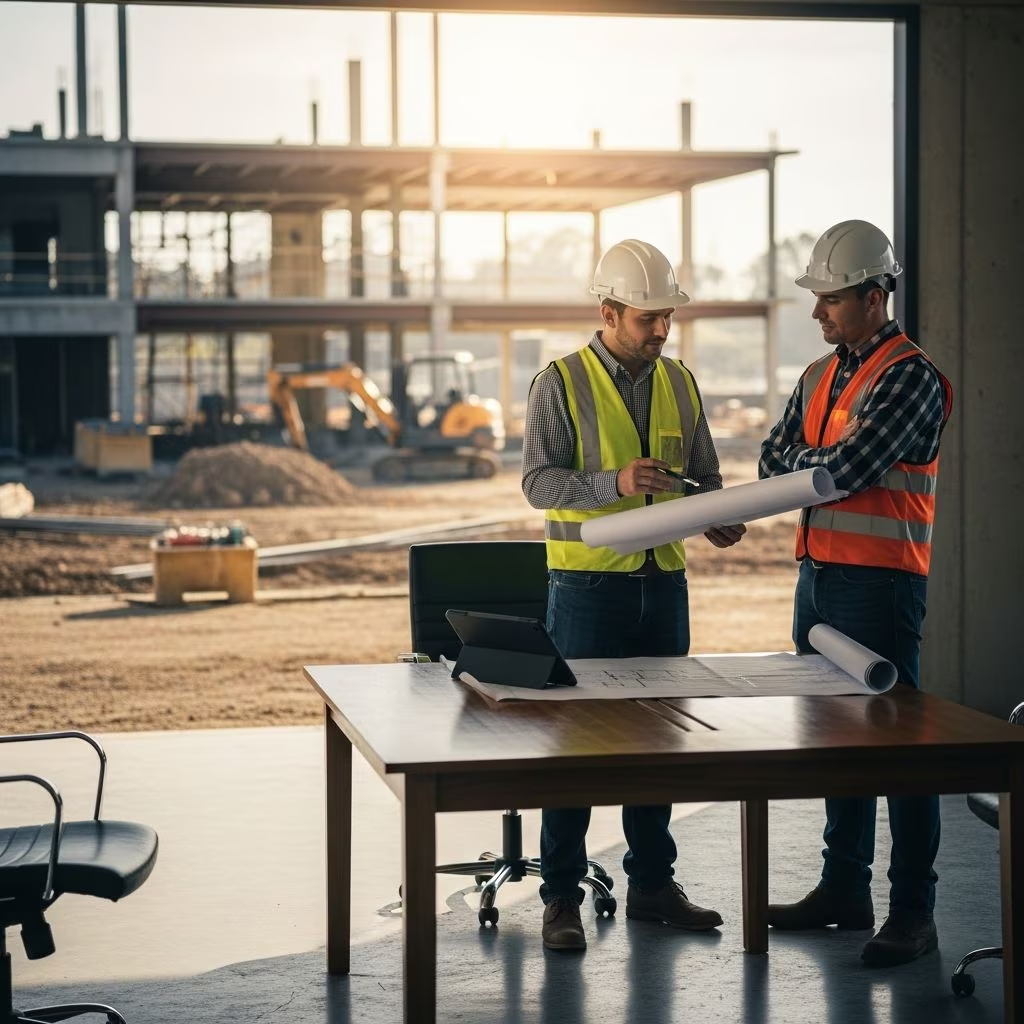
Construction projects often encounter unexpected hurdles when disagreements arise between homeowners and contractors. These issues, if ignored, can lead to delays, budget overruns, and strained relationships. Addressing them promptly using structured approaches like negotiation and mediation helps maintain momentum and avoids escalation to court.
Understanding Common Sources of Mid-Project Friction
Disputes frequently stem from miscommunications about timelines, costs, or quality standards. For instance, delays due to unforeseen site conditions or changes in project scope can spark arguments over additional payments or extended deadlines. Homeowners might perceive work as substandard, while contractors argue materials or designs deviated from agreements. Financial pressures, especially with rising interest rates, amplify these tensions, as noted in industry analyses where mid-sized projects face extreme cash flow strains over two years.
Other triggers include unclear contract terms on change orders, where verbal agreements lead to billing conflicts, or subcontractor performance issues that the general contractor must mediate. Recognizing these early allows for targeted interventions before small problems compound into major standoffs.
Step-by-Step Guide to Initial Problem-Solving
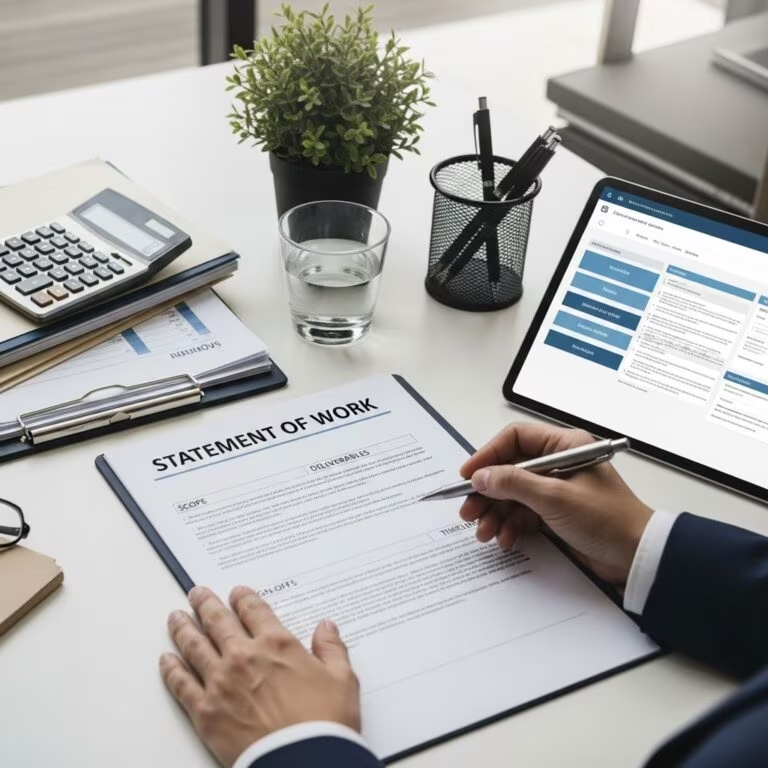
The foundation of resolution lies in proactive documentation and direct dialogue. Begin by reviewing your contract for dispute clauses, which often mandate a sequence starting with informal talks. Compile records of all communications, invoices, photos of work progress, and change requests to build a clear timeline.
- Document Everything: Log daily progress notes, emails, and site photos to substantiate claims.
- Request a Meeting: Schedule a face-to-face or virtual discussion to air concerns calmly.
- Propose Solutions: Suggest compromises like adjusted timelines or partial payments tied to milestones.
This approach fosters collaboration and resolves up to 70% of minor issues without external help, preserving project flow.
Leveraging Negotiation for Quick Fixes
Negotiation remains the first-line defense, emphasizing open communication to align expectations. Parties discuss grievances directly, often clarifying misunderstandings about scope or delays. For example, if a foundation deadline slips, negotiating penalty waivers in exchange for accelerated later phases can satisfy both sides.
Success hinges on choosing the right setting—a neutral site with agendas—and involving key stakeholders like project managers. Industry experts stress frequent check-ins to preempt escalation, ensuring realistic budgets and timelines underpin talks. This method is cost-free, confidential, and relationship-preserving, ideal for ongoing partnerships.
When to Escalate to Professional Mediation
If talks stall, mediation introduces a neutral facilitator who guides discussions toward mutual agreement without imposing decisions. Mediators, often construction-savvy professionals, tailor sessions to project specifics, achieving 90% resolution rates for mature disputes.
Unlike courts, mediation offers flexibility: parties craft creative outcomes like phased payments or resource reallocations. It’s particularly effective mid-project, providing interim financial relief to ease pressures while deferring complex issues. Select mediators experienced in technical construction matters for optimal results, as generic processes yield poorer outcomes.
| Method | Pros | Cons | Best For |
|---|---|---|---|
| Negotiation | Free, fast, preserves relationships | May fail if trust is low | Minor scope or payment issues |
| Mediation | High success rate, confidential, flexible | Costs mediator fees | Technical or multi-party disputes |
Exploring Arbitration and Adjudication Options
For binding resolutions, arbitration provides a private tribunal where an expert arbitrator decides based on evidence, faster than litigation but enforceable like court judgments. It’s suited for complex disputes involving multiple claims, though less flexible than mediation.
In regions like Ontario, statutory adjudication via bodies like ODACC offers rapid interim rulings on payment or delay disputes, mandated in updated Construction Acts since 2019. Dispute Resolution Boards (DRBs), standing panels formed at project start, monitor and resolve issues continuously, popular with government projects.
Legal Safeguards and Contract Best Practices
Robust contracts prevent many disputes. Include multi-tiered clauses: negotiation first, then mediation, arbitration last. Define change order processes clearly, requiring written approvals for modifications.
If resolution fails, consult attorneys specializing in construction law. Liens, breach claims, or termination rights may apply, but weigh project impacts. Government resources like state contractor boards offer complaint mediation.
Preventive Measures for Smoother Projects
Proactive strategies minimize conflicts. Hire vetted contractors with references, use detailed scopes, and employ digital tools for real-time tracking. Kickoff meetings set communication norms, while regular audits catch variances early.
- Implement AI-driven contract reviews for ambiguity detection.
- Set realistic schedules accounting for weather or supply chains.
- Foster team-building to build trust from inception.
Experienced project managers act as buffers, navigating issues before they harden.
Case Studies: Real-World Resolutions
In one scenario, a delayed infrastructure project used mid-project mediation to grant schedule relief and partial payments, averting cost spirals and enabling completion. Another involved subcontractors negotiating scope clarifications, avoiding arbitration via documented change logs. These illustrate how timely intervention “resuscitates cooperation” and prevents disputes from metastasizing.
Frequently Asked Questions
What should I do first in a contractor dispute?
Gather documentation and initiate a calm negotiation meeting to discuss issues directly.
Is mediation legally binding?
No, but parties can formalize agreements into enforceable contracts; it’s voluntary and confidential.
How long does construction mediation take?
Typically one to three sessions over days or weeks, far quicker than arbitration or court.
Can I fire a contractor mid-project?
Yes, if contract terms allow for material breach, but expect disputes over payments and completion; seek legal advice.
What if the contractor files a lien?
Respond promptly via negotiation or adjudication to protect your property; many states require quick resolutions.
Navigating mid-project disputes demands balance: assert rights while prioritizing continuation. These strategies, drawn from industry best practices, empower informed decisions.
References
- Resolving construction disputes mid-project — Lexpert. 2023-10-01. https://www.lexpert.ca/news/litigation-law/resolving-construction-disputes-mid-project/381539
- Resolving Construction Contract Dispute: Mediation, Arbitration, or… — Mastt. 2024-05-15. https://www.mastt.com/blogs/contract-dispute
- Understanding and Resolving Construction Disputes — Superlegal.ai. 2024-02-20. https://www.superlegal.ai/blog/understanding-and-resolving-construction-disputes/
- Best Practices for Conflict Resolution in Construction — ABC Hawaii. 2023-11-10. https://www.abchawaii.org/conflict-resolution-in-construction/
- Common Construction Disputes: Prevention and Resolution — Ferguson Firm TX. 2024-01-05. https://fergusonfirmtx.com/blog/common-construction-disputes-prevention-and-resolution/
- Construction Dispute Resolution: Arbitration vs. Litigation — Bachara Group. 2023-09-12. https://bacharagroup.com/arbitration-vs-litigation-in-construction-contracts/