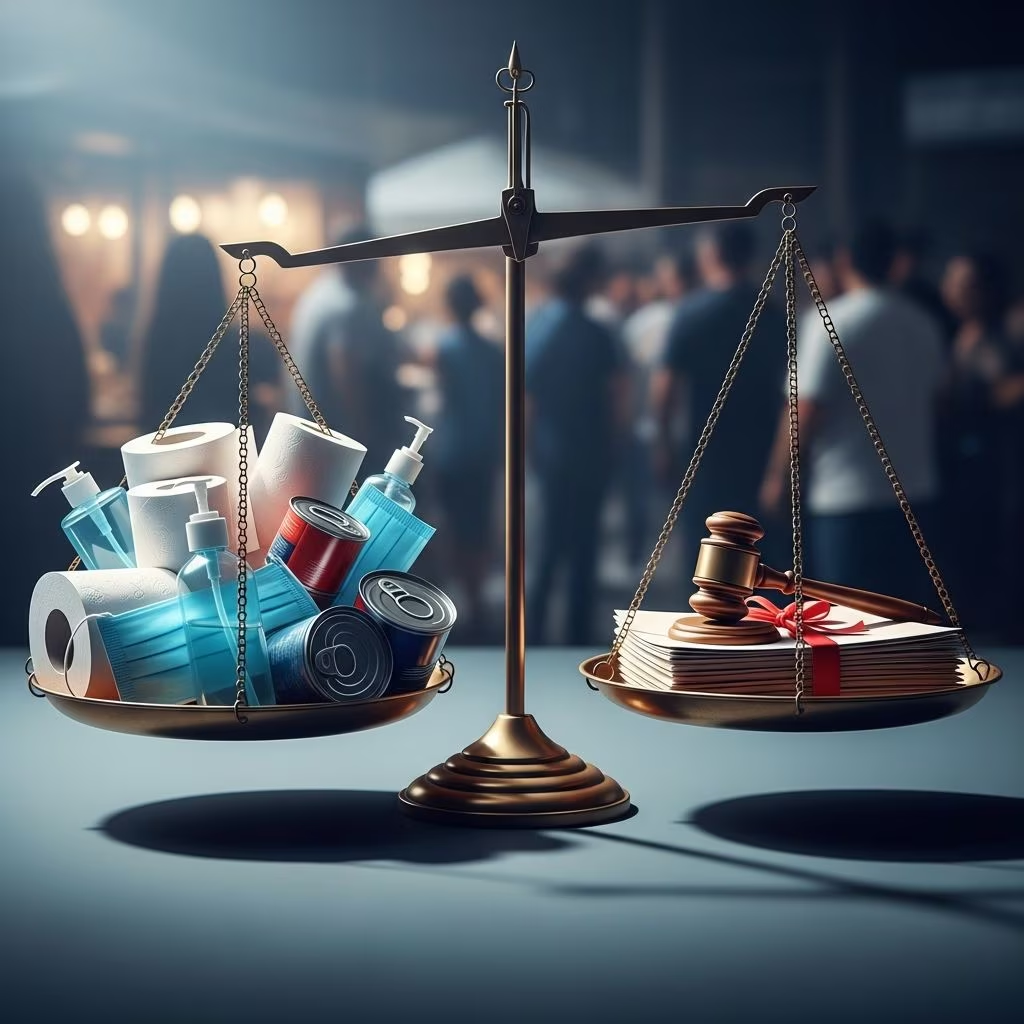
During times of crisis, such as pandemics or natural disasters, demand for basic necessities like hand sanitizer, toilet paper, masks, and disinfectants surges dramatically. Individuals and small-scale sellers often see opportunities to buy in bulk and resell at higher prices, but this practice frequently collides with longstanding consumer protection laws designed to prevent exploitation. While reselling itself is not inherently illegal in a free market, emergency declarations trigger specific regulations that can make it unlawful under certain conditions.
Understanding Price Gouging and Its Triggers
Price gouging refers to the act of significantly increasing prices on essential goods or services during states of emergency when consumer vulnerability is heightened. Most U.S. states have anti-price gouging statutes that activate automatically upon a gubernatorial declaration of emergency, such as those issued during the COVID-19 outbreak. These laws typically prohibit sellers from charging prices that are “unconscionably excessive” compared to pre-emergency levels, often defined as increases exceeding 10-30% without justification like increased costs.
For instance, goods like hand sanitizer and toilet paper were classified as vital for public health and sanitation, placing them squarely within protected categories. Resellers who purchased these items at retail prices and attempted to flip them online at markups of 500% or more faced swift enforcement actions. The rationale is to ensure equitable access to necessities rather than allowing market speculation to drive artificial scarcity.
State Variations in Resale Regulations
Laws governing resale of essentials vary widely by jurisdiction, reflecting local priorities and historical precedents. Approximately 37 states plus Washington, D.C., Puerto Rico, and several U.S. territories enforce some form of anti-price gouging measure. In states like California, Florida, and New York, violations can result in civil penalties up to $10,000 per offense, with criminal misdemeanor charges possible for repeat offenders.
- Federal Baseline: While no comprehensive federal price gouging law exists for consumer goods, the Federal Trade Commission (FTC) monitors deceptive practices under Section 5 of the FTC Act, which prohibits unfair or deceptive acts in commerce.
- State-Specific Thresholds: Texas defines gouging as a price increase greater than 25% for items like water or medical supplies during disasters. New Jersey extends protections to any “emergency” good, including fuel and lodging.
- Exemptions for Businesses: Wholesalers or retailers demonstrating legitimate cost increases (e.g., supply chain disruptions) may avoid penalties, but individual resellers rarely qualify.
During the COVID-19 pandemic, platforms like Amazon, eBay, and Facebook Marketplace actively policed listings, removing thousands of inflated offers for sanitizers and paper products in coordination with state attorneys general. This self-regulation complemented government efforts but did not absolve sellers of legal liability.
Defining Essential Goods in Emergency Contexts
Not all items qualify for protection; only those deemed “essential” trigger heightened scrutiny. State orders typically list categories such as healthcare supplies, food, water, and sanitation products. Hand sanitizer falls under personal protective equipment (PPE), while toilet paper is considered a household staple necessary for hygiene.
| Category | Examples | Common Protections |
|---|---|---|
| Healthcare & PPE | Hand sanitizer, masks, gloves | Price caps, resale bans during shortages |
| Household Hygiene | Toilet paper, disinfectants, soap | Anti-gouging thresholds (10-50% hikes) |
| Food & Water | Bottled water, non-perishables | State emergency declarations |
| Non-Essential | Luxury goods, electronics | No special restrictions |
These designations often tie into “essential business” guidelines, where only approved retailers could operate physical stores under shelter-in-place orders. Resellers operating from home or online bypassed some restrictions but remained subject to pricing rules.
Historical Precedents and Pandemic Lessons
Prior to COVID-19, price gouging laws were tested during Hurricane Katrina (2005) and Superstorm Sandy (2012), where gasoline and hotel rooms saw massive markups. Courts upheld convictions, establishing that intent to exploit panic is not required—mere excessive pricing suffices. The pandemic amplified these issues globally, with the World Health Organization noting supply chain vulnerabilities for hygiene products.
In 2020, New York Attorney General Letitia James secured over $1 million in settlements from resellers hawking sanitizers at 10x retail. Similarly, California’s Department of Justice issued cease-and-desist orders to online scalpers. These cases underscored that platforms’ terms of service often prohibit gouging independently of state law, leading to account suspensions.
Penalties and Enforcement Mechanisms
Consequences for illegal reselling range from fines to imprisonment, depending on scale and jurisdiction. Civil penalties dominate, but egregious cases escalate to criminal charges.
- Fines: $1,000-$50,000 per violation, scalable by volume sold.
- Criminal Charges: Misdemeanors in many states, with felonies possible for organized operations (e.g., Florida: up to 60 days jail).
- Injunctions: Courts can halt sales and order refunds.
- Private Rights of Action: Some states allow consumers to sue for treble damages.
Enforcement relies on consumer complaints routed through attorneys general offices. Online monitoring tools and tip lines proliferated during crises, enabling rapid response. Businesses faced additional scrutiny if classified as non-essential yet attempting bulk purchases for resale.
Strategies for Legal Reselling
To resell without risk, sellers must prioritize compliance:
- Monitor Declarations: Check state emergency orders for active gouging bans.
- Document Costs: Retain receipts proving no undue markup.
- Avoid Bulk Hoarding: Purchasing limits at stores prevent “scalping” accusations.
- Use Legitimate Platforms: Those with anti-gouging policies reduce exposure.
- Donate Excess: Redirecting surplus to charities can mitigate scrutiny.
Post-crisis, resale normalizes as markets stabilize, but ongoing shortages (e.g., from supply disruptions) may sustain restrictions. Importers and distributors often receive waivers if serving healthcare providers.
Broader Implications for E-Commerce and Markets
The rise of online resale during lockdowns highlighted regulatory gaps in digital marketplaces. Bills like the federal Stopping Price Gouging Act (proposed 2022) aim to standardize protections, including for online sales. Economists debate whether short-term price spikes incentivize supply increases, but consumer advocates prioritize access over market signals during emergencies.
Internationally, similar laws exist; the EU’s Unfair Commercial Practices Directive curbs exploitative pricing, while Australia’s Competition and Consumer Act imposes fines up to AUD 10 million. U.S. states continue refining lists, with recent updates including baby formula amid 2022 shortages.
Frequently Asked Questions (FAQs)
Is buying in bulk and reselling always illegal?
No, but during declared emergencies, excessive markups on essentials violate price gouging laws in most states. Stick to reasonable profits justified by costs.
What counts as an ‘unconscionable’ price increase?
Varies by state: often 10-30% above pre-emergency averages. Courts consider market conditions, but speculative resales rarely qualify as justified.
Can online platforms ban my listings?
Yes, independently of law. Amazon and eBay removed gouging listings during COVID-19, even before government action.
Do these laws apply to private sales between individuals?
Generally yes, if for profit during emergencies. Craigslist and Facebook sales have led to fines.
What if I’m reselling imported or homemade sanitizers?
FDA regulations add layers; unapproved products risk additional health code violations beyond pricing issues.
Navigating Future Crises Responsibly
As climate events and health threats intensify, resale regulations will evolve. Businesses and individuals should consult local attorneys or state AG websites for guidance. Prioritizing ethical commerce preserves trust and avoids legal pitfalls in uncertain times. Proactive compliance not only sidesteps penalties but supports community resilience.
References
- Essential vs. Nonessential Businesses Under Laws Related to COVID-19 — Justia. 2020. https://www.justia.com/covid-19/business-assistance-during-the-coronavirus-pandemic/essential-vs-nonessential-businesses/
- What Businesses Are Considered Essential During the COVID-19 — The Caucus Blog. 2020-03. https://www.thecaucusblog.com/2020/03/what-businesses-are-considered.html
- What are Considered Essential Businesses Under States’ COVID-19 Rules — LCB Law Blog. 2020. https://www.lcb.law/blog/what-are-considered-essential-businesses-under-states-covid-19-rules/
- What Businesses Qualify as an “Essential Service” During the COVID-19 Outbreak — Nolo. 2020. https://www.nolo.com/covid-19/what-businesses-qualify-as-an-essential-service-during-the-covid-19-outbreak.html
- COVID-19: Essential Workers in the States — National Conference of State Legislatures (NCSL). 2023-01-17 (updated). https://www.ncsl.org/labor-and-employment/covid-19-essential-workers-in-the-states