
Why Representative Military Leadership is Vital
Exploring the strategic need for representative leadership in the military.
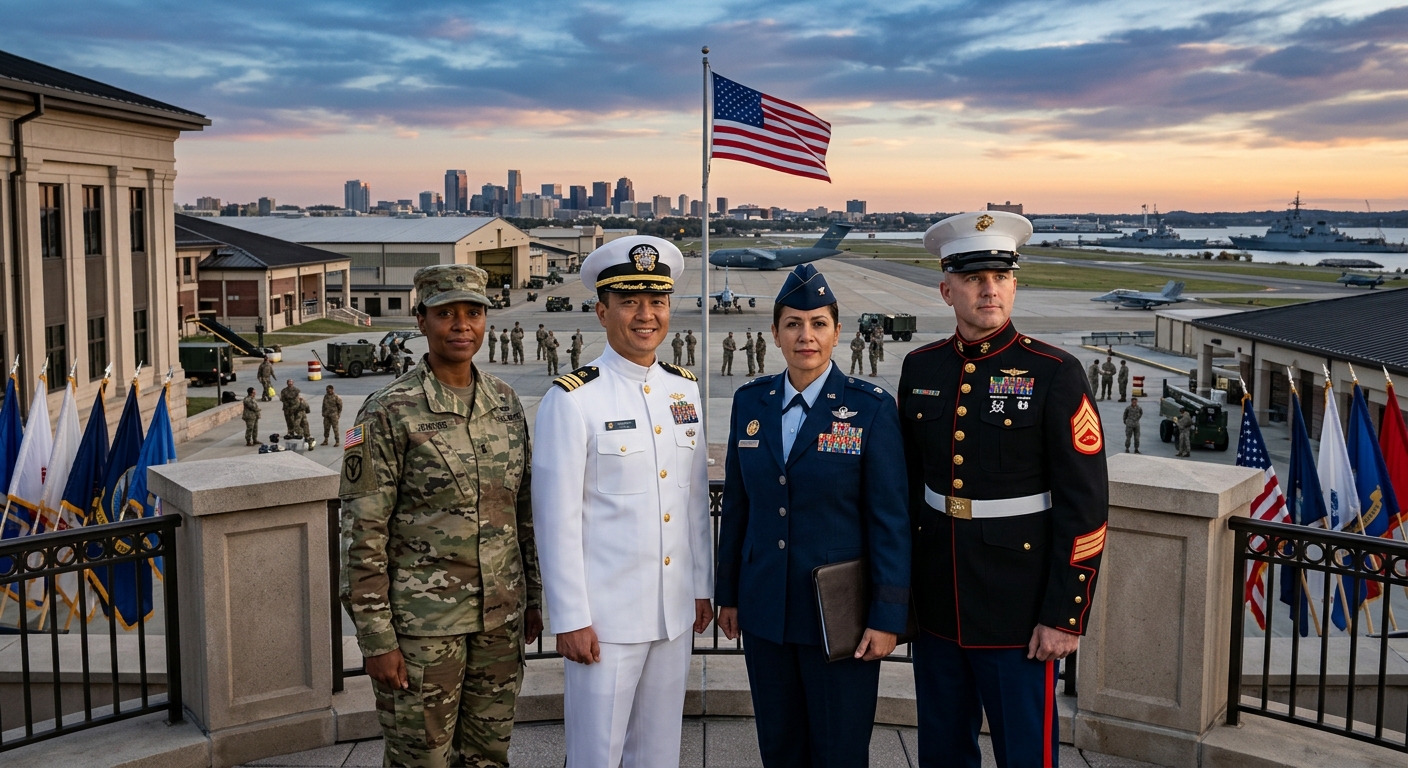
The Strategic Imperative of a Representative Military
The landscape of modern warfare and global security requires an armed force that is not only technologically advanced but also highly adaptable and resilient. One of the most critical components of this resilience is the human element—specifically, the composition and demographic makeup of the military personnel who execute complex missions. Historically, discussions surrounding the demographic makeup of armed forces have been framed primarily through the lens of social equity and equal opportunity. However, contemporary defense strategies increasingly recognize that cultivating a force reflective of the nation it serves is a fundamental strategic imperative.
When the individuals tasked with defending a nation represent a wide array of cultural, socioeconomic, and geographical backgrounds, they bring with them a diverse set of problem-solving skills, linguistic capabilities, and cultural competencies. These attributes are invaluable in multinational coalitions, counterinsurgency operations, and global peacekeeping missions where understanding the human terrain is just as critical as dominating the physical battlefield. Furthermore, a military that mirrors its civilian population reinforces the social contract between the state and its citizens, fostering public trust and demonstrating that the burden of national defense is shared equitably across all segments of society.
Moreover, a military that fails to represent its citizenry runs the risk of becoming an insular organization, detached from the democratic values it is sworn to protect. When civilian populations see themselves reflected in the ranks and leadership of their armed forces, it reinforces the legitimacy of the military institution. This mutual trust is an essential pillar of a healthy civil-military relationship, particularly in a democratic society where the military relies on the public for funding, recruits, and moral support. Therefore, demographic representation is not merely a metric of social progress; it is a vital operational asset that directly contributes to the agility, legitimacy, and overall effectiveness of the military establishment on the global stage.
Analyzing the Demographic Divide Between Enlisted Ranks and Leadership
Despite the broad recognition of its strategic value, a significant demographic divide persists within the structure of the United States Armed Forces, particularly when comparing the enlisted ranks to the officer corps. The enlisted force—the backbone of the military responsible for the day-to-day execution of operations—is remarkably diverse. It closely mirrors, and in some demographic categories exceeds, the diversity of the general civilian population. Young men and women from various racial, ethnic, and socioeconomic backgrounds find a pathway to service, skill acquisition, and upward mobility through military enlistment.
However, as one examines the higher echelons of military leadership, this demographic reflection begins to fade. The officer corps, particularly at the senior levels (such as generals and admirals), remains disproportionately homogenous. This disparity is often attributed to the structural pathways required for commissioning and subsequent promotion. Officers typically enter the service through military academies, Reserve Officers’ Training Corps (ROTC) programs, or Officer Candidate Schools, which historically require a bachelor’s degree. Disparities in access to higher education, disparate graduation rates, and varying exposure to military career opportunities at the collegiate level all contribute to a narrower, less diverse pipeline for future military leaders.
The Department of Defense has continuously monitored these trends. Demographic profiles of the military community routinely highlight that while the overall percentage of minority service members is robust, the concentration of these individuals is heavily skewed toward the lower and middle enlisted grades. This structural bottleneck means that the strategic decisions, policy formulations, and cultural tone-setting at the highest levels of the military are often determined by a demographic subset that does not accurately reflect the broader force they command. Addressing this structural disconnect requires sustained, deliberate efforts to widen the commissioning pipeline and ensure equitable career progression without compromising the rigorous standards required for military leadership.
Unit Cohesion and the Psychological Impact of Homogenous Leadership
The disparity between a diverse enlisted force and a homogenous leadership structure is not merely an abstract statistical anomaly; it has profound psychological and operational implications for service members. At the core of military effectiveness is “unit cohesion”—the interpersonal bonds, mutual trust, and shared commitment that enable a group of individuals to endure the extreme stresses of combat and perform as a unified entity. Research into military team dynamics consistently indicates that trust is more easily established when service members feel understood, valued, and represented by their chain of command.
When minority service members look up the chain of command and rarely see leaders who share their cultural or racial backgrounds, it can inadvertently foster a sense of alienation or institutional marginalization. This phenomenon is not about a conscious bias from leadership, but rather the subconscious signaling that the highest echelons of achievement within the organization may be inherently restricted for certain groups. A lack of representative leadership can exacerbate feelings of isolation, particularly in highly stressful or culturally complex deployment environments. It may also deter talented minority service members from pursuing long-term military careers, as they may perceive a “glass ceiling” limiting their advancement.
Conversely, inclusive leadership structures actively enhance unit cohesion. When leaders possess a diverse array of lived experiences, they are often better equipped to identify and mitigate interpersonal conflicts within their units, recognize unique stressors affecting different demographic groups, and foster an environment of psychological safety. Studies examining the inclusion climate within military contexts demonstrate that when service members feel their unique backgrounds are respected and integrated into the unit’s identity, their overall morale, retention rates, and mission readiness improve significantly. Thus, a reflective officer corps acts as a force multiplier, transforming a demographically mixed group of individuals into a tightly knit, high-performing tactical unit.
Navigating the Legal Landscape: Affirmative Action and Military Academies
The structural mechanisms used to cultivate a diverse officer corps have recently been subjected to intense legal scrutiny, highlighting the complex intersection of defense policy and constitutional law. In 2023, the landscape of higher education admissions was fundamentally altered by the Supreme Court’s ruling in Students for Fair Admissions, Inc. v. President and Fellows of Harvard College. The Court determined that race-based affirmative action programs in civilian university admissions violated the Equal Protection Clause of the Fourteenth Amendment, effectively dismantling decades of precedent that allowed institutions to consider race as a factor in cultivating diverse student bodies.
However, this landmark decision included a highly significant caveat. The Supreme Court explicitly carved out an exemption for the nation’s military service academies. In its ruling, the Court acknowledged the “potentially distinct interests” of military academies, recognizing the arguments presented by the federal government and former military leaders that a diverse officer corps is essential for national security. The government successfully argued that the military cannot afford the operational risks associated with a leadership structure that is demographically isolated from both the enlisted troops it commands and the nation it defends.
This legal exemption underscores a profound national recognition: the requirement for diverse military leadership transcends standard educational benefits and touches directly upon the state’s ability to maintain a cohesive, effective, and legitimate fighting force. While civilian institutions must now navigate race-neutral admissions strategies, military academies retain a broader legal latitude to ensure their incoming classes of future officers reflect the broader American populace, thereby safeguarding the strategic cohesion of the armed forces.
Modern Recruitment Challenges in a Shifting Demographic Environment
The legal protections afforded to military academies are only one facet of a broader challenge facing the Department of Defense: adapting to the rapidly shifting demographic realities of the modern recruiting environment. The United States is undergoing significant demographic transformations, with younger generations—the prime demographic for military recruitment—being the most racially and ethnically diverse in the nation’s history. To maintain the all-volunteer force, the military must successfully appeal to and recruit from these expanding demographic pools.
A critical hurdle in this endeavor is the perception of the military among younger, diverse populations. If the institution is viewed as antiquated or lacking in equitable opportunities for advancement, it will struggle to attract top-tier talent. This is where the visibility of diverse leadership becomes a potent recruitment tool. Prospective recruits are far more likely to commit to an organization where they can visually identify a clear trajectory for their own success. When potential officers and enlisted personnel see individuals from similar backgrounds excelling in senior command roles, it provides tangible proof that the military is a meritocracy that values and rewards diverse talent.
Furthermore, recruitment in the 21st century relies heavily on community influencers—parents, educators, and local leaders. Building strong relationships with diverse communities requires military representatives who can authentically engage with these influencers, addressing their unique concerns and cultural perspectives. A leadership corps that lacks this diversity may find itself structurally disadvantaged in its outreach efforts, exacerbating existing recruiting shortfalls and threatening the long-term sustainability of the armed forces.
Fostering Sustainable Institutional Change for Future Readiness
Achieving a sustainably reflective officer corps requires moving beyond the initial point of recruitment and focusing on the systemic retention and equitable promotion of diverse talent. Institutional change within a massive, historically rigid organization like the military necessitates a multifaceted approach. Simply increasing the intake of diverse junior officers is insufficient if structural barriers prevent their advancement to senior leadership roles.
One of the most effective strategies for fostering this change is the formalization of robust mentorship and sponsorship programs. In many organizations, informal networks often dictate career progression, and individuals naturally gravitate toward mentoring those who remind them of themselves. By institutionalizing mentorship, the military can ensure that young officers from underrepresented backgrounds receive the guidance, career mapping, and advocacy necessary to navigate the complexities of military promotion boards.
Furthermore, transparent communication regarding promotion criteria and selection rates is vital. When the processes governing career advancement are shrouded in opacity, it can breed cynicism and the assumption of systemic bias. By adopting data-driven approaches to track the career progression of various demographic groups, the Department of Defense can proactively identify points of attrition and implement targeted interventions. These interventions might include specialized leadership seminars, expanded educational opportunities, or reevaluating the weighting of certain evaluation metrics that historically disadvantage minority candidates. Ultimately, fostering sustainable change requires a culture that views diversity not as a compliance metric, but as an integral component of strategic readiness, demanding the same rigorous cultivation as any other critical defense capability.
Conclusion: A Unified Force for a Complex World
In an era characterized by asymmetric threats, rapid technological advancement, and complex geopolitical shifts, the United States military cannot rely solely on overwhelming firepower to ensure national security. The true strength of the armed forces lies in the human capital that comprises its ranks. A military leadership structure that accurately reflects the diversity of its enlisted personnel and the broader civilian population is not a political luxury; it is an operational necessity.
By bridging the demographic divide between the enlisted corps and senior leadership, the military enhances unit cohesion, improves tactical decision-making, and strengthens the vital bond of trust between the armed forces and the American public. Navigating the legal complexities of admissions and overcoming modern recruitment challenges will require sustained, deliberate effort. However, cultivating a representative officer corps will ultimately yield a more adaptable, legitimate, and unified force, fully prepared to meet the multifaceted security challenges of the 21st century.
Frequently Asked Questions (FAQs)
- Why is unit cohesion important in the military?
Unit cohesion refers to the interpersonal bonds and mutual trust among service members. It is critical because it directly impacts a unit’s ability to operate effectively under the extreme stress of combat. High unit cohesion leads to better communication, higher morale, and improved mission execution. - How does leadership diversity affect military retention?
When service members see leaders who reflect their own backgrounds and experiences, it fosters a stronger sense of belonging and inclusion. This psychological safety can improve job satisfaction and encourage talented personnel to remain in the military for full careers, rather than separating early. - What was the Supreme Court’s ruling regarding military academies and affirmative action?
In its 2023 decision (Students for Fair Admissions v. Harvard), the Supreme Court struck down race-based affirmative action in civilian university admissions. However, it explicitly exempted military service academies, acknowledging the unique and compelling national security interests in maintaining a diverse officer corps to lead a diverse enlisted force. - Are enlisted military ranks more diverse than the officer corps?
Yes. Statistical data consistently shows that the enlisted ranks of the U.S. military are highly diverse, often mirroring or exceeding the diversity of the general U.S. population. In contrast, the senior officer corps remains predominantly homogenous. - How does demographic representation impact global military operations?
A representative military force is better equipped to operate in diverse global environments. Personnel from various cultural and linguistic backgrounds provide unique insights into the human terrain of international conflicts and peacekeeping missions. This cultural competence can enhance intelligence gathering, improve relations with local civilian populations, and facilitate smoother cooperation with international allied forces.
References
- Department of Defense Releases Annual Demographics Report — U.S. Department of Defense. 2022-12-14. https://www.defense.gov/News/Releases/Release/Article/3246268/
- Students for Fair Admissions, Inc. v. President and Fellows of Harvard College — Supreme Court of the United States. 2023-06-29. https://www.supremecourt.gov/opinions/22pdf/20-1199_hgdj.pdf
- Department of Defense: DEI Workforce Reductions — U.S. Government Accountability Office (GAO). 2024-04-17. https://www.gao.gov/products/gao-24-107452
Similar Articles








Read full bio of Sneha Tete


