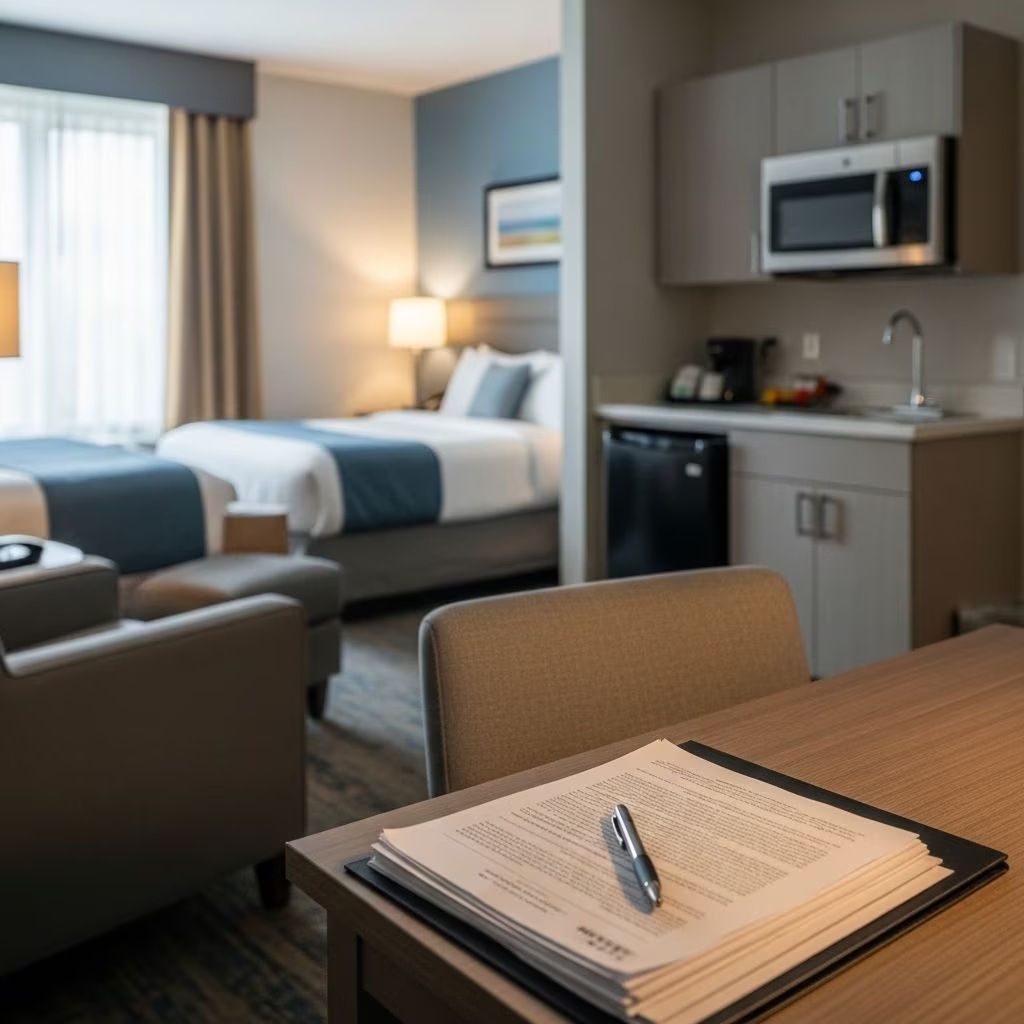
Extended-stay hotels and similar properties blur the line between short-term lodging and long-term housing. Many people live in these locations for weeks or months at a time, sometimes using them as their primary home when traditional rentals are unavailable or unaffordable. That can raise a crucial question: do long-term hotel residents have the same legal protections as renters in apartments?
The answer depends heavily on state and local law, as well as the specific facts of your stay. Some jurisdictions treat certain long-term hotel occupants as tenants with full landlord-tenant protections, while others continue to view them as guests who can be removed under hotel rules rather than formal eviction procedures. This article offers a general framework to help you understand the distinction and what it means for your rights.
Hotels vs. Tenancies: Why the Distinction Matters
Almost every state draws a legal distinction between two basic categories of occupants:
- Transient hotel guests – people staying for short periods, generally covered by innkeeper or hospitality laws, not landlord-tenant statutes.
- Tenants – people renting a residence, typically protected by landlord-tenant statutes that restrict self-help lockouts and require formal eviction procedures.
This classification matters because it determines how easily you can be removed from the property, what privacy protections you enjoy, and what remedies you may have if something goes wrong.
| Issue | Typical Hotel Guest | Typical Residential Tenant |
|---|---|---|
| Legal framework | Innkeeper / hospitality statutes | Landlord-tenant statutes and housing codes |
| Removal process | Often rapid; may involve law enforcement under hotel rules | Formal eviction or unlawful detainer lawsuit; court order usually required |
| Security of tenure | Limited; stay can often be ended according to hotel policies | More secure; lease or statutory notice periods apply |
| Privacy expectations | Room access for housekeeping and management is broader | Entry often restricted to emergencies or proper notice by law |
| Anti-discrimination protections | Public accommodation rules may apply | Fair housing and landlord-tenant anti-retaliation provisions may apply |
When a Long-Term Hotel Guest May Be Treated as a Tenant
Many people assume that simply staying in a hotel for more than a certain number of days automatically converts them into tenants. In reality, the rule is more nuanced and varies between states:
- Some states specify that after a fixed number of consecutive days (such as 30 days), an occupant may be treated as a tenant and can only be removed through eviction proceedings.
- Other states explicitly exclude hotels and motels from their residential landlord-tenant statutes, regardless of length of stay.
- Courts may look at the totality of circumstances: how the property is used, whether it functions as the person’s primary home, and the intentions of both parties.
From a legal standpoint, key factors may include:
- Whether the property is designed and marketed for temporary lodging or long-term residential use.
- Whether the occupant views the unit as a place to return to regularly and uses it as their main residence.
- Whether the occupant has an alternative residence.
- The presence or absence of a written lease or rental agreement.
- How the business classifies and taxes the stay (for example, as a hotel room subject to lodging tax).
Because these criteria are very state-specific, long-term hotel residents should consult local statutes or speak with a housing or consumer law attorney for advice tailored to their jurisdiction.
Legal Protections for Guests Who Qualify as Tenants
If your state treats certain extended-stay occupants as tenants, you may gain protections similar to those enjoyed by apartment renters. Common examples include:
- Protection against self-help eviction: The owner generally cannot simply change the locks, shut off utilities, or throw belongings out without a court order.
- Notice requirements: The landlord must usually give written notice before ending the tenancy, often with different timelines for nonpayment of rent versus other reasons.
- Eviction through court process: If you do not leave voluntarily, the landlord must file an eviction or unlawful detainer lawsuit and obtain a judgment before law enforcement can remove you.
- Basic habitability standards: Landlord-tenant and housing codes may require safe, sanitary, and structurally sound living conditions.
- Protection against retaliation: Many states forbid landlords from retaliating against tenants for asserting legal rights or complaining to authorities.
- Security deposit rules: Where deposits are taken, laws often regulate how they are held and when they must be returned.
Again, these protections depend on both your classification as a tenant and the specific provisions of your state’s law.
Fair Housing and Anti-Discrimination Rules
Another important question is whether civil rights and housing discrimination laws apply to extended-stay guests. Under the federal Fair Housing Act (FHA), protections typically apply to dwellings, a term that covers most housing units intended for long-term residence.
Court decisions and guidance suggest that:
- Traditional hotels and motels used only for short stays are often not considered dwellings under the FHA, so full housing protections may not apply to their guests.
- However, some extended-stay facilities may qualify as dwellings if occupants intend and are expected to remain there for significant periods of time and treat them as a home-like residence.
If an extended-stay hotel is treated as a dwelling, protections against discrimination based on race, color, religion, national origin, sex (including gender identity and sexual orientation), familial status, and disability can come into play. The U.S. Department of Housing and Urban Development (HUD) enforces these federal protections.
Privacy, Inspections, and Room Access
Privacy expectations are another gray area where hotel and tenancy concepts can collide. In a typical hotel setting, management retains broad discretion to enter a room for housekeeping, maintenance, safety, and policy enforcement. When a long-term occupant gains tenant status, however, landlord-tenant rules may limit access more strictly.
Depending on local law and your legal classification, you may have rights such as:
- Advance notice before entry for non-emergency inspections or repairs (for example, 24 hours’ written notice under some landlord-tenant statutes).
- Emergency entry without notice when there is an immediate threat to health, safety, or property (such as fire, flooding, or suspected crime).
- Potential claims if staff repeatedly enter without proper notice or legitimate reason, and you are legally recognized as a tenant.
Even when you are treated as a hotel guest rather than a tenant, basic privacy expectations apply, often backed by innkeeper and consumer protection laws. However, those expectations are generally less robust than formal tenant privacy rights, so it is crucial to understand which legal category you fall into.
Safety, Crime, and Habitability Concerns
Extended-stay properties sometimes present safety challenges, including crime on or near the premises. Both hotel guests and tenants may have certain protections when conditions become unsafe.
- In most states, housing codes require landlords to maintain basic safety features such as functioning locks, adequate lighting in common areas, and structurally sound buildings.
- Hotel operators must comply with health and safety regulations, fire codes, and local licensing rules, which may be enforced by city or state agencies.
- Severe or ongoing unsafe conditions can sometimes justify complaints to code enforcement, public health departments, or consumer protection agencies.
Where a guest is treated as a tenant, longstanding doctrines such as the implied warranty of habitability—recognized in many states—may provide additional remedies when living conditions fall below legal standards.
Billing Practices, Rate Changes, and Taxes
Extended-stay guests frequently pay weekly or monthly rates and may be subject to special pricing structures. Issues often arise when rates are increased abruptly or terms change without clear notice.
Key points to be aware of include:
- Written agreements: If you have a written agreement, it may govern how and when the operator can change rates or end the arrangement.
- Local consumer laws: Deceptive or unfair billing practices may violate state consumer protection statutes.
- Occupancy and lodging taxes: Some states change the tax treatment after a certain number of consecutive days of occupancy, while others continue to apply hotel taxes regardless of the length of stay.
In disputes over broken rate promises or surprise charges, documenting communications and saving receipts, emails, and screenshots can be crucial if you later challenge the practices.
What to Do if You Are Threatened With Removal
If an extended-stay hotel tells you that you must leave immediately, your options depend on whether you are treated as a guest or a tenant under local law. Steps that can help include:
- Ask for written notice: Request a written explanation of why the property wants you to leave and on what legal basis.
- Gather documents: Collect any agreements, payment receipts, emails, and notes about staff statements or conduct.
- Check your state’s statutes: Look up landlord-tenant laws and any specific provisions about hotels, motels, or extended-stay lodging. State legislative or attorney general websites often provide summaries or full text of applicable laws.
- Contact legal aid or a housing attorney: Many legal services organizations assist low-income tenants and may advise long-term hotel residents whose housing is at risk.
- Stay calm with law enforcement: If police become involved, calmly explain your situation and that you believe you may have tenant rights; provide documentation if available.
In states where long-term hotel residents qualify as tenants after a set period, courts have held that they generally cannot be removed by simple lockout and must receive full eviction process protections.
Practical Tips for Long-Term Hotel Residents
While the law can be complex, long-term guests can take basic steps to protect themselves:
- Get terms in writing: Whenever possible, ask for a written confirmation of your rate, payment schedule, and length of stay.
- Keep thorough records: Save every receipt, email, and written notice. Keep a simple log of significant events (e.g., entries into your room, threats of removal, major maintenance problems).
- Check local rules before you move in long term: If you expect to stay for several months, research your state’s laws on extended hotel stays and tenant status ahead of time.
- Know your status may change over time: In some jurisdictions, remaining past a particular number of days can shift your legal status closer to that of a tenant.
- Seek help early: If you receive a warning, notice, or experience unsafe conditions, contact legal aid, a tenants’ rights clinic, or a local bar association referral service before the situation escalates.
Frequently Asked Questions (FAQs)
Do I automatically become a tenant after 30 days in a hotel?
No. Some states treat guests as tenants after a certain number of consecutive days, but others specifically exempt hotels and motels from landlord-tenant laws regardless of length of stay. You must check the statutes and court decisions in your state.
Can an extended-stay hotel lock me out without going to court?
If you are still considered a hotel guest under local law, the operator may be able to end your stay under innkeeper rules without filing a formal eviction. If you qualify as a tenant, most states require a court process before you can be locked out.
Are extended-stay hotels covered by the Fair Housing Act?
Traditional hotels used only for short stays are usually not treated as dwellings under the Fair Housing Act. However, extended-stay properties functioning as long-term residences for occupants may, in some cases, be considered dwellings, triggering Fair Housing protections.
Can a hotel raise my rate in the middle of my stay?
Your rights depend on your agreement and local consumer and landlord-tenant laws. If you have a written contract guaranteeing a specific rate for a set period, the hotel’s ability to raise the rate may be restricted. Sudden, undisclosed increases can also raise consumer protection concerns.
Where can I get help if I think my rights are being violated?
Possible resources include local legal aid organizations, housing or tenants’ rights clinics, state or local bar association lawyer referral services, and government agencies that enforce fair housing, consumer protection, or housing code laws. Many of these organizations provide free or low-cost advice.
References
- Housing in Limbo: Rights for Hotel and Motel Tenants — Northwest Justice Project. 2018-10-01. https://nwjustice.org/article/1920
- Do Extended Stay Hotels Rent Rooms to Customers or Tenants? — Aliano & Associates, PLLC (discussing New Hampshire law and Anderson v. Robitaille). 2019-03-15. https://alfanolawoffice.com/do-extended-stay-hotels-rent-rooms-to-customers-or-tenants/
- The Fair Housing Act and the Extended Stay Industry — HospitalityLawyer.com. 2015-06-03. https://hospitalitylawyer.com/the-fair-housing-act-and-the-extended-stay-industry/
- Can a Hotel Kick You Out Every 28 Days? — Yash Law Group (California-focused analysis). 2020-07-01. https://www.yashlaw.com/articles/can-a-hotel-kick-you-out-every-28-days/
- Essential Resources for Tenants Who Live in Hotel Rooms — Tenant Law Group (California). 2021-05-01. https://tenantlawgroupsf.com/essential-resources-for-tenants-who-live-in-hotel-rooms/