
Reimagining Public Safety: The Protest Force Paradox
Analyzing the complex intersection of free speech, police militarization, and the urgent need for crowd control reform.
Introduction: The Collision of Free Speech and State Force
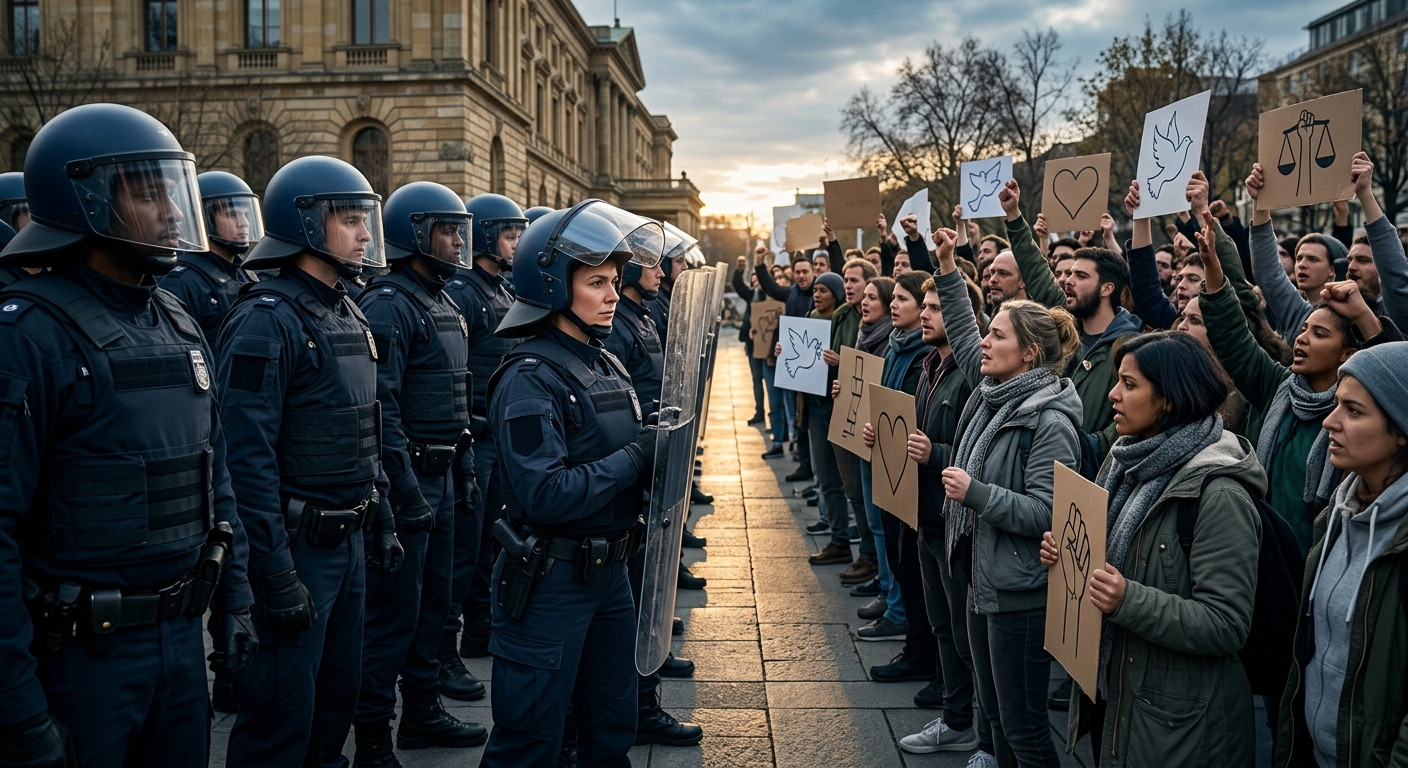
When citizens take to the streets to demand accountability and systemic change, they are participating in one of the most fundamental traditions of democratic societies. However, a troubling paradox has emerged in recent years across the nation: demonstrations organized specifically to protest state violence are frequently met with further displays of state violence. This escalation not only endangers public safety but also threatens the core tenets of free expression. When law enforcement agencies deploy riot gear, chemical irritants, and heavy-handed tactics against demonstrators, it transforms peaceful assemblies into urban battlegrounds, fundamentally undermining the fragile trust between communities and those sworn to protect them.
The irony of deploying militarized force to quell uprisings about militarized force is both glaring and counterproductive. Instead of functioning as neutral facilitators of democratic expression, heavily armed riot units often act as an accelerating catalyst for the very unrest they are deployed to manage. This dynamic necessitates a profound reevaluation of how municipalities balance the preservation of public order with the sacred obligation to protect constitutional liberties.
The Constitutional Mandate: Safeguarding the First Amendment
The right of the people peaceably to assemble and to petition the government for a redress of grievances is enshrined as a cornerstone of the American democratic experiment. This constitutional mandate was not designed merely to protect popular or comfortable speech; it was explicitly crafted to safeguard the voices of dissent, particularly when those voices challenge the apparatus of the state itself. Historically, civil rights movements, labor strikes, and anti-war demonstrations have all relied heavily on the physical occupation of public space to force societal introspection and political change.
When policing strategies shift from crowd facilitation to crowd control and dispersal, they inherently infringe upon these historical and constitutional rights. The presence of officers adorned in tactical combat gear, wielding batons and shields, creates a chilling effect on free speech. This aggressive posturing sends a clear, intimidating message to the public: dissent will be treated as an act of hostility rather than a civil right. Consequently, individuals who might otherwise participate in peaceful marches—such as the elderly, parents with young children, or individuals with disabilities—are deterred from joining due to the very real threat of physical harm. The suppression of these voices disproportionately impacts marginalized communities, who often have the most urgent grievances to air and the fewest alternative avenues for political influence.
The 1033 Program and the Militarization of Main Street
To understand the current state of protest policing, one must examine the extensive supply chains that equip local departments. In the wake of the War on Drugs and the post-9/11 War on Terror, federal initiatives have blurred the lines between local police and the military. Chief among these is the Department of Defense’s 1033 Program, which has permitted billions of dollars worth of surplus military equipment to flow directly into local law enforcement agencies.
This influx of military-grade hardware—including armored vehicles, assault rifles, and tactical body armor—has fundamentally shifted police culture. When an agency is equipped like an occupying army, the psychological framework of its officers inevitably shifts toward a militaristic, “us-versus-them” mentality. Access to military equipment alters training and tactics, viewing community members as adversaries rather than civilians to be protected. This dynamic is especially combustible during protests against police brutality. The visual of heavily armored officers descending upon civilian streets validates the very grievances the protesters are voicing. Furthermore, the “law of the instrument” suggests that when police possess a vast arsenal of riot control equipment, they are significantly more likely to deploy it, even when peaceful de-escalation tactics would be far more appropriate and effective.
The Misnomer of “Less-Lethal” Munitions
Tear gas, rubber bullets, beanbag rounds, and flashbang grenades are broadly categorized in police manuals as “less-lethal” weapons. However, the terminology often masks the severe, indiscriminate, and sometimes permanent bodily harm these munitions can inflict. United Nations human rights experts have explicitly warned against the militarized approach to policing protests, noting that less-lethal weapons are frequently misused, leading to a rise in human rights violations, devastating injuries, and an escalation of overall violence.
Tear gas, an indiscriminate chemical irritant, does not differentiate between a violent provocateur, a peaceful marcher, a legal observer, or a neighborhood bystander. Its use essentially amounts to collective punishment, forcing chaotic dispersal and often inciting panic that leads to further injuries. Similarly, kinetic impact projectiles like rubber bullets, though intended to be fired at the ground to bounce upward, are frequently fired directly at crowds. This misuse has resulted in horrific injuries, including traumatic brain injuries, shattered facial bones, and permanent vision loss. Local governments are beginning to recognize this danger; for example, the City of Berkeley passed a resolution noting that less-lethal crowd control operations are highly dynamic and imprecise, making the chances of hitting uninvolved peaceful protesters incredibly high. The continued reliance on these tools during civilian demonstrations represents a failure of public safety protocols and a blatant disregard for human life.
Analyzing the Impact: Crowd Control Tactics in Numbers
Understanding the tactical breakdown of crowd control helps illuminate exactly where policy failures occur and how they might be corrected. The following table outlines common militarized tactics, their unintended consequences on civilian populations, and the proposed reforms necessary to align modern policing with constitutional values.
| Tactic / Equipment | Impact on Demonstrators | Proposed Policy Reform |
|---|---|---|
| Chemical Irritants (Tear Gas, Pepper Spray) | Indiscriminate respiratory distress, panic, collective punishment of peaceful attendees. | Complete ban on chemical agents for crowd dispersal; strict legislative limits on use. |
| Kinetic Projectiles (Rubber Bullets, Sponge Rounds) | Severe physical trauma, loss of vision, high risk of lethal outcomes if misused or aimed high. | Prohibit firing into crowds; restrict use solely to imminent threats of severe violence. |
| Tactical “Kettling” | Traps peaceful protesters, leading to mass unwarranted arrests and escalating widespread panic. | Require clear, open dispersal routes and multiple audible warnings before any crowd action. |
| Military Surplus Gear (Armored Vehicles, Camouflage) | Intimidation, chilling effect on First Amendment rights, psychological escalation of tension. | End participation in the 1033 Program; mandate the divestment of military-grade hardware. |
Forging Pathways to Systemic Reform
Meaningful systemic change requires dismantling the aggressive posture that characterizes modern crowd control. Reform cannot simply be a matter of updating training manuals; it requires a holistic restructuring of law enforcement’s mandate during public assemblies.
Redefining Use-of-Force Continuums
The threshold for deploying force against an assembly must be drastically elevated. Departments must rewrite their use-of-force continuums to explicitly forbid the deployment of less-lethal munitions against peaceful, non-compliant, or verbally hostile crowds. Force should never be used as a tool for simple crowd dispersal unless there is a specific, verifiable, and imminent threat to human life. Furthermore, officers who witness the excessive use of force by their peers must be legally and professionally mandated to intervene and report the misconduct, shattering the traditional institutional silence.
Instituting Robust Civilian Oversight
Internal police investigations consistently fail to hold officers accountable for abuses committed during protests. True accountability demands the establishment of independent civilian oversight boards endowed with subpoena power and the authority to recommend or enforce disciplinary actions. These independent bodies should routinely audit police protest responses, ensuring that after-action reports are publicly accessible and completely transparent. When municipalities pay out millions in taxpayer-funded settlements for police misconduct at protests, the financial burden should ideally impact departmental budgets to disincentivize future brutality.
Demilitarizing Local Departments
Local governments must actively restrict the militarization of their police forces. This includes passing binding local ordinances that prohibit the acquisition and use of military surplus equipment, completely withdrawing from federal transfer programs, and returning currently held military assets. Funds previously allocated to the maintenance of armored vehicles and tactical gear should be responsibly reallocated toward community-based crisis intervention teams, unarmed mediation units, and essential social services that address the root causes of civil unrest rather than merely policing the symptoms.
The Judicial Response and Legislative Momentum
The judicial branch is increasingly recognizing the urgent need to constrain police responses to civilian demonstrations. Recent legal battles have underscored the necessity of protecting demonstrators from excessive force and upholding the rule of law over authoritarian tactics. For instance, in a landmark move in February 2026, a federal judge in Portland issued an order strictly prohibiting federal agents from using chemical or projectile munitions against protesters outside federal facilities unless there was an “imminent threat of physical harm”.
Such rulings serve as a vital check on state power, highlighting that the indiscriminate use of force violates fundamental constitutional protections against unreasonable seizure and suppresses the right to free speech. The judiciary has explicitly stated that in a well-functioning democratic republic, nonviolent protest and courageous newsgathering must be respected, not treated as adversarial combat. While individual court orders provide temporary relief in specific jurisdictions, they are signaling a broader momentum. Legislative bodies at the state and municipal levels are increasingly facing pressure from constituents to codify these judicial principles into permanent law, ensuring that the protection of civil liberties is not contingent on piecemeal litigation.
Conclusion: Forging a Path Toward True Public Safety
True public safety is never achieved through the subjugation of dissent, but rather through the vigilant and uncompromising protection of constitutional rights. Meeting protests against police brutality with an overwhelming display of heavily armed state force is a profound failure of democratic governance. It creates a tragic, self-perpetuating cycle of trauma and violence that alienates communities and erodes the legitimacy of law enforcement institutions across the nation.
Moving forward, society must wholly reject the false dichotomy that pits public order against civil liberties. By embracing comprehensive demilitarization, implementing stringent accountability mechanisms, and fundamentally rethinking the psychology of crowd facilitation, municipalities can ensure that the streets remain a safe, vibrant forum for democratic participation. The right to demand justice is the absolute lifeblood of a free and functioning society; the response from the state must be to listen and adapt, not to aggressively silence the very people it serves.
Frequently Asked Questions (FAQs)
- What is the 1033 Program and how does it relate to police militarization?
The 1033 Program is a federal initiative managed by the Department of Defense that transfers excess military equipment to local and state law enforcement agencies. Critics argue that distributing armored vehicles, assault rifles, and tactical gear to local police fundamentally shifts their operational culture from community protection to a militarized, combative approach, especially evident during protests. - Are rubber bullets and tear gas considered illegal under international law?
While not outright banned in domestic civilian policing, international human rights bodies have consistently criticized their misuse. United Nations human rights experts have highlighted that the indiscriminate deployment of these less-lethal weapons often leads to severe human rights violations, calling for strict regulations to prevent their use against peaceful demonstrators. - What is “kettling” in the context of protest policing?
Kettling is a highly controversial crowd control tactic where police officers form cordons to trap a large group of protesters in a confined area, cutting off all exit routes. This tactic indiscriminately detains everyone in the area—including peaceful marchers, journalists, and bystanders—often leading to mass arrests and escalating tension and panic. - What are the recommended alternatives to militarized crowd control?
Experts broadly advocate for a “facilitation” approach rather than a combative “control” approach. This includes deploying unarmed community mediators, maintaining open lines of communication with protest organizers, establishing clear and safe march routes, and utilizing crisis intervention strategies that prioritize peaceful de-escalation over the use of physical force.
References
- How 9/11 helped to militarize American law enforcement — Brookings Institution. 2021-09-09. https://www.brookings.edu/articles/how-9-11-helped-to-militarize-american-law-enforcement/
- ‘Militarised approach’ to policing peaceful protests, only increases risk of violence: UN human rights expert — UN News. 2022-06-20. https://news.un.org/en/story/2022/06/1120862
- Resolution: Opposition to Police Brutality and Use of Force on Nonviolent Protesters — The City of Berkeley. 2024-10-15. https://berkeleyca.gov/sites/default/files/documents/2024-10-15%20Item%20XX%20Resolution%20Opposition%20to%20Police%20Brutality.pdf
- Judge orders federal agents to curb use of force and tear gas at ICE facility — Portland.gov. 2026-02-03. https://www.portland.gov/mayor/news/2026/02/03/judge-orders-federal-agents-curb-use-force-and-tear-gas-ice-facility
Similar Articles








Read full bio of Sneha Tete


