
Reimagining Public Safety Through Community Crisis Response
Transforming mental health emergencies with behavioral health professionals.
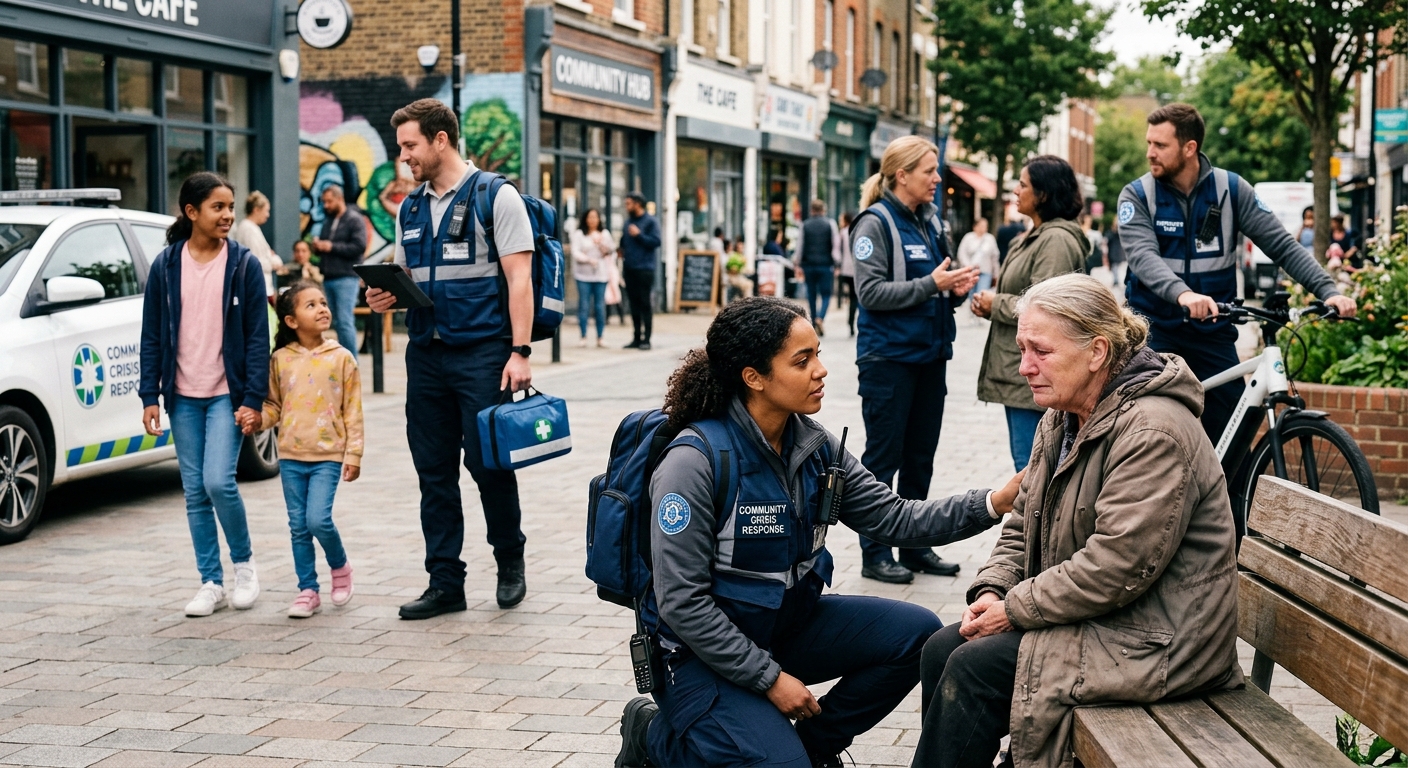
For decades, the standard response to a mental health emergency in the United States has been a dispatched police car. When individuals dial 911 for help with a severe psychiatric episode, substance use emergency, or emotional distress, law enforcement officers are frequently the first—and only—responders to arrive on the scene. However, an emerging consensus among public health officials, community advocates, and government agencies is driving a profound paradigm shift. Instead of treating behavioral health emergencies as criminal justice issues, cities and states are increasingly adopting community-led, non-police crisis response models. This public health approach aims to deliver specialized care, de-escalate volatile situations without armed intervention, and ultimately save lives while reimagining the fabric of public safety.
The Limitations of Law Enforcement in Behavioral Health Crises
The traditional reliance on law enforcement to manage mental health emergencies has systemic flaws. Police officers are trained primarily to enforce laws, secure crime scenes, and neutralize threats. While many departments have commendably implemented Crisis Intervention Team (CIT) training to better handle these encounters, officers are fundamentally not behavioral health clinicians. The mere presence of armed, uniformed officers can inadvertently escalate a situation, particularly for individuals experiencing severe paranoia, acute anxiety, or psychosis. The visual cues of law enforcement—flashing lights, badges, and firearms—can trigger defensive or fearful reactions in vulnerable populations, transforming a moment of medical vulnerability into a high-stakes standoff.
Furthermore, relying on law enforcement for mental health crises often leads to the criminalization of mental illness. Individuals in distress are frequently arrested for minor, non-violent offenses such as trespassing, public intoxication, or disorderly conduct simply because officers lack alternative healthcare options. This funnels people into the criminal justice system, where local jails and state prisons become de facto, ill-equipped mental health facilities. The human cost of this approach is staggering. Data consistently reveals a disproportionate number of police use-of-force incidents involving individuals suffering from severe mental illness. Recognizing these tragic, preventable outcomes, municipalities are realizing that an emergency response must match the nature of the emergency: medical and psychological crises require medical and psychological professionals, not punitive measures or use of force.
A National Movement: Unarmed Crisis Response Programs
In response to the clear need for specialized, trauma-informed care, cities across the nation are pioneering alternative response programs. These initiatives redirect non-violent behavioral health calls away from standard police dispatch and toward localized teams of licensed clinical social workers, paramedics, and peer support specialists.
A leading example is the approach taken in Washington, D.C., where the Department of Behavioral Health operates the Community Response Team (CRT). This comprehensive program offers 24-hour services to communities experiencing psychiatric emergencies, trauma, or substance use disorders . The CRT is equipped with behavioral health specialists and peers in recovery who conduct on-the-spot assessments, distribute critical harm reduction tools like life-saving naloxone, and connect individuals to long-term support services rather than jail cells . By prioritizing active community engagement and direct diversion from the criminal justice system, the CRT provides crisis outreach support to hundreds of individuals each month, demonstrating the high demand for clinical alternatives .
Similarly, the city of Chicago has heavily invested in non-police crisis interventions through its Crisis Assistance Response and Engagement (CARE) program. Recently expanded citywide, the CARE initiative deploys behavioral health professionals and emergency medical technicians (EMTs) to individuals in socio-emotional distress . Operating with a core mission to connect residents to support rather than holding cells, the CARE program emphasizes a public health and safety strategy that prioritizes dignity and compassionate care when law enforcement intervention is strictly unnecessary . Other communities are following suit with their own tailored models, drawing inspiration from legacy programs like CAHOOTS in Eugene, Oregon. These specialized units demonstrate that a non-police response is not a radical, untested theory, but a proven, highly effective logistical framework that saves municipal funds while significantly improving patient outcomes.
Federal Funding and Legislative Momentum
The push for behavioral health reform is not limited to local municipalities; it has gained substantial, bipartisan traction at the federal level. The Substance Abuse and Mental Health Services Administration (SAMHSA), an agency within the Department of Health and Human Services, has been instrumental in guiding and funding this nationwide transition. Between 2020 and May 2025, SAMHSA provided over $1.3 billion to states and local entities to bolster alternative crisis response infrastructure . These targeted federal grants allow cities to hire specialized personnel, purchase unmarked civilian vehicles for their mobile teams, and develop sophisticated data-sharing systems between healthcare providers and emergency dispatchers.
Recent legislative efforts aim to solidify and expand these initial advancements. Lawmakers have introduced the Behavioral Health Crisis Care Centers Act of 2025, a critical bill designed to expand access to comprehensive “one-stop” crisis stabilization centers . These specialized facilities offer continuous behavioral health services, temporary housing support, and wraparound care under one roof, providing a vital alternative to overcrowded hospital emergency rooms and holding cells . Additionally, the introduction of the 911 Community Crisis Responders Act seeks to establish dedicated federal grant programs that empower states, tribes, and localities to build mobile crisis response networks tailored specifically to nonviolent emergency calls . By aggressively securing federal funding, these legislative measures aim to reduce the daily strain on police departments while ensuring equitable, holistic public safety across diverse jurisdictions .
Core Pillars of an Effective Crisis Response System
According to federal guidelines outlined by SAMHSA, a truly comprehensive behavioral health crisis system must operate across a continuous, integrated spectrum of care . These three core components ensure that individuals receive immediate, appropriate, and ongoing support without falling through institutional cracks.
| Pillar of Care | Federal Guideline Description | Community Impact |
|---|---|---|
| Someone to Contact | 24/7 centralized crisis call centers (such as the 988 Suicide & Crisis Lifeline) staffed by highly trained behavioral counselors. | Resolves a significant percentage of crises directly over the phone, effectively eliminating the need for any in-person emergency dispatch. |
| Someone to Respond | Mobile crisis teams composed of specialized mental health professionals, paramedics, and certified peer support specialists. | Provides immediate, on-site de-escalation, psychological assessment, and medical stabilization without relying on armed law enforcement. |
| A Safe Place for Help | Crisis stabilization facilities that offer short-term clinical observation and specialized care in a restorative, non-punitive environment. | Diverts vulnerable individuals away from standard, overcrowded emergency departments and isolating criminal justice holding facilities. |
The successful integration of these three foundational pillars creates a seamless, closed-loop public health system. When a person calls a dedicated lifeline, a trained dispatcher can determine whether the crisis can be safely resolved verbally, whether a mobile team is urgently required, or whether the individual needs direct transport to a stabilization center. For stabilization, these centers are designed to be warm, welcoming, and clinically sound—offering comfortable recliners instead of rigid hospital beds, and peer-led support groups instead of isolation. They focus on rapid clinical stabilization, usually within a 23-hour window, and ensure that individuals leave with a concrete outpatient care plan and necessary housing referrals.
Challenges to Implementation and Scalability
Despite the universally proven efficacy and growing popularity of civilian-led crisis response models, successfully scaling these programs presents distinct logistical challenges. One of the primary obstacles is workforce capacity. There is a documented, nationwide shortage of licensed behavioral health clinicians and specialized social workers. Recruiting and retaining qualified professionals to work in high-stress, unpredictable emergency response environments requires competitive municipal compensation, comprehensive healthcare benefits, and robust mental health support for the responders themselves.
Another significant, systemic hurdle involves emergency dispatch protocols and complex risk assessment. 911 dispatchers are traditionally trained to prioritize strict physical safety above all else, which routinely leads to a default dispatch of police officers “just in case” a situation unexpectedly becomes violent. Transitioning to a modernized model where dispatchers confidently route calls to unarmed mental health teams requires extensive retraining, highly accurate triage algorithms, and a profound cultural shift within emergency communications centers.
Finally, long-term, sustainable funding remains a persistent and pressing concern. While innovative pilot programs often launch with the temporary help of federal grants or private community investments, their long-term viability requires permanent, structural integration into municipal budgets. Cities must be politically willing to reallocate broader public safety funding, viewing mental health response not as a supplementary luxury, but as a mandatory, core component of local emergency services.
Building Community Trust and Equity
The ultimate success of any alternative crisis response program is heavily dependent on foundational community trust. For historically marginalized communities, the prospect of dialing 911 during a mental health crisis has long been fraught with deep-seated, justifiable fear. Decades of disproportionate policing and systemic neighborhood disparities have left many residents deeply hesitant to seek help, knowing that a traditional police response could unfortunately result in incarceration or physical harm. Emerging non-police models must actively, intentionally work to rebuild this fractured trust by ensuring their response teams accurately reflect the demographics and nuanced cultural backgrounds of the communities they serve.
This is where the direct inclusion of “peer support specialists”—individuals with documented lived experience of mental illness, homelessness, or substance use recovery—becomes absolutely invaluable. Peers can build immediate, authentic rapport with patients, demonstrating profound, shared empathy that clinical degrees alone cannot provide. Their mere presence signals to the person in crisis that they are not being judged, patronized, or criminalized. When communities consistently witness crisis teams prioritizing harm reduction, deep respect, and gentle de-escalation over strict compliance and coercion, they are far more likely to utilize these lifesaving public services proactively before a crisis reaches a breaking point. True equity in modern crisis response means that every individual receives a compassionate, healthcare-first response.
Conclusion
The systemic transformation of mental health crisis response in the United States represents one of the most critical public policy evolutions of our era. By firmly acknowledging that mental health emergencies are acute medical events, rather than criminal infractions, cities are actively charting a more humane, highly effective, and economically sound operational course. Programs expanding across the nation thoroughly demonstrate that when we deploy deep compassion and specific clinical expertise instead of armed force, we not only save human lives but actively foster healthier, significantly more resilient local communities. The continued, vital expansion of these initiatives relies heavily on sustained legislative support, dedicated municipal funding, and an unwavering, structural commitment to public health equity.
Frequently Asked Questions (FAQs)
What is a non-police crisis response model?
A non-police crisis response model is an innovative emergency intervention strategy that dispatches unarmed, highly trained professionals—such as licensed clinical social workers, paramedics, and certified peer support specialists—to non-violent behavioral health emergencies instead of standard law enforcement officers. The overarching goal is to clinically de-escalate the situation and firmly connect the individual to long-term, appropriate care rather than the criminal justice system.
How does the 988 Lifeline differ from traditional 911?
The 988 Suicide & Crisis Lifeline is a dedicated, national three-digit dialing code specifically optimized for behavioral health crises. While dialing 911 routes callers to standard, multi-purpose police, fire, and EMS dispatchers, 988 connects callers directly to highly trained mental health crisis counselors who can provide immediate, specialized support, verbal de-escalation over the phone, and carefully coordinate localized mental health field services if a physical response is deemed necessary.
Are civilian mobile crisis teams safe for the responding community?
Yes. Extensive, multi-year data from established municipal programs nationwide shows that civilian-led mobile crisis teams operate incredibly safely. The vast majority of standard mental health calls do not involve active violence or dangerous weapons. Through rigorous, multi-layered dispatch screening protocols, emergency calls indicating an immediate physical danger are still securely routed to police, ensuring that unarmed teams are only ever sent to appropriate, carefully vetted situations.
What active role does the federal government play in supporting these programs?
The federal government, operating primarily through the Substance Abuse and Mental Health Services Administration (SAMHSA), provides critical operational guidance, industry best practices, and billions of dollars in structured grant funding. This vital federal support actively helps states and diverse municipalities build, test, and permanently sustain their local crisis response infrastructure, shifting the overall national standard of care toward a public health model.
References
- Community Response Team Data and Information — Office of Gun Violence Prevention, DC.gov. Accessed June 4, 2026. https://buildingblocks.dc.gov/page/community-response
- Mayor Brandon Johnson and Chicago Department of Public Health Announce Citywide Expansion of CARE Program — City of Chicago. 2026-05-13. https://www.chicago.gov/city/en/depts/cdph/provdrs/health_protection_and_response/news/2026/may/mayor-brandon-johnson-and-chicago-department-of-public-health-an.html
- Behavioral Health: Federal Activities to Support Crisis Response Services — U.S. Government Accountability Office (GAO). 2025-09-04. https://www.gao.gov/products/gao-25-107050
- Rep. Adam Smith Introduces Behavioral Health Crisis Care Centers Act — Representative Adam Smith (house.gov). 2025-10-31. https://adamsmith.house.gov/press-releases?ID=18F58A03-6B1C-4B4B-A630-E46F8E8C9461
- Smith and Fitzpatrick Introduce Legislation to Create and Expand Mobile Crisis Response Programs — Representative Adam Smith (house.gov). 2025-05-30. https://adamsmith.house.gov/press-releases?ID=2E898A13-6F1C-4B5C-B720-F57F9F9C8472
Similar Articles








Read full bio of medha deb


