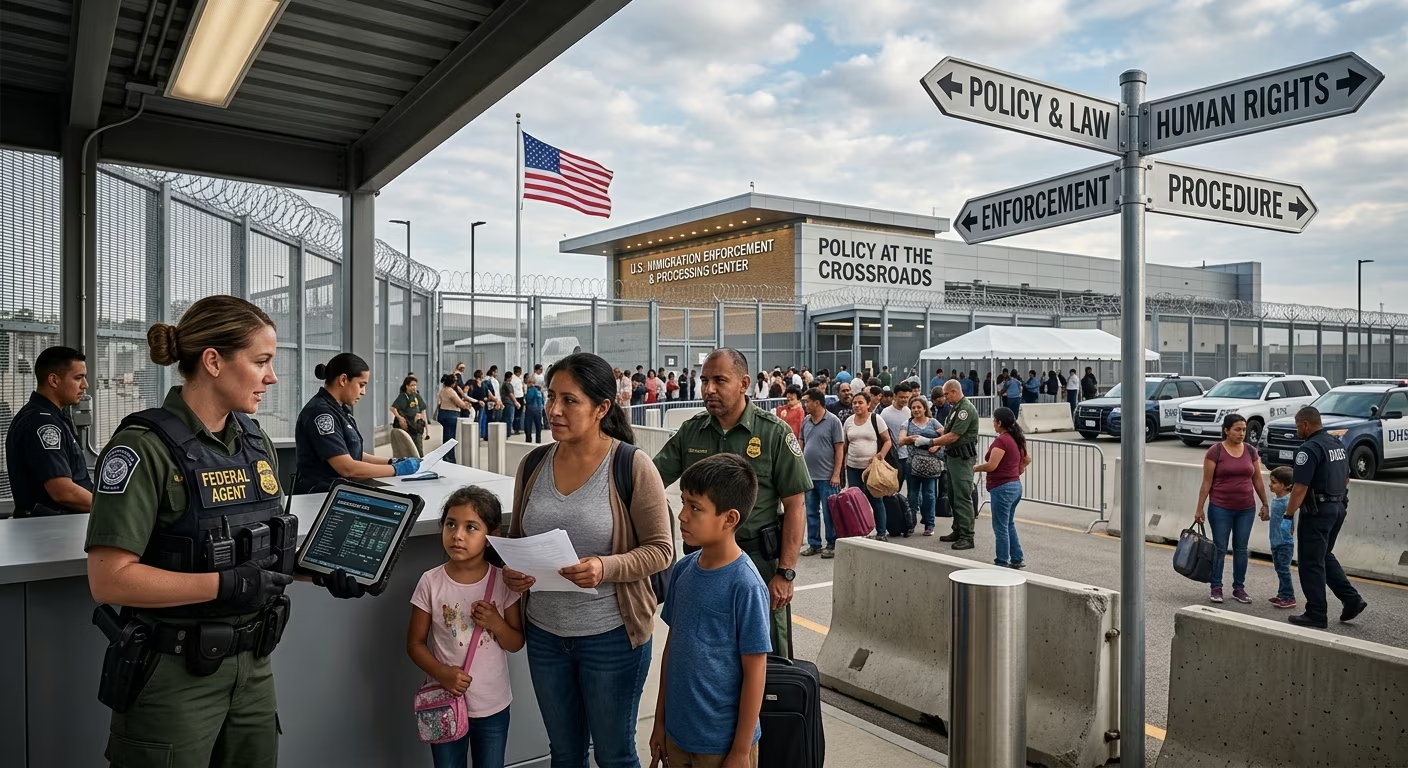
Reimagining Federal Immigration Enforcement: A Crossroads for Policy and Human Rights
The appointment of a new director for U.S. Immigration and Customs Enforcement (ICE) represents more than just a routine personnel shift within the federal bureaucracy. It serves as a pivotal juncture for the executive branch to recalibrate the nation’s interior immigration enforcement apparatus. Over the past two decades, ICE has grown into a formidable enforcement agency, often characterized by aggressive deportation tactics and a heavy reliance on a sprawling detention network. For advocates of human rights and systemic policy reform, a change in leadership offers a renewed opportunity to align the agency’s daily operations with humane, sensible immigration policies. At the core of this transition is the urgent need to address deep-seated issues, from the highly criticized conditions within civil detention centers to controversial partnerships forged with local police departments. A new chief must navigate a complex web of statutory mandates, budgetary constraints, and political scrutiny to chart a course that prioritizes public safety without compromising foundational human dignity or legal due process.
The Evolving Landscape of U.S. Immigration Enforcement
The narrative surrounding federal immigration enforcement has long been caught in a continuous tug-of-war between hardline deterrence strategies and progressive calls for a more compassionate approach. During the early days of the current administration, sweeping promises were made to overhaul the entire immigration system. These included halting the reliance on private, for-profit detention centers, reducing the sheer number of individuals held in civil confinement, and fundamentally rethinking the criteria regarding who is prioritized for deportation. However, the translation of these ambitious campaign rhetorics into tangible administrative action has been fraught with challenges. Entrenched bureaucratic norms within the agency, combined with ongoing judicial battles initiated by state governments seeking to block policy shifts, have frequently stalled meaningful reform.
The Gap Between Campaign Rhetoric and Administrative Action
The new ICE director inherits an agency that is heavily scrutinized. On one hand, there is immense pressure to maintain high enforcement metrics; on the other, there is a loud, sustained demand to dismantle practices that effectively criminalize migration. The gap between initial pledges and reality remains stark. For example, despite directives intended to pause mass deportations and refocus enforcement solely on verifiable threats to national security or public safety, ICE’s operational footprint remains massive. The incoming leadership must bridge this gap by aggressively enforcing prosecutorial discretion, a legal principle allowing law enforcement to logically decide where to allocate finite resources. By institutionalizing these targeted priorities across all field offices, the new director can begin dismantling the dragnet approach that historically swept up individuals with established ties to local communities.
Reassessing the Reliance on Immigration Detention
Perhaps the most pressing issue facing the new ICE leadership is the agency’s vast infrastructure of immigration detention. The United States maintains the largest civil immigration detention system in the world, a network comprising over two hundred facilities. These include dedicated federal centers, privately operated prisons, and local county jails contracting with the federal government to hold migrants. For years, advocacy groups, independent medical professionals, and governmental oversight bodies have raised severe alarms regarding the deteriorating conditions within these facilities.
The Push to Eliminate Profit from Incarceration
One heavily criticized aspect of the federal enforcement system is the profit motive intertwined with civil detention. Private prison corporations operate the vast majority of ICE detention beds. Critics consistently argue that outsourcing immigrant incarceration to shareholder-driven entities inherently prioritizes aggressive cost-cutting over the welfare, health, and legal rights of detainees. The administration previously issued an executive order phasing out the Department of Justice’s use of private criminal prisons, yet this directive excluded ICE’s civil detention centers. The incoming ICE chief possesses the unique administrative leverage to systematically decline the renewal of these lucrative contracts. Shifting the agency away from a privatized model cited for gross inadequacies in medical care and safety protocols is a necessary step toward humanizing enforcement.
Health, Safety, and Human Dignity in Facilities
Conditions inside many detention facilities have been the subject of federal investigations and whistleblower complaints. A comprehensive July 2024 report by the U.S. Government Accountability Office (GAO) noted significant fluctuations in ICE detentions and emphasized the pressing need for ICE to strengthen data reporting mechanisms to ensure transparent oversight of vulnerable populations . Reports of dangerously inadequate medical attention, controversial overuse of solitary confinement, and substandard living conditions continue to surface. A transformative ICE director must prioritize implementing rigorous, independent oversight mechanisms. This means terminating contracts with facilities possessing documented histories of systemic abuse and rethinking whether mass physical detention is inherently necessary. Transitioning to a model emphasizing community-based case management over physical confinement represents a monumental step toward a humane system.
Severing Ties: The Controversy Surrounding Local Law Enforcement Partnerships
Another critical area demanding immediate review and action is the expansive web of agreements ICE maintains with state and local law enforcement agencies, most notably implemented through the 287(g) program. Enacted under the sweeping Illegal Immigration Reform and Immigrant Responsibility Act of 1996, Section 287(g) of the Immigration and Nationality Act allows the Department of Homeland Security to formally deputize local police officers and county sheriffs to perform functions that are typically strictly reserved for highly trained federal immigration agents .
Understanding the Mechanics of the 287(g) Program
Under the parameters of these memorandums, designated local law enforcement officers receive limited training to interview individuals about their immigration status, check federal databases, and issue administrative detainers to hold individuals in local jails until ICE personnel assume custody. Proponents argue that the 287(g) program acts as an essential force multiplier, allowing federal authorities to seamlessly identify removable individuals already moving through the criminal justice system without expending additional federal manpower. However, the reality of how these programs operate in municipalities tells a deeply concerning story of racial profiling, civil rights violations, and shattered community trust.
Impacts on Community Trust and Public Safety
When local police officers are perceived as a direct extension of federal immigration enforcement, the cooperative nature of community policing is profoundly compromised. Immigrant communities—including naturalized citizens living in mixed-status households—become acutely hesitant to interact with local authorities. Witnesses to violent crimes and victims of domestic violence often choose to remain silent rather than risk exposing themselves or their loved ones to the looming threat of deportation. This widespread chilling effect ultimately undermines broad public safety for everyone residing in the jurisdiction. The new ICE chief retains the executive authority to unilaterally terminate these cooperative agreements. Ending the 287(g) program would send a clear message that the federal government does not support blurring the lines between routine local law enforcement and civil immigration regulation.
A Paradigm Shift in Deportation Priorities
The sheer volume of undocumented or otherwise removable individuals currently residing within the United States far exceeds the logistical and operational capacity of ICE. Therefore, the agency must strategically utilize prosecutorial discretion to rationally determine which specific cases warrant the expenditure of federal pursuit and resources.
Focusing on Due Process and Alternatives to Detention
In late 2021, the Department of Homeland Security issued updated guidelines intended to focus civil immigration enforcement strictly on distinct, verifiable threats to national security, public safety, and border security . These comprehensive guidelines represented a significant ideological departure from the indiscriminate zero-tolerance policies of previous years. They explicitly instructed federal officers that the mere fact of being an undocumented immigrant should not, in isolation, be the sole basis for initiating an enforcement action. However, the practical implementation of these guidelines has been historically inconsistent across the agency’s various autonomous field offices, and the overarching policy has faced intense, ongoing legal challenges from states seeking to compel the federal government to maximize overall deportations regardless of individual circumstances.
The new ICE director must aggressively champion a robust, unified application of prosecutorial discretion uniformly across all levels of the sprawling agency. This multifaceted approach involves establishing clear, enforceable accountability metrics for field agents and ensuring that legal representatives and advocates have accessible, formalized channels to request comprehensive case reviews. Furthermore, the agency must pivot its budgetary resources aggressively toward Alternatives to Detention (ATD). By successfully utilizing community-based support programs, robust case management services, and non-restrictive monitoring systems, ICE can successfully ensure an individual’s compliance with immigration court proceedings at a mere fraction of the astronomical cost of physical detention. This paradigm shift simultaneously respects human rights by allowing individuals to remain deeply connected with their families and continue positively contributing to their local economies while their complex legal cases are meticulously adjudicated.
A Roadmap for Meaningful Systemic Reform
To truly alter the historical trajectory of U.S. immigration enforcement, minor piecemeal adjustments and temporary policy memos will not suffice. A holistic, systemic, and culturally ingrained overhaul is required at every operational level of the agency. The strategic table provided below outlines the necessary paradigm shifts from the current enforcement status quo to a proposed, rights-respecting framework that the new ICE leadership should urgently adopt to fulfill the long-standing promises of reform.
| Policy Area | Current Status Quo | Proposed Reform Target |
|---|---|---|
| Detention Infrastructure | Heavy reliance on private, for-profit prisons and local county jails with minimal independent oversight. | Phase out private contracts entirely; dramatically scale back physical detention in favor of community-based programs. |
| Local Partnerships | Expansion and maintenance of 287(g) agreements, blending local policing with federal immigration duties. | Terminate all 287(g) agreements to restore community trust and separate criminal policing from civil enforcement. |
| Enforcement Priorities | Inconsistent application of prosecutorial discretion; frequent dragnet arrests of non-violent community members. | Strict adherence to prioritizing actual threats to public safety; requiring individualized assessments before initiating removal. |
| Transparency & Oversight | Opaque data reporting methods regarding conditions, length of stay, and vulnerable population metrics. | Implementation of rigorous, unannounced independent inspections and comprehensive public data dashboards. |
Frequently Asked Questions (FAQs)
What is prosecutorial discretion in the context of immigration?
Prosecutorial discretion is the recognized legal authority held by law enforcement agencies, including ICE, to decide where to focus their limited resources. In immigration enforcement, it means choosing whether or not to arrest, detain, or deport a specific individual based on a variety of factors, such as their ties to the community, criminal history, or potential threat to public safety, rather than pursuing every single undocumented person.
Why is the 287(g) program considered controversial?
The 287(g) program is highly controversial because it deputizes local police officers to act as federal immigration agents. Critics argue that this practice severely damages the crucial trust between immigrant communities and local law enforcement. When people fear that calling the police could lead to their own deportation or the deportation of a family member, they are far less likely to report crimes or assist in local investigations, which ultimately decreases overall public safety.
Are there viable alternatives to physical immigration detention?
Yes. Alternatives to Detention (ATD) encompass a variety of programs that ensure individuals attend their immigration court hearings without being held in a physical prison. These alternatives include community-based case management, regular check-ins, and technological monitoring. Research consistently shows that well-designed ATD programs have high compliance rates, are significantly more humane, and cost taxpayers a fraction of what physical detention facilities require.
How does the privatization of detention centers affect migrants?
When detention centers are operated by private, for-profit corporations, the underlying business model depends on keeping beds filled to maximize revenue. Independent oversight bodies and civil rights advocates have frequently found that this profit incentive can lead to dangerous cost-cutting measures, resulting in inadequate medical care, poor nutrition, understaffing, and overall substandard living conditions for the detained individuals.
References
- Immigration Enforcement: Arrests, Removals, and Detentions Varied Over Time and ICE Should Strengthen Data Reporting — U.S. Government Accountability Office (GAO). 2024-07-23. https://www.gao.gov/products/gao-24-106233
- 287(g) End-of-Year Annual Report – 2019 — Department of Homeland Security (DHS). 2020-06-24. https://www.dhs.gov/sites/default/files/publications/ice_-_287g_end_of_year_report_0.pdf
- Guidelines for the Enforcement of Civil Immigration Law — Department of Homeland Security (DHS). 2021-09-30. https://www.ice.gov/doclib/news/guidelines-civilimmigrationlaw.pdf