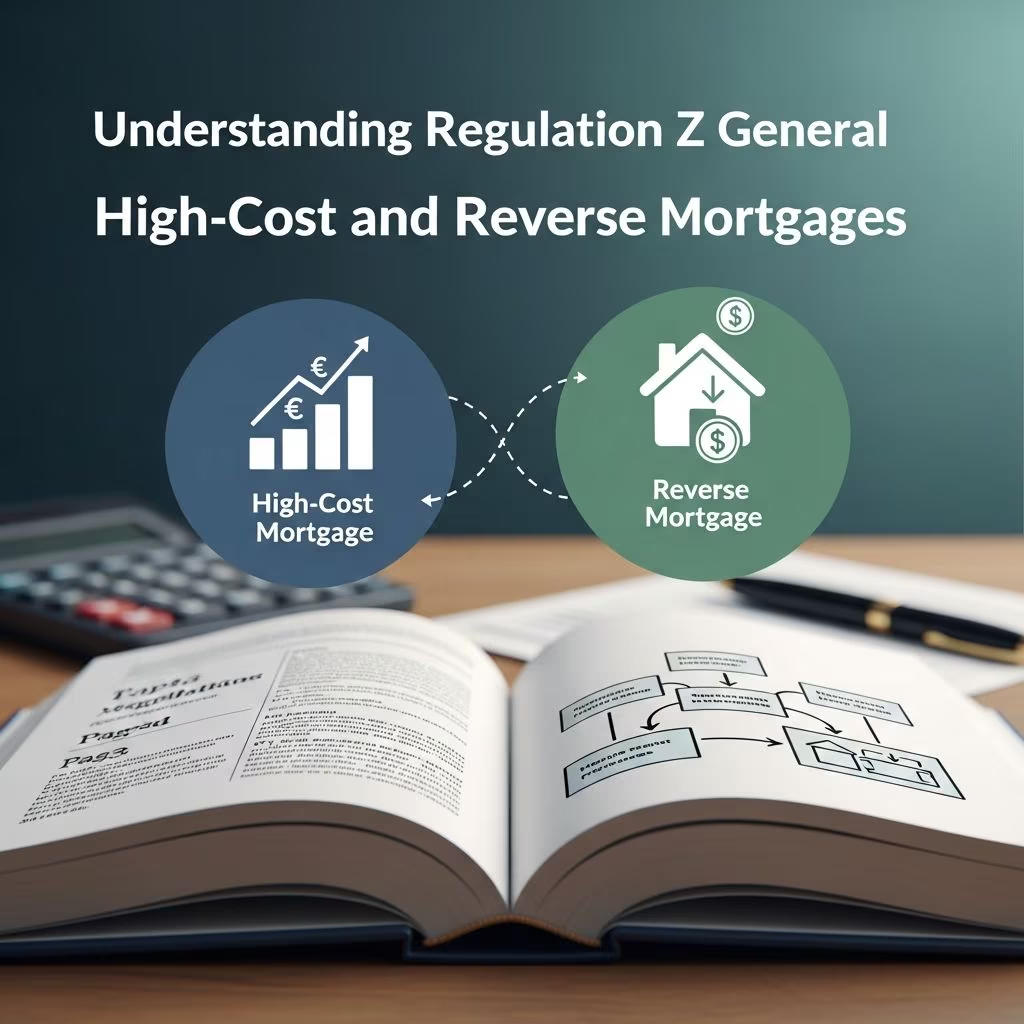
Regulation Z, which implements the federal Truth in Lending Act (TILA), contains a set of general rules that apply specifically to certain mortgage transactions, such as high-cost mortgages and reverse mortgages. These rules appear in Subpart E of Regulation Z and are designed to ensure that consumers receive meaningful, timely, and accurate information before entering into complex or higher-risk mortgage loans.
This guide explains those general rules in plain language, focusing on disclosure timing, use of estimates, corrections of violations, and key compliance expectations for creditors and assignees.
1. How Subpart E Fits into the Truth in Lending Framework
To understand the general rules, it helps to see where they sit within the overall TILA and Regulation Z structure.
- TILA is a federal law that promotes the informed use of credit by requiring clear, standardized disclosure of credit terms.
- Regulation Z is the Consumer Financial Protection Bureau’s (CFPB) regulation that implements TILA and provides detailed rules for creditors.
- Subpart E (12 CFR 1026.31–1026.45) sets special rules for certain mortgage transactions, including high-cost mortgages under the Home Ownership and Equity Protection Act (HOEPA) and reverse mortgages.
Within Subpart E, the general rules provision (12 CFR 1026.31) acts as a foundation for:
- How and when special disclosures must be provided for covered mortgages.
- What happens if those disclosures are wrong or incomplete.
- How creditors may rely on estimates when exact information is not yet available.
2. Scope: Which Transactions Are Covered?
The general rules under Subpart E apply to a defined set of transactions.
| Type of Transaction | Key Regulatory Focus |
|---|---|
| High-cost mortgages (HOEPA) | Special disclosures, fee and term limitations, and anti-abuse protections. |
| Reverse mortgages | Special disclosures including total annual loan cost and unique product features. |
| Certain other mortgage transactions in Subpart E | Additional restrictions and disclosure obligations designed to protect consumers. |
Other parts of Regulation Z govern additional aspects of consumer credit, but this article focuses on the general rules that frame disclosures and corrections for Subpart E mortgage transactions.
3. Core Disclosure and Timing Requirements
One of the central purposes of TILA and Regulation Z is to ensure that consumers receive disclosures early enough to compare options and understand the costs and risks.
3.1 Three-Business-Day Waiting Period
For high-cost mortgages, creditors must provide specific written disclosures at least three business days before consummation (for closed-end loans) or account opening (for open-end plans).
- “Business day” definition: For these high-cost mortgage rules, a business day generally means all calendar days except Sundays and specified federal legal holidays, consistent with the rescission rule under Regulation Z.
- Earliest consummation date: If disclosures are delivered on a Friday, consummation may occur any time on the third business day after receipt (typically Tuesday), without waiting until midnight of that third day.
This waiting period is intended to give consumers a clear window to review the material terms and risks before they become obligated on a high-cost loan.
3.2 Changes in Terms and Redisclosure
If certain terms change after initial high-cost mortgage disclosures are provided, the creditor must issue new disclosures and restart the waiting period.
Redisclosure is required when a change renders earlier disclosures inaccurate, including when those disclosures were labeled as estimates.
Common triggers include:
- A change in the interest rate or other fees that alters the disclosed payment schedule.
- The consumer finances additional premiums or charges at closing, changing the payment amount.
- Any revision that causes the disclosures mandated for high-cost mortgages to no longer reflect the true terms of the transaction.
4. Consumer Waiver of the Waiting Period
Regulation Z permits a consumer to modify or waive the three-business-day waiting period in very limited, emergency circumstances.
4.1 Bona Fide Personal Financial Emergency
To waive the waiting period:
- The consumer must have already received the required high-cost mortgage disclosures.
- The circumstances must meet the criteria for a bona fide personal financial emergency, interpreted consistently with Regulation Z’s rescission provisions.
An often-cited example is an imminent foreclosure sale scheduled to occur during the waiting period, where closing the new loan immediately is necessary to avoid loss of the consumer’s home.
4.2 Requirements for an Effective Waiver
To be valid, the waiver must typically:
- Be in written, signed form by each consumer entitled to the waiting period.
- Describe the emergency and state that the consumer is waiving the waiting period to meet that emergency.
Creditors should not encourage routine waivers; the rule contemplates rare, fact-specific circumstances where delay would significantly harm the consumer’s financial position.
5. Basis of Disclosures and Use of Estimates
Regulation Z recognizes that creditors may not always know every exact figure at the time disclosures must be prepared, especially for mortgages involving complex closing calculations.
5.1 When Estimates Are Permitted
The general rules allow creditors to use estimates when information necessary for an accurate disclosure is unknown and cannot be determined at the time disclosures are prepared.
- Estimates must be clearly labeled as such in the disclosure documents.
- Once the actual information becomes available, if the resulting change makes the disclosure inaccurate, the creditor may be required to provide new disclosures and observe a new waiting period for high-cost mortgages.
5.2 Per-Diem Interest and Affected Disclosures
Special commentary clarifies how creditors may handle per-diem interest—the daily interest that may be collected at consummation for the period between closing and the start of regular payments.
- If the creditor bases calculations on the best information known at the time disclosures are prepared, the disclosures are generally considered accurate, even if the exact per-diem interest collected at closing differs somewhat.
- This concept applies to numerical amounts affected by per-diem interest, such as the finance charge, annual percentage rate (APR), and payment amounts.
This flexibility supports timely disclosures while recognizing the practical realities of scheduling and closing mortgage transactions.
6. Corrections and Unintentional Violations
Even with robust compliance systems, errors can occur. The general rules under Subpart E provide a structured way for creditors and assignees to identify, correct, and remediate certain violations.
6.1 Written Notice to Consumers
When a creditor or assignee discovers a violation covered by these rules and seeks the benefit of the correction provisions, they must typically provide the consumer with a written notice describing:
- The nature of the error or violation.
- The corrective actions being offered.
- The consumer’s available options and any required election.
The notice should give the consumer at least 60 days to consider the options and communicate a choice, if a choice is required (for example, where the consumer must select between alternative adjustments).
6.2 Implementing Restitution and Adjustments
To rely on the correction provisions, a creditor or assignee must implement the remedy within a reasonable time after the consumer chooses an option.
- What is “reasonable” depends on the complexity of the change required to the loan documents, terms, or payment schedule.
- As a general benchmark, completing restitution and the consumer’s elected adjustment within about 30 days of the consumer’s notice is typically considered reasonable.
Timely correction and restitution can significantly reduce consumer harm and may mitigate certain regulatory consequences, though it does not eliminate all potential liability.
7. Compliance Considerations for Creditors and Assignees
Financial institutions subject to Regulation Z must maintain compliance programs that address the general rules under Subpart E as part of a broader Truth in Lending framework.
7.1 Elements of an Effective Compliance Approach
- Accurate identification of covered loans: Systems must flag high-cost mortgages and reverse mortgages early in the process so that Subpart E rules are applied consistently.
- Disclosure management: Procedures for generating and delivering required disclosures within the correct timeframes, with appropriate labeling of estimates.
- Change monitoring: Controls to detect changes in loan terms that trigger redisclosure and a new waiting period.
- Error detection and correction: Mechanisms to identify potential violations, notify consumers, and implement restitution and adjustments promptly.
- Training: Regular training for loan officers, compliance staff, and servicing personnel on Subpart E’s unique requirements.
7.2 Regulator Expectations
Agencies such as the CFPB, FDIC, NCUA, and other federal regulators expect supervised institutions to demonstrate:
- Consistent application of TILA and Regulation Z standards across product lines.
- Board and senior management oversight of consumer compliance risks.
- Documentation of policies, procedures, and internal monitoring related to mortgage disclosures and high-cost mortgage safeguards.
8. Consumer Impact and Practical Tips
The general rules under Subpart E are ultimately aimed at consumer protection. They help ensure that borrowers taking on high-cost or complex mortgage products are not rushed into obligations they do not fully understand.
8.1 How Consumers Benefit
- Time to review: The three-day waiting period gives consumers a short but meaningful chance to review disclosures, ask questions, and consider alternatives.
- Transparency around changes: Redisclosure ensures that consumers are informed when key terms change before they close.
- Emergency flexibility: Waiver provisions recognize that some consumers may need faster closings to address urgent financial problems, such as foreclosure.
- Right to corrections: Correction and restitution rules provide a framework for making consumers whole when violations occur.
8.2 Practical Advice for Borrowers
Consumers considering a high-cost or reverse mortgage can use these rules to their advantage by:
- Reviewing all disclosures carefully as soon as they are received.
- Comparing costs, fees, and terms across multiple offers where possible.
- Asking the creditor to explain any term or fee that is not clear.
- Not signing a waiver of the waiting period unless they fully understand the emergency and the implications.
- Keeping copies of all disclosures and communications, in case a future error needs to be addressed.
9. Frequently Asked Questions (FAQs)
Q1: What is considered a “high-cost mortgage” under Regulation Z?
A high-cost mortgage is a consumer credit transaction secured by the consumer’s principal dwelling that meets certain triggers related to the annual percentage rate, points and fees, or prepayment penalties, as defined in 12 CFR 1026.32.
Q2: Does the three-day waiting period apply to all mortgages?
No. The three-business-day waiting period discussed here applies specifically to high-cost mortgages subject to Subpart E’s special rules. Other TILA and Regulation Z provisions may impose different timing requirements for different types of mortgage disclosures.
Q3: Can a creditor require me to sign a waiver of the waiting period?
Creditors may not routinely require or pressure consumers to waive the waiting period. A waiver is allowed only when the consumer faces a bona fide personal financial emergency and has already received the required disclosures, and it must be in a signed, written statement from each affected consumer.
Q4: If the lender makes an error in my high-cost mortgage disclosures, what happens?
If a covered violation occurs, the creditor or assignee may correct certain errors by providing written notice, offering appropriate restitution or adjustments, and implementing the consumer’s elected remedy within a reasonable time, typically within about 30 days after the consumer’s notice.
Q5: Why do some amounts in my disclosures say “estimated”?
When certain exact figures are not yet known at the time disclosures are prepared, Regulation Z allows creditors to use clearly labeled estimates based on the best information reasonably available. If later changes make those estimates inaccurate, redisclosure may be required for high-cost mortgages.
References
- 12 CFR 1026.31 – General rules (Subpart E) — Electronic Code of Federal Regulations (eCFR). 2024-01-01. https://www.ecfr.gov/current/title-12/chapter-X/part-1026/subpart-E/section-1026.31
- Truth in Lending Act (TILA) Examination Manual — Consumer Financial Protection Bureau. 2015-03-01. https://files.consumerfinance.gov/f/201503_cfpb_truth-in-lending-act.pdf
- TILA-RESPA Integrated Disclosure (TRID) Rule FAQs — Consumer Financial Protection Bureau. 2023-05-01. https://www.consumerfinance.gov/compliance/compliance-resources/mortgage-resources/tila-respa-integrated-disclosures/tila-respa-integrated-disclosure-faqs/
- Truth in Lending Act (TILA) & Regulation Z — National Credit Union Administration (NCUA). 2022-09-15. https://ncua.gov/regulation-supervision/manuals-guides/federal-consumer-financial-protection-guide/compliance-management/lending-regulations/truth-lending-act-regulation-z
- V-1 Truth in Lending Act (TILA) Examination Procedures — Federal Deposit Insurance Corporation (FDIC). 2022-06-01. https://www.fdic.gov/resources/supervision-and-examinations/consumer-compliance-examination-manual/documents/5/v-1-1.pdf
- Summary of High-Cost Mortgage Rule — BuckleySandler LLP (InfoBytes). 2013-01-01. https://infobytes.orrick.com/wp-content/uploads/files/36/doc/BuckleySandler_Summary%20of%20CFPB%20High%20Cost%20Mortgage%20Rule.pdf
- 12 CFR Part 1026 – Truth in Lending (Regulation Z) — Consumer Financial Protection Bureau. 2024-01-01. https://www.consumerfinance.gov/rules-policy/regulations/1026/