
Refusing a Breathalyzer Test: Rights, Risks, and Consequences
Understand what really happens if you refuse a breathalyzer test, from implied consent laws to license suspensions and court impacts.
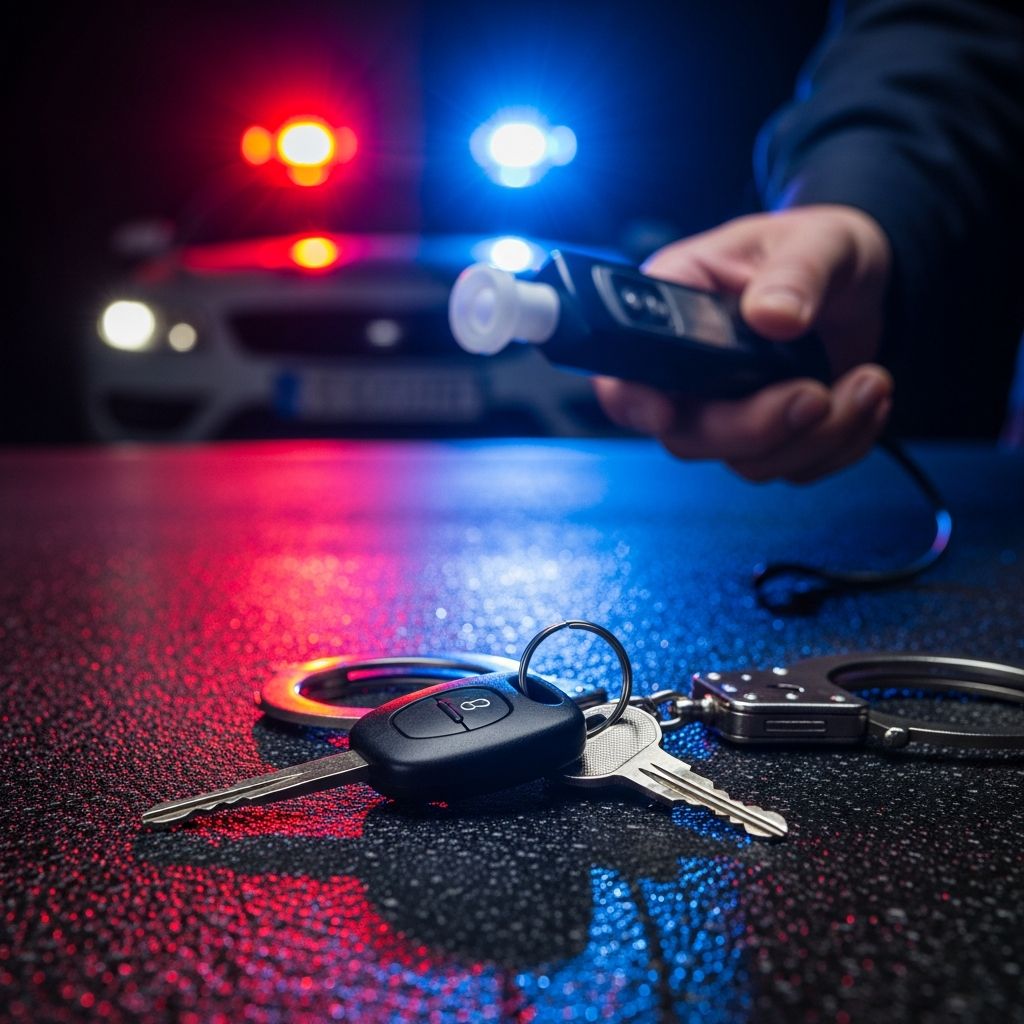
Being stopped for suspected drunk or impaired driving is stressful, and one of the most important decisions you may face is whether to take or refuse a breathalyzer test. This choice can affect your driver’s license, potential criminal charges, and how your case is handled in court.
This guide explains how breath tests work in a DUI investigation, what “implied consent” really means, and the practical pros and cons of refusing a breathalyzer. It is general information, not legal advice, and laws vary by state, so you should always consult a licensed attorney in your jurisdiction.
Breath Tests in DUI Stops: Two Very Different Stages
Police typically use two kinds of breath testing in drunk driving investigations, and they are treated differently under the law:
- Roadside screening devices (often called portable breath tests or PBTs)
- Stationhouse or evidential breath tests (larger, calibrated machines used at a station or jail)
Many states treat refusal of a roadside screening test differently from refusal of an evidential test given after an arrest. For example, in North Carolina, refusing the roadside PBT does not itself suspend your license, but refusing the official Intoxilyzer test at the station can trigger a one-year civil license suspension.
| Type of Breath Test | When It Is Used | Main Purpose | Typical Consequences of Refusal |
|---|---|---|---|
| Portable breath test (PBT) | Roadside, before or during the stop | Help officer decide whether to arrest | Often no automatic suspension, but refusal may contribute to arrest decision |
| Evidential breath test (Intoxilyzer or similar) | At station or jail, after arrest | Generate official blood alcohol evidence | Frequently triggers license suspension and other penalties under implied consent laws |
Implied Consent: Why Saying “No” Still Has Consequences
All U.S. states have some form of implied consent law for drivers. In simple terms, by choosing to drive on public roads and accepting a driver’s license, you agree in advance to provide a chemical test (breath, blood, or urine) if lawfully arrested for impaired driving.
Key features of implied consent rules typically include:
- Pre-consent to testing: Your agreement to testing is a condition of holding a license, whether you recall it or not.
- Probable cause requirement: Officers generally must have enough evidence (such as bad driving, odor of alcohol, slurred speech, failed field tests) to justify requiring a chemical test.
- Mandatory warnings: Many states require officers to read a standardized notice explaining the consequences of refusing a post-arrest test, such as license suspension.
- Separate from DUI guilt: Refusing the test is treated as its own violation, usually handled through the motor vehicle agency, whether or not you are later convicted of DUI.
Because of these laws, “I don’t consent” to a post-arrest breath test often does not prevent penalties. It simply shifts you into a different category of legal consequences.
Can You Legally Refuse a Breathalyzer Test?
In most states, you can physically refuse to blow into the machine, but the law attaches penalties to that decision. Every state except Wyoming imposes some form of license suspension for refusing a chemical test after a DUI arrest.
Important distinctions to keep in mind:
- Refusing is usually not a crime by itself on a first offense, but it is a separate civil or administrative violation that can cost you your driving privileges.
- Some states make repeat refusals a crime or treat the refusal as a specific misdemeanor when combined with prior DUI history.
- Your refusal will not guarantee you avoid a DUI conviction. Prosecutors can rely on officer observations, driving behavior, field sobriety tests, and other evidence to try to prove impairment beyond a reasonable doubt.
Administrative License Consequences of Refusal
The most immediate effect of refusing a post-arrest breath test is usually an administrative suspension or revocation of your driver’s license by the motor vehicle agency, separate from any court case or DUI conviction.
Typical features of these administrative penalties include:
- Automatic or near-automatic suspension: In many states, your license is suspended for a fixed period upon documented refusal, sometimes even if you are never convicted of DUI.
- Length tied to history: First refusals often carry one year of suspension; repeat refusals can lead to 18 months or several years without driving privileges.
- Short deadline to contest: You may only have a few days after arrest (often around 10 days) to request a hearing to challenge the suspension; otherwise it becomes final by default.
- Limited or restricted licenses: Some states allow restricted or hardship licenses for work or medical appointments, but conditions can be strict and may require ignition interlock devices or enrollment in treatment programs.
These license penalties are designed to encourage cooperation with testing and to remove potentially impaired drivers from the road quickly, without waiting for a criminal trial.
Criminal and Courtroom Impact of Saying No
Refusing a breathalyzer test also has consequences inside the criminal justice system. Even if the refusal itself is not a crime on a first offense, it can shape how your DUI case plays out.
When Refusal Becomes a Separate Offense
In some jurisdictions, a second or later refusal is treated as a standalone misdemeanor, or repeat refusal can trigger longer revocations and special designations such as “persistent drunk driver.” These can lead to:
- Additional fines beyond standard DUI penalties
- Possible jail time on the refusal charge alone
- Mandatory alcohol education or treatment programs
- Ignition interlock requirements once driving rights are restored
Use of Refusal as Evidence Against You
Many courts allow prosecutors to tell the judge or jury that you refused to take a breath test and to argue that this shows you were trying to avoid confirming a high blood alcohol level.
That can affect your case in several ways:
- Inference of guilt: The prosecution may claim you refused because you believed your level was over the legal limit.
- Reduced negotiating leverage: Without a test result, it can be harder to negotiate certain plea offers that depend on a documented BAC.
- Reliance on subjective evidence: The case may focus more heavily on officer testimony about your behavior, appearance, speech, and driving pattern.
On the other hand, some defense strategies rely on the absence of a numeric BAC to argue that the state cannot quantify your level of impairment. Whether this is helpful depends heavily on local laws, the facts of your stop, and how your courts treat refusal evidence.
Can Police Still Get a Sample If You Refuse?
Refusing a breath test does not always prevent law enforcement from obtaining a chemical sample. Depending on the circumstances, officers may:
- Seek a search warrant from a judge to draw your blood, especially if there was a crash or serious injury.
- Rely on other forms of testing, such as blood or urine, when permitted by statute or court order.
- Use your refusal itself as part of their evidence, as discussed above.
Some states limit when forced blood draws are allowed and require a warrant unless there is an emergency. These rules have evolved over time in response to U.S. Supreme Court decisions on search and seizure, so they can be complex and highly state-specific.
Potential Advantages and Disadvantages of Refusing
People often ask whether they are “better off” refusing a breathalyzer. There is no one-size-fits-all answer. The decision can have serious trade-offs.
Possible Reasons Drivers Choose to Refuse
- They believe the test result will be far above the legal limit and want to avoid a high documented BAC.
- They hope to limit the state’s evidence in court.
- They are confused, frightened, or misunderstand the officer’s warnings.
- They incorrectly assume that refusal means the police “have no case.”
Risks and Downsides of Refusal
- Guaranteed license consequences: Unlike a DUI charge, which might be reduced or dismissed, a refusal-based suspension is often easier for the state to prove and harder to avoid.
- Possibly harsher total penalties: In some settings, the combination of a DUI conviction and a refusal-based suspension can be more burdensome than if you had taken the test.
- Refusal used against you in court: Juries may see refusal as a sign that you knew you were impaired.
- No guarantee of avoiding a blood draw: If police obtain a warrant, you may face both a forced test and separate refusal penalties.
Because the stakes are high, many people contact a DUI defense lawyer as soon as possible after arrest, especially to preserve their right to contest any automatic suspension deadlines.
Common Defenses and Issues in Refusal Cases
Even if you refused a breath test, there may be legal questions a defense lawyer can explore, including:
- Was there valid probable cause? If the officer lacked sufficient basis to arrest you or request a test, implied consent penalties may be challenged.
- Were you properly warned? Many states require the officer to read specific language about the consequences of refusing. If this is skipped or done incorrectly, the refusal allegation may be vulnerable.
- Was the refusal truly a refusal? Communication issues, medical conditions, or equipment problems sometimes lead to disputes over whether you willfully refused.
- Are there medical explanations? Certain health issues can affect breath testing or your ability to comply, which might play a role in your defense.
Administrative hearings at the motor vehicle agency are often separate from criminal court and may have different rules of evidence and proof. An attorney familiar with both processes can help you understand the realistic options in your specific case.
Practical Steps If You Have Already Refused
If you have already refused a breathalyzer test and are now facing potential consequences, consider the following general steps:
- Note deadlines immediately: Determine how long you have to request an administrative hearing to challenge any license suspension; these deadlines are often short.
- Gather documents: Keep the citation, temporary license, refusal form, and any paperwork you were given at the time of arrest in a safe place.
- Consult a qualified attorney: A lawyer who regularly handles DUI and implied consent issues can explain state-specific rules and possible defenses.
- Follow any temporary license instructions: Some states allow limited driving while your case is pending; failing to follow the rules can create additional violations.
Again, because implied consent laws are technical and vary widely, individualized legal advice is essential.
Frequently Asked Questions (FAQs)
Q: Does refusing a breathalyzer mean I cannot be convicted of DUI?
No. Prosecutors can pursue a DUI case using other evidence such as driving behavior, officer observations, and field sobriety tests, even if there is no breath or blood result.
Q: Will I lose my license automatically if I refuse?
In most states, refusal of a post-arrest chemical test leads to an administrative suspension or revocation, often even if you are never convicted of DUI.
Q: Can my refusal be mentioned at trial?
In many jurisdictions, yes. The prosecutor may argue that your refusal shows consciousness of guilt, although the defense can offer other explanations.
Q: Is refusing a breathalyzer a crime?
Often a first refusal is treated as a civil or administrative violation tied to implied consent, but some states make repeat refusals or certain refusal situations criminal offenses.
Q: Can the police force me to give a blood sample if I refuse?
Officers may seek a search warrant to draw blood, especially after crashes or serious injuries, if allowed by state law and constitutional rules on searches and seizures.
References
- What Happens if You Refuse a Breathalyzer in Florida? — DiFilippo & Pica, PLLC. 2022-08-15. https://dplawfl.com/what-happens-if-you-refuse-a-breathalyzer-in-florida/
- Can I Refuse a Breathalyzer Test? — LawInfo. 2023-05-10. https://www.lawinfo.com/resources/dui/can-i-refuse-a-breathalyzer-test.html
- Can I Refuse A Breathalyzer Test In Tennessee? — Nash Law, PLLC. 2023-04-18. https://www.criminaldefenseattorneyfranklintn.com/refuse-breathalyzer-tn/
- The consequences of refusing a breathalyzer test in Tennessee — Best & Brock. 2022-11-02. https://www.bestlawhb.com/the-consequences-of-refusing-a-breathalyzer-test-in-tennessee/
- Implied Consent Law in Tennessee: Can You Refuse a Breathalyzer or Blood Test? — Law Office of Joshua S. Reed. 2023-01-20. https://knoxcrimdefense.com/implied-consent-law-in-tennessee-can-you-refuse-a-breathalyzer-or-blood-test/
- The Legal Consequences of Refusing a Breath or Blood Test — LeFleur Law. 2022-09-09. https://lefleurlaw.com/blog/the-legal-consequences-of-refusing-a-breath-or-blood-test/
- Refusing a Breathalyzer Test in North Carolina: Your Rights and the Potential Consequences — The Law Offices of Jason E. Taylor, P.C. 2023-06-01. https://www.nctriallawyer.com/refusing-a-breathalyzer-your-rights-and-the-potential-consequences/
Similar Articles








Read full bio of Sneha Tete


