
The Future of Justice: Reforming Solitary Confinement in CA
Discover why California must reform its solitary confinement practices today.
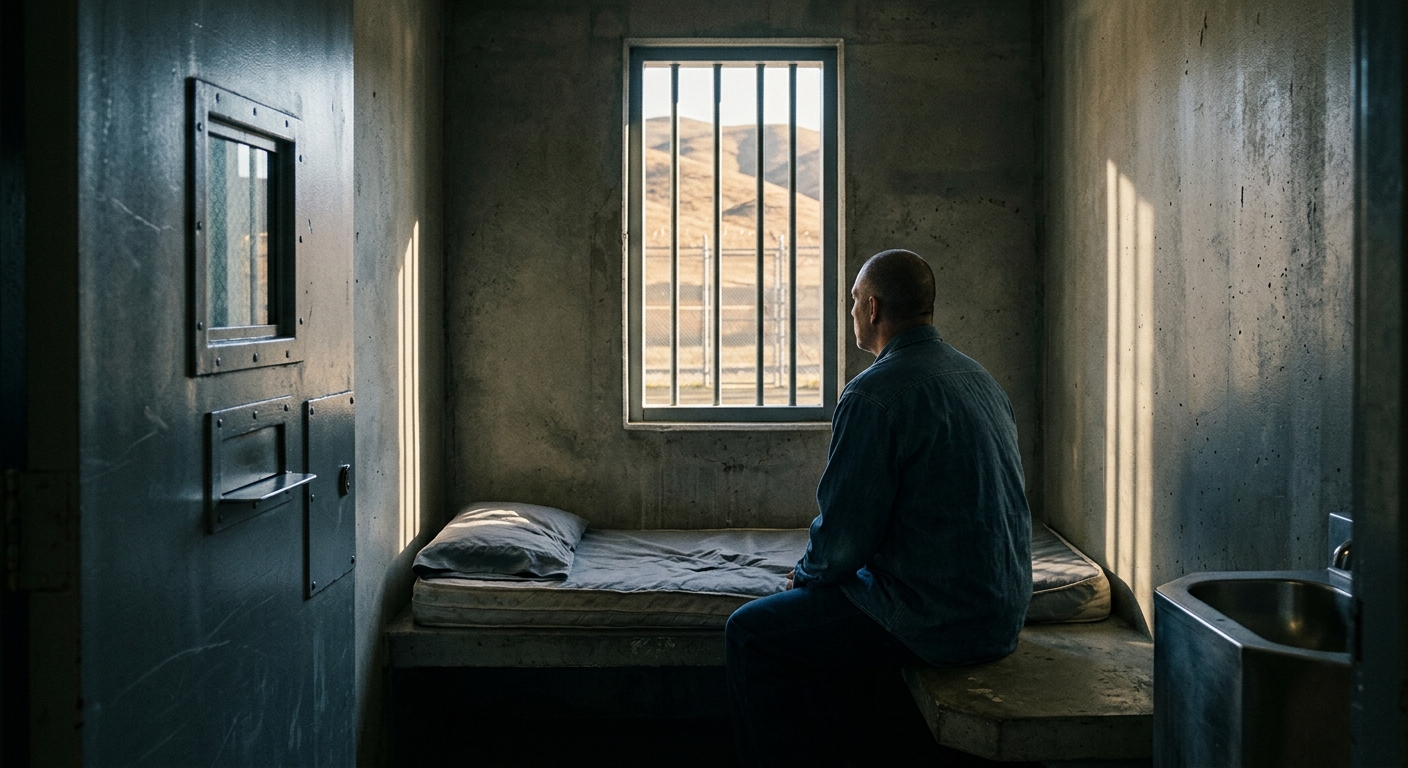
Imagine spending 23 hours a day inside a concrete room no larger than a standard parking space. There is no meaningful human contact, no natural light, and absolutely no access to educational or rehabilitative programming. For thousands of incarcerated individuals in California, this is not a dystopian fiction; it is the daily, grinding reality of solitary confinement. Over the past few decades, solitary confinement has transitioned from a temporary measure of last resort to a chronic management tool utilized heavily across state prisons, county jails, and private immigration detention facilities. However, as our understanding of psychological trauma deepens, the call to aggressively reform these extreme isolation practices has grown significantly louder.
California currently stands at a critical crossroads regarding its criminal justice system. The state has historically been scrutinized for its heavily overcrowded prisons and an overwhelming reliance on segregated housing, an issue that most notably sparked the massive 2013 Pelican Bay hunger strikes. Today, an expanding coalition of human rights advocates, medical professionals, solitary survivors, and lawmakers are pushing for definitive legislative boundaries. Reforming solitary confinement is no longer merely a legal or fiscal debate—it is a profound moral imperative. By aligning its practices with international human rights standards, California has the unique opportunity to lead the nation in transforming its correctional facilities from environments of harsh punishment to true centers of genuine rehabilitation and healing.
The Hidden Toll of Extreme Isolation
The psychological and physiological damage inflicted by solitary confinement is profound, devastating, and extensively documented by medical professionals worldwide. Without regular social interaction, the human mind rapidly deteriorates. Renowned psychological experts, such as Dr. Craig Haney from the University of California, Santa Cruz, have spent decades studying the effects of segregated housing on human cognitive function. Research conducted on individuals held in California’s Security Housing Units (SHU) revealed staggering, deeply troubling statistics: over 90 percent of isolated individuals experienced severe anxiety, nearly 80 percent suffered from chronic depression, and a significant majority reported experiencing dangerous hallucinations, intense paranoia, and a total loss of reality.
Furthermore, the physical toll is equally alarming. Extended confinement often leads to cardiovascular issues, severe weight fluctuation, and chronic sleep disturbances that shatter immune health. When an individual is denied regular physical movement, adequate nutrition, and essential natural sunlight, their bodily systems rapidly degrade. Alarmingly, individuals subjected to long-term segregation have significantly higher rates of self-harm and suicide compared to the general prison population. The National Commission on Correctional Health Care (NCCHC) has issued stern warnings, emphasizing that correctional health professionals should not condone, facilitate, or participate in treatments that degrade a person’s physical safety and psychological well-being. Despite these severe outcomes, highly vulnerable populations—including those with preexisting mental health conditions—are frequently placed in isolation, effectively exacerbating the very behaviors the system seeks to control.
The Global Consensus: Recognizing the Nelson Mandela Rules
The international community has firmly established that prolonged solitary confinement crosses the threshold into cruel, inhuman, and degrading treatment. In December 2015, the United Nations General Assembly adopted the revised Standard Minimum Rules for the Treatment of Prisoners. These critical guidelines are now universally known as the “Nelson Mandela Rules” in honor of the late South African president who famously spent 27 years incarcerated and intimately understood the degradations of prison life.
These rules provide clear, unequivocal, and humane boundaries for the treatment of incarcerated individuals. According to the Nelson Mandela Rules, solitary confinement is strictly defined as the confinement of prisoners for 22 hours or more a day without meaningful human contact. Crucially, the rules stipulate that “prolonged solitary confinement”—explicitly defined as lasting for more than 15 consecutive days—should be absolutely prohibited globally, classifying the practice as a form of torture due to the irreversible psychological damage it inflicts.
For years, the United States, and California specifically, has operated in stark violation of these established international standards. Individuals in California have been routinely held in administrative segregation not just for weeks or months, but sometimes for consecutive decades. Adopting the framework provided by the Mandela Rules is absolutely essential for modernizing the state’s penal code, reducing senseless suffering, and ensuring that the inherent dignity of all human beings is respected, regardless of their past criminal convictions.
The California Mandela Act (AB 280) Explained
To directly address these ongoing systemic abuses, state legislators introduced the California Mandela Act, officially drafted as Assembly Bill 280 (AB 280). Championed by Assemblymember Chris Holden, AB 280 seeks to establish strict statewide regulations on the use of segregated confinement. It provides a comprehensive legal definition of solitary confinement and mandates absolute transparency through rigorous, publicly available reporting requirements.
If enacted into law, this legislation will fundamentally alter how California detention facilities operate on a day-to-day basis. The core components of the California Mandela Act include the following crucial mandates:
- A Complete Ban for Vulnerable Populations: The bill strictly prohibits the use of solitary confinement for specific, highly vulnerable demographic groups. This protective blanket includes pregnant and postpartum individuals, people under the age of 26 or over the age of 59, and individuals diagnosed with mental, physical, or developmental disabilities.
- Strict, Enforceable Time Limits: Aligning perfectly with the United Nations’ international standards, AB 280 caps the use of solitary confinement at no more than 15 consecutive days. Furthermore, it explicitly prevents facilities from utilizing loopholes—such as brief, temporary releases—by limiting total isolation to no more than 20 days within any given 60-day period.
- Mandatory Statewide Transparency: The act requires all operational detention facilities—including state prisons, local county jails, and private immigration detention centers—to maintain clear, publicly accessible records on the use of solitary confinement to guarantee ongoing oversight.
- Clear Legal Definitions: It establishes a unified, rigorous legal definition of “segregated confinement” in California law, directly closing loopholes that previously allowed facilities to simply rename isolation units (e.g., calling them “administrative segregation” or “security housing”) to avoid legal scrutiny.
Rethinking Rehabilitation: Alternatives to Isolation
A frequent and vocal argument against reforming solitary confinement is the concern for institutional safety. Critics argue that removing the ability to isolate individuals indefinitely will inherently endanger correctional officers, facility staff, and other incarcerated people. However, reforming solitary confinement does not mean entirely eliminating the ability to separate individuals who pose a genuine, immediate, and violent threat to others.
Instead, the California Mandela Act heavily promotes safer, evidence-based alternatives that focus on de-escalation and treatment. When individuals need to be removed from the general population for safety reasons, they can be placed in specialized transition pods or residential rehabilitation units. These alternative housing units successfully maintain necessary security protocols while still allowing for essential out-of-cell time, supervised congregate activities, and crucial access to therapeutic programming.
By shifting the institutional focus from sheer punishment to targeted intervention, facilities can address the actual root causes of violent or disruptive behavior. Providing individuals with access to mental health professionals, conflict resolution and anger management courses, and advanced educational materials within a secure but appropriately social environment drastically reduces the tension and deep trauma that traditional solitary confinement inevitably breeds.
The Economic and Societal Impact of Segregation
Beyond the profound moral and human rights concerns, California’s vast over-reliance on solitary confinement represents a massive and unsustainable fiscal burden on taxpayers. Operating high-security segregation units requires significantly higher staffing levels, specialized facility maintenance, and intense daily security protocols. Simply put, housing an individual in solitary confinement costs the state substantially more money than housing them in the general population.
Redirecting these exorbitant operational funds into educational programming, mental health treatment facilities, and community reentry support would yield far better returns for long-term public safety. The societal impact of solitary confinement extends far beyond prison walls. The vast majority of individuals currently incarcerated in California will eventually serve their designated sentences and return to their home communities. Releasing someone directly from long-term, agonizing sensory deprivation into a fast-paced modern society creates a significant public safety risk.
Individuals traumatized by extreme isolation often struggle immensely to reintegrate, maintain stable employment, or rebuild fractured family relationships. By implementing trauma-informed alternative practices and stringently limiting isolation durations, California can actively lower state recidivism rates and ensure that returning citizens have a fair, realistic chance at successful societal reintegration.
Status Quo vs. Meaningful Reform: A Direct Comparison
Understanding the true scope of the proposed legislative changes requires a direct, side-by-side comparison between how the current correctional system operates and what the California Mandela Act would actively mandate across the state.
| Policy Feature | Current California Practices | Proposed Reforms (AB 280) |
|---|---|---|
| Duration Limits | Individuals can be held indefinitely; some have spent decades entirely in isolation. | Hard maximum of 15 consecutive days, or 20 days within any 60-day period. |
| Vulnerable Populations | Mentally ill, pregnant, youth, and elderly individuals can be frequently isolated. | Complete, statewide ban on isolating pregnant/postpartum, disabled, youth (<26), and elderly (>59). |
| Facility Scope | Highly inconsistent regulations between state prisons, county jails, and private facilities. | Unified, strict standards uniformly applying to all prisons, jails, and private detention centers. |
| Data & Transparency | Opaque record-keeping; incredibly difficult for the public and advocates to access isolation data. | Mandatory, standardized documentation and public reporting on isolation usage and demographics. |
The Road Ahead for California
Reforming solitary confinement is undoubtedly a monumental task that requires persistent grassroots advocacy, immense legislative courage, and widespread public awareness. As organizations like the American Civil Liberties Union (ACLU), the CA Mandela Campaign, and numerous civil rights groups continue to tirelessly push for humane alternatives, the momentum is undeniably shifting in favor of justice. New York’s recent, historic passage of the HALT Solitary Confinement Act proves that large, incredibly complex state prison systems can successfully implement comprehensive reform without ever compromising facility safety.
California has the extensive resources, the clear empirical data, and the absolute moral obligation to follow suit and lead the West Coast in reform. Justice should not, and must not, require the systematic destruction of the human mind. By successfully passing the California Mandela Act and fundamentally altering its approach to mass incarceration, California can permanently end the torturous practice of prolonged solitary confinement, ensuring that true rehabilitation and basic human dignity remain at the very forefront of the justice system for generations to come.
Frequently Asked Questions (FAQs)
What exactly qualifies as solitary confinement?
Solitary confinement, frequently referred to in facilities as segregated housing, administrative segregation, or isolation, is officially defined as the physical and social isolation of an individual in a small cell for 22 to 24 hours a day, with little to no meaningful human interaction, environmental stimulation, or programming.
What are the UN Nelson Mandela Rules?
The Nelson Mandela Rules are a set of globally recognized minimum standards for the humane treatment of prisoners, officially adopted by the United Nations General Assembly in 2015. They notably classify prolonged solitary confinement (lasting beyond 15 consecutive days) as cruel, inhuman, and degrading treatment that directly amounts to torture.
Does reforming solitary confinement endanger prison staff?
No. Meaningful reform does not prevent the necessary separation of individuals who pose a clear, immediate threat. It simply replaces indefinite, torturous isolation with alternative housing models, like transition pods, which allow for safe separation while maintaining access to critical programming, out-of-cell time, and necessary mental health support.
Who is most profoundly affected by solitary confinement in California?
Historically, solitary confinement has wildly disproportionately impacted marginalized groups, including people of color, individuals with serious preexisting mental illnesses, and those who have attempted to advocate for their civil rights while incarcerated.
References
- The United Nations Standard Minimum Rules for the Treatment of Prisoners (The Nelson Mandela Rules) — United Nations General Assembly. 2016-01-08. https://undocs.org/A/RES/70/175
- Position Statement: Solitary Confinement (Isolation) — National Commission on Correctional Health Care (NCCHC). 2016-04-10. https://www.ncchc.org/solitary-confinement
- The Psychological Effects of Solitary Confinement: A Systematic Critique — Craig Haney, Crime and Justice (University of Chicago Press). 2018-03-09. https://www.journals.uchicago.edu/doi/10.1086/696041
- Assembly Bill 280 (California Mandela Act) — California State Legislature. 2023-01-24. https://leginfo.legislature.ca.gov/faces/billNavClient.xhtml?bill_id=202320240AB280
Similar Articles








Read full bio of medha deb




