
Reevaluating Confederate Symbols in Public Spaces
Uncovering the truth behind monuments to build inclusive civic spaces.
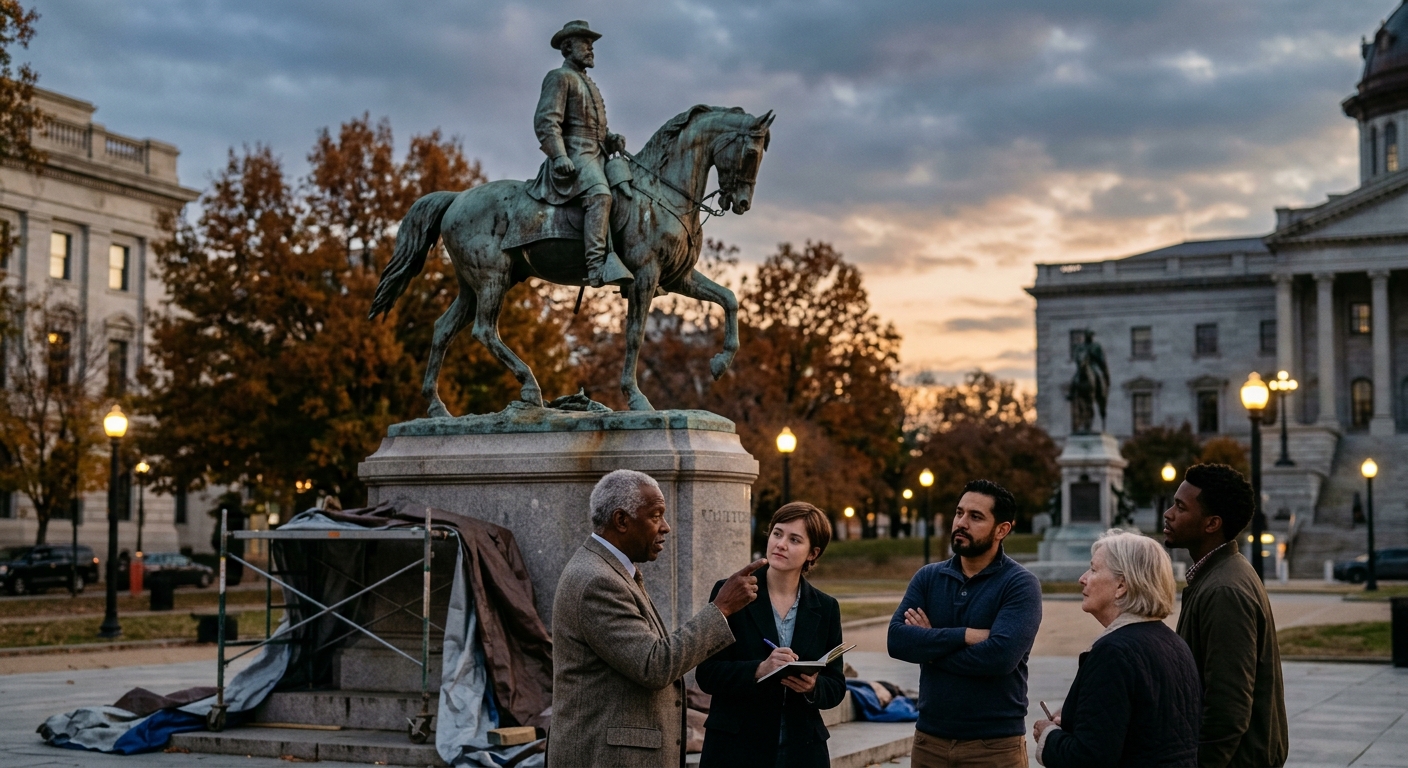
Introduction: The Battle for the Public Square
The public square serves as the visual representation of a society’s values, historical narrative, and collective identity. Over the past decade, a profound national conversation has emerged regarding the presence of Confederate iconography—statues, flags, and memorials—in civic spaces across the United States. While some argue these symbols are benign tributes to heritage, extensive historical analysis and civil rights advocacy suggest a more complex, troubling reality. Resolving this debate requires confronting the empirical history of the Confederacy, understanding the timeline behind monument construction, and evaluating the civic impact of maintaining symbols of insurrection in places of public honor. This article explores the necessity of reevaluating these monuments to foster an environment of historical truth, civic unity, and democratic equity. As the nation grapples with its complex legacy, the conversation has expanded beyond mere historical debate into a fundamental question of what modern democracy should look like in practice.
The Chronology of Commemoration: When Were They Built?
A central misconception is the assumption that Confederate monuments were erected immediately following the Civil War as tributes to fallen soldiers. Historical data reveals a starkly different, politicized chronology. The vast majority of these memorials were constructed during two distinct spikes that align with periods of intense racial subjugation.
The first surge occurred between the 1890s and the 1920s, coinciding with the institutionalization of Jim Crow laws. The erection of monuments during this time served a dual purpose: to romantically reframe the Civil War through the “Lost Cause” ideology, and to signal political dominance over marginalized communities. Placing statues of Confederate generals on courthouse lawns intentionally obscured the central role of slavery in the conflict.
The second wave of monument construction occurred throughout the 1950s and 1960s, directly mirroring the rise of the modern Civil Rights Movement. As activists achieved landmark victories like Brown v. Board of Education, opponents of integration responded by deploying Confederate symbols. By flying the battle flag over state capitols and dedicating new statues, proponents of segregation sent an unambiguous message of defiance against federal civil rights mandates. These statues are largely artifacts of segregationist backlash rather than simple historical markers.
The Ideological Underpinnings of the Insurrection
To fully evaluate the appropriateness of these symbols, it is necessary to examine the foundational ideology of the Confederacy. Historical documentation leaves little ambiguity regarding the primary catalyst for secession. The declarations of causes issued by seceding states explicitly cited the preservation of chattel slavery as their non-negotiable motivation.
The most definitive articulation of this mission was delivered by Alexander Stephens, Vice President of the Confederacy, in his 1861 “Cornerstone Speech.” Stephens stated that the new government’s foundations rested upon the “great truth that the negro is not equal to the white man; that slavery… is his natural and normal condition.” This explicit commitment to white supremacy was embedded directly into the Confederate Constitution.
When contemporary public spaces prominently feature figures who took up arms against the United States to defend this exact ideology, it sanitizes their cause. Statues cast in bronze do not convey the brutal reality of enslavement or the treasonous nature of the military rebellion. They project an aura of nobility onto individuals who fought to perpetuate human bondage, challenging the sanitized “heritage” defense by revealing the oppressive history embedded within.
Civic Impact and the Purpose of Public Space
Public monuments are active components of civic infrastructure that communicate what a community fundamentally values. Unlike museums, which provide nuanced historical education, public squares and courthouse lawns are spaces of active democratic engagement. Placing statues of Confederate leaders in these locations automatically elevates them to the status of civic role models.
For marginalized communities, particularly Black Americans whose ancestors were enslaved by the men depicted in these monuments, their presence causes tangible civic harm. Walking past a courthouse guarded by a monument to a Confederate general conveys a deeply intimidating message about who can expect fair treatment within those walls. It creates a psychological environment of alienation, perpetuates historical trauma, and visually reinforces archaic racial hierarchies. The physical landscape of a city should serve all its residents, fostering a sense of belonging and mutual respect rather than perpetuating the divisions of a fractured past. When taxpayers are forced to subsidize the upkeep of monuments that celebrate their ancestors’ enslavers, the social contract is profoundly violated.
Maintaining these monuments contradicts the core democratic ideals of liberty and equality. A healthy democracy cannot visually venerate those who fought to dismantle it. Removing these symbols is a necessary step toward creating welcoming public spaces for everyone.
Addressing the “Erasure of History” Argument
A frequent counter-argument to the removal of Confederate statues is the claim that doing so constitutes an outright “erasure of history.” This perspective fundamentally conflates veneration with historical record. History is recorded, analyzed, and preserved in textbooks, academic archives, and museums. Statues, conversely, are monuments built specifically for honor and glorification. They do not teach history; they mandate respect.
Removing a statue does not delete the historical figure from the historical record. When the United States declared independence, tearing down statues of King George III did not erase the American Revolution from history books. Similarly, relocating Confederate monuments to environments explicitly dedicated to historical preservation, such as specialized museums, allows for a much more comprehensive engagement with the past.
In a museum setting, a statue can be contextualized. Educational exhibits can explain who the figure was, but also when the specific statue was built and the political climate of white supremacy that prompted its creation. This transition from glorification to education represents an enhancement of historical understanding, not an erasure of it. It separates the necessary study of historical events from the passive veneration of controversial figures.
Demographics and Evolving Public Sentiment
Public sentiment regarding Confederate monuments has undergone a measurable transformation, reflecting a broader societal reckoning with systemic racism. Sustained grassroots activism and rigorous academic research have fundamentally shifted the national discourse. Communities are increasingly rejecting the narrative that these monuments are historically neutral.
Trends in Monument Removal
| Historical Period | Contextual Drivers |
|---|---|
| 1890s – 1920s (Peak Construction) | Implementation of Jim Crow laws, formulation of the “Lost Cause” narrative. |
| 1950s – 1960s (Secondary Spike) | Backlash against the modern Civil Rights Movement and desegregation mandates. |
| 2015 – Present (Civic Removals) | Global racial justice protests, leading to widespread municipal policy shifts and relocations. |
As illustrated, the lifecycle of these monuments is intertwined with the trajectory of racial politics. Hundreds of symbols have been removed or relocated since 2015, underscoring a growing consensus that public infrastructure must reflect contemporary democratic values instead of preserving artifacts of discrimination.
Pathways Toward Reconciliation and Inclusive Public Art
The physical removal of Confederate symbols leaves behind conceptual voids in public squares. However, these empty pedestals present communities with a profound opportunity to redefine their civic identity through inclusive public art and intentional memorialization. The process of deciding what should replace these symbols can be as healing as the act of removal itself.
Communities are exploring several forward-looking strategies:
- Truth and Reconciliation Commissions: Establishing local bodies to facilitate honest dialogues about the legacy of slavery and racial violence, centering the voices of historically marginalized groups.
- Inclusive Memorialization: Commissioning new public art that honors previously ignored historical figures, such as civil rights leaders, pioneering abolitionists, indigenous peoples, or abstract monuments dedicated to human equality.
- Contextual Repurposing: Some municipalities leave pedestals deliberately empty as an educational reminder of the removed past, or use the spaces to feature rotating contemporary art installations that showcase local talent and diversity.
By replacing symbols of exclusion with testaments to resilience, cities can actively repair civic trust and promote a much more cohesive communal identity.
Conclusion
The debate over Confederate monuments is a deeply moral contest over the historical narrative the United States chooses to embrace. Historical evidence overwhelmingly demonstrates that these symbols were erected to fortify white supremacy during periods of intense racial oppression, commemorating an armed insurrection fought to preserve human bondage. Defending their continued presence ignores the documented trauma and civic exclusion they inflict upon marginalized communities. Relocating these statues to educational settings and thoughtfully replacing them with symbols of inclusive democracy is a vital step toward historical honesty. Enduring civic unity demands that our public spaces serve as reflections of a society’s highest ideals, not as ongoing memorials to its damaging historical injustices. Ultimately, the spaces we share must evolve as our understanding of history deepens and our commitment to human rights strengthens. By confronting these historical echoes with courage and clarity, we can build a more just future.
Frequently Asked Questions
Why were most Confederate statues built so long after the Civil War ended?
Historical data indicates they were constructed during two distinct periods: the turn of the 20th century, coinciding with the establishment of Jim Crow segregation, and the 1950s and 1960s, as a political backlash against the Civil Rights Movement. They were intended to assert white supremacy and intimidate Black citizens rather than purely mourn the dead.
Does removing these monuments mean we are erasing history?
No. History is preserved in books, academic journals, and museums. Statues in public squares are forms of veneration, not neutral records. Moving a statue to a museum shifts it from civic honor to historical education, allowing us to study history contextually without glorifying the architects of inequality.
What is the “Lost Cause” ideology?
The “Lost Cause” is a pseudo-historical narrative developed to reframe the Southern rebellion as an honorable defense of states’ rights, deliberately minimizing the undeniable role of slavery. Monuments were heavily funded by groups adhering to this ideology to permanently enshrine this false narrative into the physical landscape of the American South.
References
- Whose Heritage? Public Symbols of the Confederacy — Southern Poverty Law Center. 2022-02-01. https://www.splcenter.org/whose-heritage
- AHA Statement on Confederate Monuments — American Historical Association. 2017-08-01. https://www.historians.org/news-and-advocacy/aha-advocacy/aha-statement-on-confederate-monuments/
- How Americans view the removal of Confederate statues — Pew Research Center. 2020-06-16. https://www.pewresearch.org/short-reads/2020/06/16/how-americans-view-the-removal-of-confederate-statues/
Similar Articles








Read full bio of Sneha Tete


