
Reentry Permits For Green Card Holders: Complete Guide
Essential guide for U.S. permanent residents planning extended trips abroad without risking green card status.
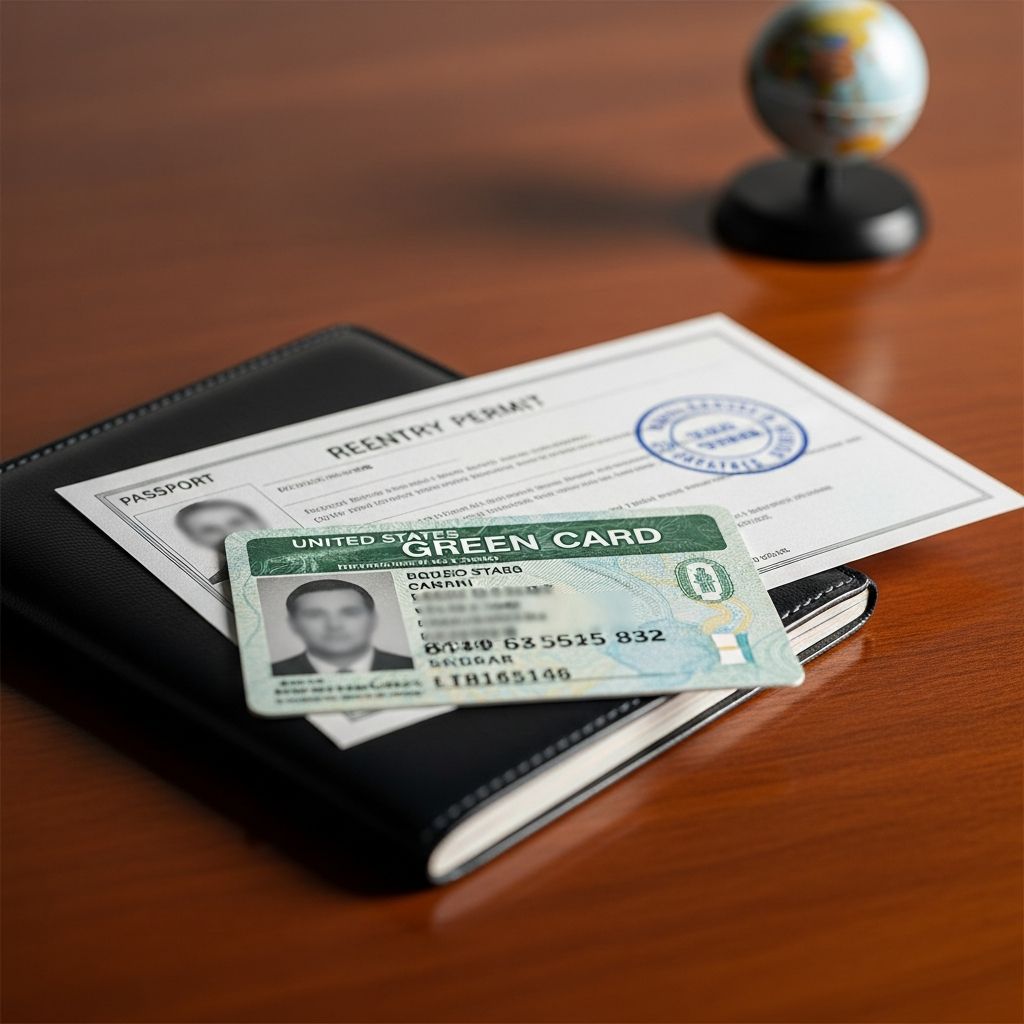
Green card holders, known as lawful permanent residents (LPRs), enjoy significant travel freedoms but face strict rules on extended absences from the United States. A reentry permit serves as a critical safeguard, allowing LPRs to depart for up to two years without automatically jeopardizing their status. This document signals to U.S. Customs and Border Protection (CBP) officers that the absence was intentional and temporary, preserving the right to return.
Understanding the Role of Reentry Permits in Maintaining Residency
Lawful permanent residents must demonstrate ongoing intent to reside in the U.S. Absences exceeding six months can trigger scrutiny at ports of entry, where CBP may question whether residency has been abandoned. For trips between six months and one year, a reentry permit is strongly recommended; beyond one year, it becomes essential unless other exceptions apply. Unlike a standard green card, which may suffice for shorter trips, the permit provides documented proof of non-abandonment.
The permit does not confer any immigration benefits beyond facilitating reentry and is valid solely for LPRs. It cannot be issued or renewed outside the U.S., emphasizing the need for proactive planning. Holders must still carry their valid green card and passport upon return.
Key Scenarios Requiring a Reentry Permit
- Trips under 6 months: Green card alone typically suffices, provided U.S. ties like employment, family, or property are maintained.
- 6 months to 1 year: Risk of residency challenges increases; permit advised to preempt issues.
- 1 to 2 years: Permit mandatory for smooth reentry.
- Over 2 years: Permit invalid; pursue SB-1 returning resident visa via U.S. consulate abroad.
Multiple long trips or prior extended absences may prompt USCIS to issue shorter permits or deny applications if patterns suggest abandonment.
Eligibility Criteria for Obtaining a Reentry Permit
To qualify, applicants must meet these core requirements:
- Hold valid lawful permanent resident status (green card).
- Be physically present in the U.S. at filing and biometrics appointment.
- Intend to return to the U.S. as primary residence.
- Provide evidence of compelling reasons for extended travel, such as work, family emergencies, or medical needs.
Applicants with heavy prior foreign travel—over four of the last five years outside the U.S.—may receive only a one-year permit. Exceptions exist for U.S. government personnel, certain athletes, or missionaries.
| Absence Duration | Document Needed | Risk Level Without Permit |
|---|---|---|
| < 6 months | Green Card | Low |
| 6-12 months | Reentry Permit (recommended) | Medium |
| 12-24 months | Reentry Permit (required) | High |
| > 24 months | SB-1 Visa | Status at risk |
Complete Application Process for Form I-131
Applications use Form I-131, Application for Travel Document, filed with USCIS while in the U.S.. USCIS urges submission at least 60 days before departure to accommodate processing and biometrics.
Step-by-Step Guide
- Gather Documents: Green card copy (front/back), two passport photos, travel itinerary, U.S. ties evidence (e.g., lease, tax returns, employment letter).
- Complete Form I-131: Detail personal info, travel history, and reasons for absence. Explain intent to maintain U.S. residency.
- Pay Fees: Current fee is $660 (as of latest updates); check USCIS for changes. No fee waiver typically available.
- Submit to USCIS: Mail to designated lockbox or file online if eligible.
- Attend Biometrics: USCIS schedules fingerprinting/photo appointment; mandatory, even for repeats.
- Monitor Status: Use USCIS case tracker; processing averages 8-12+ months.
- Receive Permit: Mailed to U.S. address or consulate for pickup.
Permits are valid up to two years from issuance or departure date, whichever is later, but non-extendable. Surrender prior permits when applying for new ones.
Risks of Traveling Without Proper Documentation
Without a reentry permit for qualifying trips, CBP may deem the absence as abandonment, leading to denial of entry or green card revocation proceedings. Even with a permit, officers can probe further if ties appear weak. Lost green cards abroad require boarding foils if absence under 364 days without permit.
Rebuilding status post-abandonment demands SB-1 visa, involving consulate interviews, civil document lists, and proving error or unavoidable circumstances. Success rates vary; prevention via timely permits is far preferable.
Special Considerations for Frequent Travelers and Families
Children and spouses traveling together should each hold permits if eligible. Dual intent (e.g., business abroad while retaining U.S. home) strengthens cases. Tax compliance, voter registration, or bank accounts bolster ties evidence.
For government workers or religious leaders, exemptions or longer considerations apply—consult USCIS directly. Always update address with USCIS to ensure permit delivery.
Common Pitfalls and How to Avoid Them
- Filing Abroad: Impossible; return to U.S. first.
- Missing Biometrics: Auto-denial.
- Insufficient Ties: Include multifaceted proof.
- Overstaying Permit: Seek SB-1.
Frequently Asked Questions (FAQs)
Do I need a reentry permit for trips under six months?
No, your green card suffices if U.S. ties remain strong, but frequent short trips warrant caution.
How long does processing take?
Typically 8-12 months or longer; apply well in advance.
Can I renew a reentry permit abroad?
No, must return to U.S. and reapply in person.
What if my green card is lost overseas?
Obtain a boarding foil if under 364 days absent without permit.
Does a reentry permit guarantee entry?
No, but it strongly evidences non-abandonment; CBP retains discretion.
Planning Your Next Steps
Review USCIS website for latest forms/fees. For complex cases, immigration attorneys can assist. Proactive use of reentry permits ensures seamless travel while safeguarding hard-earned permanent residency.
References
- How To Get a Re-Entry Permit — Rivas Associates. 2024. https://www.rivasassociates.com/blog/how-to-get-a-re-entry-permit/
- U.S. Lawful Permanent Residents (Green Card holders) — U.S. Consulate General Hong Kong & Macau. 2025-01-15. https://hk.usconsulate.gov/immigrant-visas-u-s-lawful-permanent-residents-green-card-holders/
- You are a permanent resident alien returning to the United States — U.S. Embassy Copenhagen. 2024. https://dk.usembassy.gov/you-are-a-permanent-resident-alien-returning-to-the-united-states/
- Re-Entry Permits, Explained — Boundless Immigration. 2025-06-10. https://www.boundless.com/immigration-resources/re-entry-permits-explained
- Documents needed for Lawful Permanent Residents (LPR)/Green Card Holders — U.S. Customs and Border Protection. 2025. https://www.help.cbp.gov/s/article/Article1287?language=en_US
- Returning Resident Visas — U.S. Department of State. 2025-10-01. https://travel.state.gov/content/travel/en/us-visas/immigrate/returning-resident.html
Similar Articles








Read full bio of Sneha Tete


