
Beyond Incremental Shifts: Redefining the Political Agenda on Criminal Justice
Analyzing the gap between political party platforms and the urgent demand for transformative, systemic justice reform.
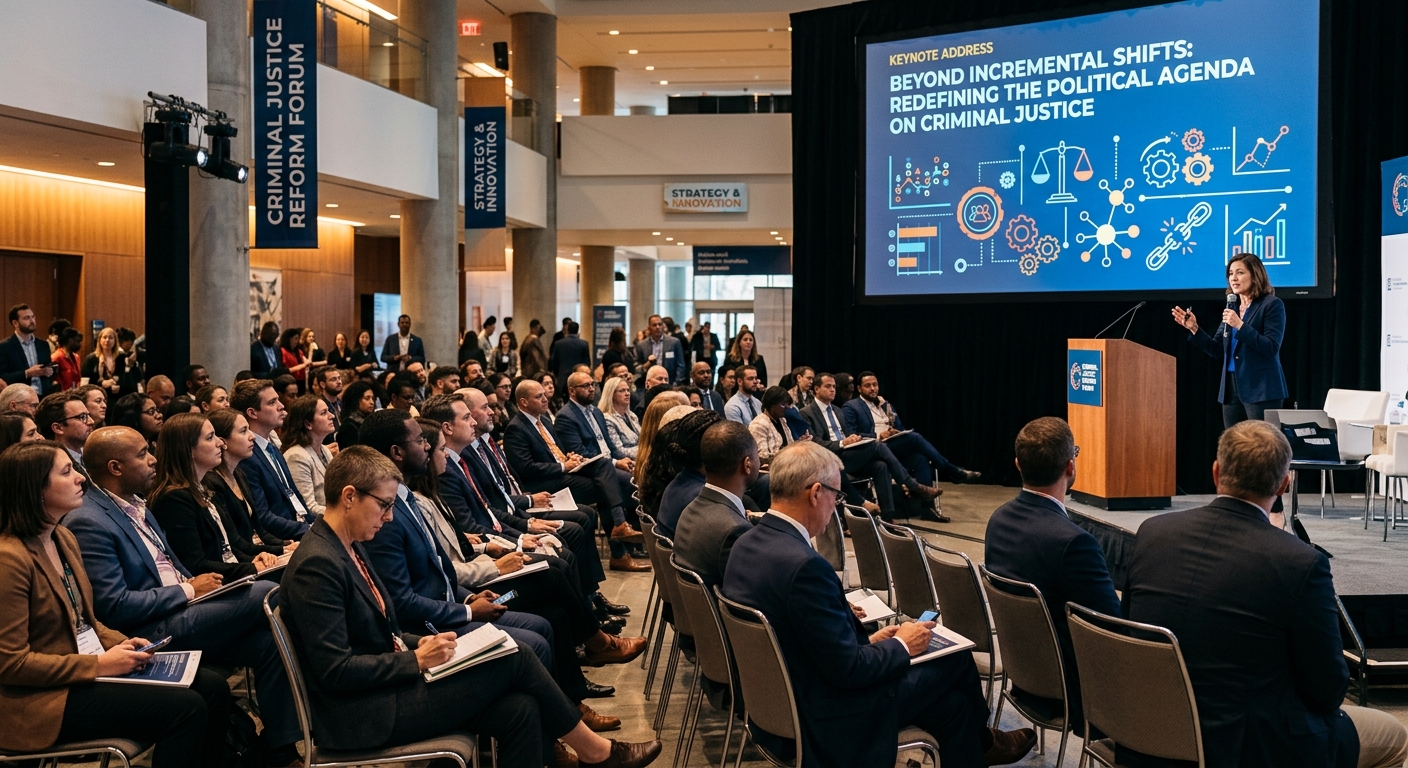
The Evolving Landscape of Criminal Justice Policy
Political platforms are far more than ceremonial statements of party values; they function as explicit roadmaps for future governance, legislation, and policy priorities. In the context of criminal justice, these foundational documents reveal exactly how the political establishment interprets, and plans to act upon, the public’s mandate for safety, equity, and civil rights. Over the past decade, the national dialogue surrounding law enforcement, the penal system, and public safety has undergone a seismic shift. For generations, “tough on crime” rhetoric dominated the political arena across the partisan divide, incentivizing harsh sentencing laws, the proliferation of mandatory minimums, and expansive, militarized police budgets. Today, major political factions, particularly within progressive spaces, have pivoted sharply away from this punitive consensus.
In their 2020 platform, the Democratic Party explicitly acknowledged that the current justice apparatus is actively failing communities, noting that the system has criminalized poverty and over-policed minority neighborhoods . They committed to an overhaul “from top to bottom,” recognizing the disproportionate and devastating harm inflicted on marginalized populations. However, acknowledging a historic crisis is merely the first, rudimentary step; the true test of political leadership lies in the ambition, scope, and execution of proposed legislative solutions. To evaluate these platforms fairly, one must measure their proposed policies against the sheer magnitude of the crisis they seek to resolve. While moving away from draconian policies is a necessary correction, replacing them with moderate adjustments does not equate to achieving true equity.
Decoding Incremental Progress in Modern Platforms
To understand the current state of reform, it is essential to analyze the specific policy pillars that have gained mainstream political traction. These proposals represent significant progress compared to the policies of the late 20th century, yet they must be scrutinized to determine if they address the root causes of systemic injustice.
Decarceration and Sentencing Milestones
Contemporary policy blueprints now consistently identify mass incarceration as a primary target for legislative reform. Mainstream platforms frequently feature proposals to end cash bail, eliminate the profit motive by banning private prisons, and repeal mandatory minimum sentences for non-violent drug offenses. These are indispensable, pragmatic steps that aim to dismantle the bureaucratic mechanisms keeping the United States prison population artificially high. Reducing pretrial detention, for example, is a critical intervention. Extensive research from the Brookings Institution underscores that pretrial detention not only violates the presumption of innocence but also imposes cascading socio-economic damage. Individuals detained before trial are more likely to lose their jobs, experience housing instability, and face negative impacts on intergenerational mobility . By addressing these sentencing and detention milestones, political platforms are actively attempting to curb the most egregious excesses of the carceral state. Furthermore, efforts to grant clemency and establish restorative justice programs mark a stark departure from the era of “three strikes” laws, signaling a shift toward rehabilitation over pure retribution.
Reimagining Policing Practices and Accountability
The political discourse surrounding policing has equally matured, moving from unconditional support to a framework demanding greater accountability. Mainstream political proposals now routinely advocate for the establishment of national use-of-force standards, the widespread, mandatory deployment of body-worn cameras, and the legislative curtailment of qualified immunity—a legal doctrine that has historically shielded officers from civil liability. There is also growing, institutional support for federal interventions into local police departments that demonstrate a “pattern or practice” of unconstitutional behavior through Department of Justice consent decrees.
According to the National Institute of Justice, making these critical police reforms endure requires deliberately institutionalizing new norms, oversight structures, and cultural expectations within law enforcement agencies . While these accountability measures introduce vital layers of transparency and oversight, they operate under a significant limitation: they primarily seek to manage, regulate, and refine the existing system rather than fundamentally rethinking the role and footprint of law enforcement in modern society. They attempt to make policing less harmful, rather than asking if a heavily armed police response is the appropriate intervention for the majority of community crises.
The Chasm Between Policy Promises and Transformative Action
While celebrating incremental progress is important for maintaining political momentum, a profound chasm remains between these moderate political promises and the transformative, structural demands championed by grassroots movements. It is in this gap that political platforms are often accused of “missing the moment.”
The Economic Case for Systemic Divestment
Political platforms frequently attempt to treat the symptoms of a broken justice system without addressing its core economic drivers and massive financial footprint. The economic costs of maintaining the current penal apparatus are staggering, siphoning billions of taxpayer dollars away from essential public services. Research emphasizes the deep economic consequences of mass incarceration, revealing how aggressive policing and high incarceration rates artificially depress community wealth, reduce workforce participation, and perpetuate cycles of poverty .
Merely tweaking sentencing guidelines for future offenses does not offset the billions spent annually on maintaining an expanding carceral infrastructure. Advocates argue for a bold, systemic divestment from punitive systems, redirecting those immense funds into community-based safety initiatives, early childhood education, and healthcare access. When political platforms refuse to entertain the reallocation of funds away from traditional policing and prisons, they implicitly endorse the continuation of a bloated carceral economy that thrives on the disenfranchisement of low-income communities.
Tackling the Root Causes of Systemic Inequality
The central critique of modern political platforms is their persistent tendency to treat crime in a vacuum, purely as a crisis of law enforcement rather than a symptom of systemic socio-economic failure. True equity requires a pivot toward front-end criminal justice reforms that proactively prevent individuals from entering the system in the first place .
This paradigm shift necessitates heavy, sustained investments in mental health crisis response teams, affordable housing initiatives, and comprehensive substance abuse treatment centers that operate outside the penal system. When political platforms emphasize better police training over funding community-led violence interruption programs, they miss a critical opportunity for structural change. They validate the ongoing, dangerous reliance on armed officers to handle complex social crises—such as homelessness, mental health breakdowns, and poverty—that stem from decades of chronic government underinvestment. Transformative justice requires acknowledging that the safest communities are not those with the most police, but those with the most resources.
The Vital Role of Grassroots Movements
It is impossible to analyze the evolution of political platforms without acknowledging the primary catalyst for change: the tireless work of grassroots organizers, civil rights groups, and community activists.
Shifting the Overton Window
The positive shifts visible in current political platforms did not originate in closed-door committee rooms or corporate think tanks; they were forged in the streets through protest, advocacy, and community mobilization. Grassroots movements have relentlessly pushed the “Overton Window”—the spectrum of policies considered politically acceptable and mainstream. By courageously championing bold frameworks like defunding the police, abolishing private prisons, and dismantling the prison-industrial complex, these movements have forcibly expanded the political imagination. Consequently, previously “radical” concepts like ending cash bail, legalizing marijuana, and repealing mandatory minimums now appear moderate, reasonable, and politically viable to the establishment. Political platforms are, therefore, a trailing indicator of the cultural and moral shifts initiated by grassroots labor.
Implementation Hurdles: From Rhetoric to Reality
However, the transition from platform rhetoric to legislative reality is fraught with systemic challenges. Even when ambitious, progressive goals are officially adopted by a political party, they are frequently diluted, compromised, or entirely abandoned during the legislative process. Entrenched interests, powerful law enforcement lobbying groups, and the pervasive political fear of being labeled “soft on crime” consistently hinder the enactment of substantive reform.
The true measure of a political platform’s success is not found in the eloquence of its progressive language, but in the political capital that leaders are genuinely willing to expend to codify those promises into binding law. For instance, creating effective alternatives to incarceration requires directly confronting the political inertia that equates “public safety” solely with high arrest rates, punitive sentencing, and filled jail cells. Overcoming these implementation hurdles demands unrelenting public pressure and a commitment from lawmakers to prioritize justice over political convenience.
A Comparative Look at Reform Proposals
To better understand the spectrum of criminal justice policies, consider the following comparison between historical approaches, current platform proposals, and grassroots demands:
| Policy Area | Traditional “Tough on Crime” Approach | Current Incremental Platform Proposals | Transformative Grassroots Demands |
|---|---|---|---|
| Policing | Increased funding, militarization, “Broken Windows” enforcement. | Body cameras, bias training, banning chokeholds, community policing. | Divestment from police budgets, reinvestment in community-led crisis response. |
| Bail & Pretrial | Heavy reliance on cash bail, high rates of pretrial detention. | Reforming or limiting cash bail for low-level, non-violent offenses. | Complete abolition of cash bail, presumption of release, community support services. |
| Sentencing | Mandatory minimums, “Three Strikes” laws, harsh drug penalties. | Reducing mandatory minimums, decriminalizing marijuana. | Retroactive resentencing, abolishing life without parole, full drug decriminalization. |
| Incarceration | Expansion of private and public prisons, punitive solitary confinement. | Banning federal use of private prisons, improving prison conditions. | Decarceration, closing prisons, investing in restorative and transformative justice. |
Looking Ahead: Building a Truly Equitable Justice System
If political leaders genuinely wish to capture the historical moment and deliver on the promise of equal justice under the law, they must transcend the politics of tinkering around the edges. The current trajectory of mainstream political platforms is undoubtedly heading in the right direction, providing necessary relief and rolling back some of the most destructive policies of the past. However, this trajectory lacks the necessary velocity and scope required to dismantle centuries of deeply entrenched systemic inequity.
A truly comprehensive, forward-looking approach must boldly embrace economic redistribution, actively dismantle the school-to-prison pipeline, and completely redefine the modern concept of public safety. Safety must be redefined not by the presence of armed enforcement, but by the presence of opportunity, health, and community cohesion. By aligning their policy frameworks with the ambitious, lived-experience visions of those most directly impacted by the justice system, lawmakers have the unprecedented opportunity to craft a legacy that moves beyond incrementalism and achieves genuine, lasting equity.
Frequently Asked Questions (FAQs)
- What is criminal justice reform?
Criminal justice reform refers to a broad spectrum of efforts aimed at fixing errors, biases, and systemic failures within the law enforcement, judicial, and penal systems. Goals often include reducing mass incarceration, ensuring police accountability, eliminating racial disparities, and focusing on rehabilitation rather than purely punitive measures. - Why do critics say modern political platforms “miss the moment”?
Critics argue that while modern platforms propose necessary incremental changes (like banning chokeholds or reforming bail), they fail to address the foundational structures of the justice system. “Missing the moment” implies that in a time when the public is calling for systemic transformation and divestment from punitive infrastructure, politicians are offering moderate tweaks that keep the overarching, flawed system intact. - What is the difference between incremental reform and systemic overhaul?
Incremental reform involves making small, manageable improvements to the existing system—such as requiring police to wear body cameras or reducing specific sentence lengths. Systemic overhaul, or transformative justice, questions the very foundation of the system. It involves shifting resources away from traditional policing and prisons and fundamentally redesigning how society handles harm, focusing on community investment, mental health, and economic support. - How does pretrial detention impact communities?
Pretrial detention—holding individuals in jail before they have been convicted of a crime, often because they cannot afford cash bail—has devastating community impacts. It leads to job loss, housing evictions, disrupted family dynamics, and a higher likelihood of the individual accepting a plea deal simply to get out of jail. It disproportionately extracts wealth and stability from low-income and minority communities. - What role do grassroots movements play in shaping policy?
Grassroots movements act as the primary engine for political change. Through protests, community organizing, and advocacy, they force issues into the public consciousness and shift the “Overton Window”—making radical ideas mainstream. Most progressive policies found in today’s political platforms were first championed and normalized by grassroots activists long before politicians adopted them.
References
- 2020 Democratic Party Platform — The American Presidency Project. 2020-08-17. https://www.presidency.ucsb.edu/documents/2020-democratic-party-platform
- The Economic Costs of Pretrial Detention — Dobbie, Will and Yang, Crystal. Brookings Papers on Economic Activity. 2021-03-25. https://www.brookings.edu/wp-content/uploads/2021/03/BPEASP21_Dobbie-Yang_conf-draft.pdf
- Making Police Reforms Endure: The Keys for Success — Office of Justice Programs / National Institute of Justice. https://www.ojp.gov/ncjrs/virtual-library/abstracts/making-police-reforms-endure-keys-success
- Front-end criminal justice reforms are key to addressing systemic inequities — Brookings Institution. 2025-03-11. https://www.brookings.edu/articles/front-end-criminal-justice-reforms-are-key-to-addressing-systemic-inequities/
Similar Articles








Read full bio of Sneha Tete




