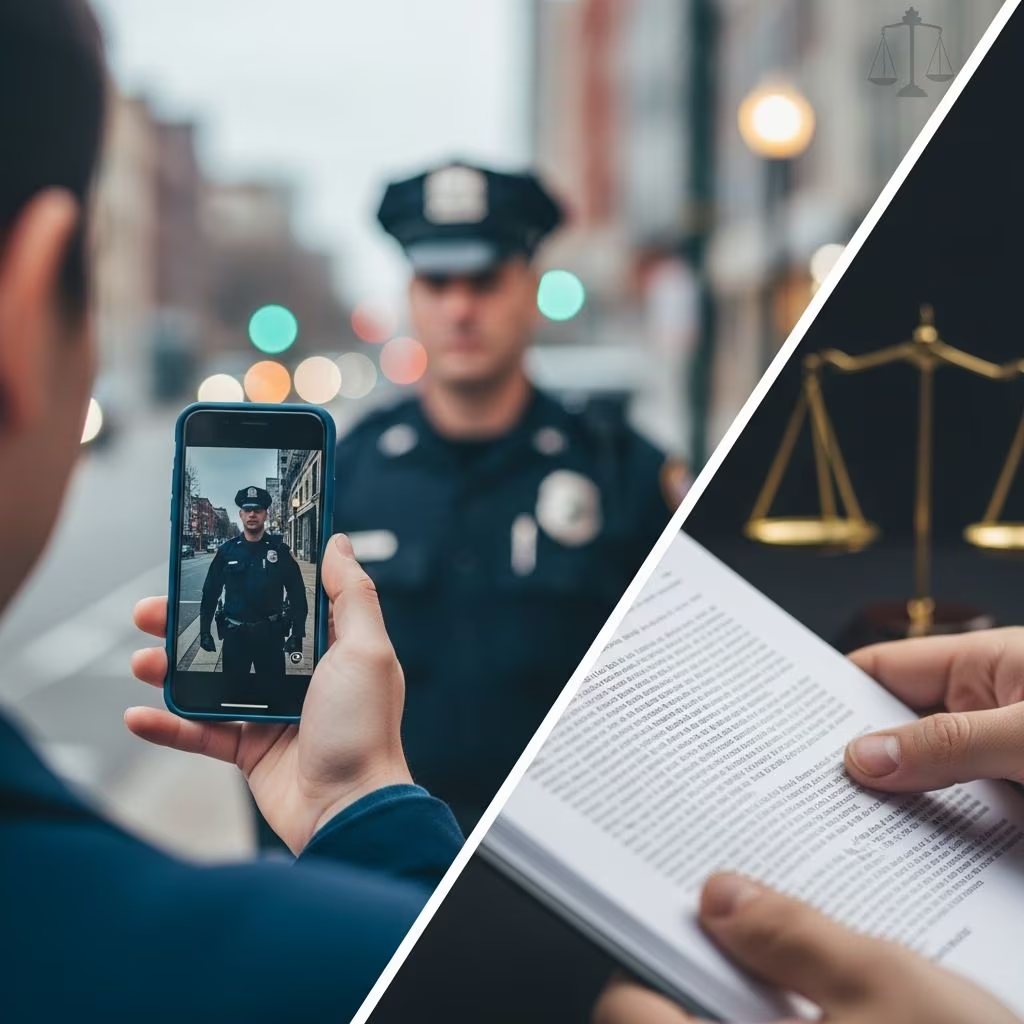
Filming law enforcement officers performing their duties in public areas has become a common practice with smartphones ubiquitous. This activity serves as a vital tool for accountability, but it raises questions about legality and boundaries. Federal courts consistently affirm a First Amendment right to record police in public spaces, provided it does not interfere with official duties. This article delves into the legal foundations, practical guidelines, exceptions, and strategies for safely exercising this right.
Foundational Legal Protections Under the First Amendment
The U.S. Constitution’s First Amendment safeguards freedom of speech and press, which courts have extended to include observing and documenting government officials, including police. Every federal appeals court addressing this has upheld the right to film, photograph, or audio-record officers in public while they conduct official business. This protection stems from the need for public oversight of government actions, acting as a ‘watchdog’ function.
For instance, in Irizarry v. Yehia (2022), the 10th Circuit Court of Appeals ruled that filming police fulfills a constitutional role in monitoring official conduct. Similarly, organizations like the ACLU emphasize that citizens can openly or discreetly record in public spaces without police interference solely based on the act of recording. These rulings apply nationwide, though subject to reasonable restrictions on time, place, and manner.
When and Where Recording is Protected
Your right is strongest in open public areas like streets, parks, and sidewalks where no expectation of privacy exists. You may record traffic stops, arrests, protests, or routine patrols as long as you remain lawfully present and do not obstruct operations.
- Traffic stops: Film from a safe distance without entering the scene.
- Arrests: Document proceedings unless it physically impedes officers.
- Protests: Capture police interactions with demonstrators.
This extends to recording your own encounters, such as being questioned, absent interference. State laws in places like New York City explicitly prohibit officers from preventing recordings or seizing devices used for this purpose. Massachusetts and Connecticut also protect video and audio capture of public duties.
Key Limitations and Exceptions to Know
While broadly protected, recording is not absolute. Courts defer to officers’ on-site judgments when activities pose risks. Common restrictions include:
| Situation | Why Restricted | Example |
|---|---|---|
| Interfering with duties | Blocks officer access or safety | Standing between officer and suspect during arrest |
| Private property | Owner’s permission required | Inside a home or business without consent |
| Undercover operations | Compromises investigations | Filming confidential informants |
| Audio of private talks | Wiretap laws in some states | Quiet conversations away from crowds |
| Inciting violence | Leads to crimes | Encouraging resistance to arrest |
In busy streets or crime scenes, officers can require you to relocate for safety without halting the recording. Inside jails or stations, permissions are typically needed. Two-party consent states may limit secret audio of non-public police talks, though official duties often qualify as public.
Police Powers Over Your Device and Footage
Officers cannot demand you stop recording, delete files, or surrender your device without a warrant. Even during arrest, they may hold your phone for safekeeping but cannot access or alter contents absent judicial approval. New York City law bans seizing recording equipment or issuing summonses based solely on filming.
If ordered to comply unlawfully, calmly assert: ‘I do not consent, and I have a First Amendment right to record in public.’ Refusal alone does not justify arrest. However, assess risks, as some officers may detain despite illegality.
Practical Strategies for Safe and Effective Recording
To minimize conflicts:
- Stay calm and visible: Keep hands in sight, maintain distance, and avoid sudden movements.
- Announce if desired: ‘I’m exercising my First Amendment right to record.’ No obligation, but it documents awareness.
- Provide basics only: Share name/ID if required; refuse searches or extra questions.
- Use backups: Livestream or cloud-sync to prevent total loss.
- Position safely: Sidewalks over roads; behind lines during operations.
Post-incident, note details: officer names, badges, vehicles, witnesses. Photograph injuries and file complaints with departments or oversight boards. Organizations like FIRE or ACLU offer support.
State Variations and Local Ordinances
While federal law sets the floor, states enhance protections. Colorado, Hawaii, Illinois, and New York have statutes or constitutional provisions. New York City’s § 14-189 explicitly shields recorders from intimidation or seizure. Connecticut distinguishes public duties (protected) from private talks (consent needed).
Check local wiretap laws: one-party (your consent suffices) vs. all-party consent. Always prioritize federal precedents for public filming.
The Role of Recordings in Promoting Accountability
Recordings provide objective evidence, countering ‘he said, she said’ disputes. They have exposed misconduct, aided prosecutions, and trained officers. Courts value them as independent records, reinforcing public trust. High-profile cases demonstrate their impact, from exonerating innocents to documenting force.
Yet challenges persist: not all officers comply, leading to arrests later dismissed. Persistence, paired with legal knowledge, advances transparency.
Frequently Asked Questions
Can I secretly record police in public?
Yes, First Amendment protects both open and concealed recording in public spaces, though visibility reduces confrontation risks.
What if I’m recording my own arrest?
Protected if not interfering, but physically resisting to film may cross into obstruction.
Do police need a warrant to view my footage?
Yes, absent consent or incident to lawful arrest with warrant.
Is this right the same everywhere in the U.S.?
Federal courts agree, but states add layers; no right is unlimited.
What if an officer deletes my video?
Illegal; document and report for potential tampering charges.
Empowering Citizens Through Knowledge
Understanding these rights equips you to document without fear, fostering better policing. Share this guide, stay informed on rulings, and use technology responsibly. When done right, your smartphone becomes a shield for justice.
References
- Recording police in public: What you need to know — Foundation for Individual Rights and Expression (FIRE). 2023. https://www.thefire.org/research-learn/recording-police-public-what-you-need-know
- Recording Police: First Amendment Right or Arrestable Offense? — Freedom Forum. 2023-06-12. https://www.freedomforum.org/recording-police/
- § 14-189 Right to record police activities — American Legal Publishing (New York City Code). Accessed 2026. https://codelibrary.amlegal.com/codes/newyorkcity/latest/NYCadmin/0-0-0-124260
- Know Your Rights: Photographing or Recording the Police — ACLU of Massachusetts. 2023. https://www.aclum.org/know-your-rights/know-your-rights-photographing-or-recording-police/
- Know Your Rights: Recording the Police — ACLU of Connecticut. 2017-07. https://www.acluct.org/app/uploads/2017/07/know_your_rights-_recording_the_police_11.pdf