
Recognizing and Avoiding Car Wrap Check Scams
Learn how bogus “get paid to wrap your car” offers work, how to spot red flags, and how to protect your bank account from fake check scams.
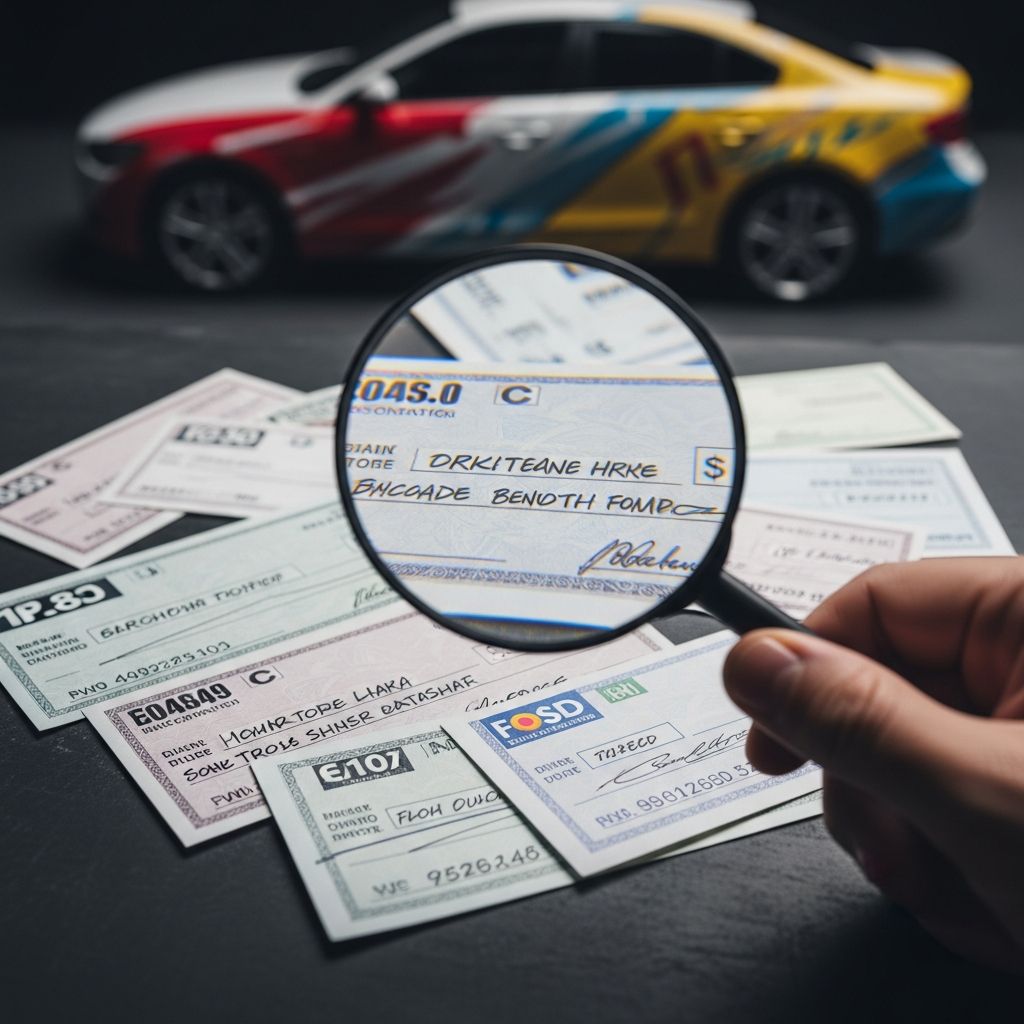
Get-Paid-to-Wrap-Your-Car Offers: Easy Money or Expensive Trap?
Ads promising that you can get paid to wrap your car with a big brand logo might sound like the perfect side gig. You are told that all you have to do is drive normally while displaying an advertising wrap for a well-known company, and you will earn hundreds of dollars each week. But many of these offers are actually car wrap check scams that use fake checks to steal your money and your personal information.
Understanding how these scams work – and recognizing the warning signs – can help you avoid costly losses and protect your bank account.
What a Legitimate Car Wrap Deal Usually Looks Like
Car wraps are a real advertising tool. Companies and marketing agencies sometimes pay drivers to display branded graphics, but legitimate programs operate very differently from scam offers.
- Professional recruitment: Real campaigns are usually run through established marketing firms or fleet programs, not random emails or texts to strangers.
- Clear contracts: You sign an agreement that explains the pay rate, campaign duration, mileage expectations, and any responsibilities for vehicle condition.
- Direct vendor payment: The business deals directly with the installation shop or wrap vendor. You are not asked to receive money and forward it to anyone.
- Normal payroll methods: Legitimate companies pay by direct deposit, payroll service, or standard business checks after work is performed – not before.
Whenever an offer departs from these practices and asks you to move money on the company’s behalf, you should be on high alert.
How the Car Wrap Scam Typically Unfolds
While scammers vary the story details, most car wrap scams follow a similar script built around a fake check and a request for you to send money back.
| Step | What Happens | Why It’s Dangerous |
|---|---|---|
| 1. Initial contact | You see a social media ad, job posting, text message, or email promising weekly pay to wrap your car. | Scammers use broad messages to reach many victims at once, pretending to represent big brands. |
| 2. Attractive pay offer | You are promised several hundred dollars per week for doing nothing more than driving normally. | Unrealistic earnings are used to lower your guard and get you to respond quickly. |
| 3. Large upfront check | A check for far more than your first week’s pay arrives by mail or courier – often thousands of dollars. | The check is forged or otherwise invalid, but may initially appear to “clear” when deposited. |
| 4. Instructions to forward money | You are told to deposit the check, keep a portion as your pay, and send the rest to an “installer” or “wrap vendor” using wire transfer, person-to-person payment app, cryptocurrency, or money order. | These payment methods move funds quickly and are very hard to reverse, giving scammers fast access to your money. |
| 5. Check bounces | Days or weeks later, your bank learns the check is fake and removes the deposit from your account. | You are responsible for the amount you withdrew or sent; your bank can require repayment and charge fees. |
| 6. Scammer disappears | The scammer cuts off contact, blocks your messages, and vanishes with the money you sent. | Your funds are gone, and in many cases, they cannot be recovered because they were sent through irreversible channels. |
Why Fake Checks Are So Convincing
Car wrap scams exploit weaknesses in how checks are processed. In the United States, banks must often make deposited funds available quickly, sometimes before a check has fully cleared through the financial system.
- Early availability is not final approval: Your online banking app might show the funds as “available,” but the check can still be returned later if it is counterfeit or altered.
- You bear the loss: Under federal rules governing check deposits, you generally owe the bank the amount of any check that comes back unpaid, even if you were fooled by a sophisticated fake.
- Modern counterfeits look real: Scammers can print checks with realistic logos, security features, and even legitimate bank names, making them hard to spot with the naked eye.
Because of these factors, any offer that requires you to deposit a check and send part of it elsewhere is extremely risky and should be treated as a scam, regardless of the story that comes with it.
Red Flags That Signal a Car Wrap Scam
While fraudsters constantly tweak their pitches, there are consistent warning signs. If you notice several of these at once, walk away from the offer immediately.
Suspicious Communication and Recruitment Tactics
- Unsolicited texts or emails offering a job you never applied for.
- Vague or generic job descriptions that emphasize easy money but provide few concrete details.
- Poor spelling and grammar in messages, contracts, or letters, even though the sender claims to represent a major global brand.
- Pressure to respond immediately or risk “losing your spot” in the campaign.
Financial Red Flags
- Overpayment by check: You receive more money than you were promised and are told to return or forward the surplus.
- Instruction to send money back via wire transfer, money order, cryptocurrency, or a payment app.
- Requests for banking access or for you to provide online banking credentials to “verify” your account or “speed up” payment.
- Claims that the brand wants to work only through you instead of paying the wrap vendor directly.
Brand and Identity Concerns
- Famous companies named, but email from free providers (such as generic webmail addresses) rather than corporate domains.
- No independent verification of the program on the company’s official website or customer service line.
- Refusal to provide a verifiable business address, phone number, or tax identification information.
How to Protect Yourself Before You Say Yes
Preventing loss is much easier than trying to recover money after it is gone. These practical steps can help you evaluate offers and avoid car wrap scams.
1. Slow Down and Research the Offer
- Look up the company name plus the word “scam” using a search engine. See if there are FTC consumer alerts or news reports describing similar schemes.
- Visit the official website of the brand supposedly running the campaign and check for any mention of vehicle advertising programs.
- Call the company’s public number (not a number in the email or text) and ask if the offer is legitimate.
2. Treat Unsolicited Checks With Extreme Caution
- Never assume a check is valid just because your account shows the funds as available; final clearing can take days or longer.
- If you receive a surprise check tied to a request that you send money onward, do not deposit it. Contact your bank and ask for guidance.
- Remember: if someone insists you use your own account as a pass-through to pay a third party, that is a core feature of fake check scams.
3. Refuse to Forward Money for Any Employer
- Legitimate car wrap campaigns and employers do not need you to act as a payment processor or middleman.
- If an offer combines a job with handling funds for vendors or installers, decline and look for other opportunities.
4. Guard Your Personal Information
- Avoid sharing your Social Security number, driver’s license, or bank account details early in any application process.
- Scammers can use this data for identity theft or to attempt unauthorized financial transactions.
If You Already Deposited a Check or Sent Money
If you realize you have interacted with a car wrap scam, acting quickly can limit the damage. Consumer protection agencies stress the importance of early reporting in fake check schemes.
- Contact your bank immediately: Explain that you may have deposited a counterfeit check and followed instructions to send money out.
- Ask whether any outgoing transfers can be reversed: While wire transfers and cryptocurrency are often final, prompt reporting may sometimes help stop pending transactions.
- Change your online banking passwords and enable multi-factor authentication if you shared any account access.
- Monitor your statements and credit reports for unusual activity, especially if you provided personal identifiers.
- Report the scam to appropriate government and consumer agencies (see below).
Where and How to Report a Car Wrap Scam
Reporting scams helps enforcement agencies track patterns, warn others, and, in some cases, bring legal actions against fraudsters. U.S. authorities encourage victims and targets to submit complaints even if no money was lost.
- Federal Trade Commission (FTC): File a report describing the offer, the communication you received, and any financial loss through the FTC’s official complaint portal.
- U.S. Postal Inspection Service: If a fake check or letter arrived by mail, you can submit a mail fraud complaint through the Postal Inspection Service, the law enforcement arm of the U.S. Postal Service.
- State or local consumer protection office: Many states have consumer protection divisions or attorneys general that collect fraud reports and may take action at the state level.
- Better Business Bureau (BBB): You can file a scam report that becomes searchable to the public, helping others recognize similar schemes.
Safer Ways to Find Side Gigs and Extra Income
Scammers prey on people looking for extra income. Focusing on more transparent and verifiable opportunities can reduce your risk of fraud.
- Use reputable job sites and filter for employers with established histories and verified contact information.
- Be skeptical of any job that promises large earnings for little effort, particularly if it involves your personal bank account.
- Consider local opportunities where you can meet the employer in person or visit an actual business address.
- Check for complaints or warnings from consumer protection agencies before signing up for unusual advertising or gig programs.
Frequently Asked Questions (FAQs)
Q: How can I quickly tell if a car wrap offer is a scam?
A major warning sign is any request that you deposit a check and then send part of the money to someone else, especially via wire transfer, cryptocurrency, or payment app. Legitimate companies pay vendors directly and do not rely on new drivers to move money for them.
Q: My bank showed the funds from the check as available. Doesn’t that mean it cleared?
No. Banks often must make deposited funds available before a check has fully cleared through the system. A counterfeit check can be returned days or weeks later, and when that happens, the bank can remove the amount from your account and hold you responsible for any money already withdrawn or sent out.
Q: What if the company using the car wrap is a brand I recognize?
Scammers frequently claim to represent well-known brands to appear legitimate. Always verify offers through the brand’s official website or customer service number, and be suspicious if messages come from personal email addresses or phone numbers that are not connected to the company.
Q: Can I get my money back if I already wired it to the “installer”?
Recovering funds sent by wire transfer, money order, or cryptocurrency is very difficult because these methods move money quickly and often irreversibly. You should still contact your bank immediately and report the fraud, but you should also be prepared that the funds may not be recoverable.
Q: Are all car wrap jobs scams?
Not necessarily. Vehicle advertising can be a legitimate form of marketing. However, real programs do not involve surprise checks or instructions to forward money. Any genuine campaign should be verifiable through the company’s official channels, operate through professional contracts, and pay you only for services actually rendered.
References
- How to spot a car wrap scam — Federal Trade Commission (FTC). 2016-08-30. https://consumer.ftc.gov/consumer-alerts/2016/08/how-spot-car-wrap-scam
- How to avoid getting wrapped up in a car wrap scam — Federal Trade Commission (FTC). 2024-03-28. https://consumer.ftc.gov/consumer-alerts/2024/03/how-avoid-getting-wrapped-car-wrap-scam
- How to spot, avoid, and report a car wrap check scam — WXYZ Detroit / Scripps Local Media. 2023-01-17. https://www.wxyz.com/news/how-to-spot-avoid-and-report-a-car-wrap-check-scam
- Fake Checks — Federal Trade Commission (FTC). 2021-10-01. https://consumer.ftc.gov/articles/fake-checks
- Car wrap scam alert — Wrap Bullys. 2019-06-01. https://wrapbullys.com/car-wrap-scam-alert/
Similar Articles








Read full bio of Sneha Tete


