
How to Recognize and Stop FEMA Impersonator Scams
Learn how FEMA really contacts disaster survivors so you can spot impersonators, avoid scams, and protect your money and identity.
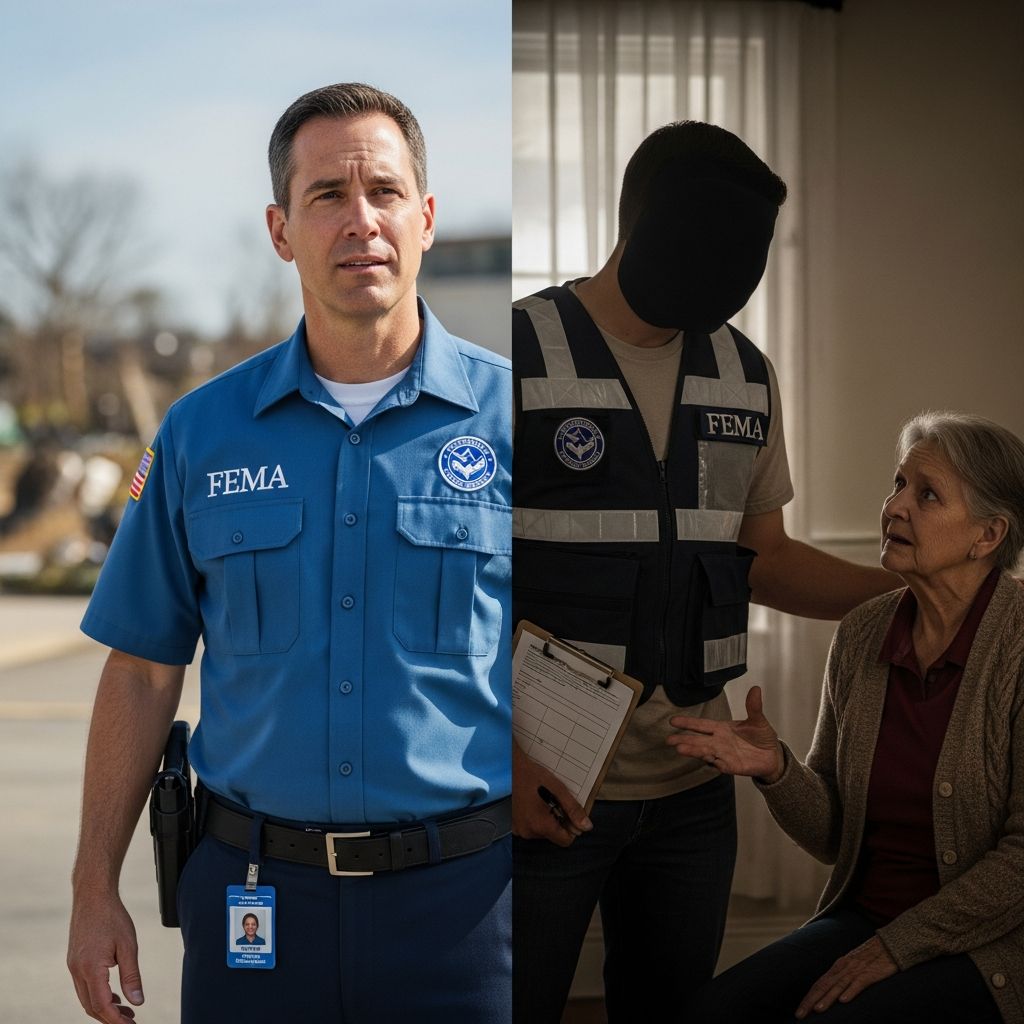
Each time a hurricane, flood, wildfire, or tornado devastates a community, legitimate help arrives — and so do scammers pretending to be that help. One of the most common post-disaster scams involves criminals posing as officials from the Federal Emergency Management Agency (FEMA) to steal money and personal information from survivors.
This guide explains how FEMA assistance really works, how impostors operate, and the specific steps you can take to protect your money, your identity, and your recovery.
Why Scammers Target Disaster Survivors
Disaster survivors are especially vulnerable: they are stressed, displaced, and urgently need help with housing, repairs, and basic needs. Scammers know this and tailor their schemes to fit real FEMA programs or disaster relief efforts.
Criminals impersonate FEMA and other government agencies because:
- People expect contact from FEMA after major disasters.
- Trust in government logos and uniforms makes victims less likely to question demands.
- High volumes of applications and confusion make it easy to slip fake calls or visits into the mix.
- Personal data (Social Security numbers, bank details) can be resold or used for identity theft.
How Genuine FEMA Assistance Works
Understanding what real FEMA workers do — and do not do — is the strongest protection against fraud. FEMA publishes detailed guidance on how its personnel identify themselves and what survivors should expect during legitimate contact.
Key facts about real FEMA assistance
- No fees: FEMA does not charge for inspections, disaster grants, debris removal, application help, or appeals.
- No payment to apply: You never have to pay to submit or process a FEMA application.
- No demand for cash: FEMA staff will not ask you to pay them in cash, gift card, wire transfer, or mobile payment app to get aid.
- Official ID: FEMA employees and contractors carry a government-issued photo badge with their name and agency clearly visible.
- Contact pattern: FEMA only contacts you if you applied for or requested disaster assistance.
- Limited information requests: FEMA may need some personal details to process a claim, but they do not demand sensitive information by text or in unsolicited messages.
Typical steps in legitimate FEMA contact
While exact procedures can vary by disaster, legitimate assistance usually follows this pattern:
- You apply for assistance through FEMA-approved channels (phone, online, or official disaster recovery centers).
- FEMA confirms your application using the contact information you provided.
- A scheduled inspector may visit your property. They show their badge, confirm limited details, and never ask for payment.
- Decisions on eligibility and amounts are sent via official FEMA letters, emails, or portal messages, not through threats, pressure, or surprise payment demands.
Common FEMA Impersonator Tactics
Government impostor scams are widespread and adaptable. After major disasters, impostors often blend into the chaos by copying FEMA’s language, clothing, or logos. Recognizing their typical moves can help you shut down a scam early.
Frequent scam approaches
- Door-to-door visits after a storm or flood, with the visitor claiming to be from FEMA and offering fast grants or inspections — for a fee.
- Unsolicited calls or texts stating you were “pre-approved” for FEMA assistance you never applied for.
- Fake inspections where someone walks around your property, then demands payment before they file the “official report.”
- Application help scams offering to “push your case through” or get you more money in exchange for up-front cash or a percentage of your eventual payment.
- Refund or correction schemes claiming FEMA overpaid you or must fix your file, and demanding your bank or card details “to return funds.”
Warning signs you are dealing with a scammer
Walk away, close the door, or hang up immediately if someone who claims to be from FEMA:
- Asks for cash, gift cards, or wire transfer to get or speed up assistance.
- Demands your full Social Security number, bank account login, or card PIN over text, email, or call.
- Pressures you to act immediately or lose eligibility for benefits.
- Contacts you “out of the blue” when you never applied for FEMA assistance.
- Refuses to show an official, government-issued badge or becomes hostile when asked to verify their identity.
FEMA vs. Scam Calls, Texts, and Visits: A Quick Comparison
| Behavior | Real FEMA | Impersonator / Scam |
|---|---|---|
| Fees for inspections or grants | Never charges a fee for disaster assistance. | Asks for money up front, often in cash or gift cards. |
| Initial contact | Usually only after you apply or request help. | Unsolicited calls, texts, or visits, even if you never applied. |
| Payment methods | Payments to you are via approved, traceable channels. | Demands cash, peer-to-peer apps, wire, or prepaid cards. |
| Identification | Official photo badge; agrees if you call FEMA to confirm. | Fake or no ID; rushes you, resists verification. |
| Information requests | Limited, related to a specific application. | Asks for broad personal and financial details not tied to a known case. |
How to Safely Verify a FEMA Contact
If you are unsure whether a call, text, email, or in-person visit is legitimate, pause before you respond. Verification protects you from both financial loss and identity theft.
Steps to confirm identity
- Ask to see ID: For in-person visits, request to see the official government-issued badge. Check the name, photo, and agency.
- Use official phone numbers: Call FEMA’s published helpline (such as 1-800-621-FEMA) to confirm that the person or call is legitimate.
- Check your FEMA file: If you have an account on an official FEMA or disaster assistance portal, log in directly (not through links in messages) to see whether FEMA has attempted contact.
- Refuse to rush: A legitimate FEMA worker will allow you time to verify their identity and will not pressure you to pay or share data immediately.
Protecting Your Money and Personal Information
Government impostor fraud is a major problem reported to law enforcement and consumer agencies across the United States. Taking a few basic precautions can greatly reduce your risk.
Practical safety steps during and after a disaster
- Guard your documents: Keep identification papers, insurance policies, and financial records in a secure place. Return them to safe storage promptly after use.
- Limit what you share: Only provide personal details to contacts you have independently verified as FEMA or another legitimate agency.
- Use trusted channels: Apply for disaster assistance only through official government websites, phone numbers, or recognized disaster recovery centers.
- Monitor your accounts: After any suspicious contact, watch your bank, credit card, and benefits accounts for unusual activity, and consider setting alerts.
- Consider a fraud alert or credit freeze if you think a scammer obtained your Social Security number or other key identifiers, as recommended by consumer protection agencies.
What To Do If You May Have Been Scammed
If you suspect you dealt with a FEMA impersonator, acting quickly can limit harm to both you and others in your community.
Immediate actions
- Stop all contact: Hang up, stop replying to messages, and do not meet the person again.
- Secure your finances: Notify your bank or card issuer if you shared account details or made a payment; ask about reversing payments and monitoring fraud.
- Change passwords: Update passwords and enable multi-factor authentication on email, financial, and government accounts that might be affected.
Reporting FEMA impersonator scams
Law enforcement and consumer agencies urge victims and witnesses to report government impostor scams so investigators can track patterns and warn others.
- Contact FEMA’s helpline to report a fraudulent contact using FEMA’s name.
- Report disaster-related fraud to the National Center for Disaster Fraud, run by the U.S. Department of Justice.
- Notify your state or local consumer protection agency or attorney general’s office if state-level alerts have been issued.
- File an online fraud report with national consumer protection agencies so they can analyze and act on the data.
Extra Caution for Older Adults and Grieving Families
Some FEMA impersonator scams specifically target older adults and families who recently experienced a death, especially when federal funeral assistance or similar benefits might be available.
Scammers may:
- Claim to help apply for disaster or funeral assistance, but request the deceased person’s Social Security number, date of birth, and other identifiers.
- Insist that benefits will be lost unless the family immediately pays a fee or provides banking information.
Families can reduce risk by:
- Centralizing important calls and applications through one trusted relative or advisor.
- Refusing to discuss sensitive personal data with unsolicited callers.
- Verifying every assistance offer using official phone numbers and websites published by federal agencies.
Preparing Before a Disaster Strikes
Preparing for scams is part of preparing for disasters. Government and consumer protection agencies recommend including fraud prevention in your emergency planning.
Smart preparation steps
- Know official contacts: Save FEMA’s helpline and other disaster resources in your phone so you do not rely on numbers given by strangers.
- Educate your household: Make sure everyone in your home knows that FEMA never charges for inspections or grants and will not demand cash.
- Use trusted apps and alerts: Download official government apps or subscribe to verified alert systems for emergency information, not for unsolicited financial offers.
- Plan for document safety: Decide how you will store and transport key documents securely if you must evacuate.
Frequently Asked Questions (FAQs)
Q: Does FEMA ever charge fees for inspections, grants, or debris removal?
A: No. FEMA does not charge for inspections, disaster assistance, debris removal, help with applications, or appeals. Anyone requesting money for these services while claiming to be from FEMA is a scammer.
Q: How can I tell if someone at my door really works for FEMA?
A: Ask to see their official, government-issued photo badge. Verify the name and agency, and call FEMA’s published helpline directly if you are unsure. A legitimate worker will not object to verification, will not pressure you, and will not ask for cash or gift cards.
Q: I got a text saying FEMA owes me money and I must click a link. Is it real?
A: Treat it as a scam unless you have recently applied for FEMA help and can confirm the message through official channels. FEMA does not send texts demanding money or asking for sensitive personal information, and you should avoid clicking links in unsolicited messages.
Q: What should I do if I already gave a scammer my bank information?
A: Contact your bank or card issuer immediately, explain that you may be the victim of fraud, and ask them to monitor or close the affected accounts. Then change your passwords and report the scam to consumer protection and disaster fraud hotlines so they can investigate.
Q: Can a third party legitimately charge me to help file a FEMA application?
A: FEMA does not require you to use paid services to apply, and government agencies warn that some paid “assistance” providers are actually fronts for scams. If you choose to seek help, use only trusted, non-profit organizations or legal aid groups, and never pay someone who guarantees specific government benefits or demands a cut of your aid.
References
- BBB Scam Alert: Government imposters pose as FEMA and trick grieving family members — Better Business Bureau. 2024-08-21. https://www.bbb.org/article/scams/24365-bbb-scam-alert-government-imposters-pose-as-fema-and-trick-grieving-family-members
- Privacy Tip #451 – Disaster Victims Fall Prey to FEMA Impersonators — Data Privacy & Security Insider. 2025-07-11. https://www.dataprivacyandsecurityinsider.com/2025/07/privacy-tip-451-disaster-victims-fall-prey-to-fema-impersonators/
- Spot and avoid FEMA impersonators — Federal Trade Commission. 2025-07-10. https://consumer.ftc.gov/consumer-alerts/2025/07/spot-avoid-fema-impersonators
- WEM, DATCP warn people to be vigilant for scammers amid severe storms — Wisconsin Emergency Management / Wisconsin Department of Agriculture, Trade and Consumer Protection. 2024-04-03. https://wem.wi.gov/wwem-datcp-scammers-warning/
- Officials: Beware of FEMA Impersonators — The Intelligencer / Wheeling News-Register. 2025-07-07. https://www.theintelligencer.net/news/top-headlines/2025/07/officials-beware-of-fema-impersonators/
Similar Articles








Read full bio of Sneha Tete


