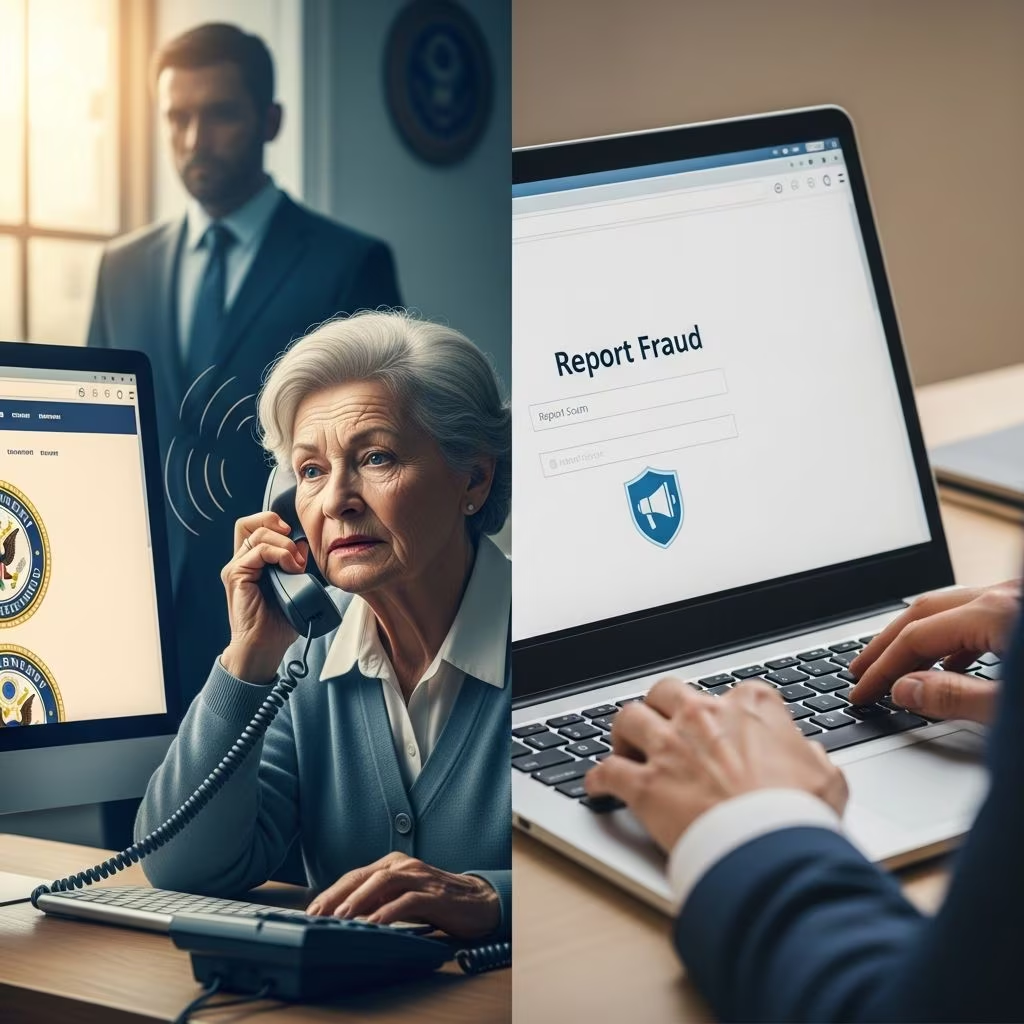
Scammers often pretend to be from trusted government agencies to pressure people into sending money or sharing sensitive information. Knowing how these scams work, what real agencies will and will not do, and how to report suspicious contacts can help you avoid losing money and protect your identity.
Why Government Imposter Scams Are So Convincing
When a caller, texter, or email claims to come from a government agency, many people instinctively pay attention. Scammers exploit this trust by copying logos, using official-sounding language, or spoofing caller ID so that the number appears to belong to a real agency. They may pretend to be from:
- Federal law enforcement (for example, the FBI or local police)
- Tax authorities (such as the IRS)
- Benefits agencies (for example, Social Security or Medicare)
- The Federal Trade Commission (FTC) or other consumer protection agencies
- State or local government offices
These criminals count on fear and urgency. They often threaten arrest, lawsuits, or the loss of benefits if you do not follow their instructions immediately.
Red Flags That a Government Contact Is a Scam
Real government agencies have specific rules for how they contact people and how they collect money. Understanding these rules makes it easier to recognize a fake. Common warning signs include:
- Unexpected contact about a problem you did not know you had.
- Demands for immediate payment to avoid arrest, legal action, or deportation.
- Requests for payment by gift card, cryptocurrency, wire transfer, or peer-to-peer apps (like payment apps on your phone).
- Pressure to keep the conversation secret or not to talk to anyone else.
- Threatening tone, including shouting, insults, or repeated calls.
- Asking for sensitive information such as your full Social Security number, bank account login, or one-time security codes.
According to U.S. authorities, legitimate federal agencies will never demand money through gift cards, cryptocurrency, or wire transfer over the phone. They also will not guarantee prizes, job offers, or debt relief in exchange for an upfront fee.
How Real Government Agencies Typically Contact You
Understanding normal procedures helps you quickly spot dishonest behavior. This table compares common characteristics of real contacts versus scams.
| Feature | Legitimate Government Contact | Government Imposter Scam |
|---|---|---|
| How they first contact you | Often by regular mail; sometimes by secure online message or scheduled call | Surprise call, text, email, or social media message demanding instant action |
| Payment methods they accept | Official payment systems (online portals, checks, authorized methods listed on the agency’s site) | Gift cards, cryptocurrency, wire transfers, or peer-to-peer apps |
| Use of threats | Not based on threats; will provide clear explanations and appeal rights | Threats of arrest, deportation, lawsuits, or immediate loss of benefits |
| Verification | Encourages you to contact the agency through official published numbers or websites | Insists you only call back the number they provide or click a link they send |
| Request for sensitive data | Limited, often through secure channels; will not ask for full card numbers or passwords by email or text | Requests full Social Security number, bank details, card numbers, or one-time codes |
Common Types of Government Imposter Scams
Criminals constantly change their scripts, but many scams follow familiar patterns.
1. Fake Law Enforcement or Court Threats
Someone claims to be from the police, sheriff’s office, or a federal agency and says you missed jury duty, violated a law, or there is a warrant for your arrest. They insist the only way to avoid jail is to pay a “fine” immediately using a non-traditional payment method.
- They may know part of your personal information to sound convincing.
- They often tell you to stay on the phone while you go to buy gift cards.
- They might warn you not to speak to anyone at the store, saying the situation is “classified” or “under investigation.”
2. Phony Tax or Debt Collection Calls
Scammers may pose as tax officials or government debt collectors, claiming you owe back taxes or overdue payments. They threaten wage garnishment, asset seizure, or legal action unless you pay at once.
- Real government debt collection follows formal procedures and written notices.
- Legitimate agencies provide appeal rights and detailed billing rather than forcing instant payment over the phone.
3. Social Security and Benefit Suspension Schemes
Here, the caller says your Social Security number has been “suspended” because of suspicious activity, or that your benefits will stop unless you verify information or pay a fee.
- Real Social Security numbers are not suspended because of misuse.
- Benefits agencies do not charge fees to restore your account or process routine changes.
4. Fake FTC or Consumer Protection Refund Offers
Some fraudsters pretend to be from the Federal Trade Commission or another consumer protection agency, claiming you are owed a refund from a previous scam. They may ask for bank details or demand a fee to “release” your money.
- When the FTC sends refunds, it does not ask people to pay money or share bank passwords.
- The agency explains refund programs publicly and often uses checks or prepaid cards issued through trusted partners.
Safe Steps to Take When You Get a Suspicious Contact
If you receive a call, text, email, or message that feels wrong, it is essential to slow down and take control of the situation. You do not have to figure everything out while you are still on the call.
Pause and Refuse Immediate Payment
- End the conversation politely but firmly; you can say you will call back through official channels.
- Do not send money or share personal data during the initial contact.
- Never pay with gift cards, cryptocurrency, or wire transfers to resolve a supposed government problem.
Verify Using Official Contact Information
Instead of relying on the phone number, link, or email address provided by the caller, use trustworthy sources:
- Go directly to the agency’s official website (for example, a .gov site) by typing the address into your browser yourself.
- Use phone numbers listed on the official website or on mail you know is legitimate.
- Log in to your existing online account (such as for taxes or benefits) through a bookmarked link or by entering the address manually.
Government agencies recommend using their published contact details, not those sent by unexpected callers or texters, to confirm whether a message is real.
Protect Your Devices and Accounts
Some scammers will ask you to install remote access software or click attachments that install malware. To protect yourself:
- Do not install programs at the request of a stranger claiming to be from the government.
- Avoid opening unexpected attachments or clicking links in unsolicited emails or texts.
- Enable multi-factor authentication on important accounts, such as email and banking, so that passwords alone are not enough to get in.
How to Report Fraud and Suspicious Government Contacts
Reporting scams helps enforcement agencies track patterns, take legal action against fraudsters, and warn other consumers. The Federal Trade Commission collects reports of fraud, identity theft, and other suspicious activities through its official complaint systems.
Reporting Fraud or Scams
If someone has tried to trick you, or you have already paid money, you can file a report with federal consumer protection authorities. When you report, be prepared to share:
- The date and time of contact.
- How the scammer contacted you (phone, email, text, social media).
- The phone number, email address, or website they used.
- What they said, including any threats or promises.
- How you paid, if you sent money (for example, gift cards, wire transfer, crypto).
Reports are shared with other law enforcement partners to help investigate fraud and unfair business practices.
Reporting Identity Theft
If a scammer has obtained your Social Security number, credit card number, bank information, or other sensitive data, you may be at risk of identity theft. Specialized reporting systems can help you create a recovery plan.
- Consider placing a fraud alert or credit freeze with major credit bureaus.
- Check your bank and card statements for unauthorized charges.
- Review your credit reports; U.S. law allows free credit reports from recognized bureaus.
Recovering Money and Limiting the Damage
Acting quickly can sometimes help you get money back or prevent further loss.
- Credit or debit cards: Contact your bank or card issuer immediately and ask them to reverse the charge or close the card.
- Bank transfers: Reach out to your bank at once to see if the transfer can be stopped or reversed.
- Gift cards: If you still have the receipt and card number, contact the gift card company right away and ask if they can freeze remaining funds.
- Wire transfers or cryptocurrency: These are much harder to recover, but notify the transfer company, exchange, or platform and explain that you were scammed.
In some cases, enforcement actions brought by agencies like the FTC can lead to refunds for victims, but there is no guarantee that all money will be returned.
Practical Tips to Avoid Future Imposter Scams
While no strategy is perfect, adopting a few simple habits can significantly reduce your risk.
- Be skeptical of urgency: Demands for instant action are a hallmark of scams.
- Guard your personal data: Share sensitive information only through channels you initiate and that you trust.
- Use strong, unique passwords and enable multi-factor authentication whenever possible.
- Monitor your accounts regularly for unfamiliar transactions or changes.
- Talk with family and friends about scams so that everyone in your circle knows the warning signs.
Frequently Asked Questions (FAQs)
Q1: The caller ID showed a real government number. Doesn’t that mean it was genuine?
No. Scammers can spoof caller ID so that any number or name appears on your phone screen, including real government offices. Caller ID alone is not proof of identity.
Q2: Can a government agency really arrest me for not paying over the phone?
Government agencies do not demand immediate payment by phone to avoid arrest. Legal processes involve written notices, clear explanations of what you owe, and opportunities to contest the claim.
Q3: Someone claiming to be from the FTC offered to help me get money back if I paid a fee. Is that legitimate?
No. The FTC does not charge people to help them get refunds, and it does not guarantee that it can recover a certain amount of money for you. Any request for upfront payment is a red flag.
Q4: I only gave the scammer my name and address. Should I still report it?
Yes. Reporting helps authorities track scam patterns and may protect others. Also watch for future suspicious contacts that use the same information.
Q5: How can I stay updated on new scam tactics?
Consumer protection agencies regularly publish alerts and educational materials about emerging scams and enforcement actions. Checking these updates can help you recognize new schemes quickly.
References
- Enforcement — Federal Trade Commission. 2024-06-01. https://www.ftc.gov/enforcement
- Bureau of Consumer Protection — Federal Trade Commission. 2024-04-10. https://www.ftc.gov/about-ftc/bureaus-offices/bureau-consumer-protection
- Consumer Protection Overview — Federal Trade Commission. 2025-05-30. https://www.ftc.gov/consumer-protection
- Rules — Federal Trade Commission. 2024-07-15. https://www.ftc.gov/legal-library/browse/rules
- Federal Trade Commission Homepage — Federal Trade Commission. 2025-03-20. https://www.ftc.gov
- Business Guidance — Federal Trade Commission. 2024-09-05. https://www.ftc.gov/business-guidance
- File a Complaint — Federal Trade Commission. 2024-11-12. https://www.ftc.gov/media/71268