
Reclaiming U.S. Leadership in Global Human Rights
Rebuilding accountability and trust in global human rights diplomacy.
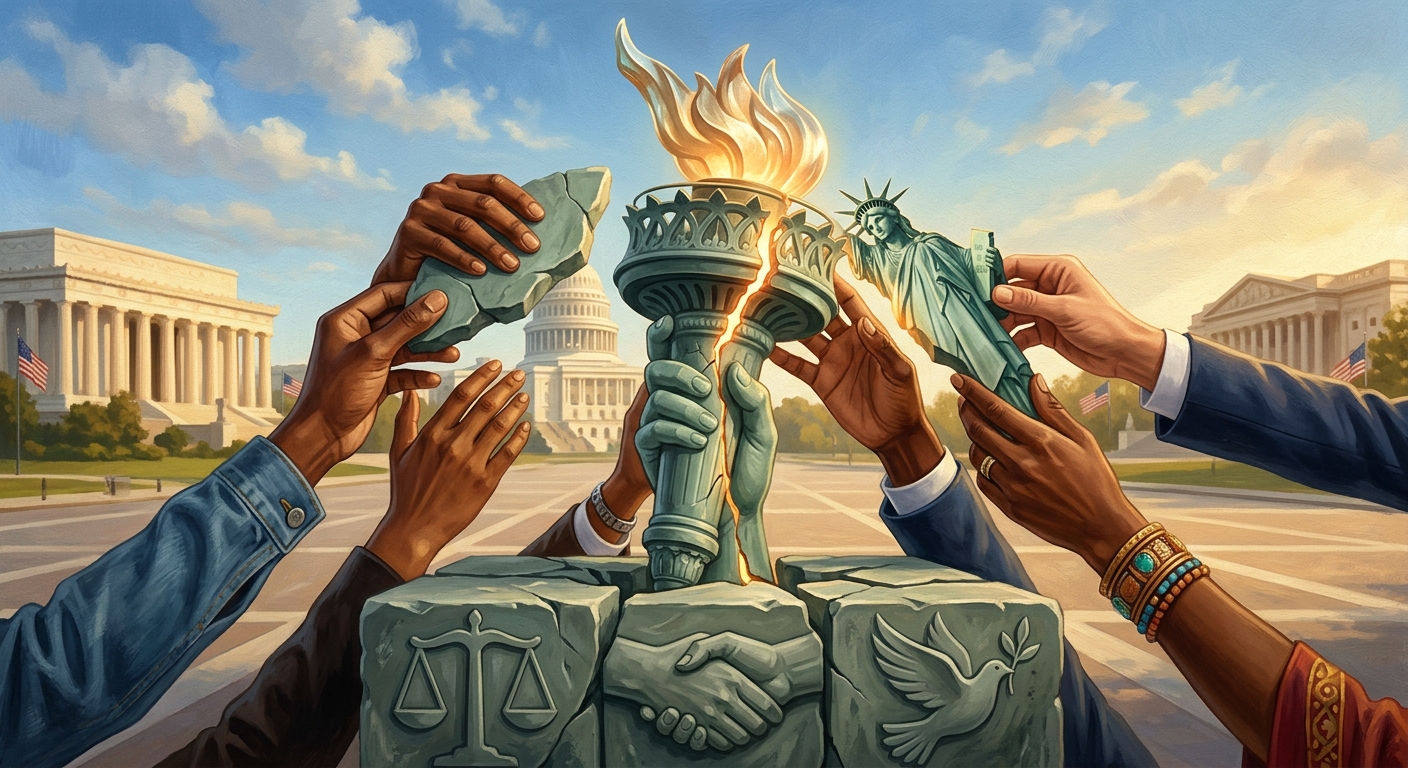
The Imperative to Restore Multilateral Diplomacy
The transition of executive power in the United States often triggers a profound recalibration of foreign policy, but few pivots are as consequential as those concerning international human rights. Over recent years, the global community has witnessed a dramatic oscillation in Washington’s approach to multilateralism. From a posture of active hostility toward global accountability mechanisms to a tentative re-embrace of international norms, the United States is currently navigating a critical diplomatic juncture. The imperative now is not merely to undo the diplomatic isolationism of the past but to forge a proactive, visionary framework that unequivocally restores American leadership in the defense of human dignity. This requires moving beyond rhetorical commitments and engaging in the complex, often uncomfortable work of holding both adversaries and allies to a universal standard of justice. Establishing a consistent, principles-based approach to international relations is essential for stabilizing global alliances and reinforcing the rule of law on the world stage.
The High Cost of Retreat: A Legacy of Isolationism
For a significant portion of the last decade, American foreign policy was defined by a deliberate withdrawal from international human rights forums. This retreat was perhaps most visibly underscored by the 2018 decision to vacate the United States’ seat on the United Nations Human Rights Council (UNHRC). At the time, policymakers cited the council’s disproportionate focus on certain nations and the inclusion of authoritarian regimes among its membership as primary reasons for the diplomatic exodus. However, abandoning this critical diplomatic arena yielded profound unintended consequences.
In the realm of international relations, a vacuum of leadership is rarely left unfilled. The absence of the United States allowed states with dubious domestic human rights records to consolidate their influence, steer committee agendas, and effectively shield themselves from international scrutiny. The policy of diplomatic isolation, rather than starving the council of legitimacy, primarily succeeded in eroding America’s own soft power. By stepping away from the negotiating table, the nation severely curtailed its ability to advocate for global democratic norms, protect vulnerable populations, and shape the narrative of international human rights from within the very institutions designed to uphold them.
The Clash Over Global Jurisdiction: Confronting the ICC
The friction between unilateral state action and international accountability reached an unprecedented zenith with the diplomatic assault on the International Criminal Court (ICC). Established by the 1998 Rome Statute, the ICC serves as a court of last resort for the most egregious crimes against humanity, war crimes, and genocide. Although the United States is not a party to the Rome Statute, the court’s assertion of territorial jurisdiction—allowing it to investigate crimes committed on the territory of member states, regardless of the perpetrator’s nationality—became a major geopolitical flashpoint.
This legal friction culminated in June 2020 with the issuance of Executive Order 13928 . This extraordinary directive weaponized economic sanctions and visa restrictions—tools traditionally reserved for terrorists and rogue states—against ICC personnel, including lead prosecutors and judges, who were investigating alleged actions by U.S. and allied forces in Afghanistan. The application of these sanctions sent shockwaves through the international legal community.
United Nations human rights experts quickly condemned the move as a “direct attack” on judicial independence and a dangerous escalation of coercion . By targeting the financial assets and international mobility of jurists, the policy effectively aligned American diplomatic tactics with those of authoritarian regimes seeking to evade international law. It created a chilling effect on global justice initiatives and deeply alienated core European allies who are staunch defenders of the Rome Statute framework. The episode underscored a fundamental paradox: a nation that historically positioned itself as the chief architect of the post-World War II international justice system was now actively seeking to dismantle the mechanisms of accountability that grew from that very foundation.
Rescission and the First Steps Toward Re-engagement
Recognizing the severe diplomatic damage inflicted by these punitive measures, the subsequent administration moved to definitively reverse course. In April 2021, Executive Order 13928 was formally revoked, terminating the national emergency regarding the ICC and lifting the unprecedented sanctions against its personnel . The administration acknowledged that while the United States maintained deep objections to the ICC’s jurisdictional claims over non-state parties absent a UN Security Council referral, the imposition of financial sanctions against an international court was an inappropriate and highly ineffective strategy.
Following this crucial de-escalation, the United States turned its attention back to the United Nations. In January 2022, the U.S. officially rejoined the UN Human Rights Council as a full member, explicitly stating a commitment to reforming the institution from within rather than lobbing criticisms from the outside . This return signaled a renewed willingness to engage in the multilateral process and collaborate with global partners to address systemic human rights abuses worldwide. However, returning to the baseline is merely the beginning of a much longer restorative process.
A Blueprint for Proactive Human Rights Leadership
Rescinding hostile executive orders and reclaiming a seat at the table represent merely the baseline of diplomatic normalization. A return to the status quo ante is insufficient to repair the structural damage done to global human rights advocacy. True leadership requires a transition from passive engagement to proactive advocacy. The international community remains watchful, seeking assurance that American commitment to human rights is an enduring institutional principle rather than a transient political preference subject to the whims of the electoral cycle.
Developing a proactive human rights framework demands a holistic integration of these principles across all facets of foreign and domestic policy. It requires robust financial and diplomatic support for grassroots human rights defenders who operate in increasingly hostile environments. Furthermore, diplomatic agencies must ensure that human rights considerations are inextricably linked to trade negotiations, security assistance, and strategic partnerships. To operationalize this vision, policymakers must adopt a multifaceted approach that contrasts sharply with past isolationism.
| Policy Domain | Previous Isolationist Approach | Proactive Leadership Strategy |
|---|---|---|
| International Institutions | Withdrawal and defunding of UN bodies (e.g., UNHRC). | Active membership, full funding, and leading internal reform coalitions. |
| Global Justice | Imposing economic sanctions on ICC investigators. | Revoking sanctions; engaging in constructive dialogue regarding jurisdiction. |
| Alliances | Alienating allies over disagreements on international law. | Collaborating with democratic partners to uphold the Rome Statute framework. |
| Human Rights Defenders | Deprioritizing protection for global activists and asylum seekers. | Centering the protection of marginalized groups and activists in foreign policy. |
The Strategic Imperative: Aligning Values with National Security
The alignment of foreign policy with human rights is not merely a moral obligation; it is a profound strategic imperative. In an era defined by renewed great-power competition, the battle for global influence is increasingly ideological. Adversarial nations frequently exploit inconsistencies in American foreign policy to construct narratives of hypocrisy, thereby undermining U.S. alliances and diplomatic initiatives globally. When a nation champions democracy abroad while simultaneously sanctioning international judges, it severely undercuts its own credibility.
By consistently defending human rights and adhering to international legal norms, a state fortifies its soft power—the ability to attract and co-opt rather than coerce. This moral clarity provides a vital strategic advantage, strengthening alliances with democratic partners and offering a compelling alternative to the transactional, consequence-free diplomacy promoted by authoritarian powers. Furthermore, prioritizing human rights addresses the root causes of global instability, including forced migration, conflict, and extremism. Ultimately, a world where human rights are universally respected and protected is intrinsically more stable, prosperous, and secure.
Frequently Asked Questions (FAQs)
What is the Rome Statute and how does it relate to the ICC?
The Rome Statute is the foundational treaty that established the International Criminal Court (ICC) in 1998. It outlines the court’s jurisdiction over four core international crimes: genocide, crimes against humanity, war crimes, and the crime of aggression. While over 120 nations are party to the statute, the United States is not, which has led to complex jurisdictional disputes.
Why did the U.S. impose sanctions on ICC officials?
In June 2020, through Executive Order 13928, the U.S. authorized economic sanctions and visa restrictions against ICC personnel. This unprecedented move was a retaliatory response to the ICC’s decision to investigate alleged war crimes committed by U.S. and allied forces in Afghanistan. The U.S. argued the court lacked jurisdiction because America is not a party to the Rome Statute.
When and why were these sanctions revoked?
The sanctions were revoked in April 2021 by a subsequent executive order. The new administration determined that while it still objected to the ICC’s jurisdictional overreach regarding non-state parties, utilizing financial sanctions against an international judicial body was inappropriate, ineffective, and damaging to U.S. relationships with key democratic allies.
Why did the U.S. leave and subsequently rejoin the UN Human Rights Council?
The U.S. withdrew from the UNHRC in 2018, citing the council’s chronic bias against Israel and the presence of severe human rights violators among its voting members. However, realizing that absence merely empowered authoritarian regimes to control the council’s agenda, the U.S. rejoined as a full member in January 2022 to drive reform through active internal participation.
Conclusion
The pivot away from diplomatic hostility and back toward multilateral engagement marks a vital correction in the trajectory of foreign policy. However, the window of opportunity to solidify this transition is narrow. As global authoritarianism evolves and human rights face unprecedented threats, democratic nations cannot afford a passive or inconsistent approach to international justice. By permanently embedding human rights into the core of diplomatic, economic, and security strategies, governments can transcend the volatility of domestic politics and forge a resilient, principled global stance. Reclaiming leadership in this arena is not merely about restoring a tarnished legacy; it is about building a sustainable, unbreakable framework for international justice that will define the geopolitical landscape for generations to come.
References
- Blocking Property of Certain Persons Associated With the International Criminal Court — Federal Register. 2020-06-15. https://www.federalregister.gov/documents/2020/06/15/2020-12953/blocking-property-of-certain-persons-associated-with-the-international-criminal-court
- Termination of Emergency With Respect to the International Criminal Court — Federal Register. 2021-04-07. https://www.federalregister.gov/documents/2021/04/07/2021-07239/termination-of-emergency-with-respect-to-the-international-criminal-court
- On Human Rights Day — United States Department of State. 2021-12-10. https://www.state.gov/on-human-rights-day-2/
- US sanctions against international court staff a ‘direct attack’ on judicial independence — UN News. 2020-06-25. https://news.un.org/en/story/2020/06/1067142
Similar Articles








Read full bio of Sneha Tete


