
Reasons Airlines Remove Passengers from Flights
Discover the legal grounds and common behaviors that lead to passengers being denied boarding or removed mid-flight by airlines.
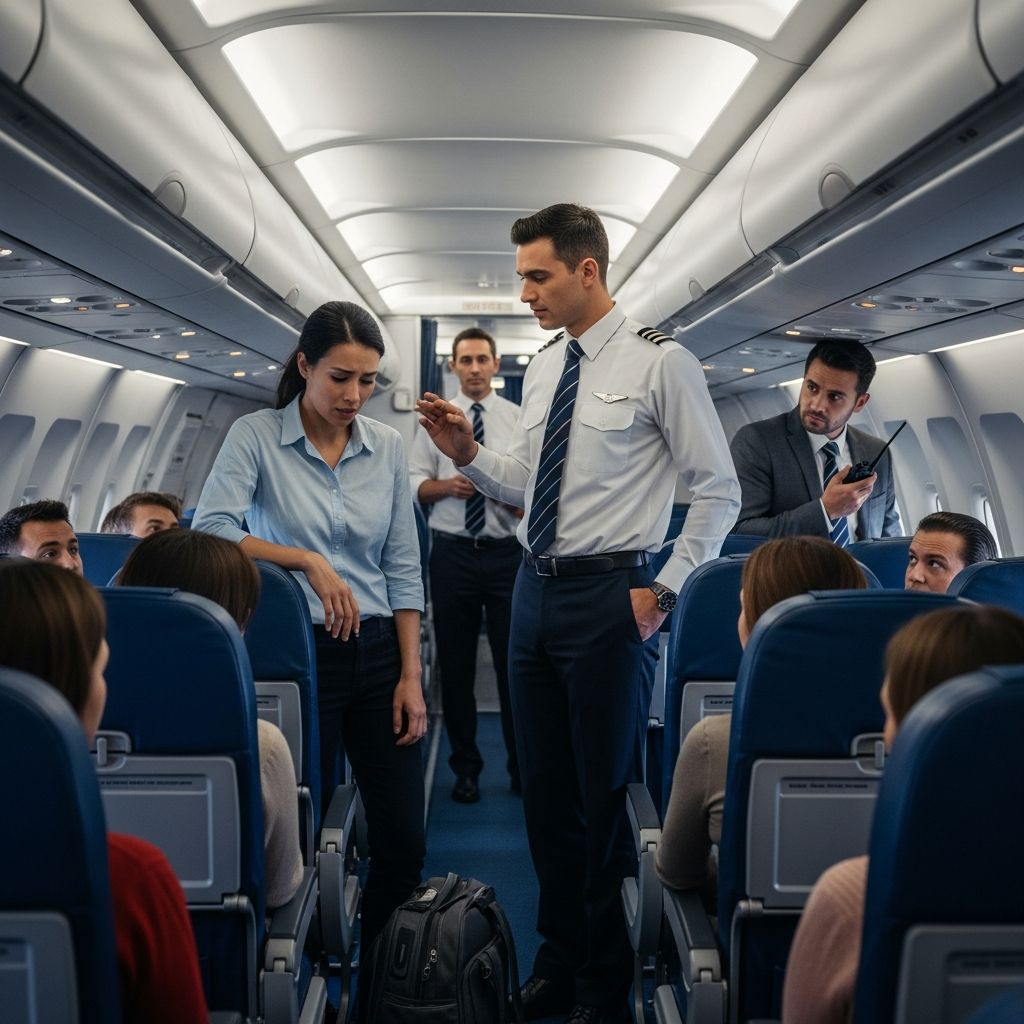
Air travel prioritizes safety above all else, granting airlines and flight crews broad authority to remove passengers who pose potential risks. Federal laws and court rulings establish a “reasonableness under the circumstances” standard, allowing carriers to act decisively when safety is at stake.
Understanding Airline Authority and Legal Standards
Airlines operate under strict federal regulations that empower captains and crew to refuse boarding or remove passengers if they believe it could jeopardize flight safety. The Federal Aviation Act, amended in 1961 amid hijacking threats, explicitly authorizes carriers to deny transport when, in their opinion, it might harm safety. Courts have refined this into a reasonableness test, rejecting stricter “arbitrary and capricious” thresholds in favor of evaluating actions based on known facts at the time.
In landmark cases like Williams v. TWA, the Second Circuit Court upheld an airline’s decision to deny boarding to a passenger with a violent criminal history, fake name, and FBI alerts, deeming it rational under the circumstances. Similarly, the Ninth Circuit in Eid v. Alaska Airlines emphasized that reasonableness accounts for high-stakes in-flight decisions, incorporating factors like time pressure and available information. This standard protects airlines from liability unless their actions stray into negligence or discrimination.
The U.S. Department of Transportation (DOT) reinforces that refusals must not be discriminatory, prohibiting bias based on race, gender, religion, or other protected traits under 49 U.S.C. § 41310. Contracts of carriage, the binding agreements between airlines and passengers, outline specific grounds for removal while mandating fairness.
Top Behaviors Leading to Passenger Removal
Certain actions consistently trigger interventions. Here’s a breakdown of prevalent issues:
- Intoxication or Drug Impairment: Passengers under the influence of alcohol or illegal substances top removal lists. Airlines can deny boarding if impairment affects safety or compliance with instructions.
- Disruptive or Unruly Conduct: Arguing with crew, refusing seatbelt use, or creating disturbances disrupts operations and endangers everyone.
- Interfering with Crew Duties: Any attempt to hinder flight attendants or pilots, even verbally, prompts swift action.
- Offensive Odors: Strong smells not linked to disabilities can lead to refusal, as they impact passenger comfort.
These align with DOT guidelines, ensuring removals serve legitimate safety needs rather than whims.
Overbooking and Involuntary Bumping Protocols
While not always a behavioral issue, overbooking frequently results in denied boarding. Airlines must follow DOT rules: solicit volunteers first with compensation offers, then proceed involuntarily if needed. Federal law via the Airline Deregulation Act limits lawsuits for bumping alone, but discrimination voids this protection.
| Scenario | Required Airline Action | Passenger Compensation |
|---|---|---|
| Voluntary | Solicit with incentives | Agreed amount or benefits |
| Involuntary (Domestic, delay <2 hrs) | 4x ticket price, max $1,350 | Statutory minimum |
| Involuntary (Intl, delay >4 hrs) | 400% fare, max $1,550 | Higher statutory |
This table summarizes DOT oversale compensation rules, promoting transparency. Courts assess forcible removals for reasonableness; excessive force, as in Peterson v. Continental Airlines, may invite liability if beyond necessary.
Court Precedents Shaping Removal Decisions
Judicial reviews provide clarity on boundaries. In Cerqueira v. American Airlines, the First Circuit applied an “arbitrary and capricious” lens but focused solely on captain discretion, relying on crew input without deep probes. Contrasting views emerged in Cordero and Eid, where the Ninth Circuit prioritized overall reasonableness, familiar to tort law.
The Tokyo Convention governs international flights, granting captains immunity for restraints or offloading with “reasonable grounds” for threats to safety or order. Domestic scenarios echo this, balancing passenger rights with aviation risks. For instance, summoning police for non-compliance is reasonable if verbal de-escalation fails, per Rombom v. United Air Lines.
Passenger Rights and Recourse Options
Despite airline latitude, passengers retain protections. File DOT complaints for discriminatory practices or policy breaches within strict timelines. Common-law claims like false imprisonment persist if actions exceed services under the Airline Deregulation Act.
Pro tips to avoid removal:
- Arrive sober and composed.
- Follow all crew directives promptly.
- Disclose medical issues upfront for accommodations.
- Know your contract of carriage terms.
LegalShield notes rights extend to baggage issues and tarmac delays, underscoring holistic passenger advocacy.
Recent Trends in Unruly Passenger Incidents
Post-pandemic surges in disruptions highlight enforcement. FAA data shows thousands of reports yearly, prompting fines up to $37,000 per violation. Airlines increasingly use no-fly lists for repeat offenders, blending safety with deterrence.
International alignments, like Montreal Convention liabilities, mirror U.S. standards, ensuring global consistency for cross-border travel.
Frequently Asked Questions (FAQs)
Can airlines remove me for being rude but not disruptive?
Not typically, unless rudeness escalates to interference or safety risks. Reasonableness governs; mere annoyance rarely suffices.
What if I’m removed unfairly—can I sue?
Yes, for discrimination or unreasonableness, but Airline Deregulation Act preempts many service-related claims. Consult counsel for tort viability.
Do I get compensated for non-safety removals?
Only if oversold and involuntary per DOT rules. Behavioral removals forfeit this; focus on refunds or rebooking.
Is physical force ever justified?
Courts uphold it if reasonably necessary, like police assistance for refusal to deplane. Excess invites battery claims.
How do odors factor in?
Non-disability related offensive odors allow refusal for comfort, per contracts.
Navigating Air Travel Safely and Legally
Armed with this knowledge, travelers can minimize risks. Airlines balance commerce with paramount safety, courts ensuring accountability. Respect rules, know rights—smooth skies await.
References
- Standard of Care When Airlines Remove or Refuse Passengers — Kreindler & Relkin LLP. Accessed 2026. https://www.kreindler.com/articles/standard-care-airlines-remove-refuse-board-passengers
- The Answers to Some of Your Questions About What Airlines Can Do When a Flight is Overbooked — Butler Kahn. 2017-04-12. https://www.butler.legal/the-answers-to-some-of-your-questions-about-what-airlines-can-do-when-a-flight-is-overbooked-and-someone-is-going-to-have-to-get-off-of-the-plane/
- Bumping & Oversales — U.S. Department of Transportation. Accessed 2026. https://www.transportation.gov/individuals/aviation-consumer-protection/bumping-oversales
- Denied Boarding Rules — Travelers United. Accessed 2026. https://www.travelersunited.org/denied-boarding-rules/
- Know Your Rights as an Airline Passenger — LegalShield. Accessed 2026. https://www.legalshield.com/blog/know-your-rights-airline-passenger
Similar Articles








Read full bio of medha deb


