
Educational Gag Orders: Classroom Censorship, Legal Risks, 2025 Guide
The battle for open inquiry tests First Amendment limits in schools.
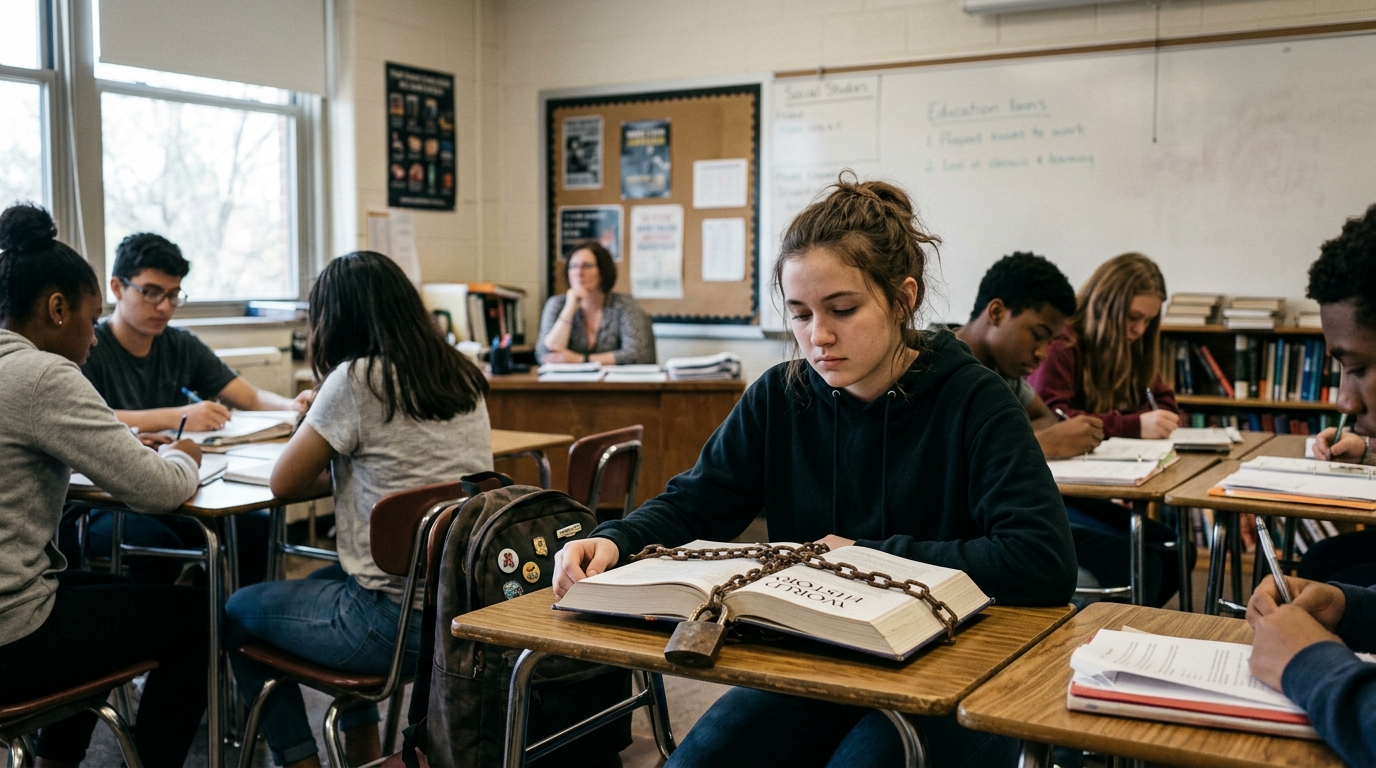
The Escalating Battle for the Classroom
Public education has historically served as the cornerstone of American democracy, designed to cultivate critical thinking, civic engagement, and a shared understanding of history. Today, however, this foundational institution is under severe stress. Across the United States, a coordinated campaign is altering the landscape of public education. From local school board meetings to state legislative floors, a wave of policies collectively known as educational gag orders is attempting to dictate what can and cannot be discussed in classrooms. On the surface, proponents argue these measures are designed to protect students from divisive concepts. However, beneath the rhetoric lies a much broader effort to suppress critical discussions surrounding race, gender identity, and systemic inequality.
This is not the first time public schools have been treated as ideological battlegrounds. From the anti-evolution statutes that sparked the 1925 Scopes Monkey Trial to the McCarthy-era loyalty oaths demanded of teachers in the 1950s, partisan efforts to control the classroom have a long, troubling history. However, the current wave of legislation is unprecedented in its speed, coordination, and the sheer volume of bills being drafted.
This battle is not merely a skirmish over a specific curriculum; it is a profound conflict over the purpose of public education. When educators are forced to whitewash history, the fundamental right to learn is compromised. By examining the legislative mechanics, the constitutional implications, and the educational fallout of these censorship efforts, we can understand the long-term threat to open inquiry.
The Architecture of Educational Gag Orders
The strategy driving classroom censorship relies heavily on legislative ambiguity and the weaponization of fear. Since early 2021, state legislatures have introduced hundreds of bills aimed at restricting educational speech. The most insidious aspect of these laws is their intentional vagueness. Rather than outright banning specific historical facts, lawmakers draft legislation that prohibits teachings that might cause discomfort, guilt, or anguish on the basis of a student’s race or sex. The sheer subjectivity of what might cause discomfort places an impossible burden on educators, resulting in widespread self-censorship.
| Type of Censorship | Primary Target | Common Mechanisms |
|---|---|---|
| K-12 Curricular Restrictions | Discussions of race, systemic racism, and history | Banning divisive concepts or topics causing discomfort |
| Higher Education Interventions | University programs, faculty tenure, academic freedom | Defunding Diversity, Equity, and Inclusion (DEI) offices |
| Library Book Removals | LGBTQ+ authors, marginalized narratives | Parental challenges, subjective inappropriateness claims |
Initially framed as a crusade against Critical Race Theory—a graduate-level legal framework rarely taught in K-12 schools—the scope of these bills quickly expanded. Recent iterations have aggressively targeted LGBTQ+ identities, banning discussions of sexual orientation and gender identity under the guise of parental rights. Furthermore, comprehensive tracking of educational censorship indicates that advocates have increasingly shifted their focus toward higher education, attacking the traditional support networks that underpin academic freedom.
The Constitutional Question: Students and the First Amendment
At the heart of the fight against classroom censorship is the First Amendment. While public schools are government entities and states possess broad authority to set curricula, this power is not absolute. The U.S. Supreme Court has long recognized that students do not shed their constitutional rights to freedom of speech or expression at the schoolhouse gate.
The Right to Receive Information
A pivotal precedent in this legal arena is the 1982 Supreme Court case, Board of Education v. Pico. In a plurality decision, the Court ruled that local school boards may not remove books from school libraries simply because they dislike the ideas contained within them. Justice William J. Brennan emphasized that the First Amendment protects not just the right to express ideas, but the right to receive them. Although Pico dealt specifically with library books rather than mandatory curriculum, the underlying principle—that the state cannot enforce ideological orthodoxy by restricting access to information—remains a cornerstone of the modern fight against censorship.
Viewpoint Discrimination
Classroom censorship laws frequently cross the line into viewpoint discrimination. When a state prohibits the discussion of systemic racism while mandating the celebration of exclusively patriotic history, it is not acting neutrally. Legal challenges mounted by civil liberties organizations argue that these gag orders violate the Equal Protection Clause and the First Amendment by specifically targeting ideas associated with marginalized groups. The government cannot arbitrarily decide which historical truths are acceptable and which are contraband without running afoul of fundamental constitutional protections.
The Educational and Psychological Toll
The impact of censorship extends far beyond legal hypotheticals; it has immediate, tangible consequences for students and educators. An education devoid of diverse perspectives is fundamentally incomplete and leaves students ill-prepared for a complex, globalized world.
- Stifling Critical Thinking: A primary goal of education is to equip students with the tools to analyze complex information, debate controversial topics, and form independent conclusions. Educational gag orders replace critical inquiry with rote memorization of a sanitized historical narrative. When students are shielded from the darker chapters of history, they are denied the context necessary to understand contemporary societal structures.
- The Value of Inclusive Curricula: Research consistently demonstrates the benefits of inclusive education. Academic studies indicate that when students see themselves reflected in their coursework, academic engagement and overall outcomes improve. Conversely, when marginalized students are told that their identities or histories are too divisive for the classroom, it inflicts profound psychological harm. It sends a clear message that their lived experiences are invalid or dangerous.
- Harms to Vulnerable Youth: For LGBTQ+ students in particular, restrictive policies do more than censor lesson plans; they enforce a culture of silence and stigma. When a teacher is barred from acknowledging the existence of same-sex parents or providing a safe space for transgender youth, the educational environment becomes inherently hostile. Mental health professionals repeatedly warn that this state-sanctioned erasure drastically increases the risk of depression and anxiety among already vulnerable youth populations.
- The Exodus of Educators: The pressure-cooker environment created by these laws is driving passionate professionals out of the field. Faced with the threat of disciplinary action, loss of licensure, or public harassment, many teachers are opting to leave the profession entirely. The fear of navigating a political minefield is exacerbating an already critical national teacher shortage, disproportionately affecting underfunded public school districts.
The Broader Political Strategy
To truly understand the fight against classroom censorship, one must view it through a broader political lens. These legislative efforts are rarely spontaneous grassroots movements; instead, they are frequently drafted by a network of well-funded national think tanks and distributed as model legislation to conservative state lawmakers.
By inflating isolated incidents or misrepresenting educational frameworks, proponents of these bills have successfully stoked parental anxiety. This anxiety is then harnessed to mobilize voters and achieve short-term electoral gains. However, beyond immediate political victories, there is a long-term strategy to undermine faith in public institutions. By framing public schools as sites of radical indoctrination, advocates for censorship create a pretext for defunding public education. This rhetoric paves the way for school privatization initiatives, such as voucher programs, which divert taxpayer money to private, less-regulated educational alternatives that are not bound by the same constitutional obligations to uphold free speech or equal protection.
The Pushback: Defending the Freedom to Learn
Despite the rapid proliferation of educational gag orders, resistance is mounting across the country. A diverse coalition of students, parents, educators, and civil rights advocates is fighting back in the courts, at the ballot box, and within their communities.
Organizations committed to civil liberties have filed numerous lawsuits challenging the constitutionality of these gag orders, seeking injunctions to prevent their enforcement on the grounds of vagueness and viewpoint discrimination. At the local level, grassroots mobilization is proving highly effective. Students are leading walkouts to protest the erasure of their histories, parents are organizing to elect pro-public-education school board candidates, and teachers’ unions are actively negotiating protections for academic freedom into their collective bargaining agreements.
Frequently Asked Questions (FAQs)
What is an educational gag order?
An educational gag order is a legislative or policy measure designed to restrict what educators can teach and what students can learn. These laws typically target discussions of race, gender, sexuality, and systemic inequality, often using intentionally vague language to force educators into self-censorship.
How do classroom censorship laws conflict with the First Amendment?
While state and local governments have authority over school curricula, the First Amendment prohibits the government from engaging in viewpoint discrimination. Banning specific political or social ideas to enforce an ideological orthodoxy violates students’ constitutional right to receive information and engage in open inquiry.
Why are higher education institutions now being targeted?
After initially focusing on K-12 education, censorship advocates have expanded their efforts to higher education. Recent legislation aims to dismantle diversity, equity, and inclusion (DEI) programs and restrict faculty tenure, attempting to enforce ideological compliance and erode traditional academic freedom at the university level.
What was the significance of the Supreme Court case Board of Education v. Pico?
The 1982 Supreme Court ruling in Board of Education v. Pico established that school boards cannot remove library books simply because they disagree with the political or social ideas contained within them. The ruling affirmed that students possess a First Amendment right to receive information, a precedent that continues to inform modern legal battles over classroom censorship.
What can parents and community members do to combat classroom censorship?
Community members play a crucial role in defending public education. Parents can attend local school board meetings, advocate for inclusive policies, and support educators who face harassment. Voting in local elections is equally important, as school board positions directly influence curriculum standards and library policies. Additionally, supporting civil rights organizations that challenge these gag orders in court helps sustain the broader legal resistance.
Conclusion
The fight against classroom censorship is not merely a debate over syllabi or reading lists; it is a battle for the soul of American education. When the state dictates what can be taught and what must be suppressed, it strikes at the core of a democratic society. Ultimately, the goal of education is not to make students comfortable, but to make them think. By confronting uncomfortable historical truths and engaging with diverse perspectives, students develop the resilience and intellectual rigor necessary for active citizenship.
Protecting the freedom to learn ensures that the next generation is equipped with the knowledge, empathy, and critical thinking skills required to navigate and improve a complex world. Educational institutions must remain vibrant marketplaces of ideas, committed to the pursuit of truth rather than the enforcement of political orthodoxy.
References
- America’s Censored Classrooms 2024 — PEN America. 2024-10-08. https://pen.org/report/americas-censored-classrooms-2024/
- Board of Education, Island Trees Union Free School District No. 26 v. Pico, 457 U.S. 853 — U.S. Supreme Court. 1982-06-25. https://supreme.justia.com/cases/federal/us/457/853/
- Turning Evidence into Impact: Why Education Research Matters — American Educational Research Association. 2024. https://www.aera.net/
Similar Articles








Read full bio of medha deb


