
The Racial Wealth Gap: A Threat to Civil Liberties
How extreme economic disparities undermine our constitutional freedoms.
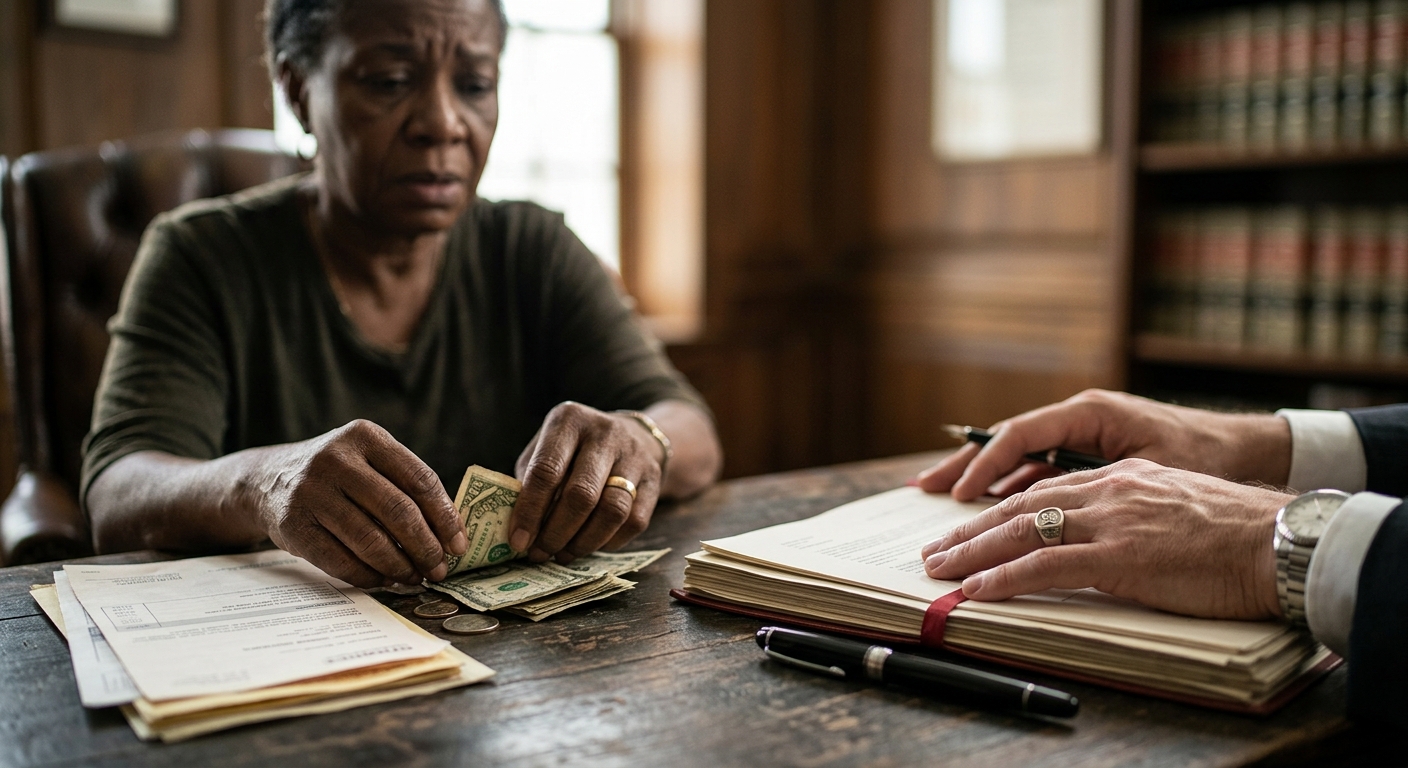
When Americans discuss civil liberties, the conversation typically centers on freedom of speech, the right to privacy, and protection against unlawful search and seizure. However, an invisible yet pervasive barrier quietly erodes these constitutional guarantees for millions of citizens: the racial wealth gap. Far from being a purely economic or financial concern, extreme disparities in wealth distribution along racial lines fundamentally undermine the foundations of a free and equal society.
To fully exercise one’s civil liberties, a baseline of economic security is often required. The ability to defend oneself in court, the capacity to participate fully in the democratic process, and the power to live free from undue state surveillance are all inextricably linked to financial resources. When a specific demographic is systemically deprived of these resources over generations, the resulting wealth chasm becomes a profound civil rights crisis.
The Structural Architecture of Economic Inequality
The contemporary racial wealth gap did not emerge by accident; it is the cumulative result of decades of exclusionary policies, discriminatory lending practices, and systemic hurdles designed to prevent marginalized communities from accumulating capital. While the Civil Rights Era dismantled de jure segregation, the economic scaffolding of inequality remained largely intact, evolving into more insidious forms of financial exclusion.
Recent data from the Federal Reserve highlights the staggering magnitude of this divide. Despite overall national wealth growing, the chasm between white households and households of color continues to widen. The data reveals a stark reality about who truly holds the economic power necessary to navigate American society effectively.
Median Household Wealth by Race
| Racial/Ethnic Group | Median Household Net Worth |
|---|---|
| White | $285,000 |
| Hispanic / Latino | $61,600 |
| Black | $44,900 |
Data reflecting disparities based on the Federal Reserve Survey of Consumer Finances .
As the table illustrates, the median white household holds substantially more wealth than the median Black or Hispanic household. This is not merely a gap in disposable income; it represents a deficit in emergency savings, home equity, retirement accounts, and intergenerational transfers. According to the Brookings Institution, the wealth disparity increased significantly during the COVID-19 pandemic, emphasizing that times of national crisis often exacerbate pre-existing structural inequities . When marginalized communities lack this financial buffer, their civil liberties are immediately compromised the moment they interact with the justice system, the housing market, or the ballot box.
Justice for Sale: How Wealth Dictates Legal Outcomes
The principle of “equal justice under law” is carved into the pediment of the United States Supreme Court, yet the reality within the nation’s courtrooms often depends on the defendant’s bank account. The criminal legal system is arguably the arena where the racial wealth gap most overtly strips individuals of their civil liberties.
The Weaponization of Cash Bail
The cash bail system functions as a direct penalty on poverty. When an individual is arrested, a judge may set a bail amount to secure their release pending trial. For affluent Americans, this is a temporary financial inconvenience. For low-income individuals—who are disproportionately Black and Hispanic due to the racial wealth gap—it is an insurmountable hurdle. Consequently, legally innocent people are left languishing in jail for weeks or months simply because they cannot afford to buy their freedom.
- Coerced Plea Deals: Individuals detained pre-trial are significantly more likely to plead guilty, even if innocent, simply to escape the brutal conditions of incarceration and return to their families.
- Loss of Livelihood: A few days in jail often leads to job loss, eviction, and the disruption of child custody arrangements, triggering a downward economic spiral.
- Erosion of the Presumption of Innocence: When wealth determines freedom, the presumption of innocence is effectively replaced by a presumption of guilt for the poor.
The Crisis of Legal Representation
While the Sixth Amendment guarantees the right to counsel, the quality of that counsel is heavily influenced by wealth. Public defender offices are notoriously underfunded and overburdened, with attorneys managing unmanageable caseloads. Wealthy defendants can hire private teams with the resources to recruit expert witnesses, conduct thorough investigations, and exhaust every legal avenue. The racial wealth gap means that minority defendants are systemically funneled into an under-resourced public defense system, diminishing their chances of a fair trial and leading to disproportionately harsher sentencing.
Democratic Participation and the De Facto Poll Tax
Voting is the bedrock of civic participation, the mechanism through which citizens shape the policies that govern their lives. Although the 24th Amendment formally abolished poll taxes, economic disenfranchisement functions as a modern, de facto barrier to the ballot box.
Participating in an election requires resources: time, transportation, and sometimes financial outlays to obtain mandatory identification. For hourly workers living paycheck to paycheck, taking time off to stand in a multi-hour line at an understaffed polling location equates to lost wages or even the risk of termination. Furthermore, systemic underinvestment in marginalized neighborhoods often results in fewer polling stations, broken voting machines, and significantly longer wait times compared to affluent, predominantly white suburbs.
When the racial wealth gap forces individuals to choose between feeding their families and exercising their democratic rights, their civil liberties are effectively nullified. The resulting electorate skews wealthier and whiter, producing legislatures that are less likely to pass policies addressing systemic inequality, thereby perpetuating a vicious cycle of disenfranchisement.
Housing Discrimination and the Right to Privacy
The Fourth Amendment protects citizens from unreasonable searches and seizures, guaranteeing a baseline of privacy. However, privacy is increasingly a commodity afforded only to those with property wealth. Homeownership is the primary engine of wealth accumulation in the United States, yet historical practices like redlining, exclusionary zoning, and predatory lending have systematically denied Black and Hispanic families equitable access to this asset-building pathway .
Without the wealth required to purchase homes, marginalized populations are disproportionately relegated to the rental market, including public and subsidized housing. Tenants in these environments frequently face invasive scrutiny that affluent homeowners would never tolerate. Landlords, public housing authorities, and even local law enforcement often subject low-income renters to arbitrary inspections, stringent behavioral rules, and a pervasive lack of privacy. The failure to secure homeownership—a direct symptom of the racial wealth gap—translates directly into a diminished expectation of Fourth Amendment protections.
Surveillance, Policing, and the Criminalization of Poverty
Economic segregation inherently alters how communities are policed. Low-income neighborhoods, which are disproportionately inhabited by communities of color, are subjected to hyper-policing and the deployment of advanced surveillance technologies. From facial recognition software to predictive policing algorithms, the state’s watchful eye is fixated on the economically disadvantaged, stripping away the anonymity and peace afforded to wealthier districts.
The Feedback Loop of Fines and Fees
Many municipalities fund their budgets through the aggressive enforcement of minor infractions, issuing fines for broken taillights, jaywalking, or loitering. When impoverished individuals cannot pay these fines, late fees accumulate, eventually leading to arrest warrants and driver’s license suspensions. This system effectively criminalizes poverty, transforming minor civil infractions into lifelong entanglements with the criminal justice system.
This relentless surveillance and enforcement violate the spirit of liberty. It creates an environment where people of color are treated as suspects rather than citizens, living under a presumption of criminality that restricts their freedom of movement and their right to exist peacefully in public spaces.
Forging a Path Forward: Economic Justice as Civil Rights Policy
Acknowledging the racial wealth gap as a civil liberties issue demands a paradigm shift in how we approach policy. Solutions cannot rely solely on legal reforms; they must address the underlying economic inequities that render those legal rights inaccessible to large segments of the population.
- Reforming the Cash Bail System: Eliminating wealth-based detention ensures that freedom pre-trial is determined by public safety considerations rather than a defendant’s bank account, preserving the presumption of innocence.
- Implementing Reparative Economic Policies: Initiatives such as “baby bonds”—government-funded trust accounts for children born into poverty—can help break the cycle of intergenerational poverty and provide a foundational stepping stone for future asset building .
- Strengthening Public Defense: Federal and state governments must mandate parity in funding between public defender offices and prosecutors, ensuring the Sixth Amendment functions as intended for all citizens regardless of their net worth.
- Ending Predatory Fines and Fees: Municipalities must be decoupled from the revenue generated by the criminal legal system, eliminating the financial incentive to over-police and over-tax low-income communities.
True liberty cannot exist in a vacuum of extreme economic deprivation. As long as the racial wealth gap persists, the constitutional rights of marginalized Americans will remain vulnerable to systemic erosion and exploitation.
Conclusion
The U.S. Constitution was designed to protect the liberties of all citizens, but extreme economic disparity acts as a powerful solvent, dissolving those protections for the nation’s most vulnerable. The racial wealth gap is a multi-generational crisis that dictates who gets to experience the full spectrum of American freedom and who is left navigating a labyrinth of systemic barriers. From the courtroom to the voting booth, and from the privacy of one’s home to the streets of one’s neighborhood, wealth remains an ultimate arbiter of justice. Recognizing economic inequality as a fundamental civil liberties issue is the first necessary step toward fulfilling the nation’s promise of true equality under the law.
Frequently Asked Questions (FAQs)
What is the core relationship between the racial wealth gap and civil liberties?
The racial wealth gap directly impacts an individual’s ability to exercise and defend their constitutional rights. A lack of wealth restricts access to adequate legal representation, leads to pre-trial detention through the cash bail system, creates economic barriers to voting, and diminishes privacy rights due to a reliance on highly scrutinized rental or public housing.
How does the cash bail system disproportionately affect people of color?
Because Black and Hispanic communities hold significantly less median wealth than white communities, they are far less likely to be able to afford bail. Consequently, individuals of color are more likely to be detained pre-trial for minor offenses, leading to lost jobs, disrupted families, and much higher rates of coerced guilty pleas.
Can economic policies actually improve civil rights?
Absolutely. Economic policies like ending wealth-based bail, eliminating predatory municipal fines, and creating asset-building programs (such as progressive taxation or baby bonds) provide marginalized communities with the financial stability needed to defend themselves in court, participate fully in elections, and avoid hyper-policing.
Why is homeownership consistently mentioned as a civil rights issue?
Homeownership is the primary method of wealth accumulation in the United States and provides a high degree of legal privacy under the Fourth Amendment. Historical discrimination, such as redlining, denied these opportunities to families of color, leading to multigenerational wealth disparities and forcing many into housing situations with severely diminished privacy and security.
References
- Wealth Inequality and the Racial Wealth Gap — The Federal Reserve. 2021-10-22. https://www.federalreserve.gov/econres/notes/feds-notes/wealth-inequality-and-the-racial-wealth-gap-20211022.html
- Black wealth is increasing, but so is the racial wealth gap — Brookings Institution. 2024-01-09. https://www.brookings.edu/articles/black-wealth-is-increasing-but-so-is-the-racial-wealth-gap/
- Homeownership, racial segregation, and policy solutions to racial wealth equity — Brookings Institution. 2021-09-01. https://www.brookings.edu/articles/homeownership-racial-segregation-and-policy-solutions-to-racial-wealth-equity/
Similar Articles








Read full bio of medha deb


