
Quirky Food Laws: Festive Conversation Starters
Discover unusual food regulations across the U.S. that make perfect icebreakers for holiday gatherings and dinner discussions.
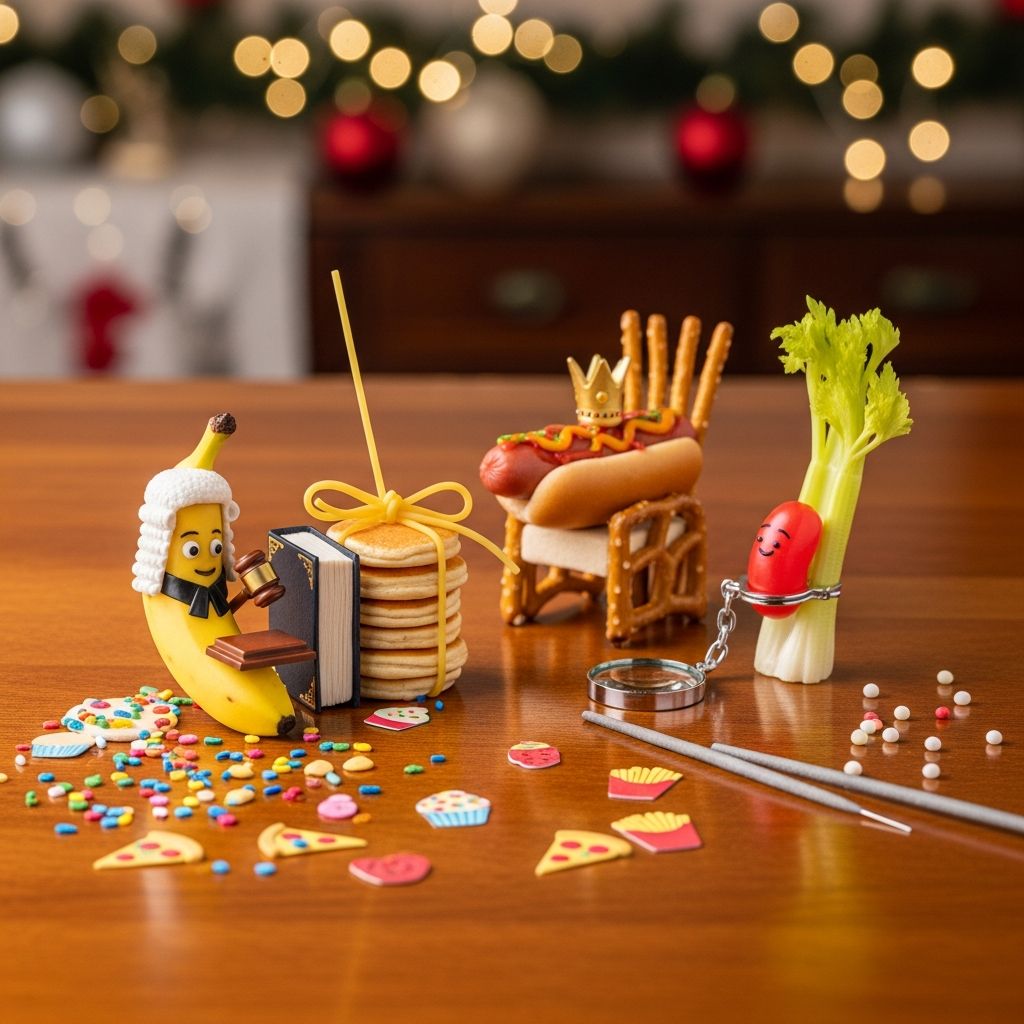
During holiday seasons, conversations often turn to family traditions, recipes passed down through generations, and the joys of shared meals. But what if you could elevate those discussions with a dash of legal trivia? The United States boasts a patchwork of food-related laws that range from the practical to the downright peculiar, shaped by federal oversight and state-specific quirks. These rules, enforced by agencies like the FDA and USDA, ensure safety while sometimes imposing unexpected restrictions. This article explores captivating food statutes that can ignite engaging dialogues at your next gathering, blending history, safety, and oddities.
The Foundations of American Food Regulation
Food laws in the U.S. trace back to early 20th-century reforms aimed at protecting consumers from adulterated products. In 1906, the Pure Food and Drug Act and Federal Meat Inspection Act marked the beginning of systematic oversight, responding to public outcries over unsafe practices. These laws established the groundwork for today’s system, where the FDA oversees about 80% of the food supply, including dairy, produce, and processed goods, while the USDA handles meat, poultry, and eggs.
Understanding this dual structure reveals why certain foods fall under different rules. For instance, a plain pizza might be FDA territory, but adding enough meat shifts it to USDA jurisdiction. Such divisions highlight the complexity of ensuring everything from farm to table meets stringent standards, preventing outbreaks and maintaining public trust.
Strange Dairy Directives Across States
Dairy products, staples of many holiday spreads, come with their share of unusual mandates. In Wisconsin, known as America’s Dairyland, state law requires that cheese served in public eating places must be plainly labeled with its common name if it’s not genuine, a nod to protecting consumers from imitation products. This rule stems from the state’s massive cheese production and ensures transparency in labeling.
California takes a bolder stance: it’s illegal to serve milk in containers that resemble cow udders, likely to avoid misleading or distasteful presentations. Imagine the table laughter when sharing how this prevents quirky restaurant gimmicks. Meanwhile, Connecticut mandates licensing for milk trucks, with requirements for refrigeration and cleanliness during transport, underscoring dairy’s vulnerability to spoilage. These laws blend safety with specificity, offering fun facts for cheese boards and eggnog toasts.
- Wisconsin Cheese Rule: Public cheese must be accurately labeled to combat fakes.
- California Milk Container Ban: No udder-shaped serving vessels allowed.
- Connecticut Milk Haulers: Licensed trucks with strict hygiene protocols.
Prohibitions on Holiday Treat Mix-Ins
Chocolate-covered cherries evoke festive cheer, but in some places, they’re off-limits. Idaho classifies chocolate-covered cherries with liquid centers as alcoholic due to trace brandy or similar fillings, making their sale illegal. This stems from concerns over unintended intoxication, especially for children, turning a sweet into a spirited debate starter.
Illinois draws a line at cotton candy with embedded cherries, deeming it unfit for human consumption—a rule possibly rooted in sanitation fears during production. Picture explaining this at a dessert table: why fluffy sugar gets regulated like a health hazard. Pennsylvania goes further, banning adding cherries to milkshakes, prioritizing purity in beverages. These confectionery curbs showcase how states interpret federal safety guidelines creatively.
Meat and Poultry Peculiarities
Holiday roasts and birds bring USDA rules into sharp focus. Federal standards under the Federal Meat Inspection Act require continuous oversight of slaughterhouses, a practice born from early 1900s scandals. States layer on extras: Kentucky deems it unlawful to sell or transport unprocessed possum meat without proper cooking instructions, reflecting wildlife management intertwined with food safety.
In Montana, selling unpasteurized milk without labeling it as such risks penalties, aligning with FDA’s push for pathogen-free dairy. Such regulations ensure that turkey carving stories can pivot to legal lore, like how FSMA now emphasizes prevention over reaction in meat processing.
| State | Meat/Poultry Rule | Rationale |
|---|---|---|
| Kentucky | No raw possum sales without cooking guide | Prevent mishandling of wild game |
| Montana | Label raw milk clearly | Alert consumers to pasteurization absence |
| Federal (USDA) | Mandatory slaughter inspections | Ensure contaminant-free products |
Boozy Baked Goods and Candy Curbs
Adults at holiday parties might ponder wine in fruitcakes or cordials in chocolates. Kansas prohibits selling fruitcakes with alcohol unless baked out completely, fearing residual inebriation. This echoes broader FDA efforts to regulate additives and residues.
New Hampshire outlaws misrepresenting alcohol quantities in candies, a safeguard against deceptive packaging. Federal irradiation rules for poultry, set by FDA and USDA, require labeling for treated products, ensuring transparency in preservation methods. These intersect with state quirks, like Washington’s ban on selling liquor-infused ice cream without a special permit. Share these over pie to blend indulgence with law.
Fish, Fowl, and Fun Animal Edicts
Seafood lovers note Kansas’s rule against serving ice cream on cherry pies—a dessert mismatch turned misdemeanor. For fowl, South Dakota requires state game birds like pheasant to be consumed in-state if hunted there, promoting local cuisine.
Federal NMFS and EPA monitor fish contaminants, complementing state fish fries regulations. Wyoming mandates cooking instructions on camel meat packages, rare but illustrative of broad wildlife laws. These nuggets transform seafood platters into conversation catalysts.
Eggs, Ice Cream, and Dessert Restrictions
New Jersey bans selling ice cream from non-sanitary vehicles, prioritizing mobile vendor hygiene. Colorado deems ice cream on cherry pie illegal statewide, matching Kansas’s oddity. Eggs face federal USDA scrutiny for residues, with states like Alabama prohibiting blue eggs in bakeries unless disclosed.
These align with FSMA’s produce and facility controls, ensuring holiday quiches are safe. Discuss how FDA’s Food Code guides restaurant egg handling.
Historical Evolution and Modern Safeguards
From 1906 acts to FSMA in 2011, food laws evolved dramatically. FSMA shifted FDA focus to prevention, mandating controls for importers and facilities. States adopt FDA’s Food Code variably, with over 3,000 local agencies enforcing retail rules.
The 1993 Jack in the Box E. coli outbreak spurred USDA changes. Today, chemical residue monitoring by FDA, USDA, and EPA prevents contaminants. These layers make U.S. food among the safest globally.
Frequently Asked Questions
Why do states have unique food laws?
States build on federal minimums, adding stricter rules for local needs like agriculture or health.
Who enforces federal food safety?
FDA and USDA lead, with FSMA enhancing prevention.
Can holiday treats violate laws?
Yes, items like boozy candies may in certain states.
How does FSMA change things?
It mandates proactive safety measures across supply chains.
Are pizza regulations split?
FDA for veggie, USDA for meat-heavy.
References
- Understanding the Basics of Food Safety Regulations — Northeastern University. 2023. https://graduate.northeastern.edu/knowledge-hub/understanding-basics-food-safety-regulations/
- The Current US Food Safety System — National Center for Biotechnology Information (NCBI). 1998-03-01. https://www.ncbi.nlm.nih.gov/books/NBK209121/
- A Historical Look at Food Safety — Institute of Food Technologists (IFT). 2019-09-01. https://www.ift.org/news-and-publications/blog/2019/september/a-historical-look-at-food-safety
- United States Food Law and Regulations — Michigan State University Libraries. 2023. https://libguides.lib.msu.edu/c.php?g=212832&p=3135122
- Food Safety Modernization Act (FSMA) — U.S. Food and Drug Administration (FDA). 2023. https://www.fda.gov/food/guidance-regulation-food-and-dietary-supplements/food-safety-modernization-act-fsma
- FDA Food Code — U.S. Food and Drug Administration (FDA). 2023. https://www.fda.gov/food/retail-food-protection/fda-food-code
Similar Articles








Read full bio of Sneha Tete


