
Punctuation Precision: Exclamation Points in Legal Filings
Explore whether exclamation points belong in court pleadings and master professional legal drafting techniques for maximum impact.
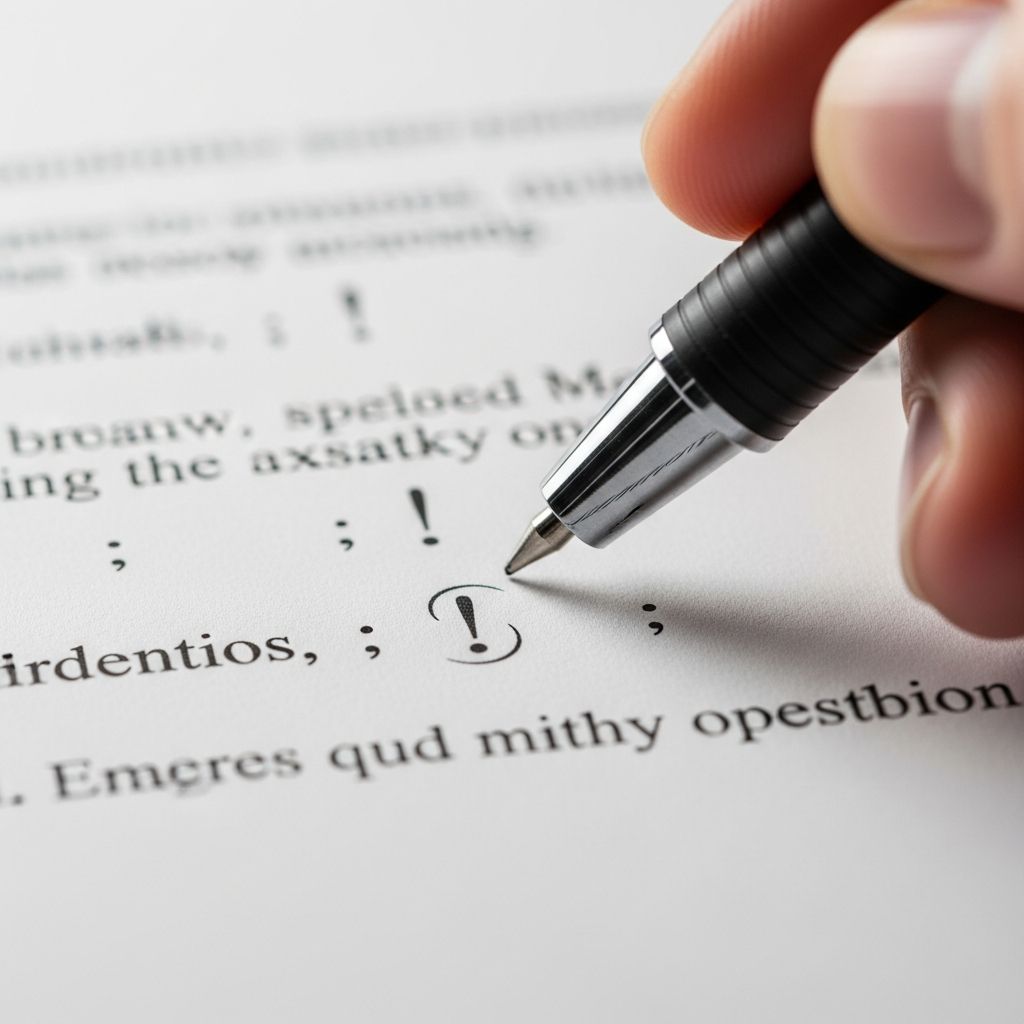
In the high-stakes world of litigation, every word and mark in a pleading carries weight. Legal documents demand precision, clarity, and an authoritative tone to persuade judges and withstand scrutiny. Among the tools of written expression, the exclamation point stands out as a controversial choice. Does it ever have a place in formal court filings, or does it undermine the gravity required in legal practice? This article delves into the nuances of punctuation in pleadings, drawing on established rules and best practices to guide attorneys and paralegals.
The Role of Tone in Legal Documents
Legal pleadings serve as the foundation of a case, outlining claims, jurisdiction, and requested relief under rules like those in the Federal Rules of Civil Procedure. These documents must convey facts logically and chronologically while maintaining objectivity. A professional tone fosters credibility; emotional outbursts, even subtle ones signaled by punctuation, can erode it. Courts expect filings to be measured, focusing on evidence rather than fervor.
Consider the purpose of pleadings: to provide notice of claims and frame issues for discovery and trial. Inflammatory language or punctuation risks dismissal or sanctions, as judges prioritize substance over style. Best practices emphasize simplicity to avoid broadening discovery scopes unnecessarily, keeping costs down for clients.
Understanding Exclamation Points: When They Signal Trouble
The exclamation point (!) injects urgency, excitement, or emphasis—emotions rarely appropriate in legal writing. In everyday communication, it conveys enthusiasm: “Great job!” But in a motion for summary judgment, “The defendant lied!” appears accusatory, inviting perceptions of bias. Legal writing authorities, including style guides like The Bluebook, advocate restraint in punctuation to ensure readability and professionalism.
Historically, courts have critiqued overly dramatic filings. While no universal ban exists on exclamation points, their rarity in published opinions underscores a norm against them. They can make arguments seem desperate rather than compelling, potentially alienating decision-makers who value restraint.
Formatting Fundamentals for Pleadings
Beyond punctuation, pleadings must adhere to strict formatting to meet court rules. California’s Rule 2.111, for instance, mandates precise first-page layouts: court title at line 1, case title to the left, case number opposite, and document nature below. Non-compliance can lead to rejection.
- Caption Precision: Use bold and ALL CAPS only for document titles, e.g., “PLAINTIFF’S COMPLAINT.” Align text with line numbers for easy reference.
- Font Consistency: Stick to court-specified fonts; never mix or resize to fit page limits.
- Spacing and Symbols: Employ nonbreaking spaces after paragraph symbols (§) and in ellipses to prevent awkward line breaks.
These elements ensure documents are scannable, aiding judges in navigating complex cases.
Structuring Effective Pleadings
Successful pleadings hinge on three core elements: jurisdiction grounds, claim statements, and relief demands. Begin with a concise introduction stating the court’s authority, followed by factual allegations in chronological order. Avoid multiple legal theories to prevent confusion and excessive discovery.
| Element | Description | Best Practice Tip |
|---|---|---|
| Jurisdiction | Short statement of court’s authority | Specify federal question or diversity basis clearly |
| Claims | Plaintiff’s entitlement summary | Link facts to elements with supporting proof outline |
| Relief | Judgment demand | Quantify damages where possible for limited civil cases |
Summarize the entire pleading in two pages or less, then expand with facts and authority. This roadmap guides the court efficiently.
Alternatives to Exclamation Points for Emphasis
Need to highlight urgency without drama? Use strategic capitalization, bolding (sparingly), or declarative sentences. For instance, replace “Pay now!” with “Immediate payment is required under the contract.” Clear, plain language enhances readability, as recommended in federal drafting guides: prefer short sentences (25-30 words average) and simple words.
Headings organize complex arguments logically, signaling shifts without punctuation flair. Curly quotes and proper ellipses maintain polish. Slash marks at page bottoms indicate continuation, preventing reader confusion.
Common Pitfalls in Legal Drafting
Avoid straight quotes, inconsistent fonts, or misaligned text—these scream amateurism. Footers should mirror caption titles, shortened if needed. In limited civil cases, explicitly state demand amounts and “Limited Civil Case”.
Overloading with theories muddies waters; focus on a single, provable narrative. Emotional punctuation exacerbates this, shifting focus from merits to tone.
State and Federal Variations
While federal rules emphasize clarity, state courts like California enforce rigid formats. Always consult local rules via official court sites or guides. For example, first-page specs differ slightly, but all prioritize left-aligned captions and precise party naming.
Case Studies: Punctuation’s Real-World Impact
Though rare, filings with excessive emphasis have drawn judicial ire. In one instance, a judge noted hyperbolic language undermined credibility, echoing broader sentiments against sensationalism. Contrast this with model pleadings: factual, structured, and punctuation-neutral, leading to favorable outcomes.
Paralegals play a key role, ensuring checklists cover claims, proof, and formatting. Tools like Microsoft Word’s formatting features—nonbreaking spaces, curly quotes—streamline compliance.
Elevating Your Practice with Polished Pleadings
Mastering these principles transforms routine filings into persuasive instruments. Prioritize objectivity, structure, and precision; reserve passion for oral arguments. In an era of electronic filing, flawless documents stand out, expediting justice.
Frequently Asked Questions (FAQs)
Can exclamation points ever be used in legal briefs?
Generally no; they convey emotion unfit for formal advocacy. Opt for strong verbs and facts instead.
What font should pleadings use?
Court-specified, often Courier or Times New Roman at 12-14 pt. Never mix fonts.
How do I align text with line numbers?
Use 1-inch left margins and fixed line spacing so body text matches numbered margins.
Are headings capitalized in pleadings?
Follow The Bluebook: capitalize major words, lowercase articles and short prepositions.
What if my pleading exceeds page limits?
Edit ruthlessly; never shrink fonts. Summarize early for conciseness.
Refining your drafting elevates professionalism, ensuring arguments resonate without distraction.
References
- A Paralegal’s Guide for Drafting Pleading — Lorman Education Services. Accessed 2026. https://www.lorman.com/resources/a-paralegal-s-guide-for-drafting-pleading-17441
- Best Practices, Part 1: Pleadings — Legal Professionals, Inc. Accessed 2026. https://www.legalprofessionalsinc.org/best-practices-part-1-pleadings/
- Rule 2.111. Format of first page — Judicial Branch of California. Accessed 2026. https://courts.ca.gov/cms/rules/index/two/rule2_111
- Drafting Pleadings That Make a Difference and Affect the Outcome — Miller, Miller & Canby. 2021-02. https://www.millermillercanby.com/wp-content/uploads/2021/02/DraftingPleadingsThatMakeaDifferenceandAffecttheOutcome.pdf
- Essentials for Drafting Clear Legal Rules — United States Courts. 2024. https://www.uscourts.gov/sites/default/files/essentials_for_drafting_clear_legal_rules_2024.pdf
- Legal Drafting: A Beginner’s Guide — Library of Congress Law Library. 2013-07. https://blogs.loc.gov/law/2013/07/legal-drafting-a-beginners-guide/
- Formatting a Legal Document in Microsoft Word — Georgetown Law. 2024-02. https://www.law.georgetown.edu/wp-content/uploads/2024/02/Formatting-a-Legal-Document-in-Microscoft-Word-2024.pdf
Similar Articles








Read full bio of medha deb


