
Understanding Public Intoxication and Disorderly Conduct Laws
A comprehensive guide to public intoxication and disorderly conduct charges, penalties, and legal distinctions.
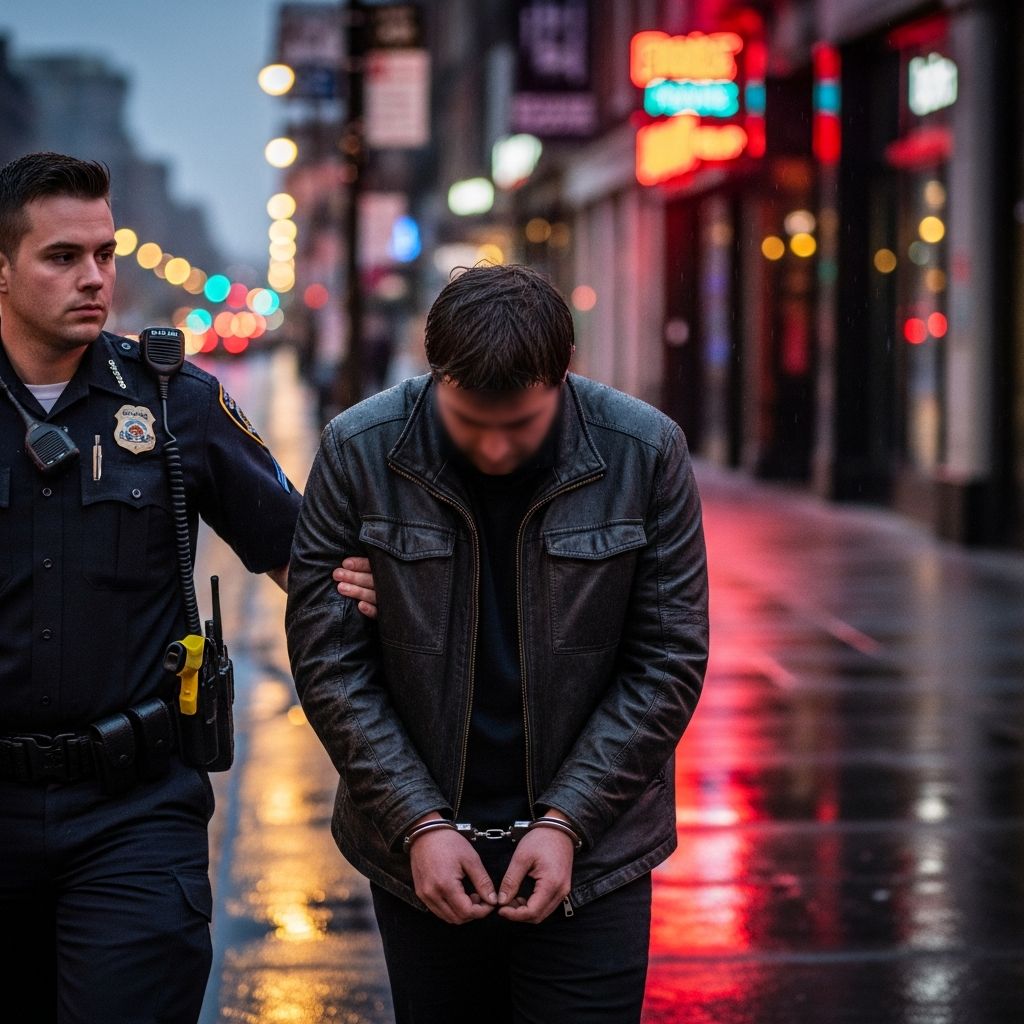
Navigating Public Intoxication and Disorderly Conduct Charges
Alcohol-related offenses in public spaces represent a significant portion of criminal charges across the United States. Two of the most commonly encountered charges in this category are public intoxication and disorderly conduct. While these terms are sometimes used interchangeably in casual conversation, they represent distinct legal violations with different elements, penalties, and implications. Understanding the nuances between these offenses is essential for anyone facing such charges or seeking to comprehend how the criminal justice system addresses behavior in public spaces.
The distinction between public intoxication and disorderly conduct has important consequences for defendants, including potential sentencing, fines, and long-term criminal record implications. Additionally, the specific elements required to prove each offense vary significantly, affecting how law enforcement officers make arrests and how prosecutors build their cases.
The Scope and Definition of Disorderly Conduct
Disorderly conduct serves as an umbrella legal category that encompasses a wide range of behaviors deemed disruptive, offensive, or harmful to public order and safety. This broad classification allows law enforcement to address various types of public disturbances without requiring a separate statute for each behavior. The fundamental principle underlying disorderly conduct laws is that individuals should not engage in activities that interfere with others’ peaceful enjoyment of public spaces or that threaten community safety.
The behaviors that fall under disorderly conduct are remarkably diverse and can include:
- Engaging in public fights or physical altercations
- Loitering in suspicious circumstances
- Lewd or indecent conduct in public settings
- Using profane, vulgar, or abusive language directed at others
- Making unreasonably loud noise that disturbs others
- Invasion of privacy such as peeping or voyeurism
- Soliciting illegal services in public
- Public intoxication (which functions as a subset of broader disorderly conduct laws)
What distinguishes disorderly conduct from many other criminal offenses is its flexibility. The definition does not require alcohol or drug involvement, meaning a person can be charged with disorderly conduct for a wide array of non-intoxication-related behaviors. This flexibility has made disorderly conduct statutes popular tools for law enforcement to maintain public order, though it has also generated debate about potential overreach and selective enforcement.
Public Intoxication as a Distinct Offense
Public intoxication, also commonly referred to as “drunk in public,” represents a more narrowly focused criminal violation that specifically targets individuals whose intoxication creates dangers or disruptions in public environments. Unlike the broad category of disorderly conduct, public intoxication charges center exclusively on a person’s state of intoxication and the consequences flowing from that condition.
In most jurisdictions, including California under Penal Code Section 647(f), establishing a public intoxication charge requires prosecutors to demonstrate specific elements:
- The defendant was willfully under the influence of alcohol, controlled substances, or drugs
- The defendant was present in a public place at the time of intoxication
- The defendant’s intoxication rendered them unable to care for their own safety or the safety of others, OR their intoxication interfered with, obstructed, or prevented free use of public ways such as streets and sidewalks
A critical aspect of public intoxication law is that simply being drunk in public is insufficient for a conviction. The prosecution must establish that the intoxication created a genuine danger or constituted an actual obstruction. This requirement protects individuals from being arrested merely for consuming alcohol in public spaces, even if they are visibly intoxicated, provided they are not endangering themselves or others or blocking access to public areas.
The Relationship Between These Offenses
The legal relationship between public intoxication and disorderly conduct can be confusing because public intoxication functions as a subset within the broader category of disorderly conduct. In jurisdictions like California, public intoxication is technically one type of disorderly conduct violation, specifically codified as subdivision (f) of the relevant statute. This means that all public intoxication offenses are disorderly conduct violations, but not all disorderly conduct charges involve intoxication.
This hierarchical relationship has practical implications for charging decisions and potential plea negotiations. A prosecutor might charge someone with the broader disorderly conduct offense rather than specifically with public intoxication, depending on the circumstances and available evidence. Similarly, a defendant might negotiate a plea agreement that addresses the broader charge rather than the narrower public intoxication specification.
Key Differences in Legal Elements and Burden of Proof
| Aspect | Public Intoxication | Disorderly Conduct (General) |
|---|---|---|
| Primary Focus | Intoxicated state and resulting danger or obstruction | Disruptive or offensive behavior (intoxication-related or otherwise) |
| Required Element | Demonstrable intoxication affecting safety or public access | Conduct that disturbs peace, morals, or safety |
| Alcohol/Drug Involvement | Always required | Not required; may involve other disruptive behaviors |
| Prosecutor Burden | Must prove intoxication and its specific consequences | Must prove disruptive conduct (nature varies by behavior type) |
| Behavioral Specificity | Limited to intoxication-related issues | Extremely broad range of possible behaviors |
The differences in what prosecutors must prove significantly impact how these cases proceed. For public intoxication, the prosecution typically focuses on establishing the defendant’s intoxicated state through officer observations, field sobriety tests, or breathalyzer results, combined with evidence of danger or obstruction. For other disorderly conduct charges, the prosecution must gather evidence specific to whatever disruptive conduct occurred, whether that involves audio recordings of excessive noise, witness testimony about fighting, or other relevant documentation.
Varying State Approaches to Public Intoxication
While public intoxication is criminalized in most jurisdictions, the specific legal standards and penalties vary considerably across states. Different states have taken notably different approaches to defining and regulating public intoxication, reflecting varying policy priorities regarding public safety and individual liberty.
California classifies public intoxication as a misdemeanor under Penal Code Section 647(f), with penalties up to six months in jail and fines reaching $1,000. The statute specifically requires that the person’s condition manifest through an inability to care for themselves or others, or through interference with public ways.
Georgia treats public intoxication as a class B misdemeanor, defining it more broadly to include conduct manifested by boisterousness, indecent condition or acts, or vulgar and profane language. This approach casts a wider net than California’s standard.
Indiana significantly reformed its approach in 2012, eliminating the crime of simple public intoxication standing alone. Instead, Indiana now requires additional elements such as endangerment to life, breaching the peace, or harassing and alarming another person. This represents a more restrictive approach that protects individuals who are merely intoxicated without creating additional harm.
Iowa maintains a straightforward prohibition against intoxication in public places under Code Section 123.46, classifying simple public intoxication as a simple misdemeanor with penalties up to 30 days in jail and $1,000 in fines. Aggravated violations occurring as a third or subsequent offense constitute an aggravated misdemeanor with potential prison time up to two years.
Penalties and Sentencing for These Offenses
Both public intoxication and disorderly conduct are typically classified as misdemeanor offenses rather than felonies, meaning they carry less severe penalties than serious crimes. However, the specific consequences can vary depending on jurisdiction, criminal history, and particular circumstances.
Common penalties for public intoxication and disorderly conduct include:
- Fines ranging from several hundred to $1,000 or more
- Jail sentences typically not exceeding six months, though repeat offenders may face longer terms
- Mandatory enrollment in alcohol education or treatment programs
- Community service obligations
- Probation periods with various conditions and monitoring
- Restitution for damages caused by the defendant’s conduct
California’s approach exemplifies how enhanced penalties may apply to repeat offenders. Under California law, a person convicted of public intoxication three times within a 12-month period faces mandatory minimum jail time of 90 days on the third conviction, though courts may suspend this sentence if the defendant enters an approved alcohol treatment program.
In practice, many jurisdictions offer alternatives to incarceration, allowing defendants to avoid jail time through successful completion of treatment programs, community service, or other rehabilitation-focused interventions. This approach reflects a broader trend toward treating public intoxication partially as a health and social issue rather than purely as a criminal matter.
The Role of Disturbance and Disruption
A crucial consideration in distinguishing public intoxication from other disorderly conduct is whether the defendant’s conduct actually caused a disturbance or created a threat of harm. Some jurisdictions require that public intoxication charges include evidence that the defendant’s condition resulted in danger to self or others, or created an obstruction to public use of spaces. This requirement prevents the criminalization of individuals who are intoxicated but otherwise posing no risk or inconvenience.
This principle means that someone who is visibly intoxicated but quietly sitting on a park bench would likely escape prosecution, whereas someone engaging in aggressive behavior while intoxicated, such as throwing objects or challenging others to fight, would face criminal charges. This distinction reflects a legal philosophy that criminalizes behavior based on its actual impact rather than on the mere fact of intoxication.
Enforcement Considerations and Police Authority
Law enforcement officers have broad discretion in deciding whether to arrest someone for public intoxication or disorderly conduct. This discretion can lead to inconsistent enforcement patterns and potential bias in how different individuals are treated. Officers must observe conduct they believe violates these statutes and determine whether sufficient evidence exists to justify an arrest and prosecution.
For public intoxication specifically, officers typically rely on observable signs of intoxication such as stumbling, slurred speech, poor balance, and impaired judgment. They may request field sobriety tests or conduct breathalyzer tests to establish the person’s level of intoxication. The officer must also gather information about whether the person’s condition creates danger or obstructs public access.
Disorderly conduct enforcement depends more heavily on witness complaints and officer observations of specific disruptive behaviors. What one officer considers disturbing the peace, another might overlook, creating potential for inconsistent enforcement based on departmental practices, neighborhood characteristics, or individual officer judgment.
Frequently Asked Questions
Q: Can someone be charged with public intoxication if they are not visibly drunk?
A: No. Public intoxication charges typically require observable evidence of intoxication and either danger to self/others or obstruction of public ways. Someone who is intoxicated but not displaying obvious signs would be difficult to prosecute. Additionally, the presence of intoxication must meet the statutory threshold in the jurisdiction, which may be demonstrated through sobriety tests or breathalyzer results.
Q: What is the difference between being intoxicated in private versus public?
A: Public intoxication laws apply only when a person is intoxicated in public places or in the curtilage of private residences without the owner’s consent. Being intoxicated within one’s own home or at a private event with the owner’s permission does not constitute public intoxication. Disorderly conduct laws similarly apply to public spaces and conduct that affects others.
Q: Can disorderly conduct charges be avoided through treatment programs?
A: In many cases, yes. Courts frequently offer diversion programs, treatment alternatives, or probation with conditions that allow defendants to avoid conviction and incarceration by completing alcohol education programs, community service, or other rehabilitative measures. The availability and specifics of such alternatives vary by jurisdiction and judicial discretion.
Q: How do prior convictions affect sentencing for these offenses?
A: Prior convictions typically result in enhanced penalties. Many jurisdictions impose mandatory minimum jail time or increased fines for repeat offenders. For example, California requires at least 90 days in jail for a third public intoxication conviction within 12 months. Some states progressively increase penalties with each subsequent offense.
Q: Can a public intoxication charge be reduced to a lesser offense?
A: Yes. Defendants often negotiate plea agreements that reduce public intoxication charges to lesser offenses or that address them through diversion programs. Defense attorneys may challenge the evidence of intoxication, the necessity element, or whether proper procedures were followed by law enforcement during the arrest.
References
- Public Intoxication vs. Disorderly Conduct: What’s the Difference in California — Southwest Legal. https://southwestlegal.com/public-intoxication-vs-disorderly-conduct/
- Public intoxication — Wikipedia. https://en.wikipedia.org/wiki/Public_intoxication
- California Penal Code Section 647(f) PC: Drunk in Public — Los Angeles Criminal Lawyer. https://www.losangelescriminallawyer.pro/california-penal-code-section-647-f-pc-drunk-in-public.html
- Public Intoxication Laws | DUI & DWI Law Center — Justia. https://www.justia.com/criminal/drunk-driving-dui-dwi/alcohol-related-crimes/public-intoxication/
- Disorderly Conduct and Public Intoxication — Morales Law Firm. https://sfcriminallawspecialist.com/blog/disorderly-conduct-and-public-intoxication/
- § 647(f) PC – Public Intoxication – California Law & Penalties — Shouse Law Group. https://www.shouselaw.com/ca/defense/penal-code/647f/
- disorderly conduct — Wex, Legal Information Institute. https://www.law.cornell.edu/wex/disorderly_conduct
Similar Articles








Read full bio of Sneha Tete


