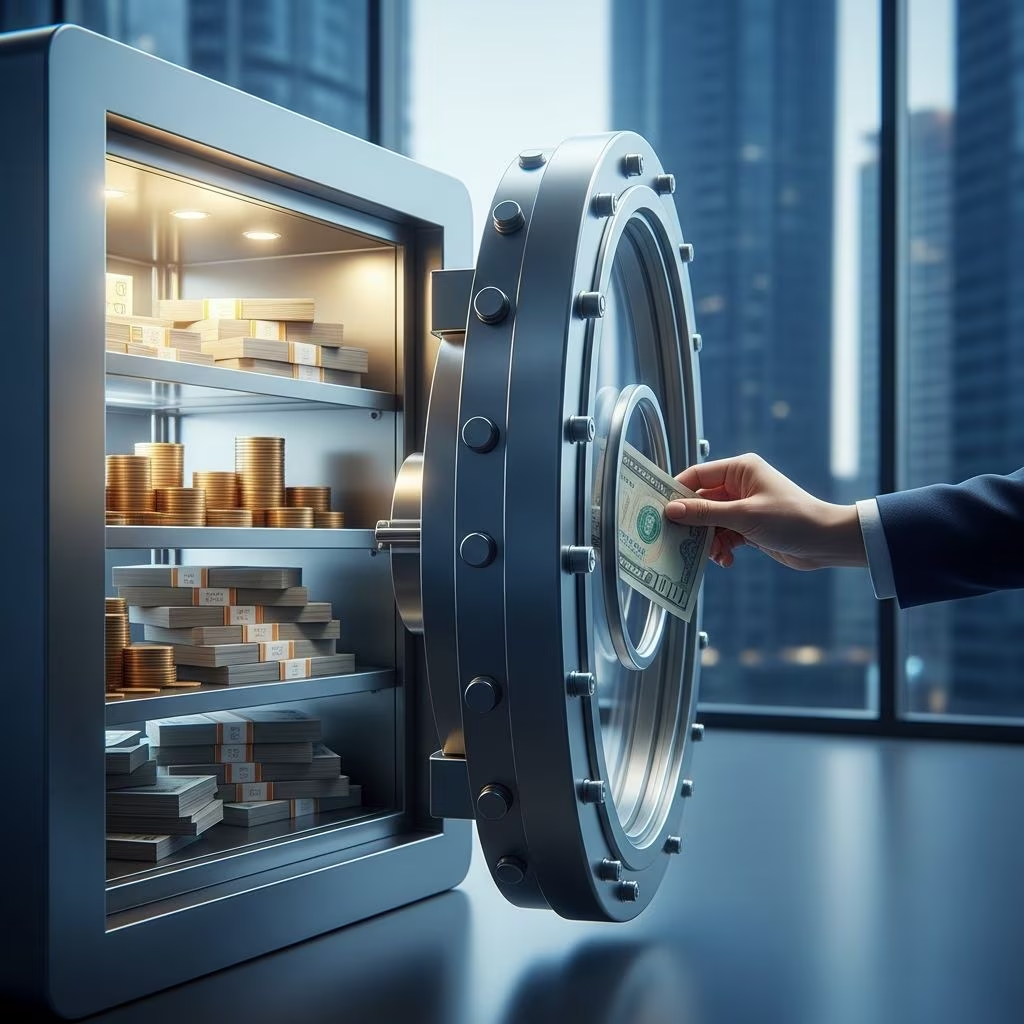
Being able to reach your own money without paying unnecessary fees is a basic expectation of modern banking. Yet, as payment technologies change and bank branches and ATMs consolidate, many people are finding that getting cash from their accounts increasingly comes with a price tag.
This article explains why free access to your deposits is so important, how new types of cash-access fees are emerging, what recent U.S. rules say about data and account access, and what you can do to avoid paying more than you should to reach your own funds.
The Changing Landscape of Accessing Your Money
Historically, the U.S. banking system has been structured so that customers could obtain cash from their own bank or credit union at no charge, typically at in-network ATMs or teller counters. Over time, that picture has become more complicated.
From Branch Counters to Digital Banking
Three long-running shifts are reshaping how people get to their money:
- Branch consolidation: Many banks have reduced branch networks or shortened lobby hours, making in-person withdrawals less convenient, especially in rural and low-income areas.
- ATM dependence: People increasingly rely on ATMs, but free in-network machines are not always nearby, leading to higher out-of-network ATM fees.
- Rise of digital payments: Mobile wallets, payment apps, and debit cards have reduced day-to-day cash use, yet cash remains essential for many small merchants, landlords, and informal transactions.
The result is that consumers who still need physical currency can end up paying more just to turn their own deposits into cash.
Retailers Filling the Gap
As banks close locations or scale back certain services, retailers have increasingly become a point of access to cash. For years, many grocery stores and big-box retailers allowed customers to get cash back at the register with a debit purchase at no additional cost, which helped people avoid ATM surcharges.
Recent regulatory research has highlighted that some large retailers, including certain discount and dollar stores, now impose fees for cash-back withdrawals, especially in communities with fewer bank branches or ATMs. That means a service consumers may remember as free can now carry a noticeable cost.
Common Ways You Pay to Access Your Own Money
There are several ways you might be charged simply for reaching funds already in your account. Understanding these fee types is the first step toward avoiding them.
| Type of Access | Typical Fee Trigger | Who Charges It? | How to Avoid or Reduce |
|---|---|---|---|
| Out-of-network ATM withdrawal | Using an ATM not owned or affiliated with your bank | Your bank and the ATM owner may both charge | Use in-network or partner ATMs; withdraw less often in larger amounts |
| Retail cash-back fee | Requesting cash back at checkout, especially at some dollar or convenience stores | The retailer | Ask about fees first; choose stores that offer free cash back or use in-network ATMs |
| Over-the-counter withdrawal fee | Certain accounts charging a fee for teller-assisted withdrawals beyond set limits | Your bank or credit union | Select low-cost or Bank On-certified accounts with transparent fee schedules |
| Foreign transaction / cross-border ATM | Withdrawing cash outside the U.S. or in a foreign currency | Your bank, network (e.g., Visa/Mastercard), and local ATM owner | Use partner banks abroad when possible; compare terms before travel |
Why Free, Low-Cost Access Is a Consumer Protection Issue
Access to your own funds is not just a convenience; it connects directly to financial stability, competition, and fairness in the marketplace.
Impact on Households with Limited Resources
Households with lower incomes, those paid in cash or checks without direct deposit, and people living in areas with few bank branches are particularly sensitive to cash-access fees. For them, an extra few dollars per withdrawal can be the difference between paying a bill on time or falling behind.
- Frequent small withdrawals compound fees over time.
- Lack of nearby in-network ATMs can push people to fee-heavy options.
- Those who cannot easily use digital wallets or online transfers may have fewer alternatives.
Over the course of a year, repeated small fees for cash access can rival or exceed the cost of some monthly bank service charges.
Competition and the Cost of Switching
The Consumer Financial Protection Bureau (CFPB) has emphasized that people should be able to move their money and financial history to better providers without being blocked by unnecessary charges or technical barriers. If obtaining cash, sharing account data, or connecting to new apps becomes expensive, consumers may feel locked into relationships that no longer serve them well.
Strong, enforceable rights to free or low-cost access to cash and account data are therefore closely tied to healthy competition across banking, payments, and credit markets.
How New Data Rights Rules Interact with Access to Funds
Beyond physical cash, another dimension of “access” is who can see and use your financial data. Recent federal rulemaking on personal financial data rights is designed to give consumers more control, while limiting the fees companies can charge for basic data access.
Key Features of the CFPB’s Personal Financial Data Rights Rule
The CFPB’s final rule on personal financial data rights (issued under the Dodd-Frank Act’s Section 1033) requires many financial institutions to make certain account data available to consumers and their authorized third parties, at no charge for the consumer.
- Covered data: Includes transaction histories, balances, information needed to initiate payments, upcoming bills, and basic account details associated with checking, savings, prepaid cards, credit cards, digital wallets, and many payment apps.
- Consumer authorization: Third parties, such as budgeting apps or alternative lenders, must obtain clear consent before accessing this information and must use it only to provide requested services.
- No consumer data-access fees: The rule bars financial providers from charging consumers fees simply to retrieve or transfer their own covered data to another provider.
- Limits on data misuse: Third parties cannot reuse data for unrelated advertising, profiling, or other purposes that go beyond what the consumer allowed.
Although this rule focuses on information rather than cash, it supports the broader principle that individuals should not have to pay simply to exercise basic control over their financial lives.
Moving Away from Risky Screen Scraping
Historically, many fintech apps relied on a practice called screen scraping, which involves storing consumers’ online banking usernames and passwords and using them to log in and copy data. The CFPB’s rule encourages a shift toward standardized, secure data-sharing interfaces, which give consumers more safety and transparency while still allowing them to benefit from innovative tools.
Safer data sharing can indirectly support better cash access by making it easier for consumers to compare fees across accounts, find low-cost options, and manage their cash flow more effectively.
Retail Cash Access: Convenience vs. Cost
As research cited by the CFPB shows, some retailers now charge for services that used to be free, including cash-back withdrawals at the point of sale. This is especially visible in certain discount and dollar store chains that may be the primary shopping venue in lower-income neighborhoods.
Why Retailers May Charge for Cash Back
Retailers may justify new fees on several grounds:
- Covering network and processing costs for debit transactions.
- Recovering the cost of handling and managing physical cash.
- Taking advantage of limited alternatives in communities with few bank branches or ATMs.
From the consumer’s perspective, however, the effect is simple: a fee that stands between them and their own paycheck or benefits payment.
Questions to Ask at the Checkout Counter
Before you rely on retail cash-back service, it helps to ask:
- Is there a fee for cash back, and if so, how much?
- Is the fee a flat amount or a percentage of the cash you receive?
- Are there limits on how much you can withdraw as cash back?
- Does another nearby store or your bank offer a free alternative?
Building the habit of asking about fees can help you avoid slow, silent erosion of your income through small but frequent charges.
Practical Steps to Minimize Cash-Access Costs
While regulators focus on system-level protections, you can take immediate steps to lower what you pay to access your money.
Choose Accounts Designed to Be Low-Cost
Many banks and credit unions offer low-fee or no-fee checking accounts, including products certified under the Bank On National Account Standards, which aim to provide affordable, transparent banking options. These accounts often feature:
- Low or no monthly maintenance fees.
- No overdraft fees or limited overdraft risk.
- Reasonable, clearly disclosed ATM access policies.
When opening an account, ask specifically about free access to your cash at branches, ATMs, and partner networks.
Plan Withdrawals Strategically
Some simple planning can significantly cut your annual fee burden:
- Use in-network ATMs: Check your bank’s website or app for locator tools that identify surcharge-free ATMs in your area.
- Withdraw larger amounts less frequently: Paying one small fee once a month is cheaper than paying it multiple times per week.
- Bundle errands: Combine grocery trips and bank visits so you can rely on free cash-back options or in-network machines.
Leverage Digital Transfers Where Safe and Practical
While cash remains essential, some payments can be shifted to secure digital methods to reduce the need for frequent withdrawals.
- Set up automatic bill payments from your account where appropriate.
- Use trusted payment apps linked directly to your bank, while reviewing their privacy and fee policies in detail.
- Take advantage of instant transfers or low-cost ACH transfers instead of repeated ATM visits.
Your Rights and Where to Learn More
Consumers have multiple overlapping protections around financial privacy, data access, and fair treatment. Some states, such as California, add further safeguards limiting how financial institutions share personal data and granting additional rights to residents.
Federally, the CFPB and other regulators oversee banks and certain nonbank companies to ensure compliance with consumer financial laws, including rules on disclosures, unfair or deceptive practices, and data rights.
When to Consider Filing a Complaint
If you believe a bank, credit union, or financial app is:
- Charging unexpected or undisclosed fees to access your funds.
- Denying you access to your own transaction data without a clear legal basis.
- Failing to honor your rights under applicable statutes or CFPB regulations.
you can typically file a complaint with the CFPB or your state’s financial regulator. Detailed complaint processes and response timelines are provided on official government websites.
Frequently Asked Questions (FAQs)
Q: Is my bank allowed to charge me a fee every time I withdraw cash?
A: Banks can charge certain types of fees, such as out-of-network ATM surcharges, if they are clearly disclosed in your account agreement. However, many institutions offer free in-network withdrawals or fee-free levels of access. Reviewing your fee schedule and seeking a low-cost account can help you avoid frequent charges.
Q: Do federal rules guarantee that I can always get cash for free?
A: Current federal rules focus more on fair disclosure and data-access rights than on guaranteeing free cash access at every location. The CFPB has stated that preserving no-cost options to reach your own money is a priority, and it continues to monitor how banks and retailers structure fees.
Q: How is data access connected to cash access?
A: The CFPB’s personal financial data rights rule ensures you can access and share certain account information without paying fees, which makes it easier to compare products, switch institutions, and use financial tools that help manage your cash flow. Better information can translate into better choices about where and how to get cash at the lowest cost.
Q: Are cash-back fees at stores regulated the same way as bank fees?
A: Retailers generally have more pricing flexibility for services like cash back at checkout, as long as their practices comply with applicable consumer protection and payment network rules. They are not regulated like banks, which face more detailed oversight and disclosure requirements for account fees.
Q: What should I look for when choosing a low-fee account?
A: Look for accounts with low or no monthly fees, no overdraft programs that can trigger high penalties, ample access to surcharge-free ATMs, and clear, simple fee disclosures. Products that meet standards like the Bank On National Account criteria are specifically designed to offer safe, affordable everyday banking.
References
- Preserving free access to money in your account — Consumer Financial Protection Bureau. 2024-09-18. https://www.consumerfinance.gov/about-us/blog/preserving-free-access-to-money-in-your-account/
- CFPB Finalizes Personal Financial Data Rights Rule to Boost Competition, Protect Privacy, and Give Families More Choice in Financial Services — Consumer Financial Protection Bureau. 2024-10-24. https://www.consumerfinance.gov/about-us/newsroom/cfpb-finalizes-personal-financial-data-rights-rule-to-boost-competition-protect-privacy-and-give-families-more-choice-in-financial-services/
- Required Rulemaking on Personal Financial Data Rights — Federal Register / Consumer Financial Protection Bureau. 2024-11-18. https://www.federalregister.gov/documents/2024/11/18/2024-25079/required-rulemaking-on-personal-financial-data-rights
- Your Financial Privacy Rights — Office of the Attorney General, State of California. 2022-08-01. https://oag.ca.gov/privacy/facts/financial-privacy/rights
- What is Bank On? — Los Angeles County Department of Consumer & Business Affairs. 2023-05-10. https://dcba.lacounty.gov/bankon/
- Open banking: Understanding CFPB’s Rule 1033 — Wipfli LLP. 2024-11-12. https://www.wipfli.com/insights/articles/fi-ra-what-open-banking-means-for-financial-institutions